
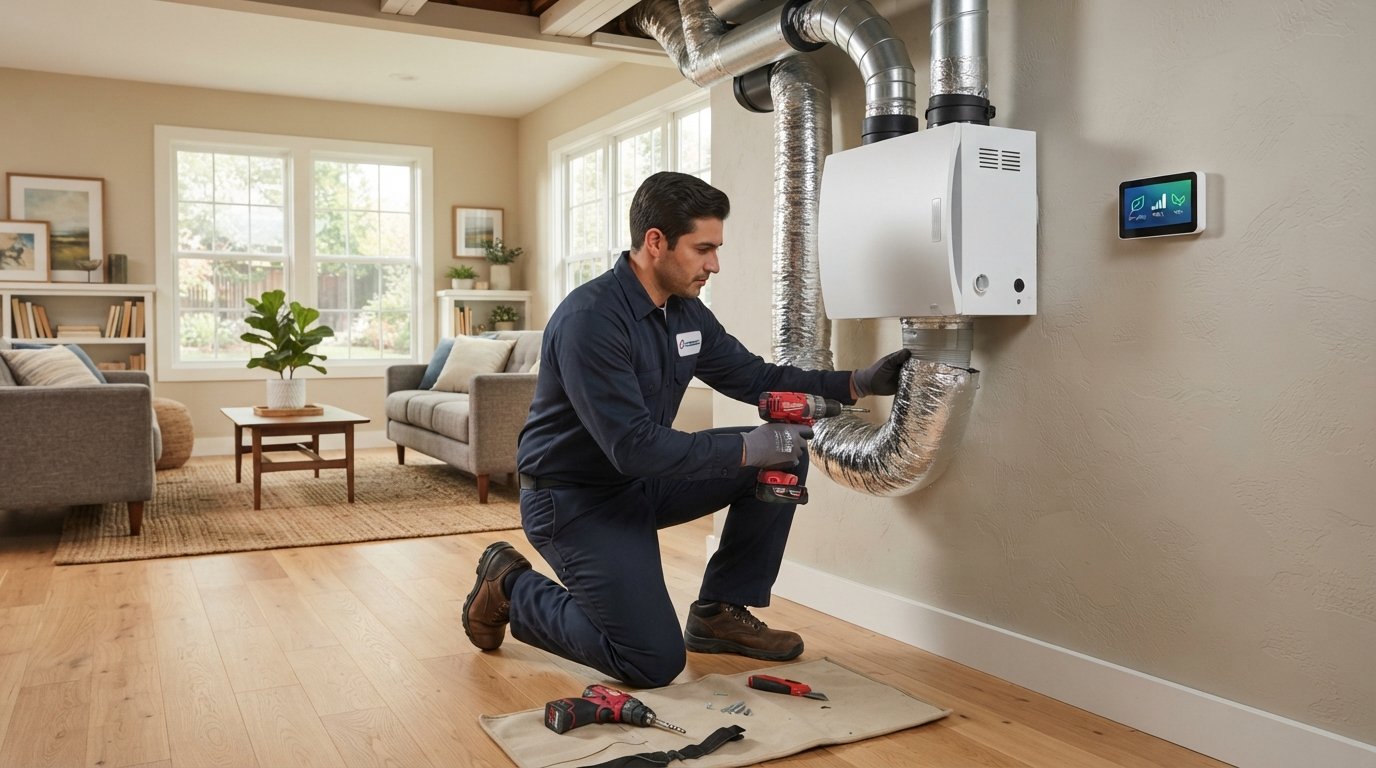
Whole House Ventilation System Indoor Air Quality Guide
A whole house ventilation system indoor air quality upgrade keeps your home fresh and healthy. Call 8333658755 to compare local contractor quotes today.

By Julian Hayes
Learn more about Duct and Vent Installation or Removal for guides, costs, and what to expect.
Compare Duct and Vent Installation or Removal Pros Near You

Enter your ZIP code to compare top-rated local professionals and request free quotes.
Your home traps more than memories. It traps cooking fumes, pet dander, bathroom moisture, and volatile organic compounds from paint, furniture, and cleaning products. Modern construction makes this worse: tighter envelopes and improved insulation reduce energy waste, but they also seal in stale air. That is where a whole house ventilation system indoor air quality strategy becomes essential. Instead of opening windows and hoping for the best, a balanced ventilation system continuously replaces polluted indoor air with fresh outdoor air while recovering energy you already paid for. The result is a healthier, more comfortable home, and in many cases, lower utility bills. Homeowners across the United States are discovering that ventilation is not a luxury upgrade. It is a core part of any serious renovation plan, right alongside roofing, windows, and HVAC work.
Why Indoor Air Quality Deserves A Spot In Your Renovation Plan
Most remodeling conversations revolve around cabinets, countertops, and flooring. Those choices matter, but they often overshadow something more fundamental: the air your family breathes for roughly 90 percent of each day. The EPA consistently ranks indoor air pollution among the top environmental health risks, largely because concentrations of certain pollutants can be two to five times higher indoors than outdoors. In tightly built homes, those pollutants have nowhere to go. They accumulate quietly, causing headaches, allergy flare-ups, fatigue, and long-term respiratory concerns.
During a renovation, you introduce an entirely new wave of contaminants. Fresh paint, adhesives, new carpet, engineered wood, and even new furniture off-gas chemicals for weeks. Without deliberate ventilation, those fumes linger. This is why smart renovation planning pairs material selection with mechanical airflow. If you are already upgrading your home systems, it makes sense to address ventilation at the same time. In our guide on efficient ventilation system secrets, we explain how airflow design supports comfort and energy savings, and the same principles apply whether you are building new or remodeling an existing space.
Older homes are not exempt either. Leaky windows and drafty attics let in plenty of outdoor air, but that air arrives unpredictably and often through unintended paths. It can pull in dust from crawlspaces, exhaust from attached garages, or moisture from damp basements. A whole house ventilation system replaces that random infiltration with controlled, filtered, and balanced airflow. The difference in how a home feels and smells is noticeable within days.
What A Whole House Ventilation System Actually Does
A whole house ventilation system is a mechanical network that continuously moves air through your home in a planned way. It typically includes a central unit (often called an HRV or ERV), ductwork, and controls that let you set airflow rates by room or by time of day. Unlike a single bathroom fan or a kitchen range hood, which handle localized exhaust, a whole house system manages the entire envelope. It supplies fresh air to living spaces and removes stale air from kitchens, bathrooms, and laundry rooms.
There are three common approaches. Exhaust-only systems depressurize the home and pull fresh air through leaks. Supply-only systems pressurize the home and push stale air out through leaks. Balanced systems, which use heat recovery ventilators (HRVs) or energy recovery ventilators (ERVs), do both at once. Balanced ventilation is generally the best choice for cold climates, hot-humid climates, and any home where energy efficiency matters. It transfers heat (and in ERVs, moisture) between outgoing and incoming air streams, so you are not throwing away conditioned air.
The benefits extend well beyond fresher air. A properly sized system reduces humidity buildup that feeds mold and dust mites. It dilutes radon and carbon monoxide that can seep in from soil or attached garages. It also helps control odors and chemical vapors from cooking, cleaning, and hobbies. For homeowners with allergies or asthma, the improvement in daily comfort can be significant. And because modern units run quietly and efficiently, the operating cost is usually a small fraction of what people expect.
How Ventilation Fits Into A Broader Home Systems Upgrade
Ventilation rarely works alone. It interacts with your HVAC system, your insulation, your windows, and your roof. If you upgrade one without considering the others, you can create new problems. For example, adding a powerful exhaust fan without makeup air can backdraft a gas water heater. Sealing a home tightly without adding ventilation can trap moisture and pollutants. This is why a coordinated approach matters.
When you work with a contractor network like USremodel, you can get matched with professionals who understand how these systems connect. Whether the project involves HVAC, windows, roofing, or a full renovation, the goal is a home that performs as a system. That means balancing air sealing, insulation, and mechanical ventilation so each upgrade supports the others instead of fighting them.
Here is a simple framework for thinking about priorities during a renovation:
- Air sealing: Close unintended gaps in attics, basements, and around windows and doors.
- Insulation: Improve thermal resistance in walls, attics, and crawlspaces.
- Ventilation: Add controlled fresh air with heat or energy recovery.
- Filtration: Use high-quality filters to capture particles before they circulate.
- Monitoring: Install CO2, humidity, or particulate sensors to track performance.
Each step amplifies the others. Air sealing without ventilation can trap pollutants. Ventilation without filtration can bring in pollen and dust. Filtration without humidity control can leave a damp environment where mold thrives. When all five work together, indoor air quality improves dramatically and consistently.
Key Components Of A Whole House Ventilation System
Understanding the hardware helps you ask better questions during contractor interviews. A typical system includes a central ventilation unit, a network of ducts, and controls. The core unit contains fans, a heat exchange core, and filters. Ducts route fresh air to bedrooms and living areas, and stale air returns from kitchens, bathrooms, and laundry rooms. Controls range from simple wall switches to smart thermostats that adjust airflow based on occupancy, humidity, or time of day.
Heat recovery ventilators (HRVs) are ideal for cold climates because they transfer sensible heat without adding moisture. Energy recovery ventilators (ERVs) are better for hot, humid climates because they transfer both heat and moisture, keeping incoming air drier. In mixed climates, either can work depending on how tight the home is and how much humidity control is needed. Filters are another critical component. MERV 8 to MERV 13 filters capture pollen, dust, and some smoke particles without overly restricting airflow. Higher MERV ratings capture more but require more fan power, so sizing must be done carefully.
Duct design matters as much as the unit itself. Poorly designed ducts create noise, waste energy, and deliver uneven airflow. A good contractor will calculate static pressure, size ducts properly, and seal every joint. They will also balance the system after installation so each room gets the airflow it needs. If you are renovating, this is the ideal time to run ducts through open walls and ceilings rather than retrofitting later.
Health, Comfort, And Energy Benefits You Can Measure
The most obvious benefit is comfort. Homes with balanced ventilation feel fresher, smell cleaner, and maintain more consistent humidity. Bedrooms are less stuffy in the morning. Bathrooms dry out faster after showers. Kitchens recover quickly after cooking. For allergy sufferers, the reduction in airborne particles and mold spores can mean fewer symptoms and better sleep. For families with young children or elderly relatives, cleaner air supports respiratory health in ways that are hard to overstate.
Energy savings are also real, though they depend on climate and system design. Because HRVs and ERVs recover 60 to 80 percent of the heat that would otherwise be exhausted, you are not paying to reheat or re-cool incoming air from scratch. That efficiency translates into lower heating and cooling loads over time. Many homeowners find that the system pays for itself through reduced energy bills and avoided moisture damage. Mold remediation, in particular, can cost thousands of dollars, so preventing it is a smart financial move.
There is also a resale advantage. As buyers become more educated about indoor air quality, homes with documented ventilation systems stand out. They signal that the home has been maintained thoughtfully, which builds trust during inspections and negotiations. In competitive markets, that trust can translate into faster sales and better offers.
Installation Costs And Planning Considerations
Budget is always part of the conversation. A whole house ventilation system typically costs between $1,500 and $5,000 installed, depending on home size, system type, and whether ducts already exist. Retrofitting ducts into a finished home costs more than running them during a renovation. If you are already opening walls for electrical, plumbing, or HVAC work, the incremental cost of adding ventilation ducts is much lower. That is why timing matters.
Maintenance is another factor. Filters need to be cleaned or replaced every few months. The heat exchange core should be cleaned annually. Fans and dampers should be inspected for wear. These tasks are simple, but they are easy to forget. Setting a calendar reminder or choosing a system with filter-change indicators helps keep performance high. A well-maintained system can last 15 to 20 years or more.
Noise is a common concern, but modern units are quiet. Look for sound ratings below 1.0 sone for bedroom-adjacent installations. Vibration isolation and flexible duct connectors further reduce noise. If you are sensitive to sound, ask your contractor to demonstrate a running unit before you commit. Controls should be intuitive enough that everyone in the household can use them without a manual.
Choosing The Right Contractor For Ventilation And Air Quality Work
Ventilation is a specialized trade, and not every HVAC contractor has deep experience with HRVs and ERVs. Look for professionals who can show you past installations, explain airflow calculations, and provide references from similar homes. Ask how they handle commissioning, the process of testing and balancing the system after installation. A contractor who skips commissioning is likely to leave you with uneven airflow and unresolved problems.
It also helps to work with a platform that connects you to vetted professionals. 180 Remodel serves homeowners across the United States by matching them with independent contractors for remodeling, renovation, and repair projects. Whether you need HVAC work, window replacement, roofing, or a full kitchen remodel, the process starts with a ZIP code and a short form. Within minutes, you can receive customized quotes and compare options side by side. This transparency makes it easier to choose the right fit for your budget and timeline.
When interviewing contractors, ask these questions:
- How do you calculate airflow requirements for my home size and layout?
- What type of system do you recommend for my climate, and why?
- Can you show me a commissioning report from a recent project?
- What is the expected maintenance schedule and cost?
- How will you integrate the ventilation system with my existing HVAC equipment?
Clear answers to these questions separate true specialists from generalists. Do not rush this step. A poorly installed system can underperform for years, wasting energy and leaving air quality problems unresolved. A well-installed system, by contrast, runs quietly in the background and delivers consistent benefits day after day.
Common Mistakes To Avoid With Home Ventilation
One frequent mistake is oversizing or undersizing the system. Too much airflow wastes energy and can create drafts. Too little airflow leaves pollutants behind. Proper sizing depends on home volume, occupancy, and local code requirements. Another mistake is neglecting filtration. A ventilation system without good filters simply moves dust around. Choose filters that match your system's capacity and replace them on schedule.
Ignoring humidity is another pitfall. In humid climates, bringing in outdoor air without moisture control can raise indoor humidity to uncomfortable and potentially damaging levels. ERVs help, but they are not a substitute for proper air conditioning and dehumidification. In dry climates, adding moisture may be necessary. The goal is balance, not maximum airflow. Finally, skipping maintenance undermines everything. A clogged filter or dirty core reduces efficiency and can shorten the life of the unit. Simple upkeep preserves performance and protects your investment.
Whole house ventilation system indoor air quality improvements are not a one-time project. They are an ongoing commitment to a healthier home. The good news is that the effort is modest and the rewards are substantial. Cleaner air, better comfort, lower energy waste, and greater peace of mind are within reach for most homeowners. Whether you are planning a major renovation or simply upgrading a few systems, ventilation deserves a place near the top of your list.