
Spring Home Maintenance Checklist: Get Ready for Warm Weather
Use this spring home maintenance checklist to get ready for warm weather and avoid surprise repair bills. Call (833)-365-8755 for vetted contractor quotes.

By Maya Adler
Learn more about Home Inspection for guides, costs, and what to expect.
Compare Home Inspection Pros Near You

Enter your ZIP code to compare top-rated local professionals and request free quotes.
Winter leaves behind more than just muddy boots and salt-stained walkways. Freeze-thaw cycles quietly stress your roof, gutters, and foundation, while months of closed windows trap dust and allergens indoors. When the first warm weekend arrives, you want to enjoy your home, not discover a leak above the kitchen or an air conditioner that refuses to start. A focused spring home maintenance checklist getting ready for warm weather helps you catch small problems before they become expensive repairs, and it sets your property up for a comfortable, efficient summer.
The tasks that matter most are not complicated, but they are easy to postpone. The goal is not to inspect every square inch of your house; it is to prioritize the systems that take the hardest hit during winter and the ones that will work hardest once temperatures climb. Below, you will find a practical sequence that covers the roof edge, cooling system, exterior envelope, and water management, plus guidance on when to call a professional rather than reach for a caulk gun yourself. If you are planning a larger renovation this season, our guide on next generation home renovation explains how to sequence upgrades so maintenance and remodeling do not collide.
Start at the Top: Gutters, Downspouts, and Roof Edges After Freeze Cycles
Water is the most destructive force in any home, and the roof edge is where winter damage first shows up. Ice dams, snow loads, and repeated freezing and thawing can loosen fasteners, crack sealant, and pull gutters away from the fascia. Before you do anything else, walk the perimeter of your house and look up. Sagging gutters, visible gaps between the gutter and the roofline, and granules from asphalt shingles collected at the bottom of downspouts are all signals that winter did more than cosmetic damage.
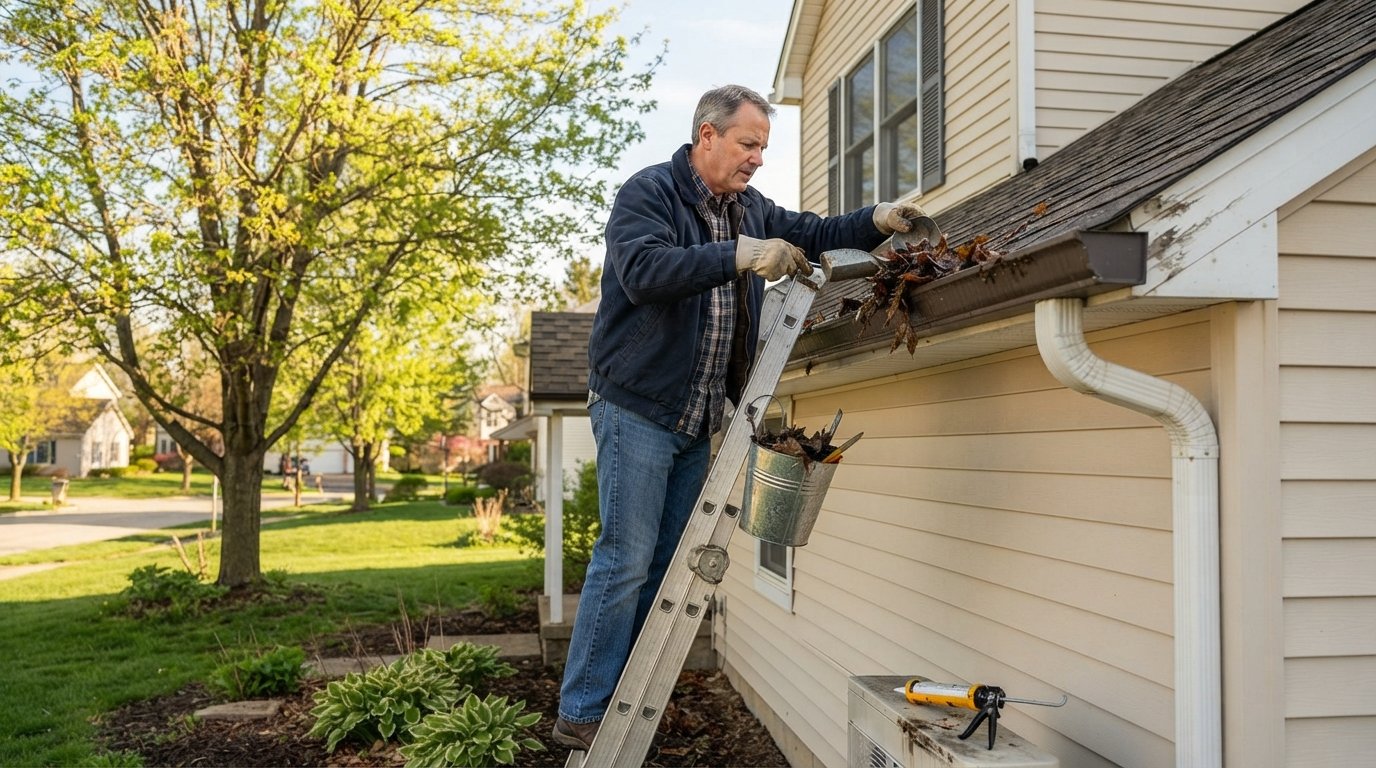
Clean gutters thoroughly, then test them with a garden hose. Water should flow freely to the downspout and exit several feet from the foundation. If it pools, backs up, or pours directly against the basement wall, you have a drainage problem that will worsen with spring rain. While you are on the ladder, check the roof edge for lifted flashing, cracked sealant around vents and chimneys, and loose or missing shingles. These small failures allow water to enter the roof deck, and the damage often stays hidden until a ceiling stain appears weeks later.
Not every roof issue is safe or wise to handle from a ladder. If you see multiple lifted shingles, granule loss across large areas, or daylight visible through roof boards in the attic, it is time to bring in a roofing professional. A contractor can assess whether you need targeted repairs or a larger replacement, and many homeowners find that bundling roof work with other exterior upgrades saves on scaffolding and labor. You can compare vetted roofing specialists in your area through Homes.Contractors, a directory that helps homeowners find qualified pros for roofing, gutters, and related exterior work.
Air Conditioning Startup and Filter Replacement: The Most Overlooked Summer Prep
Your air conditioning system has been idle for months, and the first hot day is the worst possible time to discover a problem. A proper spring startup is mostly about airflow and cleanliness. Begin by replacing the air filter, or cleaning it if you have a reusable model. A clogged filter forces the blower to work harder, reduces cooling efficiency, and can shorten the life of the compressor. If you have pets or live in a dusty area, plan to check the filter monthly through the cooling season.
Next, clear the outdoor condenser unit. Remove leaves, grass clippings, and debris from the top and sides, and make sure the unit has at least two feet of clearance on all sides. Gently rinse the condenser coils with a garden hose, but avoid high pressure, which can bend the fins. Inside the house, open the supply registers and confirm they are not blocked by furniture or rugs. A simple test run on a mild day will tell you whether the system starts promptly and blows cold air within a few minutes.
If the system short cycles, makes unusual noises, or fails to cool, do not keep resetting the thermostat. Those symptoms often point to refrigerant issues, failing capacitors, or electrical problems that require a licensed HVAC technician. Spring is also the right time to schedule a professional tune-up, which typically includes checking refrigerant levels, testing electrical components, and cleaning the condensate drain. Homeowners who plan to replace an aging system before summer can request quotes from HVAC contractors and compare options without pressure.
Exterior Caulking, Deck Boards, and Siding Inspections
The exterior envelope of your home takes a beating in winter, and small gaps that were harmless in dry weather become water entry points during spring storms. Walk the exterior and inspect caulk joints around windows, doors, and utility penetrations. Caulk that is cracked, peeling, or pulling away should be removed and replaced with an exterior-grade sealant rated for the material you are sealing. Pay particular attention to horizontal joints and the area where siding meets trim, since these collect water and are prone to freeze damage.
Deck boards deserve a close look. Soft spots, splintering, popped nails, and wobbly railings are common after a winter of moisture cycling. Test questionable boards with a screwdriver; if the tip sinks in easily, the wood has begun to rot and should be replaced. Check the ledger board where the deck attaches to the house, because failure there is a structural safety issue. Clean the deck surface, then apply a fresh coat of stain or sealer if water no longer beads on the wood.
Siding inspection is equally important. Look for loose panels, cracks, and areas where paint is blistering or peeling, which can indicate moisture trapped behind the surface. Wood siding may need scraping and repainting, while vinyl and fiber cement panels should be checked for loose fasteners and caulk failures. If you find widespread damage or are uncomfortable working at height, a professional exterior contractor can assess the siding and recommend repair or replacement. For homeowners planning a larger refresh, a pre-season inspection often reveals opportunities to combine painting, siding, and window upgrades into one project.
Outdoor Water Spigots, Irrigation, and Drainage Checks
Outdoor water systems are another area where winter damage hides in plain sight. Before you connect a hose, inspect each exterior spigot for cracks and leaks. A split pipe inside the wall may not show until you turn the water on, and by then it can spray into the wall cavity. Turn each spigot on slowly and watch for dripping at the valve and around the pipe penetration. If you have a frost-free sillcock, confirm that it drains properly and that the vacuum breaker is intact.
If you have an irrigation system, spring startup should include a zone-by-zone check. Look for heads that are broken, clogged, or spraying in the wrong direction, and adjust them so water lands on plants and lawn rather than on siding, walkways, or the foundation. Check the controller settings and replace the backup battery if needed. For drip systems, flush the lines and inspect emitters for clogs. A single misdirected head can waste hundreds of gallons over the season and contribute to basement moisture problems.
Drainage checks complete the water management picture. Confirm that the ground slopes away from the foundation on all sides, and fill any low spots where water pools after rain. Clean window wells and make sure their covers are secure. Inspect sump pump operation by pouring water into the pit and watching the float activate the pump; if the pump runs weakly or not at all, replace it before the rainy season. Downspout extensions should carry water at least four to six feet from the house, and splash blocks should be positioned to prevent erosion.
Seasonal Maintenance as Part of a Larger Renovation Plan
Spring maintenance is not just about avoiding repairs; it is also an opportunity to assess whether your home is ready for the upgrades you have been considering. A roof that needs patching, siding that is failing, or an HVAC system that is limping toward replacement are all signals that a planned renovation may deliver more value than another season of patchwork. Homeowners who document issues during the spring walkthrough can prioritize projects by urgency and budget, rather than reacting to emergencies in July.
If your checklist uncovers work that is beyond routine maintenance, take time to gather multiple quotes and compare scope, timeline, and warranty terms. A platform that connects homeowners with pre-vetted contractors can shorten the search and help you avoid unlicensed operators. Whether you need a roofer, an HVAC technician, a painter, or a general remodeler, the right professional will explain what they found, what they recommend, and what it will cost before work begins.
Finally, keep a simple record of what you inspect and when. Note the date you replaced filters, the condition of the caulk lines, and any repairs you deferred. That record becomes a useful reference next spring and a valuable document if you ever sell your home. A well-maintained house is easier to renovate, cheaper to insure, and more comfortable to live in, and the spring checklist is the simplest way to keep it that way.