
Refinishing vs. Replacing Hardwood Floors: Cost and ROI
Compare hardwood floor refinishing versus replacement cost and roi, including sanding limits and resale impact. Call (833)-365-8755 for expert guidance.

By Maya Adler
Learn more about Hardwood Floor Refinishing for guides, costs, and what to expect.
Compare Hardwood Floor Refinishing Pros Near You

Enter your ZIP code to compare top-rated local professionals and request free quotes.
Your hardwood floors have lost their luster, and you are weighing two options: bring them back to life with a sand and refinish, or tear them out and start fresh. The decision affects your wallet today and your home's resale value tomorrow. Understanding the real numbers behind hardwood floor refinishing versus replacement cost and roi helps you choose the path that protects your investment and your sanity.
Refinishing typically costs a fraction of replacement, but it is not always possible. Replacement offers a clean slate and new materials, yet it carries a higher price tag and a different return on investment. This guide breaks down the costs, the structural limits, and the resale math so you can decide with confidence.
The Core Cost Comparison: Refinishing vs. Replacement
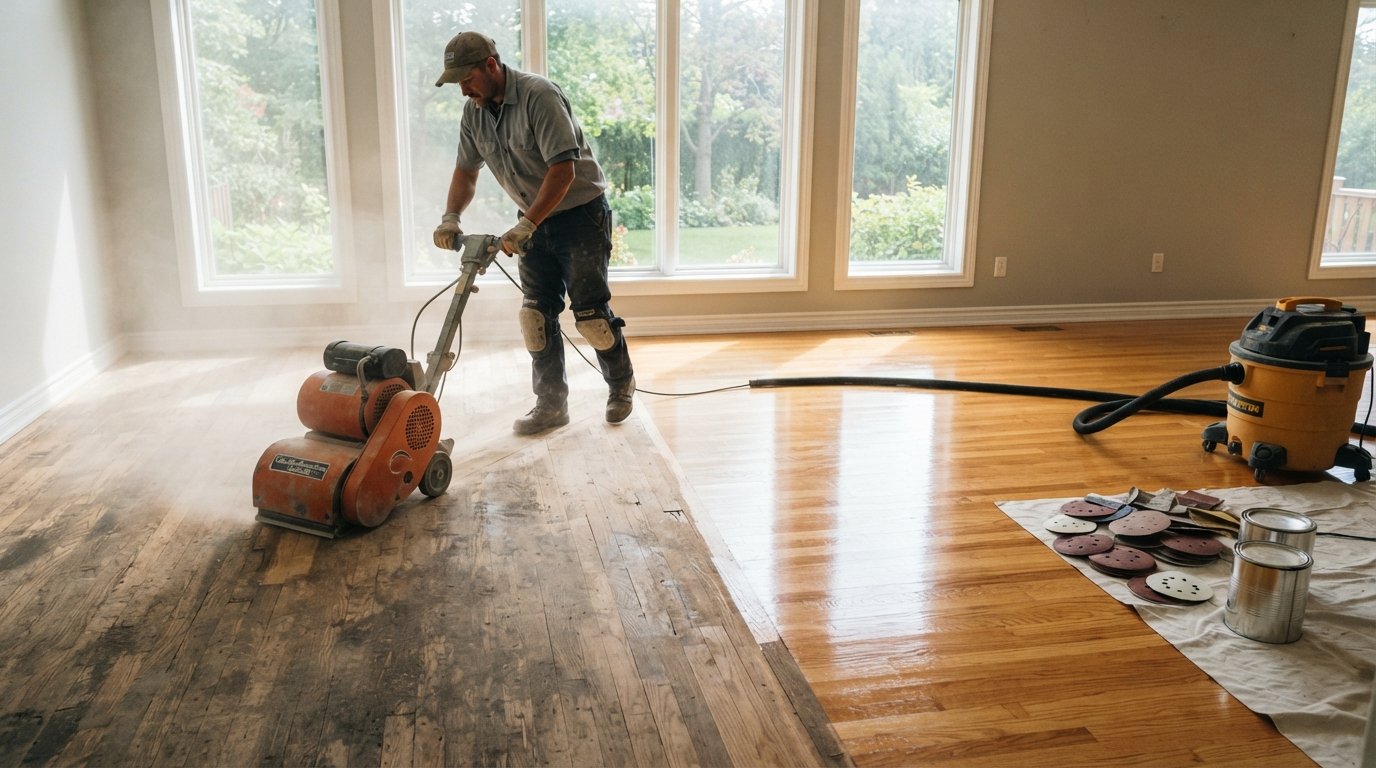
Refinishing involves sanding down the existing finish and wood surface, then applying new stain and protective coats. Replacement means removing the old flooring entirely and installing new hardwood planks. The cost gap is significant and stems from labor, materials, and disposal.
On average, refinishing a hardwood floor costs between $3 and $8 per square foot. Replacement runs from $8 to $15 per square foot or more, depending on the wood species and installation complexity. For a 500 square foot room, that translates to roughly $1,500 to $4,000 for refinishing versus $4,000 to $7,500 for replacement. The savings from refinishing often exceed 50 percent.
Several factors shift these ranges. Refinishing a floor with intricate patterns or tight spaces takes longer and costs more. Replacement costs rise with exotic woods, custom widths, or subfloor repairs. Disposal fees for old flooring add another $200 to $500 to the replacement bill. If you are comparing quotes, ask each contractor to itemize labor, materials, and disposal so you can see where the money goes.
For a deeper dive into the step-by-step process and timing, our guide on hardwood floor refinishing cost, steps, and timing walks you through what to expect from start to finish.
How Many Sanding Cycles Can Your Floor Take?
Solid hardwood floors have a wear layer, the top portion of wood above the tongue and groove. Each sanding cycle removes a small amount of that layer, typically 1/32 to 1/16 of an inch. Most solid floors can be refinished three to five times over their lifetime. Engineered hardwood, which has a thinner veneer, may only tolerate one or two sandings, and some cannot be refinished at all.
Before you commit to refinishing, have a flooring professional assess the remaining wear layer. They will check for uneven sanding from previous jobs and measure the thickness at several points. If the wear layer is too thin, sanding will expose the tongue and groove, leading to splintering and premature failure. In that case, replacement is the only durable option.
Signs that your floor may be near the end of its refinishing life include visible grooves between planks, a spongy feel underfoot, and dark stains that do not sand out. A professional can tell you how many cycles remain and whether a light screen and recoat (a less aggressive option) might buy you a few more years.
Dust Containment and Finish Options for Refinishing
Dust is the top concern for homeowners considering refinishing. Traditional sanding creates fine dust that settles on every surface. Modern dust containment systems capture up to 98 percent of particles at the source, using HEPA filters and negative air machines. Ask your contractor whether they use a dust containment system; it makes the difference between a livable home and a week of cleaning.
Finish options also affect cost and durability. Water-based polyurethane dries faster, has lower odor, and remains clear over time. Oil-based polyurethane takes longer to cure but offers a warmer amber tone and similar durability. Conversion varnish and hardwax oil are premium options with distinct looks and maintenance requirements. Your choice of finish adds $1 to $3 per square foot to the refinishing cost.
Stain choices range from natural clear to deep espresso, and custom mixes cost more. If you want to change the color of your floors, refinishing is the only way to do it without replacement. Replacement lets you choose a new wood species and plank width, which can be a selling point if the existing floor is dated.
Resale Impact and Return on Investment
Hardwood floors are a top feature for home buyers. Refinishing restores that feature at a lower cost, which often translates to a higher return on investment. According to remodeling industry data, refinishing a hardwood floor recoups 70 to 80 percent of its cost at resale. Replacement recoups 60 to 70 percent, and the gap widens when the new floor is a lower grade than the rest of the home.
Buyers pay for appearance and condition. A freshly refinished floor looks new, and buyers rarely ask whether it is original or replaced. The perceived value is similar, but your out-of-pocket cost is much lower with refinishing. That said, replacement can be worth it if the existing floor is damaged beyond repair or if you are matching new flooring in an addition. In those cases, the ROI comes from consistency and a warranty on new materials.
Consider your timeline. If you plan to sell within a year, refinishing delivers the best bang for your buck. If you plan to stay for a decade, replacement may make sense if the floor is structurally compromised. Either way, document the work with before and after photos and keep receipts for warranty and disclosure purposes.
Signs of Structural Damage That Rule Out Refinishing
Not every floor can be saved. Structural damage compromises safety and durability, and sanding can make it worse. Watch for these red flags:
- Cupping or crowning: planks that curve up or down across the width, often from moisture imbalance. Severe cases cannot be sanded flat without removing too much wood.
- Widespread water damage: dark stains, soft spots, or mold growth that penetrates the wood. Refinishing only hides the surface, and the damage continues underneath.
- Loose or squeaky boards: widespread movement indicates subfloor or fastener failure. Sanding a moving floor leads to uneven results.
- Termite or insect damage: hollow-sounding boards and frass mean the wood is compromised. Replacement is necessary to restore structural integrity.
- Extensive deep scratches and gouges: if damage reaches the tongue and groove, sanding cannot fix it without weakening the floor.
If you notice any of these signs, get a professional inspection before you decide. A contractor can tell you whether a spot repair is possible or whether replacement is the safer investment. Ignoring structural issues leads to costly repairs later and can affect your home's appraisal.
Making the Decision: A Practical Framework
Use a simple scoring system to compare your options. List the factors that matter most: cost, timeline, dust, resale value, and condition. Rate each factor on a scale of one to five for both refinishing and replacement, then add up the scores. This keeps emotion out of the decision and highlights trade-offs.
For most homeowners with solid hardwood in decent condition, refinishing wins on cost and ROI. If the floor has been sanded multiple times, shows structural damage, or you want a different wood species, replacement is the better long-term choice. Whichever route you choose, get at least three quotes from licensed contractors and ask about warranties, dust control, and finish options.
Finding a qualified flooring contractor does not have to be a hassle. Platforms like Homes.Contractors connect homeowners with pre-vetted professionals across the United States. You can compare quotes, verify licenses, and read reviews before you commit. For a faster match, 180 Remodel offers a free service that pairs you with local flooring experts in minutes. Just share your project details and receive customized quotes from multiple contractors.
Whichever path you choose, act before small problems become big expenses. A floor that is refinished on time lasts decades, and a well-planned replacement adds lasting value. With clear numbers and a professional assessment, you can move forward with confidence and protect the investment you have already made in your home.