
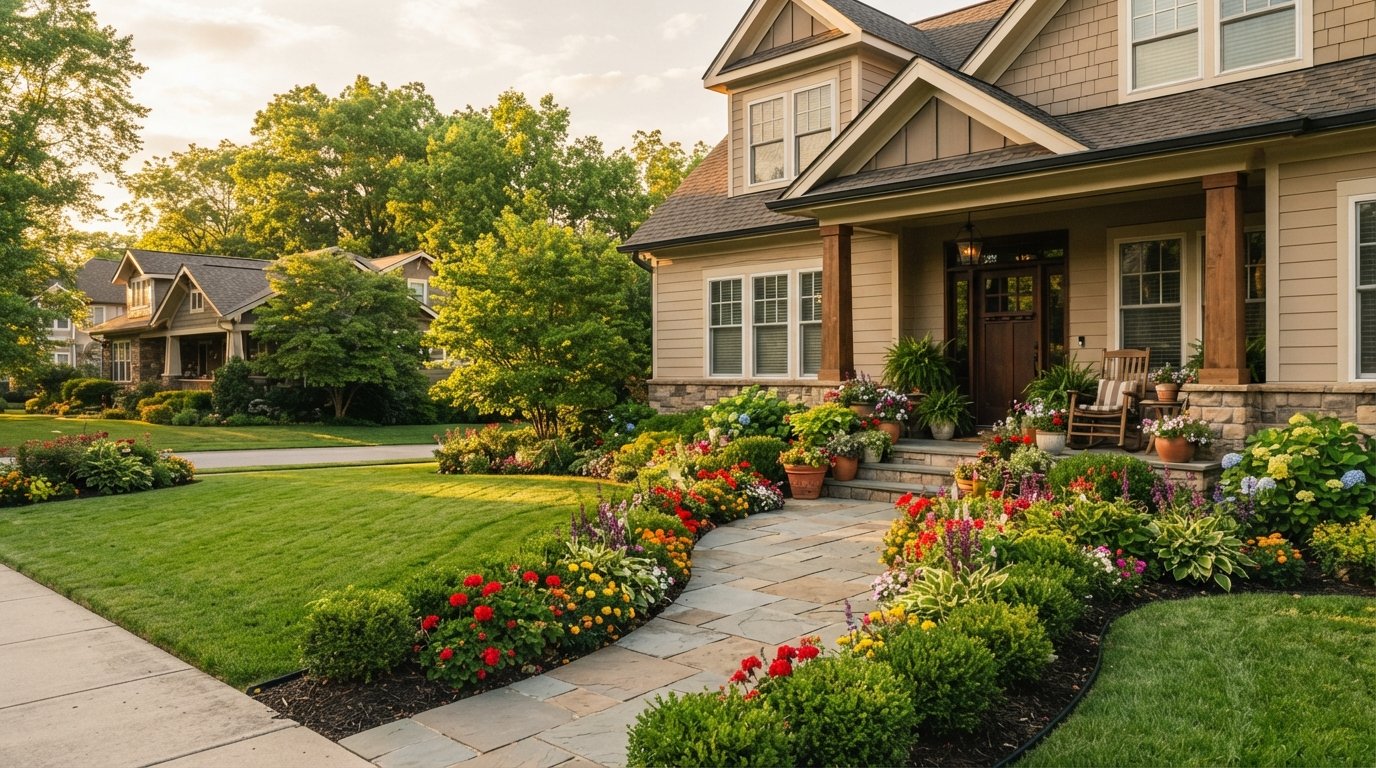
Front Yard Landscaping Curb Appeal Value: What You Gain
Front yard landscaping curb appeal value starts at the curb. Call 8333658755 to compare local landscaping and hardscaping quotes today.

By Alex Carter
Learn more about Outdoor Landscaping and Design for guides, costs, and what to expect.
Compare Outdoor Landscaping and Design Pros Near You

Enter your ZIP code to compare top-rated local professionals and request free quotes.
Your front yard speaks before you do. Long before a visitor reaches your door, the lawn, walkway, and plantings have already told a story about the people who live there. That story shapes how much someone offers for your home, how quickly it sells, and even how your neighbors treat the street. For homeowners planning exterior upgrades, understanding the relationship between front yard landscaping, curb appeal, and real property value is the difference between spending money and investing it. This guide breaks down what actually drives value, what buyers notice first, and how to plan a project that pays you back.
Why Curb Appeal Is the Highest-Return First Impression
Real estate agents repeat the same observation for a reason: buyers decide within seconds. A well-maintained front yard signals that the entire home has been cared for, from the roof to the foundation. A neglected yard suggests deferred maintenance, and buyers mentally subtract thousands of dollars before they ever step inside. That mental math is the core of front yard landscaping curb appeal value. It is not decoration. It is a pricing signal.
Studies and real estate industry surveys consistently show that homes with strong curb appeal sell faster and closer to asking price than comparable homes with weak exterior presentation. The effect is strongest in competitive markets where buyers compare several similar properties in a single weekend. When two homes have identical interiors, the one with a tidy, inviting front yard wins the offer almost every time. Landscaping becomes the tiebreaker, and tiebreakers decide price.
There is also a psychological component worth understanding. A clear path to the front door, trimmed hedges, and a healthy lawn reduce perceived risk. Buyers feel welcomed rather than warned. That emotional response translates directly into dollars, because a buyer who feels good about the exterior is far less likely to negotiate aggressively on the interior. If you want to go deeper into the design side of this topic, our guide on curb appeal landscaping design principles explains how layout, color, and proportion influence buyer perception.
How Much Value Does Front Yard Landscaping Actually Add?
Homeowners want a number, and while results vary by region, climate, and existing condition, the ranges are well documented. Professional landscaping projects typically return a significant portion of their cost at resale, and in some markets the return exceeds the initial investment because the work also shortens time on market. A faster sale saves carrying costs, mortgage payments, and the stress of repeated showings, which is value that never appears on an appraisal but absolutely shows up in your bank account.
The biggest gains come from improving the elements buyers see from the street: the lawn, the walkway, the front entry, and the overall tidiness of the space. Cosmetic fixes that cost a few hundred dollars can shift a home into a higher pricing tier when they eliminate obvious negatives like dead grass, overgrown shrubs, or a cracked walkway. Larger hardscape projects, such as a stone path or a defined planting bed, add more but take longer to pay back.
Consider the following improvements, which tend to deliver the strongest value relative to their cost:
- Lawn restoration and regular maintenance, which fixes the single most visible element of the yard
- Fresh mulch and edged planting beds, which create a clean, maintained look for minimal cost
- Pruned and shaped shrubs, especially around windows and the entry, to improve light and sightlines
- A clearly defined walkway, repaired or replaced, to guide the eye toward the front door
- Seasonal color from potted plants or flower beds near the entry, which adds warmth and personality
Each of these items works on the same principle: remove anything that looks neglected, then add something that looks intentional. Buyers are not evaluating your plant selection. They are evaluating whether the property has been loved. That is why a modest budget spent strategically often outperforms a large budget spent randomly.
Landscaping Projects Ranked by Return and Effort
Not every project deserves the same priority. Some deliver immediate visual impact for a weekend of work, while others require permits, contractors, and weeks of construction. Ranking projects by return on effort helps you sequence your spending so the yard improves at every stage rather than waiting for one big reveal.
Start with maintenance and cleanup. This category includes mowing, weeding, trimming, mulching, and removing dead plants or debris. It is inexpensive, fast, and it protects the value of everything else you do. A beautiful new walkway surrounded by weeds looks worse than a plain walkway surrounded by clean beds. Maintenance is the foundation, and skipping it undermines every other investment.
Next come cosmetic upgrades, which include fresh mulch, new edging, updated house numbers, a new mailbox, and a painted or stained front door. These are the details buyers notice without realizing they notice them. They cost little and photograph extremely well, which matters because most buyers see your home online first. A strong listing photo is often the entire reason a buyer schedules a showing.
Then come structural improvements such as walkways, retaining walls, lighting, and irrigation. These cost more but solve problems that cosmetic fixes cannot hide. A cracked, uneven walkway is a safety concern and a visual flaw, and replacing it improves both function and appearance. Low-voltage path lighting extends your home's usable evening hours and adds security, a feature buyers actively look for. Irrigation systems keep plantings alive through dry summers, protecting the investment you already made.
Finally come large-scale redesigns: regrading, new plantings throughout, water features, and full hardscape plans. These can add substantial value in the right market, especially in upscale neighborhoods where buyers expect a finished landscape. However, they also carry the highest cost and the longest timeline, so they make the most sense when you plan to stay in the home for several years or when the property's price point justifies the investment.
What Buyers Notice First, and What They Ignore
Understanding buyer attention is the fastest way to spend wisely. When a buyer pulls up to your home, their eyes follow a predictable path: the lawn, the walkway, the front door, then the windows and roofline. Anything that interrupts that path, such as a dead patch of grass, an obstructed walkway, or a cluttered porch, becomes a distraction that lowers perceived value. Anything that smooths the path increases it.
Buyers largely ignore plant names, rare specimens, and intricate garden design unless they are already gardening enthusiasts. They do notice color, symmetry, and cleanliness. A simple, well-kept yard with a few strong focal points outperforms a complex garden that looks untended. This is good news for homeowners on a budget: you do not need an elaborate design, you need a clear, clean, and welcoming one.
Lighting deserves special mention because it works around the clock. During evening showings and drive-bys, landscape lighting highlights your home's best features and makes the property feel safe. Solar path lights require no wiring and cost little, while low-voltage systems offer brighter, more consistent results. Either way, lighting is one of the few improvements that improves both daytime and nighttime curb appeal.
Water management is another area buyers notice indirectly. A yard that drains poorly leaves muddy patches, stains walkways, and can signal foundation risk. Fixing grading and adding drainage solves a real problem while improving appearance, which is the ideal combination for value. When a project improves function and form at the same time, it rarely loses money.
Budgeting Your Front Yard Project
A realistic budget keeps the project on track and prevents the common mistake of starting more work than you can finish. An unfinished project looks worse than no project at all, and buyers interpret half-finished landscaping as a red flag. Plan the entire scope before you break ground, including a contingency for surprises like poor soil, hidden roots, or drainage issues.
A simple framework helps allocate funds. Most homeowners benefit from spending roughly half the budget on maintenance and cleanup, a quarter on cosmetic details, and the remainder on one or two structural improvements that solve real problems. This sequencing ensures the yard looks better after every phase and never sits in a visibly incomplete state. If you plan to hire help, gathering multiple quotes is essential, and platforms like USremodel connect homeowners with independent contractors for landscaping, hardscaping, and related exterior work, which makes comparing bids far easier than calling companies one by one.
Timing also affects cost. Landscaping demand peaks in spring, when contractors are busiest and prices reflect it. Scheduling work in late summer or early fall often means better availability and more negotiating room. Plantings installed in fall also establish roots before winter, which reduces replacement costs next year. Thinking in seasons rather than weekends can save hundreds of dollars on the same project.
Finally, document everything. Keep receipts, photos, and plant lists. When you sell, being able to show a maintained landscape with records reassures buyers and supports your asking price. Landscaping is one of the few home improvements where the paperwork itself adds credibility to the value claim.
Mistakes That Destroy Curb Appeal Value
The fastest way to lose value is to make the yard look busy, neglected, or confusing. Overplanting is a common error: small shrubs planted close together look fine for one season, then crowd each other and require constant pruning. Buyers see maintenance burden rather than beauty. Choosing plants that match your climate and the mature size of the space prevents this entirely.
Another mistake is ignoring the home's architecture. A cottage-style garden in front of a modern home looks mismatched, and buyers feel the discord even if they cannot name it. The landscape should frame the house, not compete with it. Repeating colors and materials from the home's exterior, such as matching the walkway to the roof or trim, creates visual harmony that reads as quality.
Neglecting maintenance after installation is the most expensive mistake of all. A new garden that is not watered, weeded, or pruned reverts to a neglected look within months, erasing the investment. If you cannot maintain the plantings yourself, budget for ongoing service or choose low-maintenance options like native grasses, ground cover, and drought-tolerant perennials. The best landscape is the one that still looks good in year three.
Planning the Project With the Right Help
Some homeowners handle front yard improvements themselves, and for cleanup, mulch, and container planting, that is entirely reasonable. Structural work, however, involves grading, drainage, electrical for lighting, and sometimes permits, and mistakes in these areas are expensive to correct. Hiring qualified professionals protects both your budget and your home's value.
The challenge is finding contractors you can trust without spending weeks making calls. A matching service simplifies this by collecting your project details once and connecting you with vetted professionals who provide customized quotes. You compare options, ask questions, and choose the best fit, all without pressure. For homeowners who want to move quickly while the weather is favorable, that efficiency is worth as much as the quotes themselves.
Before hiring anyone, confirm licensing, insurance, and references, and get the scope of work in writing. A clear contract prevents disputes and ensures the finished yard matches what you approved. Whether you are refreshing a few beds or rebuilding the entire front landscape, the goal is the same: a yard that welcomes people in and tells buyers the home has been cared for.
Front yard landscaping curb appeal value is not a mystery. It is the sum of small, deliberate choices: clean lines, healthy plants, clear paths, good lighting, and consistent maintenance. Spend where buyers look, fix what looks neglected, and let the yard do the selling for you. Start with a plan, budget for the whole project, and bring in qualified help for the work that requires it. Your front yard is the first thing people see, and with the right approach, it can be the thing that closes the deal.
Learn more about Outdoor Landscaping and Design for guides, costs, and what to expect.
Compare Outdoor Landscaping and Design Pros Near You
Enter your ZIP code to compare top-rated local professionals and request free quotes.