
How to Prepare a Home for a Remodel While Living in It
Learn how to prepare a home for a remodel while living in it, from setting up temporary spaces to managing dust and pets. Call (833)-365-8755 for contractor quotes.

Learn more about Home Remodeling for guides, costs, and what to expect.
Compare Home Remodeling Pros Near You

Enter your ZIP code to compare top-rated local professionals and request free quotes.
You have signed the contract, picked the finishes, and now the real challenge begins: living through the chaos of a remodel. Whether you are updating a kitchen, adding a bathroom, or tackling a whole-house renovation, staying in your home during construction can save money on temporary housing but requires careful planning. The dust, noise, and constant parade of workers can test your patience, but with the right strategies, you can minimize disruption and keep your sanity intact. This guide will walk you through how to prepare a home for a remodel while living in it, from setting up temporary spaces to managing pets and schedules.
Set Up a Temporary Kitchen and Laundry Area
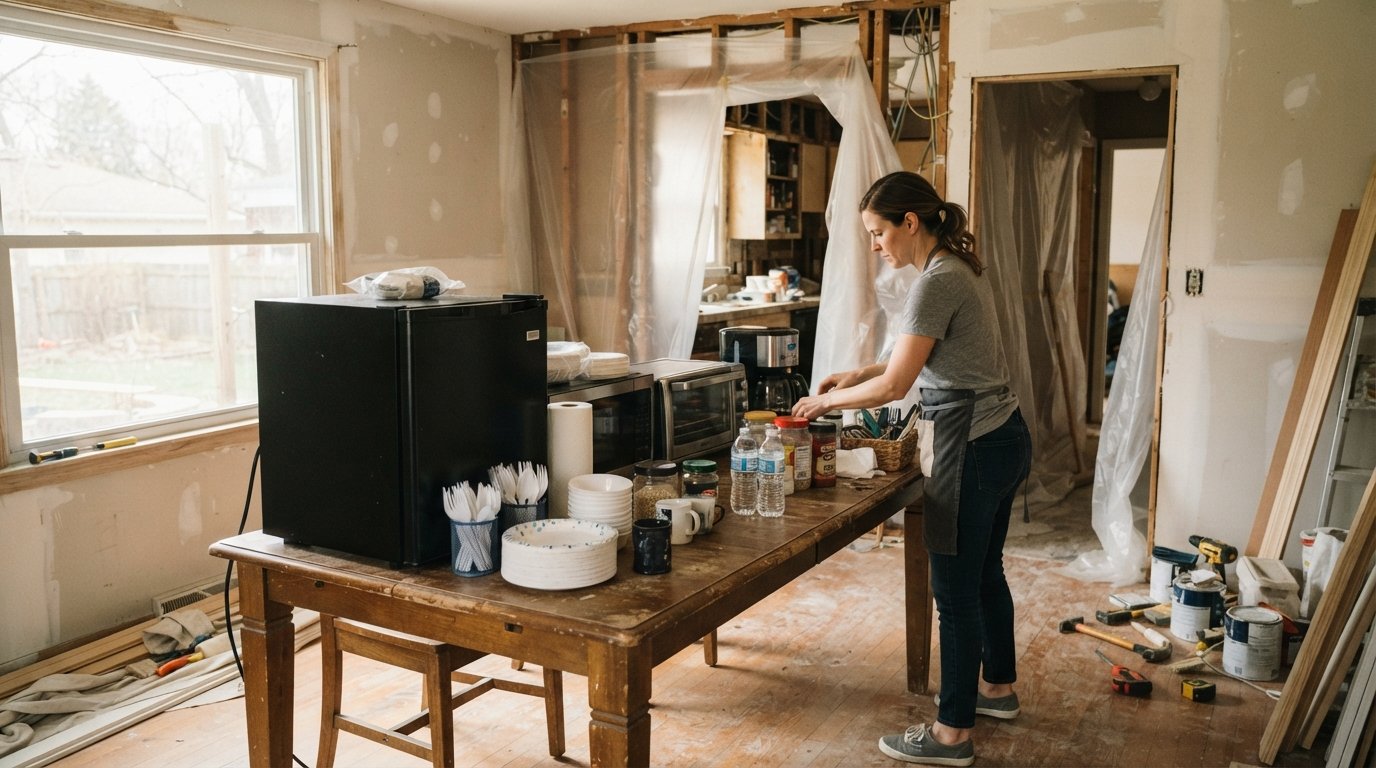
When your kitchen is out of commission, eating out quickly becomes expensive and unhealthy. Creating a temporary kitchen in another room, such as a dining area, basement, or even a garage, can make a world of difference. Start by identifying a space with access to water and electricity. A utility sink or a nearby bathroom can serve as your washing station. Set up a mini-fridge, microwave, toaster oven, and coffee maker to handle basic cooking needs. Stock it with disposable plates, utensils, and a few essential pots and pans. Remember to keep cleaning supplies handy.
Laundry can also be disrupted if your washer and dryer are in the path of renovation. If possible, relocate laundry appliances to a temporary spot, or plan to use a nearby laundromat for the duration. If you have a laundry sink, it can double as a prep area. Consider creating a checklist to ensure you have all necessary items in your temporary kitchen and laundry zones before construction begins. For more ideas on setting up functional temporary spaces, you might find our guide on living room redesign helpful, as it covers creative use of space during transitions.
Control Dust, Protect Floors, and Plan Ventilation
Dust is the uninvited guest of any remodel. It seeps into every crevice and can damage electronics and furnishings. To contain dust, use plastic sheeting and zippered doors to seal off work areas. Negative air pressure machines, which exhaust air outside, can prevent dust from spreading. Cover floors with heavy-duty rosin paper or plywood to protect them from foot traffic and debris. Seal off HVAC vents in construction zones with plastic and tape to prevent dust from circulating through your home's ductwork.
Proper ventilation is also crucial, especially when painting, sanding, or using chemicals. Open windows and use fans to direct fumes outside. If the weather permits, create a cross-breeze by opening windows on opposite sides of the house. For projects that generate a lot of fumes, consider scheduling them for when you can be away or when the family can stay with friends. Always ensure that workers use appropriate respiratory protection and that you have carbon monoxide detectors installed if gas-powered equipment is used.
Schedule Work Around Family Routines
Construction schedules rarely align perfectly with family life, but you can minimize conflict by communicating your needs to your contractor upfront. Discuss the times when workers will arrive and leave, and request that noisy activities, such as demolition or drilling, be scheduled during hours when the family is typically away at work or school. If you have young children, nap times are sacred, so ask for quiet work during those windows. For remote workers, set up a designated office space away from the construction zone and use noise-canceling headphones.
Create a family calendar that includes the construction schedule and important family events. Share it with your contractor so they can plan accordingly. If there are days when you absolutely need peace and quiet, such as for a work presentation or a child's exam week, negotiate those in advance. Flexibility on both sides will go a long way. Also, consider setting up a communication protocol: a daily check-in or a shared online document where the contractor can note progress and upcoming disruptions. This keeps everyone informed and reduces surprises.
Manage Pets and Utility Shutoffs
Pets are often stressed by the noise and strangers in their home. Create a safe, quiet room for them with their bed, food, water, and toys, and keep the door closed. Inform workers that pets are not allowed in that area. If your pet is particularly anxious, consider doggy daycare or having a friend take them for the day during major disruptions. Ensure that pets cannot escape through open doors or windows, and keep them away from tools and hazardous materials.
Utility shutoffs are inevitable during many remodels. Plan for periods without water, electricity, or gas. For water shutoffs, fill bathtubs and buckets for flushing toilets and washing hands. Have bottled water on hand for drinking and cooking. For electrical shutoffs, charge devices in advance and have battery-powered lanterns and flashlights ready. If gas is shut off, plan for alternative cooking methods and ensure carbon monoxide detectors are working. Coordinate with your contractor to schedule shutoffs at convenient times, such as early morning before everyone leaves for the day.
Create a Communication and Logistics Plan
Clear communication with your contractor is the backbone of a smooth remodel. Before work begins, establish a primary point of contact and a backup. Set up a method for daily updates, whether via text, email, or a project management app. Discuss how change orders will be handled and who has authority to approve them. Keep a folder with all contracts, permits, and contact information in a safe place.
Logistics also involve managing deliveries and waste removal. Designate a drop zone for materials and a plan for debris removal. Ensure that workers have access to a bathroom (preferably not your only one) and that they know your expectations for cleanliness. If you are using a contractor matching service like ContractorHomeQuotes, they can help you find professionals who are experienced in occupied remodels and understand the importance of minimizing disruption. A good contractor will work with you to create a plan that respects your daily life.
Finally, prepare a survival kit for the duration: paper plates, plastic utensils, a cooler, and a list of nearby takeout options. Expect some chaos, but remember that the end result, a beautiful new space, is worth the temporary inconvenience. By following these steps, you can navigate the remodel while living in your home with less stress and more confidence.