
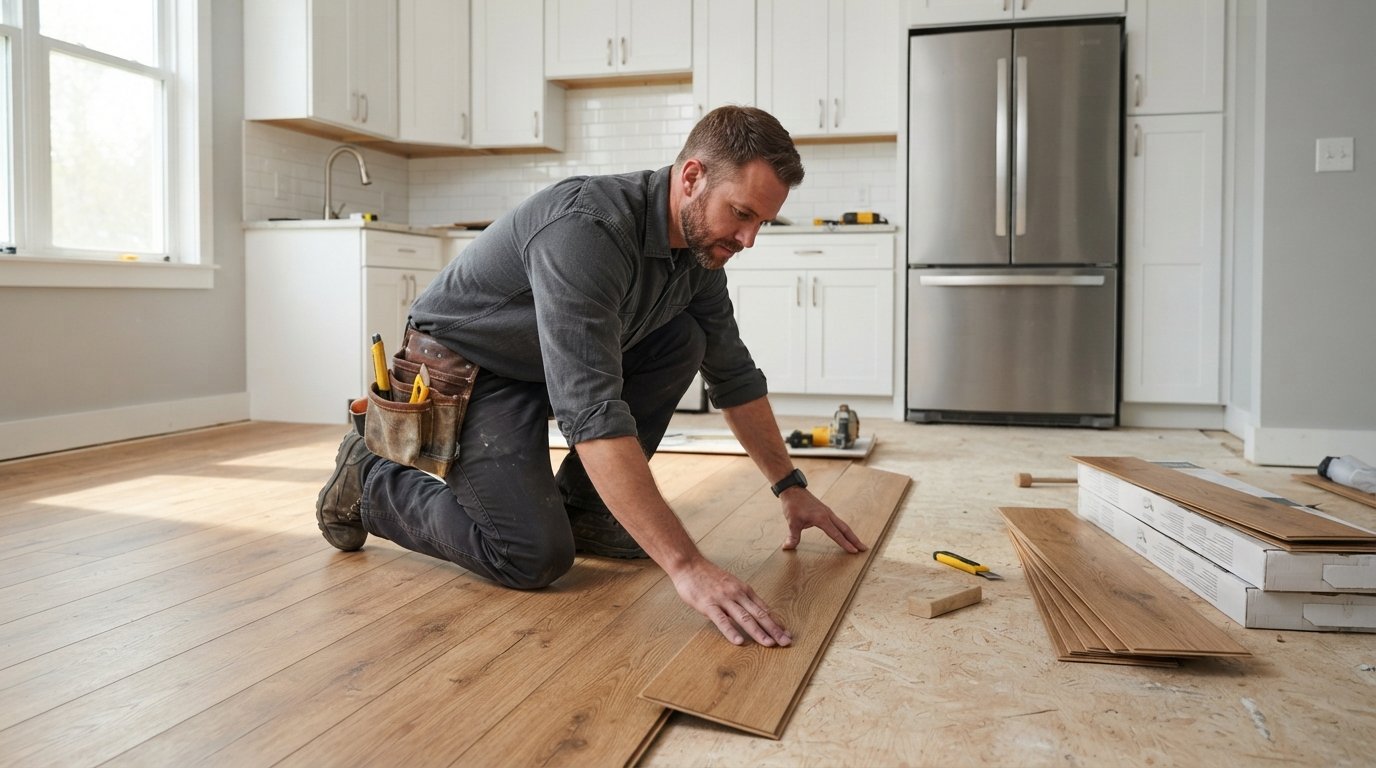
Vinyl Plank Flooring: Cost, Durability, and Style in 2026
Vinyl plank flooring offers waterproof durability, realistic wood looks, and easy maintenance, making it a top choice for modern homes. Discover cost, installation, and benefits.

By Justin Parker
Learn more about Floor Installation or Replacement for guides, costs, and what to expect.
Compare Floor Installation or Replacement Pros Near You

Enter your ZIP code to compare top-rated local professionals and request free quotes.
Imagine a flooring option that delivers the warm, natural look of hardwood but shrugs off spills, scratches, and daily chaos without a second thought. That is the promise of modern vinyl plank flooring, and it is why this material has become one of the most requested upgrades in homes across the country. Whether you are renovating a rental property, updating a busy family room, or finally tackling that dated kitchen, vinyl plank offers a compelling mix of beauty, resilience, and affordability that few other surfaces can match. For many homeowners, the question is no longer whether to choose vinyl plank, but how to select the right one and ensure it is installed properly for years of reliable service.
In this guide, we will break down everything you need to know about vinyl plank flooring, from the differences between rigid core and traditional options to realistic cost expectations and proven installation strategies. We will also help you decide whether this is the right investment for your home and how to work with a professional contractor to get the best possible result. By the end, you will have a clear roadmap for transforming your floors with confidence, avoiding common pitfalls, and protecting your investment for the long haul.
Why Vinyl Plank Flooring Has Become a Top Choice
The surge in popularity of vinyl plank flooring is not a passing trend. It is rooted in a simple truth: homeowners want floors that look high-end without demanding high-end maintenance. Unlike natural hardwood, which can warp, dent, and require periodic refinishing, vinyl plank is engineered to withstand the realities of everyday life. It is 100% waterproof, making it an ideal candidate for kitchens, bathrooms, laundry rooms, and basements where moisture is a constant concern. This single feature alone has converted countless homeowners who were previously hesitant to use wood-look products in wet areas.
Beyond its water resistance, vinyl plank excels in comfort and noise reduction. Its multi-layer construction includes a rigid core that provides dimensional stability, and many products come with an attached underlayment that softens footsteps and muffles sound between floors. For households with children, pets, or open-plan living spaces, this translates into a noticeably quieter, more comfortable home. The surface texture has also evolved dramatically, with embossed grain patterns and matte finishes that closely mimic the feel of real wood, making it difficult to distinguish from the genuine article at a glance.
Comparing Core Types: WPC, SPC, and Traditional Vinyl
When you start shopping for vinyl plank flooring, you will encounter three main core types, each with distinct characteristics. The most common are WPC (wood plastic composite) and SPC (stone plastic composite), which are both rigid core products. WPC features a foamed wood-plastic core that is lightweight and exceptionally quiet underfoot, though slightly less dense than SPC. SPC, on the other hand, contains a limestone composite core that makes it heavier, harder, and more resistant to impact and temperature fluctuations. Traditional vinyl plank, sometimes called LVP (luxury vinyl plank), is flexible and typically thinner, making it easier to cut but less rigid and stable on imperfect subfloors.
Your choice between these cores should depend on your specific conditions. For basements or rooms with high humidity, SPC is often the safer bet because it resists expansion and contraction better than WPC. For multi-story homes where noise reduction is a priority, WPC's softer core may be more appealing. Traditional vinyl is a budget-friendly option that works well in low-traffic areas with very flat subfloors, but it does not offer the same level of durability or comfort as rigid core alternatives. As a general rule, investing in a quality SPC or WPC plank will provide a better long-term return, especially in high-usage areas.
Key Benefits That Sway Homeowners
The decision to install vinyl plank flooring often comes down to a handful of standout benefits that align with modern living. Here are the most compelling reasons homeowners are making the switch:
- Waterproof Performance: Most vinyl plank is 100% waterproof, not just water-resistant, so spills, pet accidents, and mopping are never a problem.
- Scratch and Dent Resistance: The durable wear layer protects against scratches from pet claws, furniture drag, and dropped items, keeping floors looking newer for longer.
- Realistic Wood Aesthetics: High-definition printing and embossed textures replicate the look and feel of oak, maple, walnut, and other hardwoods with remarkable accuracy.
- Comfort and Noise Reduction: Rigid cores and attached underlayments provide a softer step and help reduce echo and impact noise compared to tile or hardwood.
- Easy Maintenance: Sweeping and occasional damp mopping are all that is needed to keep vinyl plank floors clean, no waxing or special cleaners required.
These advantages make vinyl plank an excellent choice for busy households, rental properties, and anyone who values low-maintenance living without sacrificing style. In our guide on homes with vinyl siding, we highlight how vinyl products can enhance a home's exterior durability and curb appeal, and the same principle applies indoors with flooring. The material's resilience is a major selling point, especially for families with young children or active pets who need a floor that can keep up with their lifestyle.
What Does Vinyl Plank Flooring Cost in 2026?
Budget is often the deciding factor for any renovation, and vinyl plank flooring offers one of the most attractive price-to-value ratios in the market. On average, homeowners can expect to pay between $2 and $7 per square foot for the material alone, depending on the brand, core type, and wear layer thickness. Premium SPC products with enhanced textures and longer warranties may push the cost higher, but even these remain significantly cheaper than solid hardwood, which can range from $8 to $15 per square foot. This cost advantage is one of the primary reasons vinyl plank has captured such a large share of the flooring market.
When budgeting for your project, you must also factor in installation costs, which typically range from $2 to $5 per square foot if you hire a professional. While DIY installation is possible, especially with click-lock systems, a professional contractor ensures your subfloor is properly prepared, which is critical for the longevity of your new floor. Additional costs may include underlayment (if not attached), transition strips, baseboard removal and replacement, and subfloor leveling or repair. To get an accurate estimate for your specific home, it is wise to request quotes from multiple contractors, and that is where a service like 180 Remodel can simplify the process by connecting you with vetted flooring specialists in your area.
Installation Methods: Click-Lock vs. Glue-Down
Understanding the installation process is essential, as it affects both cost and performance. The two most common methods for installing vinyl plank flooring are click-lock (floating) and glue-down. Click-lock planks feature a tongue-and-groove system that snaps together without adhesive, allowing the floor to float over the subfloor with an expansion gap around the edges. This method is popular for DIYers because it is relatively straightforward and does not require any special tools or drying time. It also allows for easier replacement of individual planks if one becomes damaged later.
Glue-down installation, as the name implies, involves applying adhesive to the subfloor and pressing the planks into place. This method is often preferred for commercial spaces or areas with heavy rolling loads because it creates a more permanent bond and eliminates any potential for movement. However, it requires a perfectly smooth, clean subfloor and is more labor-intensive, which typically increases installation costs. For most residential applications, click-lock is the more practical and cost-effective choice, especially if you plan to install the floor over existing hard surfaces like tile or concrete. Whichever method you choose, proper subfloor preparation is non-negotiable; any bumps or debris will telegraph through the planks and compromise the finished look.
A Room-by-Room Guide to Using Vinyl Plank
One of the greatest strengths of vinyl plank flooring is its versatility across different spaces. In the kitchen, where spills and dropped plates are inevitable, its waterproof nature and cushioned underfoot feel make it a welcome alternative to cold, hard tile. In bathrooms, it eliminates the worry of water seeping into seams and causing damage, provided the floor is properly sealed at the edges. Basements, which are notoriously prone to moisture and humidity fluctuations, benefit enormously from the dimensional stability of SPC cores, making vinyl plank one of the few flooring options that can handle below-grade conditions without warping.
Living rooms and bedrooms also benefit from vinyl plank's comfort and acoustic properties. Unlike hardwood, which can feel cold and echoey, vinyl plank retains a more moderate temperature and reduces sound transmission, creating a cozier atmosphere. Homeowners with pets will appreciate the scratch resistance, and those with allergies will like that vinyl does not harbor dust mites or mold like carpet can. Even home gyms and offices can use vinyl plank, as it supports the weight of equipment and provides a stable, easy-to-clean surface. The key is to select the appropriate wear layer thickness for the expected traffic; a 12 mil wear layer is suitable for residential use, while a 20 mil or higher is recommended for high-traffic areas or homes with large dogs.
Maintenance and Longevity: What to Expect
Once your vinyl plank flooring is installed, you will quickly discover how low-maintenance it truly is. Daily care involves simply sweeping or vacuuming with a soft brush attachment to remove grit that can scratch the wear layer. For deeper cleaning, a damp mop with a mild, pH-neutral cleaner is all you need. Avoid using steam mops or abrasive scrubbers, as these can damage the surface over time. It is also wise to place felt pads under furniture legs and use entry mats to trap dirt and moisture, which will extend the life of your floor.
With proper care, a quality vinyl plank floor can last anywhere from 15 to 30 years, depending on the wear layer and core type. This longevity is a testament to the material's durability, but it also highlights the importance of choosing a reputable brand and having the floor installed correctly. A professional installation not only ensures that the subfloor is properly prepared but also that the planks are acclimated and laid according to the manufacturer's specifications. These details matter, as they prevent issues like buckling, gapping, or premature wear that can occur with improper installation. To maximize your investment, consider scheduling a professional inspection and maintenance routine, just as you would for your HVAC system or roof.
Comparing Vinyl Plank to Hardwood and Laminate
To make an informed decision, it helps to see how vinyl plank stacks up against other popular flooring options. Hardwood is the gold standard for beauty and resale value, but it is expensive, susceptible to water damage, and requires refinishing every few years. Laminate offers a wood look at a lower price point, but it is not waterproof and can swell if exposed to standing water, making it a poor choice for kitchens and baths. Vinyl plank bridges the gap between these two, offering the aesthetics of wood with superior water resistance and ease of maintenance, often at a comparable or lower cost than laminate.
In terms of comfort, vinyl plank is warmer and quieter underfoot than tile or hardwood, though not as soft as carpet. It also provides a more realistic texture than laminate, thanks to advancements in embossing technology. However, hardwood still holds an edge in terms of overall resale value and the ability to be refinished, which some homeowners prioritize. If you are looking for a floor that balances beauty, durability, and practicality, vinyl plank is arguably the best all-around choice for modern homes. It allows you to enjoy the look of wood without the anxiety of damage, making it a smart investment for busy households.
Choosing the Right Contractor for Installation
The success of your vinyl plank flooring project hinges on the quality of the installation. Even the best materials will fail if the subfloor is not level or the planks are not properly installed. That is why it is crucial to work with an experienced flooring contractor who understands the nuances of vinyl plank installation. A professional will assess your subfloor, recommend the appropriate underlayment, and ensure that expansion gaps are correctly placed around the perimeter of the room. They will also handle tricky areas like doorways, transitions, and irregular corners with precision, resulting in a flawless finish.
Finding the right contractor can be overwhelming, but you do not have to navigate it alone. At 180 Remodel, we simplify the process by connecting you with pre-screened flooring professionals who specialize in vinyl plank and other hard surface installations. You can submit a simple request online, and within minutes, you will receive quotes from multiple qualified contractors in your area. This allows you to compare pricing, services, and timelines without the hassle of endless phone calls. When you are ready to move forward, we can also guide you through the final selection and scheduling, ensuring your project is completed to your satisfaction. As you prepare for your renovation, you might also explore our insights on vinyl siding cost and durability to see how vinyl products can enhance your home's exterior as well.
A Smart Investment in Your Home's Comfort and Value
Vinyl plank flooring is more than just a practical choice; it is a strategic investment in your home's comfort, functionality, and resale appeal. Its combination of waterproof durability, realistic aesthetics, and low maintenance makes it a favorite among homeowners and real estate professionals alike. Whether you are updating a single room or undertaking a whole-house renovation, vinyl plank offers a cost-effective way to achieve the look you want without compromising on performance. By selecting a quality product and partnering with a skilled installer, you can enjoy beautiful, worry-free floors for decades to come.
If you are ready to explore vinyl plank flooring for your home, the next step is to get started with a free, no-obligation quote from trusted local contractors. 180 Remodel makes it easy to connect with professionals who can bring your vision to life, ensuring your project is completed on time and within budget. With the right team and the right materials, you will soon be walking on floors that combine the best of style and substance, adding lasting value to your home.