
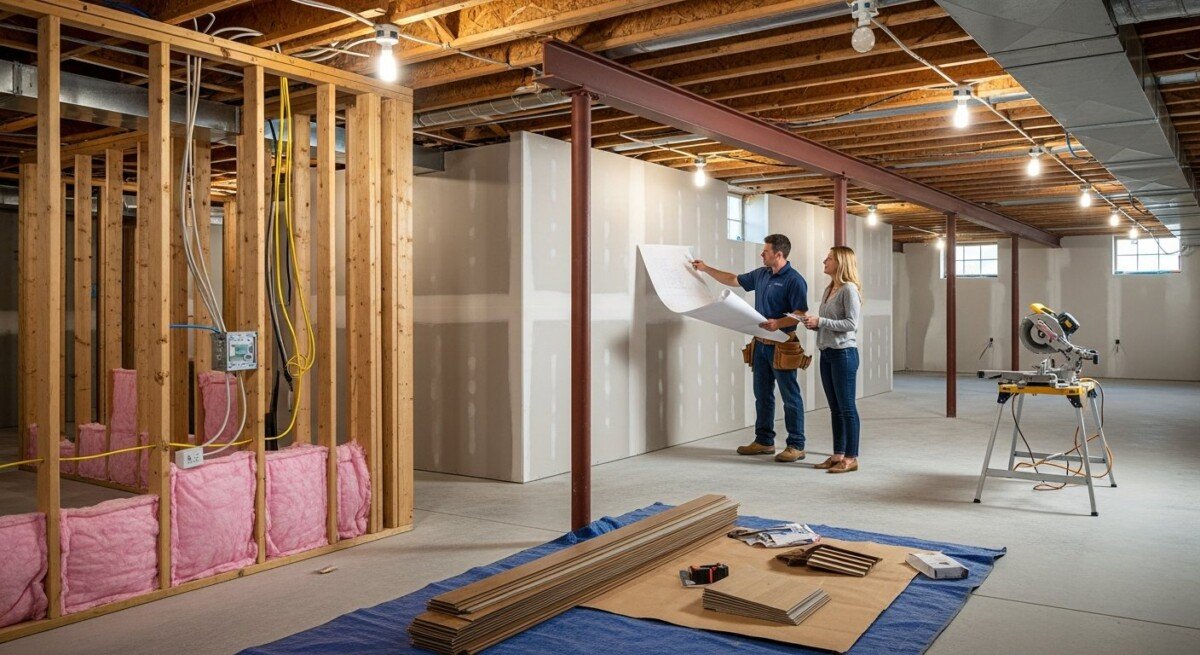
Understanding Your Basement Remodel Cost and Budget
A practical guide to understanding basement remodel cost, including what factors influence price, how to budget, and why professional planning is key to a successful project.

By Alex Carter
Learn more about Basement Finishing or Remodeling for guides, costs, and what to expect.
Compare Basement Finishing or Remodeling Pros Near You

Enter your ZIP code to compare top-rated local professionals and request free quotes.
You’ve finally decided to tackle that unfinished basement. You imagine a cozy family room, a home office, or maybe a guest suite. But as you start researching, you’re hit with a wave of questions: How much will this actually cost? Why do estimates vary so wildly? The excitement can quickly turn to confusion and worry about making a smart financial decision for your home.
Understanding Basement Remodel Cost
Your basement remodel cost is the total investment required to transform your unfinished or outdated lower level into a functional, comfortable living space. It’s not just one price, but a sum of many parts,from foundational repairs you can’t see to the finishes you’ll enjoy every day.
Costs vary because every basement and every homeowner’s vision is unique. A simple drywall and flooring update for a rec room will have a very different price tag than adding a bathroom, kitchenette, or egress windows for a legal bedroom. The condition of your existing space is the biggest starting factor.
What’s Included in the Price?
Think of your basement remodel cost in layers. First comes the critical “below the surface” work: moisture control, insulation, and framing. Next are the mechanical systems,electrical, plumbing, and HVAC. Finally, you have the visible finishes: drywall, flooring, lighting, and trim.
Why This Matters for Your Home
Investing in a basement remodel is about more than just gaining square footage. It’s about protecting your home’s structure and increasing its long-term value. A properly finished basement adds significant usable space, which is one of the best returns on investment you can make in home improvement.
Ignoring foundational issues or cutting corners to save money upfront can lead to major problems. Moisture damage, mold growth, and poor insulation can ruin your new finishes and create health hazards. Doing it right the first time protects your investment and your family’s well-being.
If you notice signs of moisture or structural concerns in your home, it may help to speak with a qualified contractor. Request a free quote or call to explore your repair or remodeling options.
Common Problems Homeowners Experience
Many homeowners begin their basement project only to discover unexpected issues that impact the budget. What looked like a simple finishing job can reveal underlying problems that must be addressed first for a lasting result.
These surprises are why detailed estimates and inspections are so valuable. A professional can identify potential roadblocks before demolition begins, helping you create a realistic budget that accounts for both the dream and the necessary groundwork.
- Unexpected moisture intrusion or foundation cracks
- Insufficient ceiling height or low-hanging ductwork
- Outdated or inadequate electrical service
- Lack of proper insulation leading to cold, damp floors
- Needing to add an egress window for safety and code compliance
- Discovering asbestos or mold during demolition
How Professionals Solve the Problem
A reputable contractor doesn’t just see your basement as empty space. They see a complex system that needs to integrate with the rest of your home. Their process is designed to solve problems efficiently and prevent future issues, which ultimately protects your budget.
Professionals follow a systematic approach that ensures each critical step is completed before moving to the next. This method avoids costly callbacks and repairs down the line. Their experience allows them to foresee challenges a homeowner might miss, saving time, stress, and money.
- Assessment & Planning: A thorough inspection identifies moisture, structural, and code issues. Detailed plans are drawn up, and a realistic timeline and budget are established.
- Preparation & Rough-Ins: This includes any necessary waterproofing, framing, and installing the “bones”,electrical wiring, plumbing pipes, and HVAC ducts behind the walls.
- Insulation & Drywall: Proper insulation is installed for comfort and energy efficiency, followed by hanging, taping, and sanding drywall.
- Finishes & Final Details: This is where your vision comes to life with flooring, paint, trim, lighting fixtures, and cabinetry.
A professional inspection can reveal hidden issues before they become expensive repairs. Compare contractor quotes here or call to discuss your project.
Warning Signs You Should Not Ignore
Before you even start planning finishes, it’s crucial to assess your basement’s health. Certain red flags indicate that foundational repairs must be part of your remodel budget. Addressing these early is always less expensive than fixing ruined drywall and flooring later.
Paying attention to these signs helps you communicate effectively with contractors and get accurate estimates. It ensures your project budget is allocated correctly, prioritizing structural integrity over aesthetics.
- Musty odors or visible mold/mildew
- Water stains on walls or floors, or efflorescence (white, chalky residue)
- Persistent dampness or pooling water after heavy rain
- Visible cracks in foundation walls or floors
- Cold, drafty conditions year-round
- Bowing walls or uneven floors
What Affects the Cost of Repairs or Installation
Understanding what drives your basement remodel cost helps you make informed choices. The final number is a combination of your home’s specific needs, the complexity of your design, and the quality of materials you select. There’s no one-size-fits-all price.
Being aware of these factors allows you to have productive conversations with contractors. You can discuss where to invest for long-term value and where adjustments can be made to align with your budget without compromising quality.
Costs can vary depending on the condition of your home. The best way to know the price is to get a personalized estimate. Request free quotes from contractors or call today.
How to Choose the Right Contractor
Your contractor is your partner in this investment. Choosing the right professional is as important as choosing the right flooring or paint color. A trustworthy contractor provides clarity, manages challenges, and delivers a space you’ll love for years.
Take your time during the selection process. The goal is to find someone who is communicative, transparent, and experienced with projects similar to yours. A good contractor will welcome your questions and provide detailed, written answers.
- Verify they are licensed, insured, and bonded for your protection.
- Read reviews and ask for references from past basement projects.
- Request a detailed, written estimate that breaks down labor and material costs.
- Compare at least three quotes, but remember,the lowest price isn’t always the best value.
- Ask about their process for handling unexpected issues or changes once work begins.
Long-Term Benefits of Professional Work
A professionally finished basement does more than just look good. It becomes a seamless, valuable part of your home. Quality workmanship ensures the space is comfortable, durable, and contributes positively to your property’s market value.
When systems are installed correctly and materials are chosen for their durability in a below-grade environment, you gain peace of mind. You avoid the headaches of recurring repairs and can truly enjoy your new living area, knowing it was built to last.
From increased energy efficiency to providing a safe, healthy environment for your family, the right investment pays dividends. It transforms a neglected area into a functional asset, enhancing your daily life and your home’s appeal for years to come.
How much does an average basement remodel cost?
The average basement remodel cost varies widely, typically ranging from $30,000 to $75,000 or more, depending on size, scope, and finishes. A basic finishing job with drywall, flooring, and simple lighting will be on the lower end, while adding a bathroom, wet bar, or complex layouts increases the budget. The only way to know your specific cost is with a detailed, site-specific estimate.
What is the most expensive part of finishing a basement?
Often, the most expensive parts are the “unseen” essentials: addressing moisture issues, upgrading electrical service, and adding plumbing for a bathroom or kitchenette. These are also the most critical for a successful, long-lasting remodel. After that, labor-intensive finish work like custom carpentry, tile, and specialty flooring make up a significant portion of the budget.
Can I finish my basement myself to save money?
While DIY can save on labor costs for simple tasks, basement remodeling involves complex building systems and codes. Mistakes in moisture control, framing, or electrical work can lead to costly damage, safety hazards, and failed inspections. Most homeowners find that hiring professionals for the core systems and potentially DIY-ing some finishes is the best balance of cost, quality, and safety.
How long does a typical basement remodel take?
A typical full basement remodel takes 4 to 8 weeks from start to finish. The timeline depends on the project’s complexity, the need for permits, and the efficiency of the contractor. Projects involving major structural changes, custom elements, or extensive plumbing will naturally take longer. A good contractor will provide a realistic timeline upfront.
Does a finished basement add value to my home?
Yes, a professionally finished basement typically adds significant value to your home, often recouping 70% or more of the project cost at resale. More importantly, it adds desirable, functional living space, making your home more appealing to future buyers. The key is ensuring the work is permitted, up to code, and done with quality materials.
Do I need a permit to finish my basement?
In almost all cases, yes. Finishing a basement requires permits for electrical, plumbing, and structural work to ensure it meets building codes for safety. A reputable contractor will handle the permit process. Skipping permits can lead to fines, problems during a home sale, and insurance issues if unpermitted work leads to damage.
How can I budget for unexpected costs during a remodel?
The best practice is to include a contingency fund of 10-20% of your total project budget. Basements are prone to surprises like hidden moisture or outdated wiring. A detailed contractor estimate will identify known costs, but the contingency covers the unknowns. Transparent contractors will discuss potential risks and how they handle change orders before work begins.
What are the first steps in planning a basement remodel?
Start by defining how you want to use the space. Then, get a professional inspection to identify any moisture or structural issues that must be fixed. Finally, consult with several licensed contractors to get detailed estimates based on your vision and the basement’s condition. This planning phase is crucial for setting a realistic budget and timeline.
Transforming your basement is a significant but rewarding investment in your home and lifestyle. By understanding the factors that influence cost, recognizing potential problems early, and partnering with a qualified professional, you can navigate the process with confidence. The most important step is to start with clear information,begin by comparing detailed quotes from experienced contractors who can help you turn your basement vision into a valuable reality.
Learn more about Basement Finishing or Remodeling for guides, costs, and what to expect.
Compare Basement Finishing or Remodeling Pros Near You
Enter your ZIP code to compare top-rated local professionals and request free quotes.