
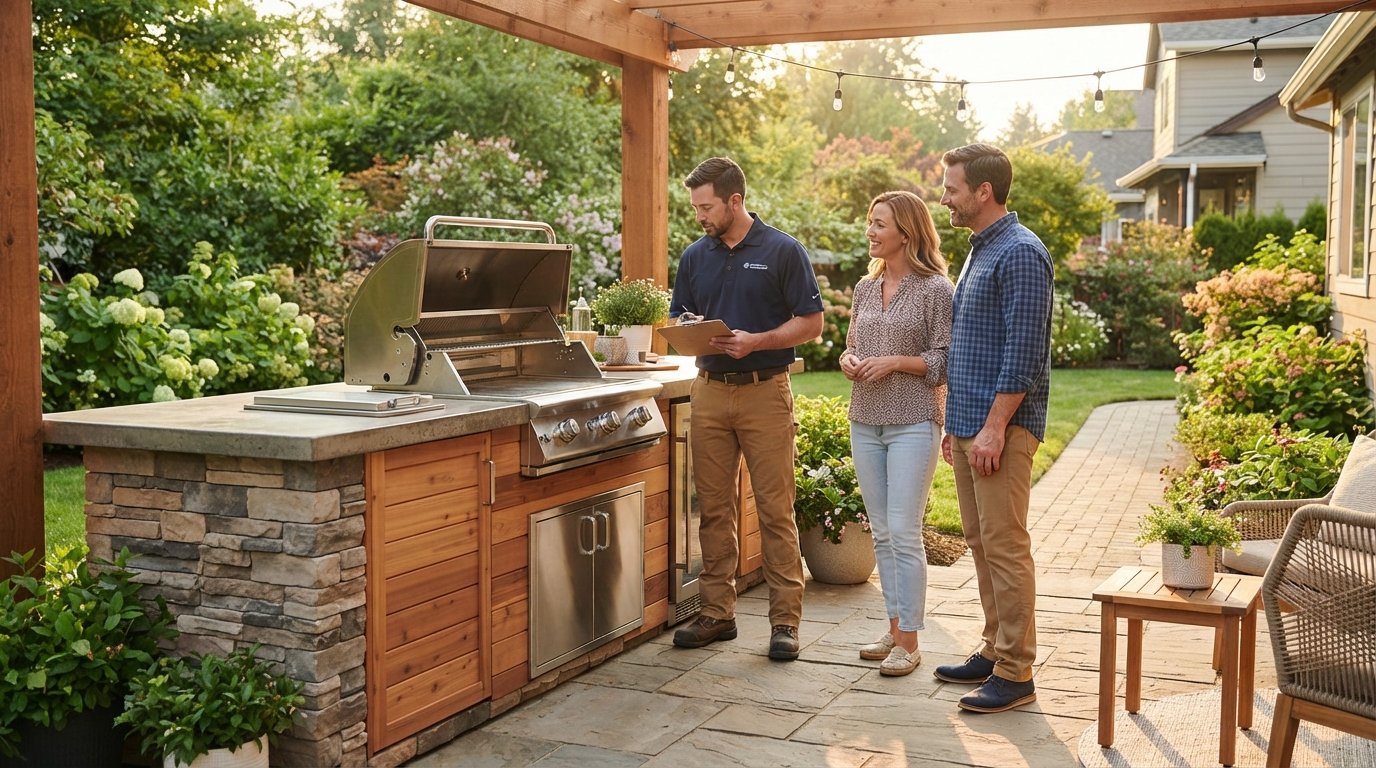
Outdoor Kitchen Design Cost and ROI: A 2026 Guide
Plan your outdoor kitchen design cost and ROI with confidence. Call 8333658755 for free quotes from vetted local contractors.

By Gabriel Nguyen
Learn more about Kitchen Remodel for guides, costs, and what to expect.
Compare Kitchen Remodel Pros Near You

Enter your ZIP code to compare top-rated local professionals and request free quotes.
An outdoor kitchen is one of the most enjoyable upgrades a homeowner can make, but it is also one of the easiest projects to overpay for. Between the appliances, the stonework, the utilities, and the finishing details, costs climb quickly, and the return on investment varies far more than most people expect. This guide breaks down what an outdoor kitchen actually costs in 2026, which design choices drive the price up or down, and how to calculate the ROI so you can decide whether the project makes financial sense for your home.
What an Outdoor Kitchen Actually Costs in 2026
Outdoor kitchen pricing is not a single number. It is a range shaped by size, materials, appliances, and how much utility work the site requires. A simple grill station with a counter and a small refrigerator can cost a fraction of a full kitchen with a built-in bar, pizza oven, sink, and pergola. Most homeowners land somewhere in the middle, and understanding the tiers helps you plan realistically instead of anchoring to a number you saw online.
As a general framework for 2026, outdoor kitchen projects fall into three broad tiers. These figures include materials and professional labor but exclude major landscaping, pool work, or structural additions that are often bundled into larger backyard renovations.
- Entry-level setup ($3,000 to $10,000): A freestanding or modest built-in grill, a small counter, and basic storage. Best for casual cooks who want a functional cooking zone without a full outdoor room.
- Mid-range kitchen ($10,000 to $30,000): Built-in grill, side burner, refrigerator, sink, stone or concrete countertops, and seating space. This is the most common range for homeowners who want a true outdoor kitchen.
- High-end kitchen ($30,000 to $75,000 and up): Premium appliances, pizza oven, bar seating, pergola or roof structure, custom cabinetry, and integrated lighting and audio. Common in luxury renovations and resort-style backyards.
Within each tier, the single biggest cost driver is usually the countertop and cabinetry material. Natural stone and poured concrete cost more than tile or composite, but they also hold up better to weather and heat. Appliance brands create another wide spread: a basic grill and a high-end built-in grill can differ by several thousand dollars even when they occupy the same footprint. Utility runs, meaning gas, water, and electrical lines, are the silent budget killer. If your cooking zone sits far from existing connections, trenching and permitting can add thousands before a single steak is grilled.
Labor is the other variable homeowners underestimate. Masonry, plumbing, electrical, and gas work often require licensed trades, and those rates vary significantly by region. In high-cost metro areas, labor alone can account for 40 to 50 percent of the total. In more affordable markets, it may be closer to 25 to 35 percent. Getting multiple quotes is the most reliable way to understand your local baseline, and platforms like USremodel connect homeowners with independent contractors who can price the same scope so you can compare apples to apples.
The Design Choices That Move Your Budget Most
Design is where an outdoor kitchen can either stay on budget or spiral. Two kitchens with identical square footage can differ by $20,000 or more based on decisions made during the planning stage. The good news is that most of these choices are visible and controllable, so you can prioritize the features that matter to you and cut the ones that do not.
Countertop material is the first major fork in the road. Granite, quartzite, and poured concrete offer durability and a premium look, but they cost more per square foot and require careful sealing. Tile is more affordable and offers design flexibility, though grout lines need maintenance. Composite and stainless steel sit in the middle and appeal to homeowners who want low maintenance. Cabinetry follows a similar logic: custom masonry and stone veneer cost more than prefabricated modular units, but they also create a more permanent, built-in feel.
Appliances are the second big lever. A built-in grill, side burner, refrigerator, sink, and warming drawer can add up fast, and premium brands charge for performance and warranty. Many homeowners save significantly by choosing mid-tier appliances for secondary functions (like the refrigerator) and investing more in the grill, which is the centerpiece of the space. Lighting, audio, and shade structures are often added later, and they can be phased in to spread the cost over time.
Site conditions matter more than most people realize. A flat, accessible patio with existing gas and electrical nearby is the cheapest scenario. Sloped yards, long utility runs, and HOA or permit requirements add cost and time. Before finalizing a design, it helps to walk the site with a contractor and identify every utility and structural constraint. If your project overlaps with a broader kitchen renovation, our guide on modern kitchen design covers how to align indoor and outdoor layouts so materials, colors, and traffic flow work together.
How to Calculate Outdoor Kitchen ROI Realistically
Outdoor kitchen ROI is not a single national percentage, and anyone who quotes one number is oversimplifying. The return depends on your market, your home's price point, the quality of the build, and how buyers in your area value outdoor living space. In warm climates and upscale neighborhoods, outdoor kitchens can return a meaningful share of their cost at resale. In colder markets or modest neighborhoods, the return is often lower, and the value shows up more in personal enjoyment than in resale dollars.
A practical way to estimate ROI is to separate the project into two buckets: the permanent infrastructure and the lifestyle features. Permanent infrastructure, such as a built-in counter, utility connections, and a shade structure, tends to hold value because it is difficult and expensive for a future buyer to replicate. Lifestyle features, such as a premium grill or a pizza oven, may not recover their full cost, but they can make your home more attractive to a specific type of buyer. Appraisers often treat outdoor kitchens as an amenity rather than a line-item value, so the impact is usually reflected in how quickly the home sells and at what price relative to comparable homes without one.
To build a realistic estimate, follow a simple framework:
- Gather three to five comparable sales in your neighborhood that include an outdoor kitchen or a similar outdoor living feature.
- Compare their sale prices to similar homes without the feature, adjusting for size, age, and lot differences.
- Estimate the percentage of your project cost that is tied to permanent infrastructure versus movable appliances.
- Apply a conservative recovery rate to each bucket, then add the value of personal use over the years you plan to stay.
That last point matters. If you plan to stay in your home for ten years, the enjoyment value of an outdoor kitchen can outweigh a modest resale return. If you plan to sell in two years, the math changes, and a smaller, well-designed kitchen may be the smarter financial move. Either way, documenting your project with photos, permits, and receipts helps you support the value when you sell or refinance.
Ways to Control Costs Without Sacrificing Quality
Staying on budget does not mean settling for a flimsy build. It means making deliberate trade-offs and phasing the project so you are not forced to cut corners on the elements that matter most. The most successful outdoor kitchens are usually the result of careful planning, not the biggest budget.
One effective strategy is to phase the project. Build the core cooking zone first, including the grill, counter, and essential utilities, then add the refrigerator, bar seating, and lighting in a later phase. This spreads the cost over two or three seasons and lets you live with the layout before committing to expensive additions. Another strategy is to choose one or two statement features, such as a stone veneer or a premium grill, and keep everything else simple and durable. Buyers notice focal points more than they notice uniform luxury.
Material selection is another place to save without regret. Concrete countertops with a good sealer can look high-end at a fraction of granite prices. Modular cabinetry can be clad in stone veneer for a built-in look. Mid-tier appliances from reputable brands often carry solid warranties and perform well for years. What you should not skimp on is the structural work: footings, utility connections, and weatherproofing. Those are the elements that determine whether your kitchen lasts a decade or a single season.
Finally, get competitive quotes and verify licensing and insurance before work begins. A platform like 180 Remodel can match you with vetted contractors for kitchen remodeling and related projects, providing free, no-obligation quotes so you can compare scope, materials, and pricing side by side. That comparison is often worth more than any single discount, because it exposes hidden costs and unrealistic bids before you sign a contract.
Permits, Codes, and Hidden Costs to Plan For
Outdoor kitchens touch multiple building systems, which means permits and inspections are common. Gas lines, electrical outlets, plumbing for sinks, and structural elements like pergolas or roofs often require permits, and unpermitted work can create problems at resale or during an insurance claim. Budget time and money for the permit process, and confirm that your contractor will handle the paperwork or clearly define who is responsible.
Hidden costs tend to cluster around three areas: utility trenching, site preparation, and weatherproofing. Trenching for gas and water can require concrete cutting, which adds labor and disposal fees. Site preparation may include leveling, drainage, and a concrete pad or paver base. Weatherproofing includes sealing stone, protecting electrical connections, and choosing materials rated for freeze-thaw cycles if you live in a colder climate. Each of these can add hundreds to thousands of dollars, and they are easy to overlook when comparing initial bids.
A detailed written scope is your best protection. Ask each contractor to itemize materials, labor, permits, and disposal, and to specify what is excluded. If one bid is dramatically lower than the others, find out why before assuming it is a bargain. In outdoor construction, the cheapest bid often becomes the most expensive project once change orders begin.
Making the Decision: Enjoyment Versus Resale
The right outdoor kitchen for your home depends on how you weigh enjoyment against resale. If you cook outside frequently, entertain often, and plan to stay in your home for years, a well-built kitchen can deliver returns that never show up on an appraisal but show up every weekend. If you are renovating primarily to increase resale value, a more modest, durable design in a desirable outdoor living market is usually the safer bet.
Either way, the process is the same: define your budget, prioritize the features you will actually use, get multiple quotes from licensed contractors, and plan for permits and hidden costs from the start. With clear numbers and realistic expectations, an outdoor kitchen can be both a rewarding lifestyle upgrade and a sensible investment in your home.