
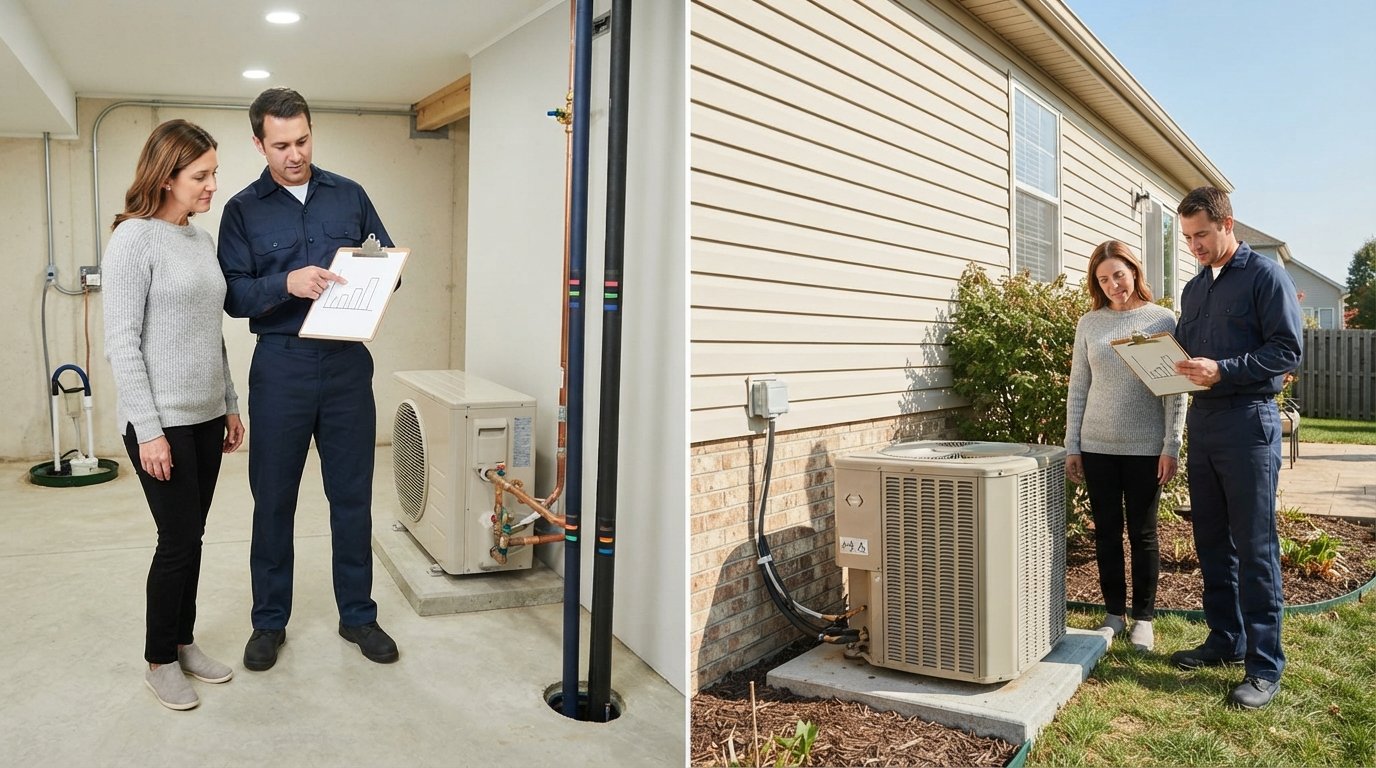
Geothermal Heat Pump Cost Versus Air Conditioner
Compare geothermal heat pump cost versus air conditioner pricing, savings, and payback. Call 8333658755 for contractor quotes on either system.

By Irene Walsh
Learn more about Heating System Installation or Replacement for guides, costs, and what to expect.
Compare Heating System Installation or Replacement Pros Near You

Enter your ZIP code to compare top-rated local professionals and request free quotes.
When homeowners compare geothermal heat pump cost versus air conditioner pricing, the sticker shock often stops the conversation before it starts. A geothermal system can run two to three times the upfront price of a standard central air conditioner, yet that gap shrinks dramatically once you factor in heating savings, federal tax credits, and a lifespan that outlasts conventional equipment by a decade or more. The real question is not which system costs less on installation day, but which one costs less over the 15 to 25 years you will live with it.
Understanding the Two Systems Before Comparing Price Tags
A traditional air conditioner moves heat from inside your home to the outdoor air using a condenser, compressor, and refrigerant lines. It cools well, but it does nothing for heating, and its efficiency drops as outdoor temperatures climb. A geothermal heat pump, sometimes called a ground source heat pump, takes a different approach: it exchanges heat with the stable 50 to 60 degree Fahrenheit temperature found a few feet below the earth's surface. In summer, it dumps heat into the ground. In winter, it pulls heat out of the ground and moves it indoors. That stable ground temperature is why geothermal systems achieve efficiency ratings that air conditioners and air source heat pumps cannot match.
Because geothermal equipment handles both heating and cooling, comparing it to an air conditioner alone understates what you get. A fair comparison is geothermal versus an air conditioner plus a furnace or a full air source heat pump system. For a broader look at how air source heat pumps perform against traditional heating and cooling setups, our guide on the efficiency of air source heat pumps versus traditional HVAC breaks down the performance data side by side.
The two systems also differ in where the money goes. An air conditioner concentrates nearly all its cost in the outdoor condenser unit and indoor air handler. A geothermal system splits its cost between the heat pump unit inside your home and the ground loop buried in your yard, and that ground loop is the single largest line item in most geothermal quotes.
What Drives the Upfront Cost of Each System
Installation pricing varies by region, home size, ductwork condition, and local labor rates, but the broad ranges are consistent enough to plan around. A standard central air conditioner for a typical 2,000 square foot home generally lands between $3,500 and $7,500 installed, including the condenser, coil, line set, and any minor ductwork adjustments. High end variable speed units can push past $10,000. A geothermal heat pump system for the same home typically ranges from $15,000 to $35,000 before incentives, with horizontal loops costing less than vertical wells because drilling is expensive.
Several factors swing those numbers significantly. The loop type matters most: horizontal loops need a large yard and cost less to trench, while vertical loops work on small lots but require drilling rigs and deeper holes. Soil and rock conditions can add thousands in drilling surcharges. If your home needs new ductwork or a zoned distribution system, both options get more expensive, though geothermal systems often pair well with existing ducts. Finally, the efficiency tier of the equipment itself, from single stage to variable speed, moves the price by 20 to 40 percent.
Homeowners who want to compare real quotes for their specific home rather than national averages can submit a project request through a platform like USremodel, which connects homeowners with independent contractors across HVAC, remodeling, and repair categories. Getting multiple bids is the only reliable way to know what either system costs in your ZIP code, because regional labor and drilling rates vary far more than equipment prices.
Operating Costs: Where Geothermal Pulls Ahead
The upfront premium is real, but it is not the whole story. Geothermal heat pumps routinely deliver coefficients of performance between 3.5 and 5.0, meaning they produce three to five units of heat for every unit of electricity consumed. The best air conditioners reach seasonal energy efficiency ratios in the low 20s, and even top tier air source heat pumps struggle to match geothermal performance in extreme cold. In practical terms, a geothermal system can cut heating and cooling bills by 30 to 70 percent compared with conventional systems, depending on local utility rates and the system it replaces.
For a home spending $2,400 per year on heating and cooling, a 50 percent reduction saves $1,200 annually. Over a 20 year horizon, that is $24,000 in avoided utility costs, which can erase most or all of the upfront price gap. Homes in climates with brutal winters or scorching summers see the largest savings, because geothermal performs consistently regardless of outdoor air temperature. Air conditioners and air source heat pumps lose capacity and efficiency as conditions worsen, while ground loop temperatures barely move.
Maintenance costs also favor geothermal. The equipment sits indoors, protected from weather, snow, and debris. There is no outdoor condenser to clean, no fan blades to straighten, and no refrigerant lines exposed to UV damage. Annual maintenance is typically limited to filter changes and occasional checks, while air conditioners need coil cleaning, refrigerant checks, and capacitor replacements that add up over time.
Incentives That Change the Math
Federal, state, and utility incentives have made geothermal far more affordable than its list price suggests. The federal residential clean energy credit covers 30 percent of the total installed cost of a geothermal heat pump, including the ground loop, labor, and electrical work. There is no dollar cap on that credit, and it can be claimed across multiple years if your tax liability is limited. State programs, utility rebates, and low interest financing add another layer of savings in many markets.
Air conditioners generally qualify for far less support. Some utilities offer modest rebates for high efficiency units, and federal tax credits for standard air conditioners have largely expired or shrunk. The incentive gap effectively narrows the geothermal premium by $4,500 to $10,000 on a typical project, which is often the difference between a system that pays back in 8 years and one that pays back in 15.
It is worth noting that the 30 percent credit applies to the full project cost, not just the equipment. That means drilling, trenching, loop installation, and even ductwork improvements tied to the geothermal install can all count toward the credit basis. Homeowners should confirm current rules with a tax professional, because program details shift, but the direction has been consistent: geothermal gets the strongest federal support of any residential HVAC option.
Lifespan, Resale Value, and Long Term Economics
Equipment lifespan tilts the comparison further toward geothermal. The indoor heat pump unit typically lasts 20 to 25 years, and the buried ground loop can last 50 years or more. Air conditioners, by contrast, usually need replacement after 12 to 15 years, and many homeowners face a second full installation before a geothermal system would need its first. When you spread cost across expected service life, geothermal often costs less per year of operation than a conventional air conditioner, even before energy savings.
Resale value matters too. Energy efficient upgrades resonate with buyers, and a home with a geothermal system can command a premium in markets where utility costs are high or where buyers value sustainability. Real estate agents frequently cite lower utility bills as a selling point, and a documented 30 percent federal credit plus decades of remaining loop life gives buyers confidence that the system is an asset, not a liability.
There is also a practical resilience argument. Geothermal systems do not rely on outdoor equipment that can be damaged by storms, vandalism, or falling debris. In regions with extreme weather, that durability translates into fewer emergency repairs and less downtime during the moments you need heating or cooling most.
When an Air Conditioner Still Makes Sense
Geothermal is not the right answer for every homeowner. If you have a small lot with no room for horizontal trenches and drilling costs are prohibitive, an air conditioner or air source heat pump may be the practical choice. If you plan to move within five years, the payback period may not materialize before you sell, though resale value can offset some of that concern. And if your existing ductwork or electrical panel cannot support a geothermal upgrade without major additional work, the total project cost can balloon.
Homeowners in mild climates with low heating demand also see less benefit, because the savings come largely from replacing expensive heating fuel or resistance heat. In those cases, a high efficiency air conditioner paired with a modest heating solution may deliver better returns. The decision hinges on your climate, your yard, your timeline, and your tolerance for upfront investment.
- Choose geothermal if: you plan to stay 10 or more years, have yard space or drilling access, face high heating or cooling bills, and want the lowest long term operating cost.
- Choose an air conditioner if: your budget is tight, your lot is small, you may move soon, or your climate has mild winters and moderate summers.
- Consider a hybrid if: you want geothermal efficiency for heating but need to phase the investment, or you can pair a smaller geothermal system with a backup for extreme peaks.
A hybrid approach deserves more attention than it usually gets. Some homeowners install a geothermal system sized for baseload heating and cooling, then keep a small conventional backup for the handful of days each year when demand spikes. This reduces loop size, lowers upfront cost, and still captures most of the efficiency gains. Contractors who specialize in ground source systems can model this tradeoff precisely using load calculations for your home.
Financing and Cash Flow Considerations
Because the geothermal premium is front loaded while the savings arrive monthly, financing structure matters as much as total cost. Many utilities and lenders offer low interest loans specifically for energy efficiency upgrades, and some programs allow on bill repayment tied to the utility meter. Property assessed clean energy programs let homeowners finance the project through a property tax assessment, which transfers to the next owner if the home sells.
When comparing quotes, ask contractors to show the full picture: equipment cost, loop cost, electrical work, permits, any ductwork changes, available rebates, and the expected federal credit. A quote that looks $8,000 higher on paper may actually cost less after incentives, and a quote that looks cheap may omit the electrical panel upgrade your home needs. Getting at least three itemized bids is the single best way to protect yourself from both overpaying and underestimating.
Homeowners who want a faster path to multiple quotes can use a contractor matching service to submit one project description and receive responses from vetted local professionals. This saves weeks of phone calls and makes it easier to compare apples to apples, especially when contractors present geothermal and conventional options side by side.
A Decision Framework You Can Actually Use
Start with a load calculation, not a rule of thumb. A proper Manual J calculation tells you how much heating and cooling capacity your home actually needs, which prevents oversizing and gives you a fair basis for comparing quotes. Next, get a loop feasibility assessment if geothermal is on the table, since soil conditions and yard space determine whether the project is even possible at a reasonable cost. Then gather itemized bids for both a conventional system and a geothermal system, including all incentives and financing options.
Run the numbers over your expected ownership period, not just the first year. Divide the net cost after incentives by the annual energy savings to estimate payback, then compare that to how long you plan to stay. If payback lands inside your timeline and the loop is feasible, geothermal usually wins on total cost of ownership. If not, a high efficiency air conditioner or air source heat pump remains a solid, lower risk choice.
Whichever direction you choose, treat the decision as part of a broader home energy plan. Insulation, air sealing, window upgrades, and smart thermostat settings all reduce the load either system has to carry, which improves comfort and shrinks the size of the equipment you need to buy. Homeowners who tackle efficiency upgrades first often find that both geothermal and conventional options become cheaper and more effective.
The geothermal heat pump cost versus air conditioner comparison rarely produces a single winner for every household. What it does produce is clarity: geothermal costs more upfront, saves more every month, lasts longer, and benefits from far stronger incentives, while air conditioners win on simplicity and initial price. Match those tradeoffs to your climate, your yard, your budget, and your timeline, and the right answer for your home becomes obvious.