
Fire Pit Installation Backyard Ideas Cost: 2026 Guide
Plan your fire pit installation backyard ideas cost with confidence. Call 8333658755 to compare vetted local contractors and get free quotes.

By Elena Shaw
Learn more about Outdoor Landscaping and Design for guides, costs, and what to expect.
Compare Outdoor Landscaping and Design Pros Near You

Enter your ZIP code to compare top-rated local professionals and request free quotes.
A fire pit turns an ordinary backyard into a gathering place that works in every season. It draws family outside on cool evenings, extends the usefulness of a patio, and adds a feature that buyers notice during a home tour. The catch is that fire pit installation, backyard ideas, and cost are three moving parts that most homeowners have to juggle at once. You want a design that fits your space, a build that passes inspection, and a price that does not spiral past your budget. This guide breaks all three down so you can plan with confidence instead of guesswork.
Why a Fire Pit Is Worth the Investment
Few outdoor upgrades deliver as much daily use per dollar as a well-placed fire pit. A fire pit extends your patio season by two to three months in most climates, gives you a natural focal point for seating, and adds a modest but real bump to resale appeal. Buyers touring homes in the evening respond to outdoor living spaces, and a built-in pit reads as a permanent feature rather than a piece of furniture they have to maintain.
There is also a lifestyle argument that matters more than the numbers. A fire pit creates a reason to sit outside after dinner, to host small groups without a full party setup, and to use the yard during months when it would otherwise sit empty. If you are already planning a broader outdoor overhaul, it is worth thinking about how this project fits into a wider renovation plan. Homeowners mapping out multiple upgrades often pair outdoor features with interior work, and you can see how that sequencing plays out in guidance like this breakdown of smart storage renovation ideas that help you plan phased projects without wasted effort.
The main decision is not whether a fire pit adds value, but what kind of pit, where it goes, and what you are willing to spend to get it built correctly.
Fire Pit Options and Backyard Design Ideas
Fire pit designs fall into a few broad families, and each one carries a different cost profile and maintenance load. Wood-burning pits deliver the crackle and smoke that many people associate with a real fire, but they require a fuel source, cleanout, and attention to local burn rules. Gas pits start with a flick of a switch, produce no ash, and work well in neighborhoods with burn restrictions, though they need a gas line and cost more upfront. Propane models sit in between: easy to light and control, but dependent on tank refills. Smokeless wood pits are a newer category that burns hotter and cleaner, reducing smoke without giving up real flames.
Once you pick a fuel type, the design options open up. Here are a few ideas that work in a range of yards:
- Sunken conversation pit: Built slightly below grade with bench seating around the rim, ideal for sloped lots or for creating a cozy, enclosed feel.
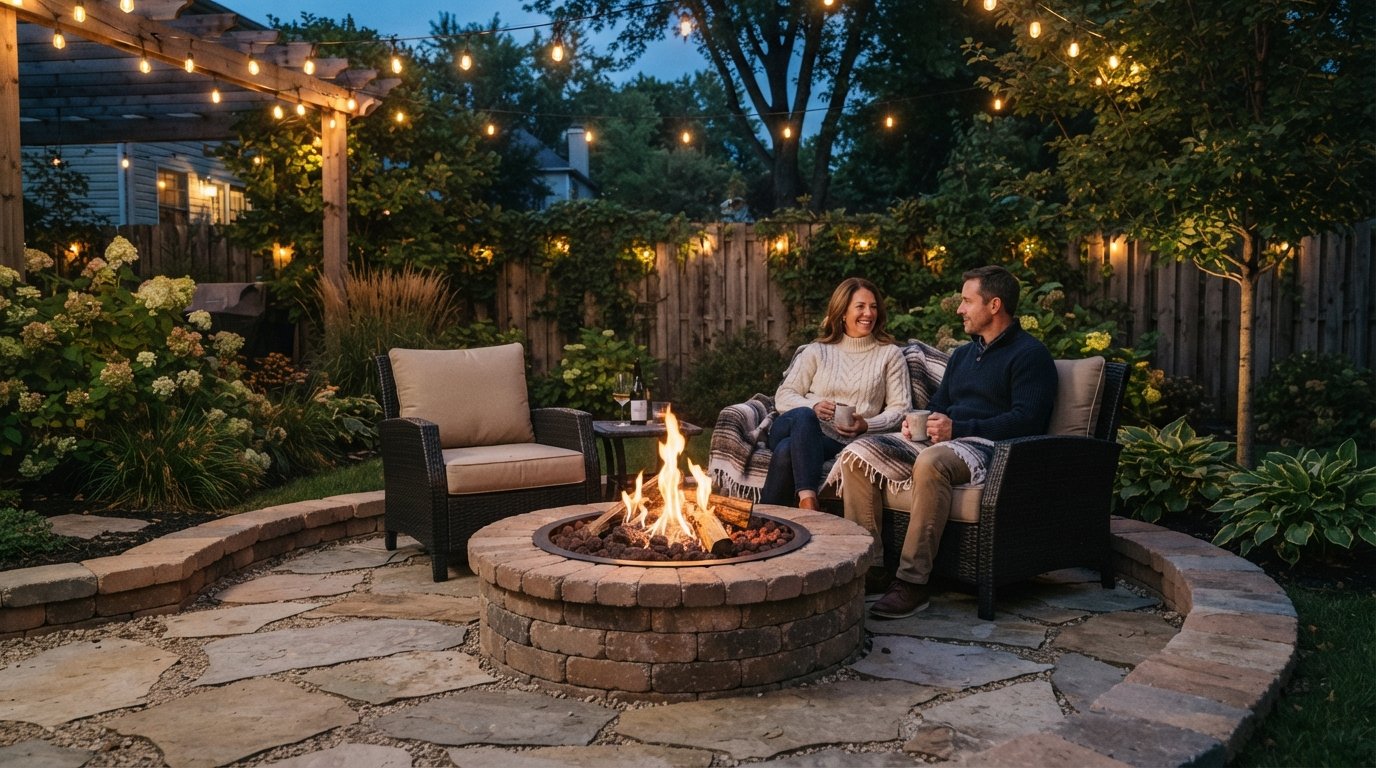
- Raised stone or brick pit: A classic built-in look that doubles as a seating ledge and pairs well with a paver patio.
- Fire pit and seat wall combo: A curved retaining wall that wraps the pit and provides backrests, great for larger patios.
- Fire table on a deck: A low-profile gas unit that sits on an existing deck, no excavation required, and can be moved later.
- Fire pit with built-in bench and storage: Adds function by hiding cushions, tools, or firewood inside the structure.
Placement matters as much as style. Keep the pit at least 10 feet from structures, low-hanging branches, and property lines unless local code says otherwise, and think about wind direction so smoke does not blow straight into your seating area. If you are building on a deck, check that the surface and railings can handle the heat and weight. A fire pit that looks great but sits in the wrong spot will get used far less than one that is positioned for comfort.
What Fire Pit Installation Actually Costs in 2026
Fire pit installation cost depends on four variables: fuel type, material, whether you need excavation or utility work, and labor rates in your area. A portable steel or cast-iron bowl might run $100 to $400 at a retailer, but that is not installation, and it is not the same product as a built-in feature. Once you move into permanent structures, the numbers climb quickly because you are paying for masonry, a base, and often a gas line.
Here is a realistic cost range for installed fire pits, based on typical 2026 pricing across U.S. markets:
- Prefab kit with DIY assembly: $300 to $1,500 for materials, plus your time.
- Basic wood-burning masonry pit, professionally built: $1,500 to $3,500.
- Gas fire pit with a plumbed line: $2,500 to $6,000, depending on run length and permits.
- Custom stone pit with seat wall and gas insert: $5,000 to $12,000 or more.
- Fire table on an existing deck: $500 to $2,500 installed.
Those ranges assume a straightforward site with easy access. Add a few hundred to a few thousand dollars if the crew has to cut through a patio, trench across a lawn, or run a gas line more than 30 feet. Permits, inspections, and any required gas work by a licensed plumber add another layer. If you are also planning a patio, deck, or hardscape project around the pit, bundling the work usually saves money on mobilization and equipment.
It helps to think about cost in three buckets: the pit itself, the site prep and utilities, and the finishing touches like seating, lighting, and landscaping. Homeowners who plan all three at once tend to avoid the surprise of a second contractor visit. If you would rather not coordinate multiple trades yourself, a platform that matches you with vetted local pros can compress the process. Services like USremodel connect homeowners with independent contractors for remodeling and repair projects, which is useful when your fire pit build is part of a larger backyard renovation.
DIY vs Professional Installation: Which Makes Sense
A prefab fire pit or fire table is a reasonable DIY project. You level the ground, set the base, assemble the unit, and you are done in a weekend. The risk is low, and the cost savings are real. The math changes the moment you involve masonry, a gas line, or electrical work. A wood-burning masonry pit requires a proper base, firebrick or stone rated for heat, and correct clearances. A gas pit requires a licensed plumber in most jurisdictions, a permit, and a pressure test. Cutting corners on either can create a safety hazard that no homeowner wants to explain to an insurance adjuster.
Professional installation also protects your investment through the warranty and the inspection record. If you ever sell the home, a permitted, inspected gas fire pit is a documented feature rather than a question mark. For simple fire tables and small wood pits, DIY is fine. For built-in structures, especially anything tied to a utility line, hiring a pro is the better call.
One more consideration: installation quality affects how the pit ages. A poorly drained base will heave in freeze-thaw cycles. Improper mortar will crack. A gas burner set at the wrong height will produce a weak flame or soot. These are the kinds of problems that cost more to fix later than they would have cost to prevent.
Permits, Codes, and Safety Requirements
Fire pit rules vary widely by city, county, and homeowners association. Some jurisdictions require a permit for any permanent structure, gas or wood. Others only require permits when a gas line is involved. Many HOAs restrict open burning, set minimum distances from structures, and dictate the type of pit allowed. Before you buy materials, call your local building department and read your HOA covenants. It takes 20 minutes and can save you a failed inspection or a forced removal.
Safety basics apply everywhere. Keep the pit at least 10 feet from the house, fences, and trees, and never place it under a roof overhang or low branches. Use a spark screen on wood-burning pits. Store propane tanks upright and outside. Never use a fire pit on a wooden deck unless the unit is rated for it and you have a heat shield underneath. Keep a fire extinguisher or a bucket of sand nearby, and check burn bans during dry seasons.
If your project is part of a bigger outdoor remodel, it is smart to confirm code requirements for the whole scope at once. Patio covers, pergolas, and outdoor kitchens each carry their own rules, and addressing them together avoids repeat visits from the inspector.
How to Budget for Your Fire Pit Project
A realistic budget starts with a target number and works backward. Decide what you want the pit to do: casual s'mores on weekends, a centerpiece for entertaining, or a low-maintenance gas feature you can light any night. That answer narrows your fuel type and size, which in turn sets the cost band. Then add the supporting costs that people forget: seating, pavers or gravel underfoot, lighting, landscaping, and any gas or electrical runs.
A simple framework helps:
- Set a total budget, including a 10 to 15 percent contingency for surprises.
- Price the pit and materials first, then site prep and utilities.
- Get at least three quotes from licensed contractors for anything beyond a prefab unit.
- Confirm permit fees and HOA requirements before signing a contract.
- Reserve a small amount for finishing touches and a cover.
If the numbers come in higher than expected, you have options. A smaller gas pit with a simpler surround can cut thousands off a custom build. A fire table on an existing patio avoids excavation entirely. Phasing the project, pit first and seating later, spreads the cost without sacrificing the end result.
Financing is another lever. Many homeowners fold a fire pit into a larger renovation loan or a home equity line, especially when the project includes other upgrades that raise property value. The key is to keep the fire pit in proportion to the rest of the work, so you are not spending custom-masonry money on a feature that will be overshadowed by a basic patio.
Getting Quotes and Choosing the Right Installer
Once you know what you want, the next step is finding someone who can build it correctly. Look for contractors with experience in masonry, hardscaping, or outdoor living, not just general handymen. Ask for photos of completed fire pits, confirm licensing and insurance, and get the scope in writing: materials, dimensions, gas or electrical work, cleanup, and warranty. A clear contract prevents most disputes.
Timing matters too. Outdoor projects book up fast in spring and early summer, so start your search a few weeks before you want work to begin. If you are comparing multiple bids, make sure each one covers the same scope so you are comparing apples to apples. The lowest quote is not always the best value if it omits the gas line or the permit.
A fire pit is one of those upgrades that pays you back in evenings spent outside, not just in resale dollars. Get the design, cost, and installation right, and you will have a backyard feature you actually use for years. Start with a clear plan, confirm the rules, and bring in qualified help where the work demands it.