
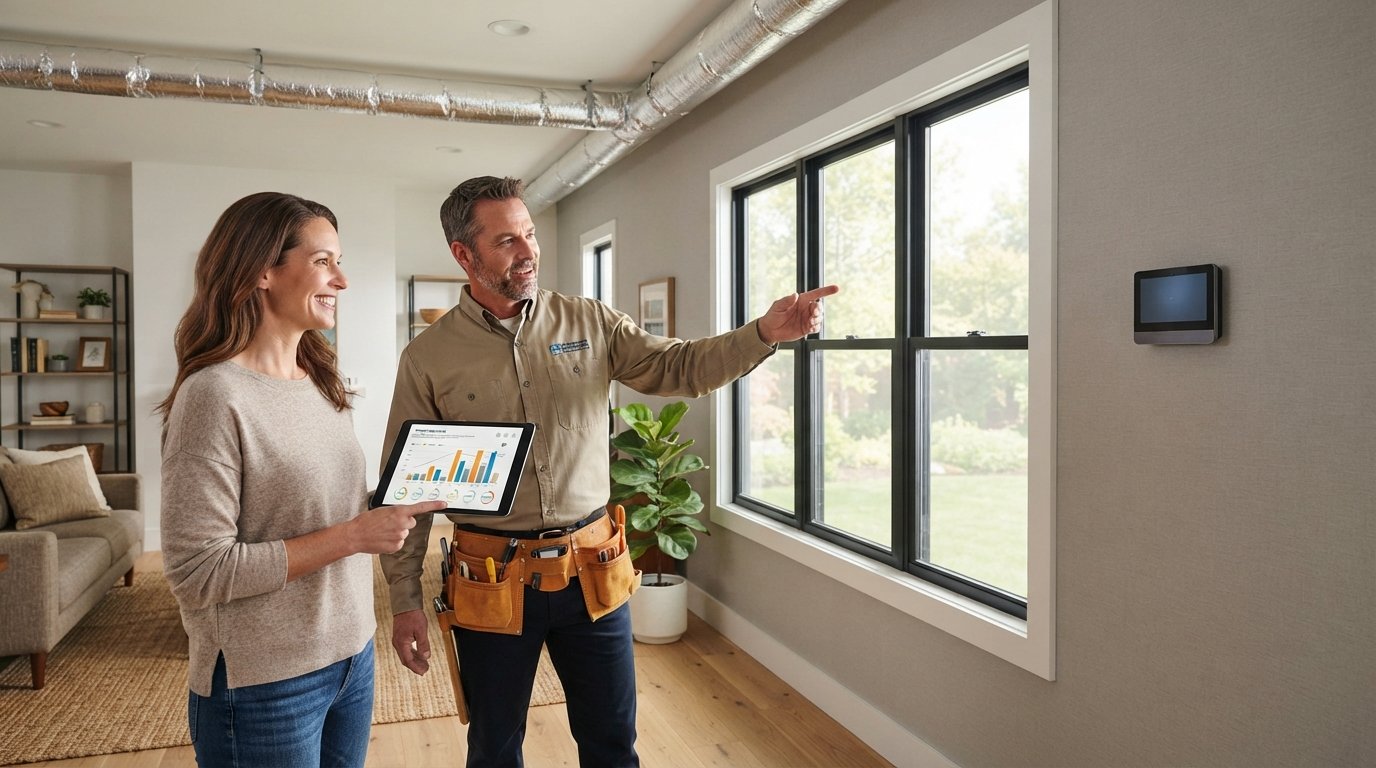
Energy Efficient Home Upgrades That Pay Off in 2026
Discover the most effective energy efficient home upgrades that cut bills, boost comfort, and increase property value. Start saving today.

By Alex Carter
Learn more about Weatherization for guides, costs, and what to expect.
Compare Weatherization Pros Near You

Enter your ZIP code to compare top-rated local professionals and request free quotes.
When your monthly utility bills keep climbing, the culprit is often a home that wastes energy through drafty windows, an aging HVAC system, or poor insulation. The good news is that strategic energy efficient home upgrades can slash those costs, boost comfort, and increase your property's resale value. In fact, according to the U.S. Department of Energy, the average household can save up to 30% on energy bills by addressing common inefficiencies. Whether you are planning a full renovation or just want to make targeted improvements, this guide will show you which upgrades deliver the best return on investment and how to prioritize them for maximum impact.
At 180 Remodel, we connect homeowners with vetted professionals who specialize in everything from window replacement to solar installation. Our goal is to help you make informed decisions that align with your budget and lifestyle. Below, we break down the most effective upgrades, the savings you can expect, and the smartest ways to pay for them.
Why Energy Efficiency Matters More Than Ever
Energy efficiency is no longer just an environmental talking point; it is a financial necessity. With fluctuating energy prices and increasing awareness of carbon footprints, homeowners are seeking ways to reduce consumption without sacrificing comfort. Upgrading your home's energy systems not only lowers monthly bills but also protects you from future rate hikes. Moreover, energy-efficient homes appraise higher and sell faster, making these improvements a wise investment whether you plan to stay for years or put your house on the market soon.
Another critical factor is indoor comfort. Drafty rooms, uneven temperatures, and poor air quality are signs of energy loss. By sealing leaks, upgrading insulation, and installing modern equipment, you create a more consistent indoor environment. This means fewer cold spots in winter, less humidity in summer, and better air filtration for your family's health.
Top Upgrades That Deliver the Biggest Savings
Not all upgrades are created equal. Some offer immediate payback, while others provide value over time through increased home value or long-term energy savings. Below is a list of the most impactful improvements, ranked by their overall return on investment and ease of implementation.
- Attic insulation and air sealing: This is often the most cost-effective upgrade, reducing heating and cooling losses by up to 20%.
- ENERGY STAR certified windows: Replacing single-pane or outdated windows can cut energy bills by 7-15% and improve curb appeal.
- High-efficiency HVAC systems: Modern furnaces and heat pumps use 20-40% less energy than older models, and they provide better humidity control.
- Smart thermostats: These devices learn your schedule and adjust temperatures automatically, saving about 10% on heating and cooling costs.
- LED lighting: Swapping out incandescent bulbs for LEDs reduces lighting energy use by up to 75% and lasts 25 times longer.
Each of these upgrades addresses a specific area of energy loss, and when combined, they create a compounding effect. For example, sealing air leaks first prevents your new HVAC system from working overtime, so you get more value from that investment. Start with a home energy audit to identify where your house loses the most energy, then prioritize the fixes that offer the fastest payback.
Understanding the Energy Audit
A professional energy audit uses tools like blower doors and infrared cameras to pinpoint leaks and insulation gaps. Many utility companies offer discounted or free audits, and some states provide incentives. Once you have a clear picture, you can target your upgrades effectively. If an audit is not feasible, you can perform a simple DIY check by feeling for drafts around windows, doors, and electrical outlets, and by inspecting your attic's insulation depth.
Windows and Doors: The First Line of Defense
Old, drafty windows are a major source of energy loss. In fact, windows account for 25-30% of residential heating and cooling energy use. Replacing them with double-pane, low-emissivity (Low-E) glass models can significantly reduce heat transfer. Low-E coatings reflect heat back into the room during winter and block solar heat in summer, keeping your home comfortable year-round. Additionally, modern frames made of vinyl, fiberglass, or wood composites offer better insulation than traditional aluminum frames.
Doors, especially sliding glass doors and entry doors, also need attention. Weatherstripping and door sweeps are inexpensive fixes, but if your doors are warped or have single-pane glass, replacement might be necessary. For exterior doors, consider insulated steel or fiberglass options that provide a tight seal and better thermal performance. When you work with a professional contractor through 180 Remodel, you can get multiple quotes for window and door replacement, ensuring you find the best price and quality for your project.
In our guide on energy efficient home upgrades that boost comfort and value, we highlight how window and door improvements not only cut energy bills but also enhance your home's aesthetic appeal. That guide provides additional insights into selecting materials and working with contractors to maximize your investment.
Heating and Cooling: The Heart of Home Efficiency
Heating and cooling account for about 48% of the energy use in a typical U.S. home, making it the largest energy expense. Upgrading to a high-efficiency HVAC system is one of the most impactful energy efficient home upgrades you can make. Modern systems, especially those with variable-speed motors and modulating burners, adjust their output to match your home's needs, which reduces energy waste and improves comfort.
Heat pumps are gaining popularity because they provide both heating and cooling with exceptional efficiency. They work by transferring heat rather than generating it, and in mild climates, they can cut electricity use by up to 50% compared to conventional furnaces. Geothermal heat pumps are even more efficient, but they come with higher upfront costs. To determine the best system for your home, consider your local climate, the size of your home, and your budget. A professional HVAC contractor can perform a load calculation to ensure you choose the right capacity.
Regular maintenance is also crucial. Changing filters every 1-3 months, scheduling annual tune-ups, and cleaning ducts can improve efficiency by up to 15%. If your system is more than 15 years old, replacement is often more cost-effective than repairing it. When you're ready to upgrade, 180 Remodel can connect you with trusted HVAC specialists who offer transparent pricing and quality installations.
Solar Panels and Renewable Energy Options
Solar panels are a long-term investment that can drastically reduce your electricity bills and even earn you tax credits. The federal solar tax credit (ITC) allows you to deduct 30% of the installation cost from your federal taxes, and many states offer additional incentives. With the average installation costing between $15,000 and $25,000, the payback period is typically 6-10 years, after which you enjoy free electricity for decades.
Beyond traditional rooftop panels, you might consider solar shingles, which blend seamlessly with your roof, or community solar programs if your property isn't suitable for panels. Battery storage systems, like the Tesla Powerwall, allow you to store excess energy for use during outages or peak rate times, further increasing your independence from the grid. Before committing, get multiple quotes and evaluate your roof's orientation and shading. Our articles on energy efficient home upgrades for comfort and savings offer a deeper look into solar options and how to choose the right installer.
Water Heating and Plumbing Efficiency
Water heating accounts for about 14% of home energy use. Upgrading to a tankless water heater, which heats water on demand, can be 24-34% more efficient than traditional storage tank models for homes that use 41 gallons or less of hot water daily. Tankless heaters also last longer, with a lifespan of 20 years compared to 10-15 years for tank models. If you need a lot of hot water, a high-efficiency heat pump water heater is another excellent option, as it uses electricity to move heat from the air to the water, cutting costs by up to 60%.
Plumbing upgrades, such as installing low-flow fixtures and insulating hot water pipes, are low-cost improvements that add up. Aerators on faucets and water-saving showerheads reduce water usage without compromising pressure. Insulating your water heater and the first 6 feet of hot water pipes minimizes heat loss, so you don't waste energy waiting for hot water. These small changes are easy to implement and often qualify for utility rebates.
Smart Home Technology and Energy Management
Smart home devices give you real-time control over your energy usage. Smart thermostats learn your routines and adjust temperatures accordingly, but they also provide energy usage reports and can be controlled remotely via smartphone apps. Smart lighting systems let you schedule lights and dim them, and smart power strips eliminate phantom loads from electronics that draw power even when turned off.
Home energy monitors, like Sense or Emporia Vue, clamp onto your electrical panel and track energy consumption by appliance. They help you identify energy-hungry devices and adjust your habits. Whole-home automation systems can integrate all these devices, allowing you to set scenes like "away mode" that turns off lights, lowers the thermostat, and powers down electronics with a single command. These technologies not only reduce waste but also enhance convenience and security.
Financing Your Energy Efficient Upgrades
The upfront cost of energy efficient home upgrades can be intimidating, but there are numerous financing options to make them affordable. Federal tax credits, such as the Energy Efficient Home Improvement Credit, provide up to $3,200 for qualifying upgrades like insulation, windows, and heat pumps. State and local programs often offer rebates, and utility companies provide incentives for specific improvements.
For larger projects, consider home equity loans, cash-out refinancing, or PACE (Property Assessed Clean Energy) financing, which allows you to repay the cost through property tax assessments. Many contractors offer payment plans, and 180 Remodel can help you get competitive quotes so you can budget effectively. Remember that energy savings offset the initial investment over time, so calculate your break-even point to determine the true value of each upgrade.
Prioritizing Your Upgrades: A Step-by-Step Plan
To maximize your return on investment, follow this sequence:
- Start with an energy audit to identify the biggest leaks and inefficiencies.
- Seal air leaks around windows, doors, and attic hatches using caulk, weatherstripping, or spray foam.
- Add insulation to your attic, walls, and basement to prevent heat transfer.
- Upgrade to ENERGY STAR appliances, especially your refrigerator, washing machine, and dishwasher.
- Replace windows and doors if they are single-pane or have damaged frames.
- Install a smart thermostat and set schedules that match your daily routines.
- Consider high-efficiency HVAC systems or heat pumps when your current system is nearing end-of-life.
- Add renewable energy like solar panels if your budget allows and your roof is suitable.
Each step builds on the previous one, ensuring that you don't waste money on equipment that has to work harder due to unresolved inefficiencies. For example, upgrading your HVAC before sealing leaks means your new system will still be overworked, reducing its lifespan and savings. Follow this order, and you'll see the fastest payback.
Working with Professionals: Getting the Best Results
While some upgrades are DIY-friendly, others require professional expertise to ensure safety and optimal performance. For HVAC installation, window replacement, solar panel installation, and major insulation projects, it's wise to hire licensed contractors. They have the training, tools, and knowledge to handle complex installations and comply with local building codes.
180 Remodel simplifies the process of finding qualified professionals. By submitting a quick form, you can receive free quotes from multiple vetted contractors in your area. This allows you to compare prices, services, and timelines, ensuring you get the best value for your project. Our network includes specialists in roofing, windows, HVAC, solar, and more, so you can handle all your energy upgrades through one trusted platform.
When interviewing contractors, ask about their experience with energy-efficient installations, request references, and verify licenses and insurance. A reputable contractor will perform a load calculation for HVAC, take accurate measurements for windows, and provide a detailed written estimate. Don't be afraid to ask questions about the equipment they recommend and the expected energy savings.
The Long-Term Payoff: Comfort, Savings, and Home Value
Investing in energy efficient home upgrades is one of the smartest financial decisions you can make as a homeowner. Beyond the immediate reduction in utility bills, these improvements increase your home's comfort, reduce your environmental impact, and boost its marketability. Studies show that energy-efficient homes sell for 2-5% more than comparable non-efficient homes, and they often sell faster due to lower ongoing costs for buyers.
Moreover, you'll enjoy a healthier indoor environment. Proper insulation and ventilation reduce the risk of mold and allergens, while modern HVAC systems filter the air more effectively. Smart thermostats and lighting add convenience, and solar panels provide energy independence. These benefits compound over time, making your home more enjoyable and valuable.
If you're ready to start your energy efficiency journey, begin with a professional assessment and a clear plan. The team at 180 Remodel is here to help you every step of the way, from getting quotes to selecting the best contractors. Submit your project details today and take the first step toward a more comfortable, affordable, and sustainable home.