
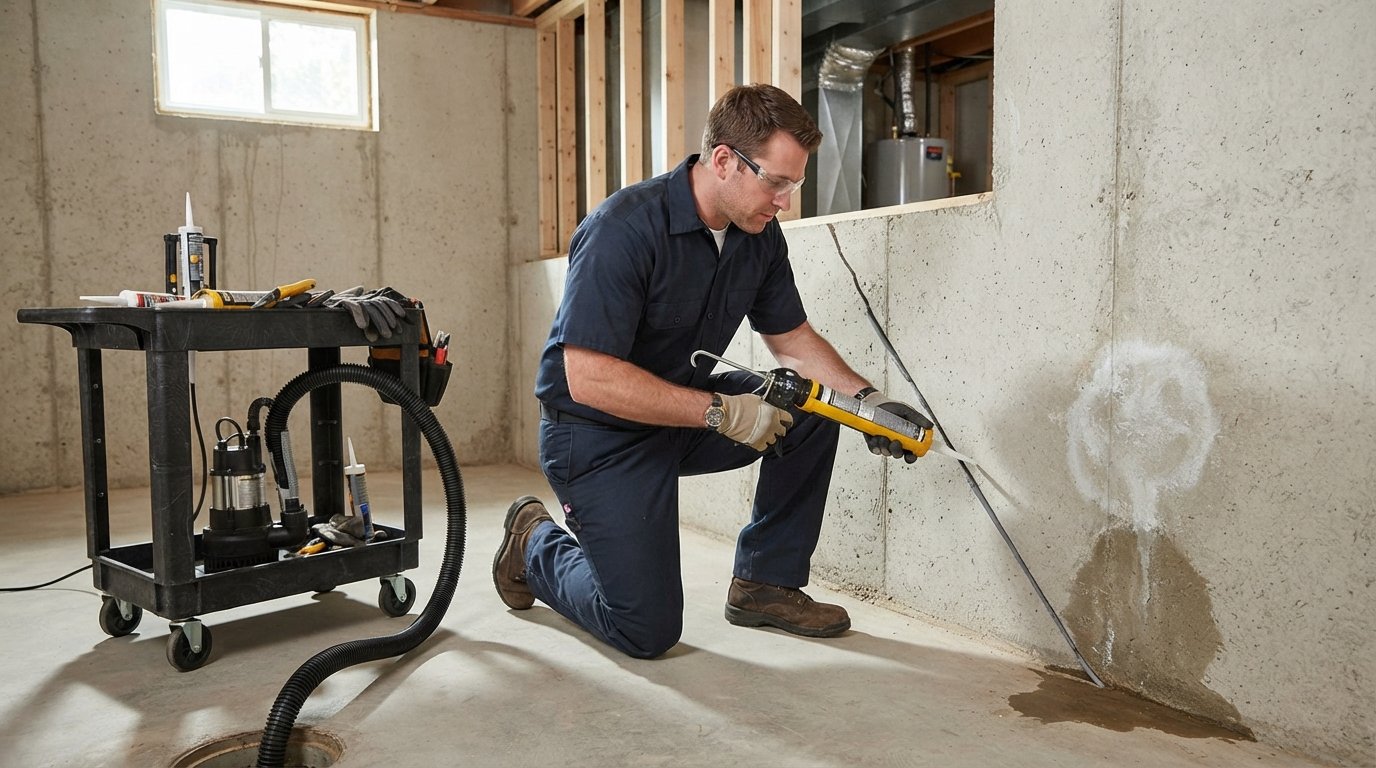
Basement Waterproofing vs Foundation Crack Repair
Compare basement waterproofing versus foundation crack repair to choose the right fix and avoid costly rework. Call (833)-365-8755 for a free quote.

By Irene Walsh
Learn more about Home Waterproofing for guides, costs, and what to expect.
Compare Home Waterproofing Pros Near You

Enter your ZIP code to compare independent local professionals and request free quotes.
You notice a damp spot on your basement wall after a heavy rain, or a thin crack that seems to be getting wider. The question is immediate: do you need a quick crack fix or a full basement waterproofing system? The answer matters because the two approaches solve different problems, carry very different price tags, and deliver different long-term results. Choosing wrong can mean paying twice, once for the wrong repair and again for the real solution. This guide breaks down basement waterproofing versus foundation crack repair so you can read the signs, understand the methods, compare costs, and evaluate contractor proposals with confidence.
Understanding the Core Difference
Foundation crack repair is a targeted fix. It addresses a specific defect, usually a crack in a poured concrete wall or a failed joint, and its goal is to stop water from entering through that one spot. Basement waterproofing is a broader strategy. It manages water around and under the entire foundation, often combining drainage, sealants, and sometimes sump pump integration to keep the whole space dry. In short, crack repair treats a symptom; waterproofing treats the system.
Think of it like a toothache. A small cavity can be filled directly, but if the whole mouth is prone to decay, you need a preventive plan. Similarly, a single non-structural crack in an otherwise dry basement may be a perfect candidate for injection repair. But if you see efflorescence, multiple leaks, or water pooling along the floor, the foundation is telling you that a system-level solution is needed. The cost difference is significant: a crack injection might run a few hundred dollars, while full waterproofing can range from several thousand to over ten thousand depending on the method and home. Getting the diagnosis right is the first step toward spending wisely.
Signs That Point to Crack Repair Versus Full Waterproofing
Homeowners often ask how to tell which service they actually need. The clues are in the pattern and location of the moisture. A single vertical crack in a poured wall that leaks only during heavy rain is a classic candidate for crack repair. So is a leak at a tie rod hole or a small honeycomb area. These are localized defects that can be sealed with polyurethane or epoxy injection, restoring the wall's integrity and stopping the leak.
On the other hand, widespread dampness, water seeping through the cove joint where the floor meets the wall, or multiple cracks across several walls suggest a systemic issue. White powdery stains (efflorescence) on the wall mean water is moving through the concrete, not just through one crack. Musty odors, peeling paint, or mold growth point to chronic high humidity, which often requires a drainage and waterproofing approach. Here is a quick checklist to help you decide:
- Crack repair likely: One or two isolated cracks, no water at the floor joint, no efflorescence, and leaks only during extreme weather.
- Full waterproofing likely: Water seeping at the cove joint, multiple cracks, damp walls across the room, efflorescence, or a history of repeated leaks.
- Hybrid approach possible: A few cracks plus minor seepage might call for crack injection combined with interior drainage or a sealant system.
Keep in mind that a crack can be a symptom of a larger problem, such as poor exterior grading or a failed gutter system. Before committing to any repair, address water management outside the home. If downspouts discharge next to the foundation, even the best crack repair will eventually fail. A thorough evaluation should include the exterior drainage conditions, not just the interior wall.
Interior Sealants, Drainage Membranes, and Sump Integration
When full waterproofing is warranted, interior methods are often the most practical and cost-effective. These systems work by managing water that has already entered the basement and directing it to a sump pump. The most common interior solution is a drainage membrane or dimpled mat installed along the base of the wall, which allows water to flow down to a perimeter drain. That drain leads to a sump pit, where a pump discharges the water away from the home. This approach does not stop water from entering the wall, but it collects and removes it before it can damage the floor or create humidity.
Interior sealants, such as crystalline coatings or cementitious waterproofing, can be applied to the wall surface to reduce vapor transmission and minor seepage. However, they are not a substitute for drainage if hydrostatic pressure is significant. A reputable contractor will often combine a sealant with a drainage system to provide a complete interior solution. Sump pump integration is critical: without a reliable pump and a backup power source, the system can fail during a storm when you need it most. Regular maintenance, including testing the pump and cleaning the pit, is essential for longevity. For a deeper dive into maintaining these systems, see our sump pump discharge and basement waterproofing checklist.
Interior waterproofing typically comes with a lifespan of 10 to 20 years or more, depending on the quality of materials and installation. It is less invasive than exterior excavation and can often be completed in a day or two. However, it does not address the source of the water, so exterior water management (grading, gutters, downspouts) must still be part of your overall strategy. Homeowners should understand that interior systems are designed to manage water, not to seal the foundation from the outside.
Exterior Excavation Methods and When They Are Warranted
Exterior waterproofing is the gold standard for stopping water before it reaches the wall. It involves excavating the soil around the foundation down to the footing, applying a waterproof membrane or coating to the exterior wall, and installing a drainage board and footing drain. This method addresses both the water pressure and the source, making it the most effective long-term solution. However, it is also the most expensive and disruptive, often requiring heavy equipment, permits, and landscape restoration.
Exterior excavation is typically warranted when the foundation has multiple leaks, when the wall is bowing or structurally compromised, or when interior solutions are not feasible (for example, if the basement is finished and you want to avoid tearing up the floor). It is also the go-to choice for block foundations with widespread seepage, as interior sealants do not adhere well to hollow block. In some cases, a hybrid approach is used: exterior excavation on the most affected walls and interior drainage elsewhere.
Cost is the main deterrent. Exterior waterproofing can range from $10,000 to $30,000 or more, depending on the length of the foundation and accessibility. The lifespan is impressive, often 20 to 30 years or more, but the upfront investment is steep. Homeowners should weigh this against the cost of repeated interior repairs and the potential for mold and structural damage if water is left unmanaged. If you are planning a larger renovation, it may make sense to coordinate exterior waterproofing with other projects to reduce overall disruption. For help finding independent local providers for this type of work, you can compare quotes from local contractors to understand typical pricing in your area.
Cost Comparisons and Expected Longevity
Budgeting for foundation work requires a clear-eyed look at both immediate and long-term costs. Crack repair is almost always the cheaper option upfront, but it may need to be repeated if the underlying cause is not addressed. Full waterproofing is a larger investment, but it often comes with a longer service life and better protection for your home's value. Here is a general comparison:
- Crack repair (injection): $500 to $1,500 per crack, lifespan of 5 to 10 years, best for isolated, non-structural cracks.
- Interior drainage system with sump pump: $3,000 to $7,000, lifespan of 10 to 20 years, effective for managing water at the cove joint and wall base.
- Exterior waterproofing: $10,000 to $30,000, lifespan of 20 to 30 years, most effective for stopping water at the source.
These ranges are broad because factors like foundation size, accessibility, and local labor rates vary widely. Always get multiple quotes and ask for a detailed breakdown of materials and labor. Be wary of any proposal that does not include a site evaluation or that promises a lifetime guarantee without maintenance. Longevity also depends on exterior water management: if you fix the crack but ignore the gutter that dumps water at the foundation, the repair will fail prematurely. A holistic view of your property's drainage is essential for any waterproofing decision.
How to Evaluate Waterproofing Contractor Proposals
Once you have a few proposals in hand, the real work begins. A good proposal should start with a clear diagnosis of the problem, not just a list of services. It should explain why the recommended solution is appropriate for your specific signs and conditions. Look for a written scope of work that details the materials to be used, the installation process, and the expected outcome. Vague proposals that simply say "waterproof basement" are a red flag.
Ask about the company's experience with your type of foundation and the specific method they propose. For crack injection, ask which type of resin they use (polyurethane for active leaks, epoxy for structural cracks) and why. For interior drainage, ask about the sump pump brand, the backup system, and the drain design. For exterior work, ask about permits, excavation depth, and landscape restoration. A professional contractor will welcome these questions and provide clear answers.
Finally, compare the warranty terms carefully. A warranty that covers the workmanship and materials for a reasonable period (5 to 10 years for interior systems, longer for exterior) is a sign of confidence. But remember that warranties often have conditions, such as maintaining exterior drainage. Get everything in writing and make sure you understand what is covered. If you need help finding independent local providers who can offer detailed proposals, 180Remodel can match you with providers in our network for a no-obligation comparison. You can also call (833)-365-8755 for guidance on your project.
Choosing between basement waterproofing and foundation crack repair comes down to diagnosing the source and extent of the water problem. A single crack in an otherwise dry basement is a straightforward fix, but widespread dampness or recurring leaks demand a system-level solution. By understanding the signs, methods, costs, and how to evaluate proposals, you can make an informed decision that protects your home and your budget. Whether you need a targeted repair or a full waterproofing strategy, comparing quotes from independent local providers is the smartest first step.
Learn more about Home Waterproofing for guides, costs, and what to expect.
Compare Home Waterproofing Pros Near You
Enter your ZIP code to compare independent local professionals and request free quotes.