
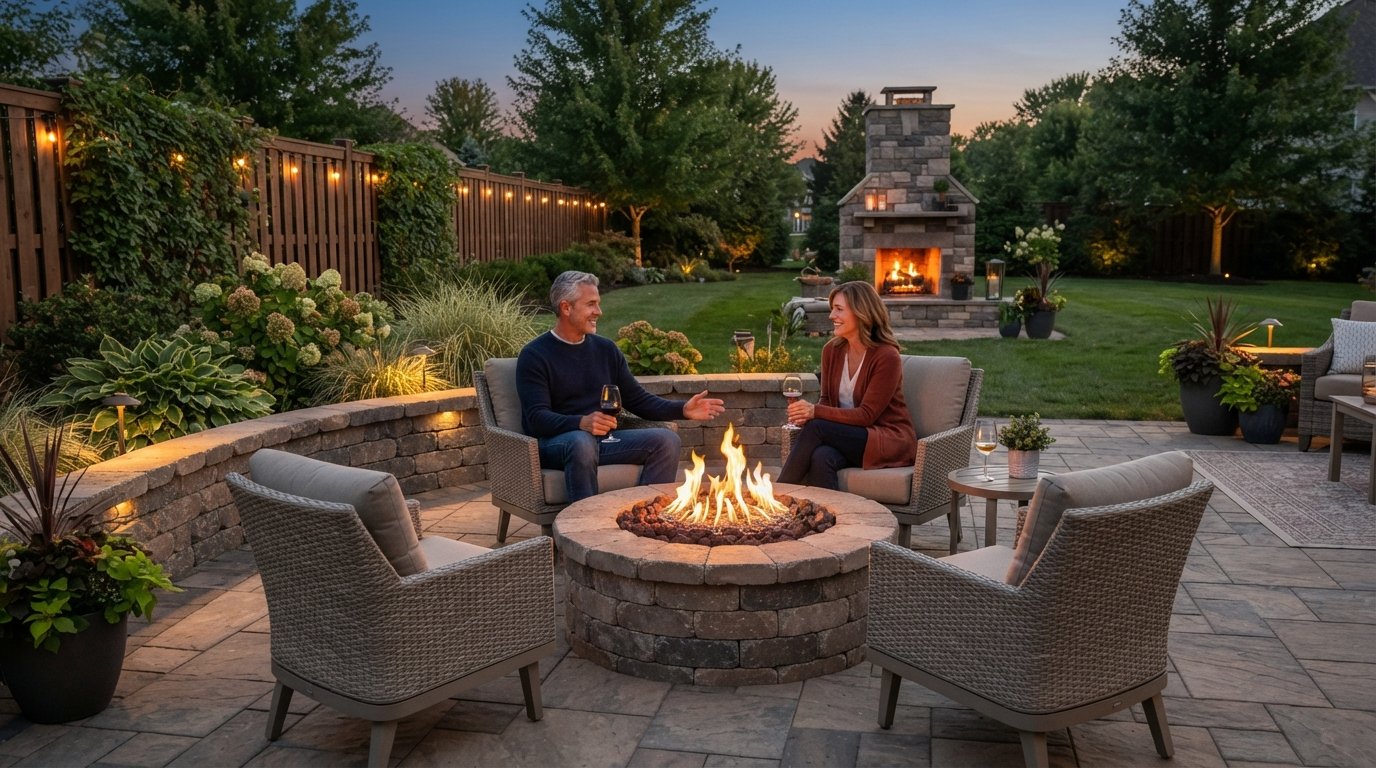
Outdoor Fire Pit and Fireplace Installation Design and Safety
Plan a safe outdoor fire pit and fireplace installation with our design and safety guide. Call (833)-365-8755 for free quotes from independent local providers.

By Elena Shaw
Learn more about Outdoor Landscaping and Design for guides, costs, and what to expect.
Compare Outdoor Landscaping and Design Pros Near You

Enter your ZIP code to compare independent local professionals and request free quotes.
A backyard fire feature transforms an ordinary patio into a gathering place, but the difference between a cozy focal point and a costly mistake comes down to planning. Homeowners who rush into outdoor fire pit and fireplace installation often discover too late that clearances were ignored, fuel choices were mismatched to the space, or local rules prohibit burning on their lot. The result can be a feature that sits unused, fails inspection, or poses a genuine hazard. This guide walks through the design decisions, safety requirements, and budgeting realities that separate a successful build from a regretful one.
Choosing the Right Fuel Type for Your Fire Feature
The first decision in any outdoor fire pit and fireplace installation is fuel. Wood, natural gas, and propane each bring distinct advantages and tradeoffs that affect design, cost, and day-to-day use. Wood-burning features deliver authentic crackle and high heat, but they require a steady supply of seasoned firewood, produce smoke and ash, and are subject to local burning ordinances that can restrict use on certain days or during drought conditions. Gas and propane models offer instant ignition, consistent flames, and no ash cleanup, though they cost more to install and depend on a fuel line or tank.
For homeowners who value convenience and use their patio frequently, natural gas is often the preferred choice because it eliminates the need to store fuel and provides unlimited burn time. Propane is a practical alternative where a gas line cannot be run economically, but it requires a dedicated tank and refill schedule. Wood remains popular for its ambiance and lower upfront equipment cost, yet it demands more attention to clearance and spark management. The table below summarizes the key differences to weigh during planning.
- Wood: Lowest equipment cost, authentic experience, but requires clearance for embers, produces smoke, and depends on local burn rules.
- Natural gas: Clean, instant, and endless fuel, but needs a plumbed line and professional connection, with higher installation cost.
- Propane: Flexible placement away from gas lines, moderate cost, but requires tank storage and periodic refills.
Beyond fuel, consider how often you will use the feature and in what seasons. A gas fireplace can be turned on for a quick evening without the preparation that wood demands, which often translates to higher usage. If your goal is a focal point for entertaining, the convenience of gas may justify the added expense. If you prize the traditional experience and have space for proper clearances, wood can be a rewarding choice provided you verify local regulations first.
Placement, Clearances, and Structural Safety
Placement is where most safety problems begin. An outdoor fire pit or fireplace must maintain safe distances from structures, combustible materials, and overhead vegetation. As a general rule, keep wood-burning features at least 10 feet from your house, fence, or shed, and maintain a minimum of 15 feet of clearance from overhead branches. Gas units often require less clearance, but manufacturers still specify minimum distances that must be followed to the letter. These distances are not suggestions; they are based on heat radiation and ember travel that can ignite nearby materials even when the fire appears contained.
The base and surround also matter. A fire pit should sit on a level, noncombustible surface such as concrete, stone, or compacted gravel. Building directly on a wood deck without a properly insulated base is a common and dangerous shortcut. For built-in fireplaces, the chimney or flue must be designed to draft correctly and terminate above the roofline in accordance with local codes. Hiring a contractor who understands these structural requirements is essential; a feature that looks correct but vents poorly can fill a patio with smoke or, worse, allow carbon monoxide to accumulate in enclosed areas.
Wind direction is another practical consideration. Position the feature so that prevailing breezes carry smoke away from seating areas and doorways. A fire pit placed upwind of the patio can make the space unusable on breezy evenings. Thoughtful placement also accounts for foot traffic: keep the fire feature away from main walkways and ensure that chairs and tables can be arranged with at least three feet of clear space around the perimeter. For those planning a broader outdoor renovation, our guide on small space renovation design and storage solutions offers ideas for maximizing compact patios without compromising safety clearances.
Local Rules, HOA Limits, and Permits
Before breaking ground, verify what your municipality and homeowners association allow. Burning rules vary widely: some areas prohibit wood burning on air quality alert days, while others ban open burning entirely in dense neighborhoods. HOAs frequently impose their own restrictions on fire feature placement, height, and fuel type, and some require architectural review before installation. Ignoring these rules can lead to fines, forced removal, or liability if a fire spreads.
Permits are often required for built-in fireplaces, gas lines, and any structure that modifies the footprint of a patio or deck. A permit ensures that the work is inspected for code compliance, which protects you at resale and provides a record of proper installation. The permit process typically involves submitting a site plan that shows clearances, fuel connections, and structural details. Skipping the permit to save time or money is a false economy; unpermitted work can complicate insurance claims and home sales.
To navigate these requirements smoothly, gather the following before hiring a contractor:
- Check your local fire department or building department website for burning ordinances and permit requirements.
- Review your HOA covenants for any rules about outdoor fire features.
- Confirm setback and clearance requirements with a code official if anything is unclear.
- Ask prospective contractors whether they will handle permit applications and inspections.
Once you have clarity on what is allowed, you can design with confidence. A contractor who regularly works in your area will already know the local nuances and can help you avoid costly redesigns.
Material Choices for Built-In Fire Pits and Chimneys
Materials determine both the look and the longevity of your fire feature. For built-in fire pits, common choices include cast concrete, natural stone, brick, and fire-rated block. Concrete offers a clean, modern appearance and can be cast in various shapes, but it may crack under intense heat if not properly reinforced. Natural stone, such as granite or limestone, provides a timeless look and excellent heat resistance, though it comes at a higher price. Brick remains a classic option that pairs well with traditional homes and is relatively affordable.
The firebox itself must be lined with firebrick or a refractory material rated for high temperatures. Using standard brick or concrete block in the firebox can lead to spalling and structural failure over time. For chimneys, stainless steel flue liners are the standard for gas and wood fireplaces because they resist corrosion and handle high heat. The chimney cap should be screened to prevent debris and animals from entering while allowing exhaust to escape freely.
Consider the surrounding hardscape as well. The patio surface should be noncombustible within the clearance zone. If you have a wood deck, maintain a generous buffer of stone, concrete, or gravel around the fire feature. Seating walls and benches should be constructed from materials that will not scorch or degrade from radiant heat. A well-designed feature integrates these elements so that safety and aesthetics work together rather than competing.
Budgeting and Hiring a Hardscape Contractor
Costs for outdoor fire pit and fireplace installation vary widely based on fuel type, materials, and complexity. A simple wood-burning fire pit with a stone surround might range from $500 to $2,000 in materials alone, while a built-in gas fireplace with a chimney and stone veneer can exceed $10,000. Labor typically adds 40 to 60 percent to material costs, depending on local rates and site conditions. Homeowners should also budget for permits, gas line extensions, and any necessary site work such as grading or electrical connections for ignition systems.
Hiring the right contractor is as important as the design itself. Look for a hardscape or landscape contractor with experience in fire features and a portfolio of completed projects. Ask whether they will pull permits, how they handle gas connections (a licensed plumber or gas fitter is often required), and what their timeline looks like. Get at least three quotes and compare the scope of work line by line; a low bid that omits permit fees or proper firebox materials is not a bargain. For homeowners planning a move or renovation in tandem with a fire feature, resources like Moving.Homes can help coordinate logistics and reduce stress.
Finally, remember that 180Remodel connects homeowners with independent local providers for projects like fire pit installation and surrounding hardscape. You can compare quotes from multiple providers in our network with no obligation, which simplifies the process of finding a professional suited to your project. A well-planned fire feature adds value, extends your outdoor living season, and provides a safe gathering spot for years to come.