
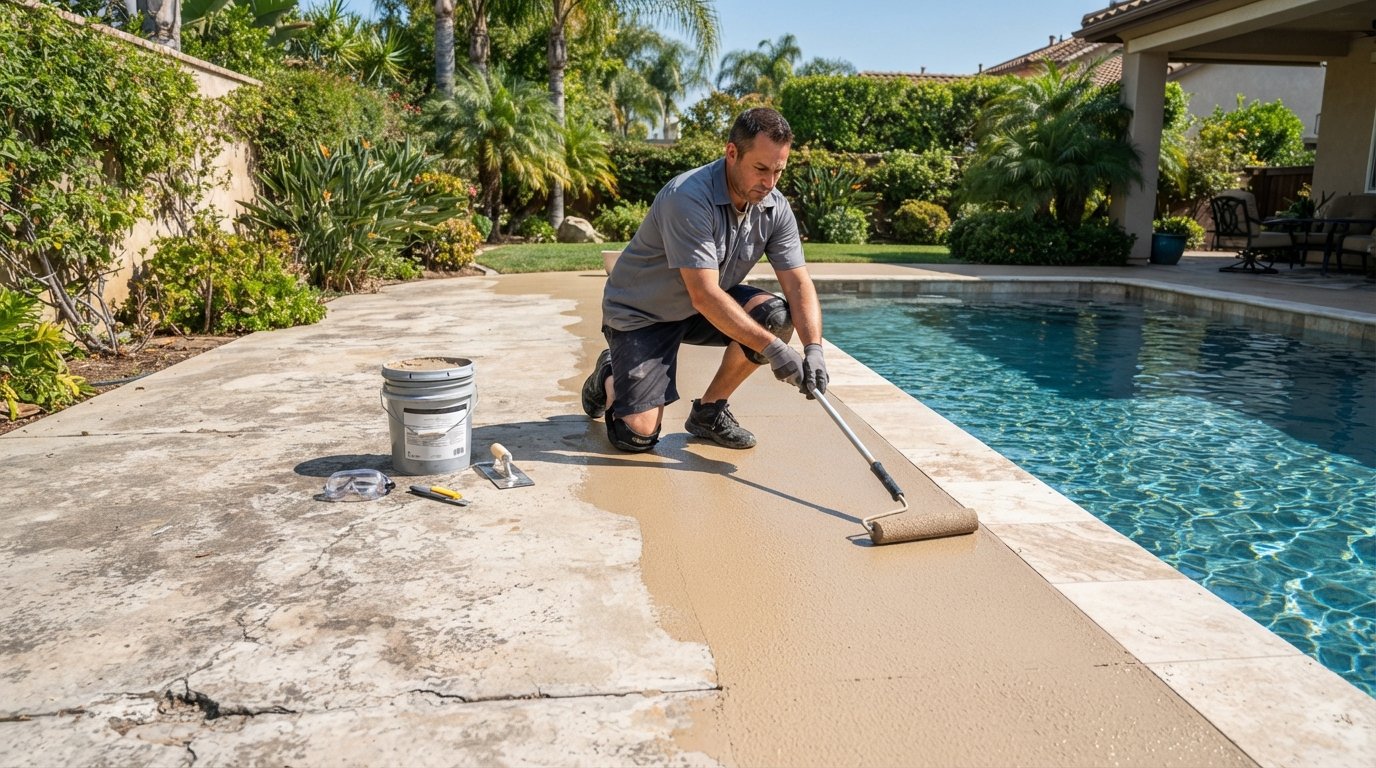
Pool Deck Resurfacing Materials Cost: 2026 Price Guide
Compare pool deck resurfacing materials cost and find the best finish for your backyard. Call 8333658755 for a free quote today.

By Maya Adler
Learn more about Concrete Repair and Maintenance for guides, costs, and what to expect.
Compare Concrete Repair and Maintenance Pros Near You

Enter your ZIP code to compare top-rated local professionals and request free quotes.
A sparkling pool loses its appeal when the surrounding deck looks cracked, faded, or dangerously slick. Homeowners across the country face the same question every season: is it worth resurfacing, and what will the materials actually cost? The answer depends on the surface you choose, the condition of the existing slab, and the labor market in your region. This guide breaks down real numbers for 2026, compares popular materials side by side, and shows you how to budget without surprises.
Before diving into dollar figures, it helps to understand why resurfacing matters beyond appearance. A worn pool deck can become a safety hazard, especially when textured finishes erode and become slippery near water. Cracks also allow moisture to reach the substrate, which can lead to costly structural repairs if ignored. Resurfacing restores grip, seals minor damage, and refreshes the entire backyard aesthetic, often for a fraction of the cost of a full deck replacement.
Why Pool Deck Resurfacing Materials Cost Varies So Much
The single biggest driver of pool deck resurfacing materials cost is the type of finish you select. Basic acrylic coatings might run a few dollars per square foot, while premium travertine or glass-bead finishes can exceed twenty dollars per square foot installed. That spread exists because each material offers different levels of durability, slip resistance, heat reflectivity, and visual appeal. Understanding these trade-offs is the first step toward a smart investment.
Regional labor rates also play a major role. Contractors in high-cost metro areas charge more for the same square footage than those in rural markets. Seasonality matters too: scheduling work in late fall or winter often unlocks better pricing because pool contractors have fewer jobs. Finally, the condition of your existing deck influences preparation costs. A surface with extensive cracking, efflorescence, or previous coating failures requires more grinding, patching, and priming, all of which add to the final bill.
If you are simultaneously planning other renovation projects, it helps to approach budgeting holistically. Our guide on how to plan for material cost for remodeling walks through a framework that applies just as well to pool decks as it does to kitchens and bathrooms.
To give you a realistic baseline, here are typical installed cost ranges for the most common pool deck resurfacing materials in 2026. These figures include surface preparation, materials, and standard labor for a deck in average condition.
- Acrylic coating (spray-down or rolled): $3 to $7 per square foot
- Concrete overlay (stamped or textured): $6 to $12 per square foot
- Travertine or natural stone pavers (overlay): $12 to $22 per square foot
- Glass-bead or quartz aggregate finish: $8 to $15 per square foot
- Rubberized or cool-deck coating: $5 to $10 per square foot
These ranges assume a deck in reasonably sound condition. If extensive crack repair, leveling, or removal of old coatings is required, expect to add 20 to 40 percent to the material and labor total. Always request a detailed written estimate that separates preparation work from finish application so you can compare bids fairly.
Comparing the Most Popular Pool Deck Resurfacing Materials
Each material brings distinct advantages and limitations. Acrylic coatings are the budget-friendly workhorse of the industry. They are easy to apply, come in dozens of colors, and provide a cool-to-the-touch surface that resists fading. However, they typically last only five to eight years before needing a recoat, and they cannot hide significant structural cracks.
Concrete overlays offer a middle-ground solution with greater durability. A thin polymer-modified overlay can be stamped or textured to mimic stone, slate, or even wood. It bonds well to existing concrete and can cover minor imperfections. The downside is that overlays can delaminate if the substrate is not properly prepared, so hiring an experienced installer is critical.
Natural stone pavers, particularly travertine, remain the gold standard for luxury pool decks. They stay cool underfoot, age gracefully, and add immediate resale value. The trade-off is cost and weight: travertine requires a sturdy substrate and professional installation, and the material itself can cost three to four times more than acrylic. For homeowners who plan to stay in their home long-term, the investment often pays off in both enjoyment and property value.
Glass-bead and quartz aggregate finishes occupy a niche between acrylic and stone. They incorporate tiny glass or quartz spheres into a resin binder, creating a surface that reflects sunlight, feels smooth yet grippy, and resists staining. These finishes are popular in high-end resorts and modern residential pools. They cost more than standard acrylic but less than natural stone, making them an attractive compromise.
Rubberized and cool-deck coatings are engineered specifically for slip resistance and heat reduction. They are ideal for families with young children or elderly swimmers. The texture feels softer than concrete and provides excellent traction even when wet. The main drawback is that rubberized surfaces can degrade faster in intense UV environments, so they may need more frequent maintenance in sunbelt states.
What Else Affects the Final Price Besides Materials
Homeowners often focus on the per-square-foot material cost and overlook the ancillary expenses that can push a project over budget. Surface preparation is the most common hidden cost. Power washing, grinding, acid etching, and crack filling are labor-intensive steps that must be done correctly for any coating to adhere. Skipping or skimping on prep leads to premature failure and wasted money.
Drainage improvements are another factor. If your existing deck slopes toward the pool or toward your home, water pooling can damage both the finish and the underlying structure. Correcting drainage may involve adding channel drains, adjusting slope with a self-leveling compound, or installing a French drain along the perimeter. These fixes add cost but prevent much larger problems down the road.
Accessibility and site conditions also matter. A backyard with narrow gate access or steep terrain makes it harder for crews to bring in equipment and materials, which can increase labor hours. Similarly, removing and disposing of an old deck surface adds dumpster rental and hauling fees. If your project includes replacing the pool coping (the cap around the pool edge), that is a separate line item that can add several thousand dollars depending on the material.
Permits and inspections may apply in some municipalities, especially if the work involves structural changes or drainage modifications. Even minor resurfacing projects sometimes require a permit if the deck is considered part of the pool enclosure. Check with your local building department before signing a contract, and factor permit fees into your budget.
How to Budget for Pool Deck Resurfacing Materials Cost
Start by measuring your deck accurately. Multiply length by width to get square footage, then subtract the area occupied by the pool itself if the deck wraps around it. Add 10 percent for waste and cuts. With that number in hand, you can multiply by the per-square-foot ranges above to get a rough materials estimate. Labor typically accounts for 40 to 60 percent of the total project cost, so double the materials figure if you want a quick ballpark for the installed price.
Next, get at least three written estimates from licensed contractors. Each estimate should break down preparation, materials, labor, and any additional fees. Be wary of bids that are significantly lower than the others; they often indicate cut corners on prep or inferior materials. Ask each contractor about warranty terms, insurance coverage, and whether they will handle permits.
If you are comparing pool deck resurfacing to other outdoor upgrades, it helps to think in terms of cost per year of useful life. An acrylic coating that costs $5 per square foot and lasts six years costs about $0.83 per square foot annually. A travertine overlay that costs $18 per square foot and lasts thirty years costs about $0.60 per square foot annually. Framing the decision this way reveals that higher upfront costs sometimes deliver better long-term value.
For homeowners who want to explore a broader range of renovation options beyond the pool area, platforms like USremodel connect you with independent contractors for projects ranging from bathroom remodels to roofing and solar. Comparing multiple quotes side by side remains the most reliable way to find competitive pricing.
Choosing the Right Material for Your Climate and Lifestyle
Climate should guide your material selection as much as budget. In hot, sunny regions like Arizona, Texas, and Florida, heat reflectivity is paramount. Travertine, cool-deck coatings, and light-colored acrylics stay significantly cooler underfoot than dark concrete or brick. In freeze-thaw climates, you need a material that can flex slightly without cracking; acrylic coatings and rubberized finishes outperform rigid overlays in those conditions.
Lifestyle also matters. If you host frequent pool parties with wet, running children, prioritize slip resistance above all else. Glass-bead finishes and textured overlays offer excellent grip without feeling rough. If you have pets that swim, choose a material that resists scratches and is easy to hose down. For homeowners who want minimal maintenance, travertine and quartz aggregate finishes require less frequent recoating than standard acrylics.
Finally, consider how the deck interacts with the rest of your backyard design. The color and texture of your resurfaced deck should complement your pool tile, patio furniture, and landscaping. Many contractors offer sample boards or small mockups so you can see how a finish looks in natural light before committing. Taking this step prevents expensive regrets and ensures a cohesive outdoor living space.
Once you have narrowed your options, schedule the work during the off-season if possible. Pool contractors in most markets are busiest from late spring through early fall. Booking in winter or early spring often means faster scheduling, more attentive crews, and sometimes discounted pricing. It also gives the new surface time to cure before the heavy swimming season begins.
Resurfacing your pool deck is an investment in safety, aesthetics, and property value. By understanding the true cost of materials, preparing for hidden expenses, and comparing multiple contractor bids, you can move forward with confidence. The right finish will transform your backyard into a space you enjoy for years, without draining your wallet in the process.