
Labor vs Material Cost: A Homeowner’s Remodeling Guide
"*" indicates required fields
You’ve saved for your kitchen remodel, picked out beautiful cabinets and quartz countertops, and are ready to get started. Then the first contractor quote arrives, and your eyes jump straight to the bottom line. It’s higher than you expected. As you scan the breakdown, you see a surprising fact: the cost of the physical materials is often less than half the total. The majority of your investment is going toward something called “labor.” Understanding this balance is the single most important step in planning a successful, stress-free home renovation.
Understanding Labor vs Material Cost Remodeling
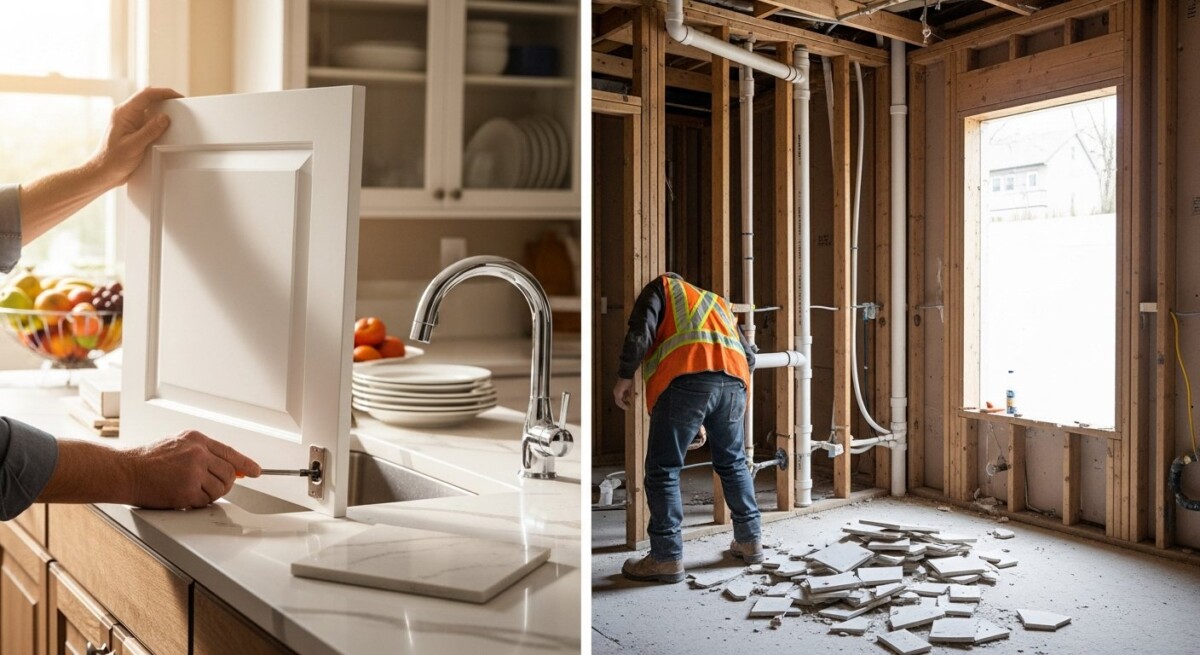
In simple terms, every remodeling project cost is made up of two main parts: the things you buy (materials) and the work to install them (labor). Materials include everything you can touch,lumber, tiles, fixtures, paint, and appliances. Labor is the skill, time, and expertise of the carpenters, plumbers, electricians, and project managers who transform those materials into your new space.
Why does labor often cost more? High-quality labor isn’t just about hours on a clock. It encompasses years of training, specialized tools, insurance, licenses, and the problem-solving experience to handle the unexpected issues hidden behind your walls. A skilled professional ensures the work is done safely, correctly, and to code, protecting your home’s value.
Why This Matters for Your Home
Misunderstanding the labor vs. material cost split can lead to poor decisions that hurt your home and your wallet. If you budget only for materials, you might be tempted to cut corners on labor by hiring the cheapest helper or attempting a complex DIY project beyond your skill level. This is a major risk.
Incorrect installation can void warranties on expensive materials, lead to water damage or electrical hazards, and create problems that require costly re-dos. Professional labor is an investment in the longevity, safety, and functionality of your renovation. It ensures your beautiful new materials perform as intended for years to come.
If you notice signs of this issue in your home, it may help to speak with a qualified contractor. Request a free quote or call to explore your repair or remodeling options.
Common Problems Homeowners Experience
When the balance between labor and material costs isn’t managed with a clear plan, homeowners often face frustrating and expensive outcomes. The most common issue is “sticker shock” from initial quotes, leading to project delays or scaling back dreams to a point of dissatisfaction.
Other problems arise during the project itself. Without a realistic budget that respects skilled labor, you might encounter unreliable workers, missed deadlines, and subpar craftsmanship. These issues often stem from choosing a contractor based solely on the lowest bid, which typically cuts labor costs in unsustainable ways.
- Unfinished projects due to running out of budget mid-way.
- Visible flaws like uneven tile, crooked cabinets, or poor paint finishes.
- Functional failures, such as plumbing leaks or electrical shorts, from improper installation.
- Wasted material costs because items were damaged or incorrectly installed.
- Permit and code violations that must be fixed before you can use the space.
- Significant delays as under-quoted contractors juggle too many jobs.
How Professionals Solve the Problem
A reputable contractor brings clarity and value to the labor vs. material equation. They provide detailed, transparent estimates that break down costs, so you see exactly what you’re paying for. Their expertise allows them to source materials efficiently and plan labor precisely, minimizing waste and ensuring your budget is allocated effectively.
The professional process is designed to deliver a reliable outcome. It starts with a thorough consultation and design, where potential hidden issues are identified early. Then, a skilled crew executes the plan with the right tools and techniques. This methodical approach, as outlined in resources like our guide on avoiding costly remodeling mistakes, is what turns your investment into lasting quality.
- Detailed Assessment & Planning: A pro evaluates the existing conditions, checks for hidden problems, and creates a precise project plan.
- Transparent Quoting: You receive an estimate that clearly separates material costs (with product selections) from labor costs (with time and crew allocations).
- Expert Execution: Licensed tradespeople perform the work in the correct sequence, adhering to building codes and best practices.
- Project Management: A foreman or project manager coordinates all trades, schedules, and inspections, keeping the project on track.
- Quality Assurance & Cleanup: The work is reviewed for quality, and the site is cleaned, leaving you with a finished, functional space.
A professional inspection can reveal hidden issues before they become expensive repairs. Compare contractor quotes here or call to discuss your project.
Warning Signs You Should Not Ignore
How can you tell if a past renovation skimped on labor? Or if your planning is heading in a risky direction? Certain red flags indicate that the labor side of the equation was undervalued, and problems may be looming.
Pay attention to the quality of workmanship in your home or in quotes you receive. Rushed, sloppy, or obviously incorrect installations are a clear sign. Another major warning is a contractor who is hesitant to provide a detailed, written estimate that breaks out labor and material costs separately.
- A quote that seems drastically lower than others for the same scope of work.
- Contractors who ask for a large cash deposit or full payment upfront for materials.
- Lack of proper licensing, insurance, or willingness to pull required permits.
- Vague language in a contract about change orders or how unexpected issues will be handled.
- No clear project timeline or communication plan.
- Pressure to use cheaper, lower-quality materials to fit an unrealistic budget.
What Affects the Cost of Repairs or Installation
Several key factors influence where your labor and material dollars go. Understanding these helps you have more productive conversations with contractors and make informed choices that align with your priorities.
The project’s complexity is a huge driver. A simple bathroom refresh with like-for-like replacements costs less in labor than a full gut job that requires moving plumbing lines, walls, and electrical circuits. The accessibility of the work area also matters,a second-story addition or a tight urban lot with no storage can increase labor time and cost.
Costs can vary depending on the condition of your home. The best way to know the price is to get a personalized estimate. Request free quotes from contractors or call today.
How to Choose the Right Contractor
Selecting your contractor is the most critical decision in your remodel. The right partner will be transparent about labor and material costs, guide you through trade-offs, and deliver quality work. Your goal is to find value, not just the lowest price.
Start by seeking recommendations from friends or trusted online sources. Then, interview at least three contractors for your project. Ask detailed questions about their process, their team, and how they handle surprises. A trustworthy contractor welcomes these questions.
- Verify they are licensed, insured, and have a good standing with local business bureaus.
- Read recent reviews and ask for references from projects similar to yours.
- Request a detailed, written estimate that clearly lists materials (brand, model, quantity) and labor.
- Compare the scope of work, timeline, and communication plans across multiple quotes.
- Trust your gut during the consultation. Do they listen, communicate clearly, and inspire confidence?
Long-Term Benefits of Professional Work
Investing in skilled professional labor pays dividends long after the project is complete. It’s the difference between a renovation that looks good on day one and one that continues to function beautifully, safely, and efficiently for decades. This protects and enhances the value of your single largest asset: your home.
Quality craftsmanship means fewer callbacks for repairs, lower utility bills thanks to proper installation of insulation and windows, and peace of mind knowing electrical and plumbing systems are safe. When it comes time to sell, appraisers and buyers recognize and reward the value of professional, permitted work. A well-executed remodel is an investment that you get to enjoy daily and that yields a strong financial return.
What is a typical labor vs material cost ratio?
There’s no single rule, as it varies by project. Generally, labor can range from 40% to 60% of the total cost. For complex projects like kitchens and bathrooms with intricate plumbing and electrical, labor often exceeds material costs. Simpler projects like painting may have a higher material percentage.
Why shouldn’t I just hire the cheapest contractor?
The cheapest bid often cuts corners on labor quality, crew experience, or proper insurance. This can lead to costly mistakes, code violations, and project delays. It’s safer to compare detailed quotes for similar scopes of work and choose based on value, reputation, and clarity, not just the bottom line.
Can I save money by purchasing my own materials?
Sometimes, but it can be risky. Contractors often get trade discounts you can’t access. More importantly, if materials you supply are wrong, damaged, or late, it can delay the project and you may be liable. It’s best to discuss this option upfront and understand the contractor’s policy.
How do change orders affect labor and material costs?
Changing your mind mid-project almost always increases costs. It often requires extra labor to redo work and may involve new materials. A good contractor will have a clear change order process to document any adjustments to the original contract price and timeline before proceeding.
What’s included in “labor cost” on an estimate?
It’s more than just hourly wages. It includes the contractor’s overhead (office, insurance, vehicles), profit, and the cost of all workers (carpenters, plumbers, etc.). It also covers project management, tool costs, waste disposal, and the expertise to complete the job correctly and efficiently.
Is it worth paying more for a licensed contractor?
Absolutely. A license ensures they have met minimum competency standards and know local building codes. It also provides you with recourse if something goes wrong. Working with an unlicensed contractor can void your homeowner’s insurance if damage occurs and makes it very difficult to resolve disputes.
How can I reduce labor costs without sacrificing quality?
Plan thoroughly to avoid mid-project changes. Choose standard-sized materials to minimize custom cutting. Be flexible with the schedule so the contractor can efficiently sequence trades. Also, consider doing some demolition yourself (if safe), but leave all installation to the pros.
Understanding the balance between labor and material costs empowers you to plan a realistic budget and choose a contractor who offers true value. By respecting the expertise that quality labor brings, you protect your home, your safety, and your investment. Don’t let uncertainty stall your dreams,reaching out for professional quotes is the best first step to turning your remodeling vision into a lasting reality.

About Alex Carter
"*" indicates required fields