
Countertop Installation: Costs, Materials, and Pro Tips
Countertop installation can transform your kitchen. Learn about materials, costs, and how to choose a pro for a flawless finish.

By Justin Parker
Learn more about Countertop Installation for guides, costs, and what to expect.
Compare Countertop Installation Pros Near You

Enter your ZIP code to compare top-rated local professionals and request free quotes.
Replacing your countertops is one of the most transformative upgrades you can make to a kitchen or bathroom. It changes the entire look and feel of the space, and it adds real value to your home. But a successful countertop installation involves much more than picking a beautiful slab of granite or quartz. From measuring and templating to cutting and sealing, the process requires precision, the right tools, and experienced hands. Whether you are planning a full kitchen remodel or a simple bathroom refresh, understanding what goes into a professional countertop installation helps you make smarter decisions, avoid costly mistakes, and end up with a surface that lasts for decades.
In this guide, we break down everything you need to know about countertop installation. We cover the most popular materials, how to prepare for the job, what to expect during the process, and how to choose a contractor you can trust. We also share practical tips for budgeting and maintenance, so you can protect your investment and enjoy your new counters for years to come.
Choosing the Right Countertop Material
The material you choose sets the tone for your entire room. It also determines your budget, maintenance routine, and how long the installation will take. Here are the most common countertop options, along with their key characteristics.
Granite and Quartz: The Popular Pair
Granite is a natural stone that offers unique veining and a high-end look. It is heat resistant and durable, but it requires periodic sealing to prevent stains. Quartz, on the other hand, is an engineered stone made from crushed quartz and resin. It is non-porous, so it never needs sealing, and it comes in a wide range of colors and patterns, including options that mimic marble. Both materials are excellent choices, but they differ in cost and care.
Quartz is generally more consistent in appearance, which appeals to homeowners who want a uniform look. Granite offers more natural variation, meaning no two slabs are exactly alike. If you are deciding between the two, consider your lifestyle. Do you cook frequently and want a low-maintenance surface? Quartz may be the better pick. Do you love the idea of a one-of-a-kind natural stone? Granite could be your match.
Laminate, Butcher Block, and Tile
Laminate countertops are the budget-friendly option. They are easy to clean, come in many styles, and are simple to install. Modern laminates can even mimic the look of stone or wood, but they are prone to scratches and heat damage. Butcher block adds warmth and is great for food preparation, but it requires regular oiling and careful maintenance. Tile countertops are affordable and allow for creative patterns, but the grout lines can be difficult to keep clean.
Each material has its own installation requirements. Laminate is often installed over existing counters, while butcher block and tile may require a sturdy base. Understanding these differences helps you plan your project and communicate effectively with your contractor.
Preparing for Your Countertop Installation
Proper preparation is the key to a smooth countertop installation. Before the crew arrives, there are several steps you should take to protect your home and ensure the job goes well.
- Clear the countertops: Remove all items from the existing counters, including appliances, dishes, and decorative pieces.
- Empty the cabinets below: The installation may require access to the plumbing and the underside of the countertop, so clear out the base cabinets.
- Disconnect the sink and appliances: Your contractor will need to disconnect the sink, faucet, and possibly the dishwasher or cooktop. Make sure these are accessible.
- Protect floors and walls: Lay down drop cloths or cardboard to protect your flooring and walls from dust and debris.
Taking these steps ahead of time helps the installation team work faster and reduces the risk of damage. It also shows your contractor that you are organized and prepared, which can lead to a more positive working relationship.
The Countertop Installation Process Step by Step
Once you have selected your material and prepared your space, the installation can begin. Here is what typically happens during a professional countertop installation.
Measuring and Templating
The first step is to create a precise template of your existing countertops. The contractor will measure every angle, corner, and cutout, including the sink, cooktop, and backsplash. This template is used to fabricate your new countertop in the shop, ensuring a perfect fit. For stone countertops, this step is crucial because any error can result in a costly mistake.
Removing the Old Countertops
Next, the old countertops are removed. This involves disconnecting the sink and any appliances, cutting through caulk or adhesive, and carefully lifting the old surface. If your old counters are laminate, they may be removed in sections. Stone countertops are heavier and may require more effort. Your contractor will take care to avoid damaging your cabinets or walls during removal.
Fabrication and Finishing
While your new countertop is being fabricated, the edges are shaped and polished according to your specifications. This is when you decide on details like edge profiles (bullnose, bevel, or eased) and any cutouts for sinks or cooktops. The fabrication process can take several days, depending on the material and complexity of your design.
Installing the New Countertop
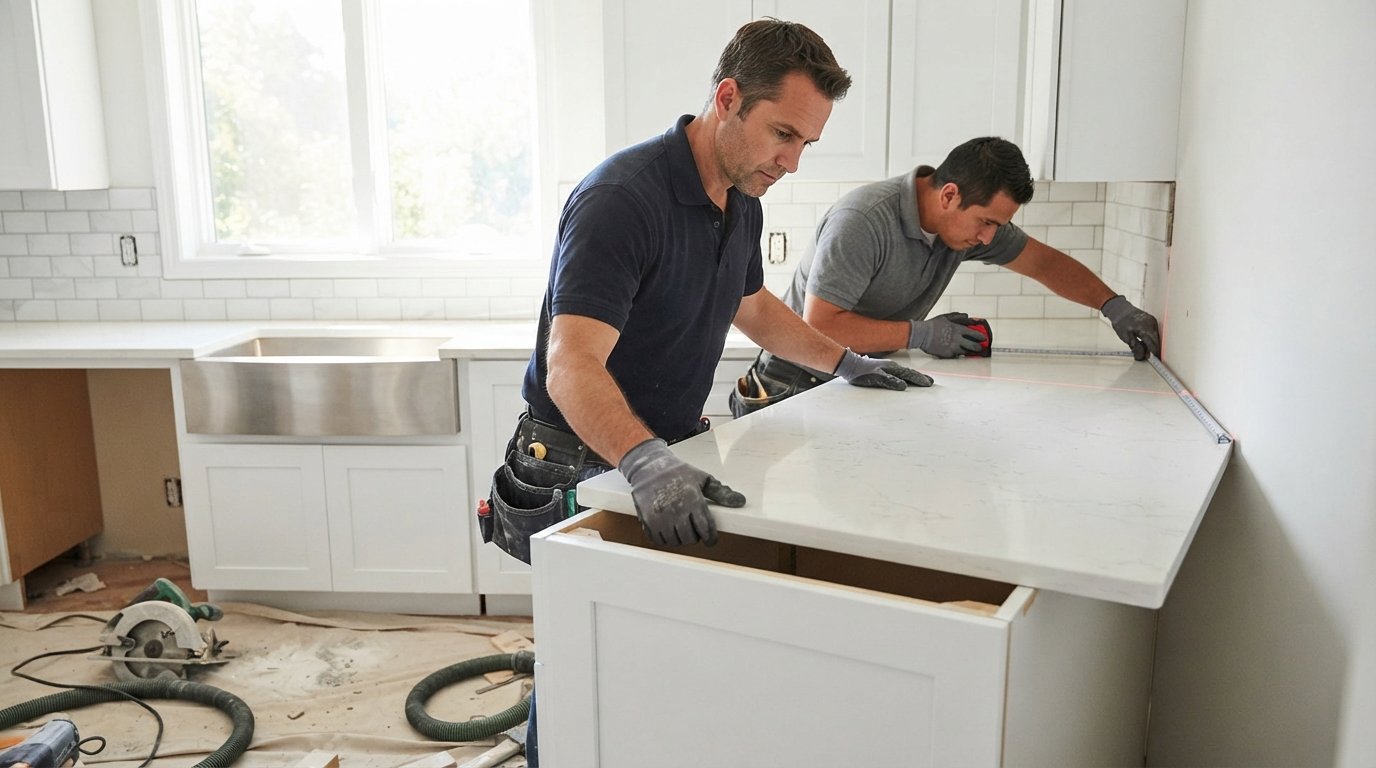
On installation day, the crew will bring your new countertop to your home and carefully place it on the cabinets. They will check for levelness, make any necessary adjustments, and secure the countertop with adhesive or brackets. The seams between sections are joined and sealed, and the sink and other fixtures are reconnected. Finally, the contractor will apply sealant to stone surfaces (if needed) and clean up the workspace.
The entire installation process, from templating to final placement, usually takes one to three days. However, the full timeline from ordering to completion can be several weeks, especially for natural stone, which requires time for fabrication and delivery.
Costs and Budgeting for Countertop Installation
The cost of countertop installation varies widely based on material, square footage, and labor. On average, homeowners spend between $2,000 and $4,500 for a typical kitchen, but this can increase significantly for premium materials like quartzite or marble. Here is a rough breakdown:
- Laminate: $20 to $50 per square foot installed
- Tile: $15 to $40 per square foot installed
- Butcher block: $30 to $60 per square foot installed
- Granite: $50 to $150 per square foot installed
- Quartz: $60 to $200 per square foot installed
These prices include materials and professional installation. Additional costs may include removal of old countertops, plumbing or electrical work, and specialty edge profiles. To avoid surprises, ask your contractor for a detailed written estimate that includes all fees and charges. Also, be wary of extremely low bids, as they may indicate subpar materials or workmanship.
When budgeting, remember that countertops are a long-term investment. Spending a little more on quality materials and experienced installation can save you money in the long run by preventing cracks, stains, and premature wear.
DIY vs. Professional Countertop Installation
Some homeowners consider installing countertops themselves to save money. While laminate and tile are more DIY-friendly, stone and quartz are best left to professionals. Here is why:
Precision and Tools: Stone countertops require specialized tools for cutting, polishing, and drilling. A professional contractor has the right equipment and experience to make precise cuts and avoid chipping or cracking. They also know how to handle heavy slabs safely, reducing the risk of injury.
Warranty and Support: Most manufacturers require professional installation to validate the warranty on stone and quartz products. If you install the countertop yourself and something goes wrong, you may be responsible for the full cost of replacement. A professional installation typically comes with a workmanship warranty, giving you peace of mind.
Time and Effort: Countertop installation is time-consuming and physically demanding. From measuring to moving heavy slabs, the process can take days. Professionals can complete the job faster and with fewer mistakes, freeing you up to focus on other aspects of your remodel.
If you are still tempted to go the DIY route, be honest about your skill level. A misaligned seam or an uneven cut can ruin the entire look of your kitchen. In most cases, hiring a professional is worth the extra cost.
How to Choose a Countertop Installation Contractor
Selecting the right contractor is just as important as choosing the right material. A skilled installer will ensure your countertops look beautiful and function perfectly for years. Here are some tips for finding a reliable professional:
- Check credentials: Verify that the contractor is licensed, insured, and bonded. This protects you from liability in case of accidents or damage.
- Read reviews: Look for online reviews on platforms like Google, Yelp, and the Better Business Bureau. Pay attention to comments about punctuality, cleanliness, and quality of work.
- Ask for references: A reputable contractor should be happy to share photos of past projects and contact information for previous clients.
- Get multiple quotes: Compare at least three estimates to understand the market rate and ensure you are getting a fair price.
- Review the contract: Read the contract carefully, including the payment schedule, timeline, and warranty terms. Never sign a contract with blank spaces.
One effective way to find vetted contractors is to use a lead generation platform like 180 Remodel. They connect homeowners with pre-screened, licensed professionals in your area. You simply submit your project details, and within minutes you can receive quotes from multiple contractors. This saves you time and helps you compare options with confidence.
When you meet with potential contractors, ask about their experience with your specific material. For example, if you are installing quartz, ask how many quartz countertops they have installed. Also, inquire about their process for handling seams and cutouts, as these are common areas for errors.
Common Countertop Installation Mistakes to Avoid
Even with a professional contractor, things can go wrong if you are not careful. Here are some common mistakes to watch out for:
- Skipping the template: Some contractors may rely on measurements taken with a tape measure instead of a full template. This can lead to ill-fitting countertops, especially in older homes where walls are not square.
- Ignoring the backsplash: The backsplash and countertop should be coordinated. If you are installing a new countertop, consider whether your existing backsplash will still match. You may need to replace it as well.
- Choosing the wrong edge profile: The edge profile affects both the look and durability of your countertop. Sharp edges can chip easily, while rounded edges are more forgiving. Discuss your options with your contractor.
- Not sealing stone properly: Some natural stones require regular sealing. If your contractor does not seal your granite or marble after installation, it may be vulnerable to stains. Ask about the recommended sealing schedule.
- Forgetting about under-mount sinks: If you are installing an under-mount sink, the sink must be mounted before the countertop is placed. Coordinate the timing with your plumber and contractor.
By being aware of these pitfalls, you can ask the right questions and ensure your installation goes smoothly.
Maintaining Your New Countertops
Once your countertops are installed, proper maintenance is essential to keep them looking new. Here are some general tips:
- Clean daily: Use a mild soap and water solution with a soft cloth. Avoid abrasive cleaners or scouring pads, which can scratch the surface.
- Wipe up spills immediately: Especially for natural stone, acidic substances like lemon juice or vinegar can etch the surface if left overnight.
- Use cutting boards: Even on durable surfaces like quartz, cutting directly on the counter can dull your knives and leave marks.
- Use trivets for hot pans: While granite is heat resistant, extreme temperature changes can cause cracks. Always use a trivet or hot pad.
- Reseal natural stone: If you have granite or marble, test the seal periodically by dropping a little water on the surface. If the water soaks in, it is time to reseal.
Following these simple steps will help your countertops maintain their beauty and functionality for years to come.
Why Choose a Professional for Your Countertop Installation?
Countertop installation is a complex task that requires skill, precision, and the right tools. While it may be tempting to cut costs by doing it yourself, the risks are high. A professional installer can guarantee a perfect fit, proper sealing, and a stunning finish. They also bring experience and knowledge that can help you avoid common mistakes.
At 180 Remodel, we make it easy to find trusted countertop installation professionals in your area. Our network includes licensed and insured contractors who specialize in kitchen and bathroom remodeling. By submitting a simple online form, you can receive free, no-obligation quotes from multiple contractors, allowing you to compare prices and choose the best fit for your project. Our process is quick, transparent, and designed to help you make an informed decision.
Whether you are upgrading your kitchen for resale or simply want to enjoy a fresh new look, countertop installation is a worthwhile investment. With the right material and a skilled installer, you can transform your space and increase your home's value.
Ready to start your countertop project? Visit 180 Remodel today to get connected with top-rated contractors in your area. It takes less than five minutes to get started, and you will be on your way to the countertops you have always wanted.
Learn more about Countertop Installation for guides, costs, and what to expect.
Compare Countertop Installation Pros Near You
Enter your ZIP code to compare top-rated local professionals and request free quotes.