
Kitchen Remodel Cost Breakdown: A Practical Guide for Homeowners
"*" indicates required fields
You’ve been dreaming of a kitchen that actually works for your family,more counter space, better lighting, maybe an island where the kids can do homework. But when you start researching, the price tags feel like a punch to the gut. One contractor says $25,000. Another mentions $60,000. And your neighbor insists she did her whole remodel for $12,000. You’re left wondering: What is this actually going to cost me? That uncertainty is exactly why understanding a kitchen remodel cost breakdown matters before you spend a single dollar.
Most homeowners discover the problem when they open their first quote and have no idea if it’s fair. Without a clear breakdown, it’s nearly impossible to compare bids, spot hidden fees, or know where you can save. The bigger risk? Jumping into a project blind can lead to budget overruns, unfinished work, or corners cut that cost you far more later. Let’s walk through the numbers so you can plan with confidence.
Understanding Kitchen Remodel Cost Breakdown
A kitchen remodel cost breakdown is simply a line-by-line list of where your money goes. Think of it like a recipe: you need to know the price of every ingredient,cabinets, countertops, labor, plumbing, electrical, flooring, and permits,before you can decide if the final dish fits your budget. Without this breakdown, you’re essentially signing a blank check.
Costs vary wildly depending on your home’s age, the size of your kitchen, and the quality of materials you choose. A 2023 report from Remodeling magazine found that a major midrange kitchen remodel averages around $80,000, while a minor update can run $26,000 to $30,000. Older homes often cost more because they need structural repairs, updated wiring, or new plumbing to meet modern codes. If your home was built before 1980, expect surprises behind the walls.
What’s Included in a Typical Breakdown?
Most professional contractors divide costs into four buckets: labor (30,40%), materials (40,50%), permits and fees (5,10%), and contingency reserves (10,20%). Cabinetry and installation alone often eat up 25,30% of the total budget. Countertops add another 10,15%. Appliances, flooring, lighting, and plumbing fixtures fill in the rest. Understanding these percentages helps you decide where to splurge and where to save.
Why This Matters for Your Home
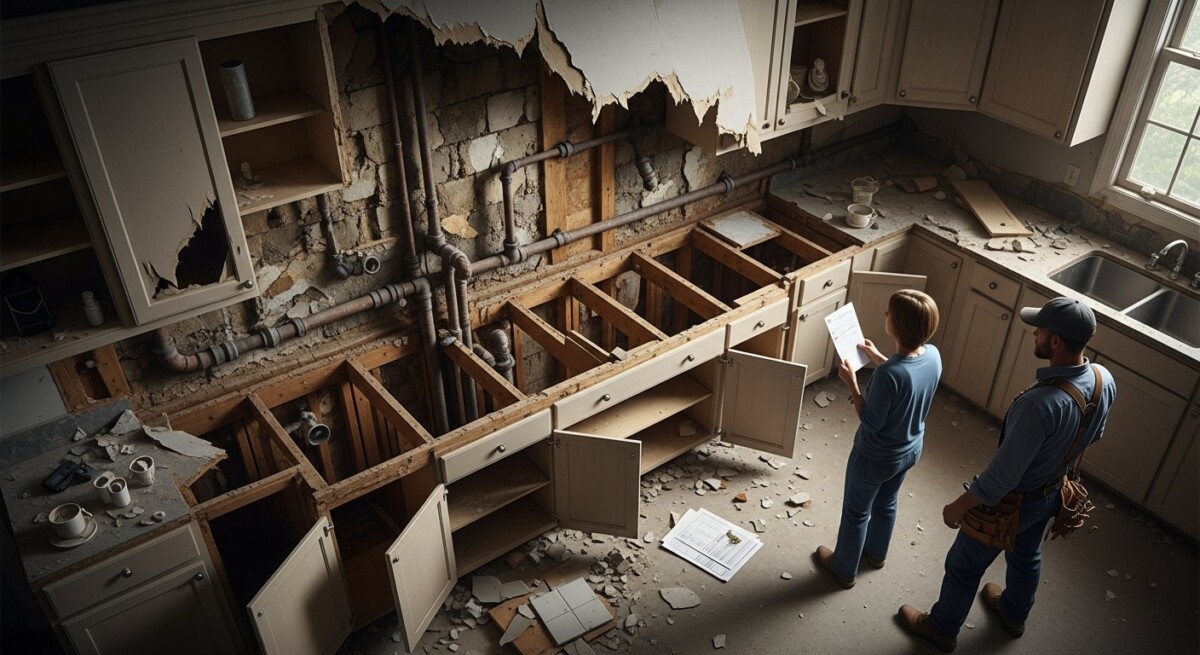
Skipping a proper cost breakdown doesn’t just hurt your wallet,it can damage your home. Imagine tearing out your old cabinets only to discover the floor has rotted from years of undetected leaks. Now you need subfloor replacement, mold remediation, and a week-long delay. Without a contingency fund, that unexpected $5,000 repair becomes a crisis. A good cost breakdown includes a buffer for exactly these moments.
There are also safety risks. Old wiring hidden behind walls can spark fires if overloaded by modern appliances. Outdated plumbing can burst under new fixture pressure. Professional contractors know this and build safety checks into their estimates. Ignoring the breakdown means ignoring the hidden dangers that could turn your dream kitchen into a liability. And when it comes time to sell your home, a poorly documented or cheaply done remodel can actually lower your property value rather than raise it.
If you notice signs of this issue in your home, it may help to speak with a qualified contractor. Request a free quote or call to explore your repair or remodeling options.
Common Problems Homeowners Experience
Even with the best intentions, homeowners run into the same handful of budget traps. The most common is underestimating labor costs. Skilled tradespeople,plumbers, electricians, tile setters,don’t come cheap, and their rates vary by region. A $20,000 budget might cover materials but leave nothing for the people who make it all work.
Another frequent issue is scope creep. You start with a simple cabinet refacing, then decide to replace the sink, then the flooring, and suddenly you’re doing a full gut job. Without a written cost breakdown that locks in scope, small changes snowball into thousands of dollars in extras. Here are the typical problems homeowners face:
- Underestimating labor costs by 20,30%
- Discovering hidden water damage or mold after demolition begins
- Choosing materials that look good but wear out quickly (e.g., cheap laminate countertops)
- Running out of funds for essential items like lighting or hardware
- Failing to account for permit fees and inspection costs
- Hiring the lowest bidder and ending up with poor workmanship that needs redoing
How Professionals Solve the Problem
Experienced contractors don’t guess,they calculate. A professional remodeler starts with a site visit to measure every inch, check the condition of existing systems (electrical, plumbing, HVAC), and discuss your must-haves. From there, they create a detailed bid that breaks down each line item. This isn’t just about price; it’s about transparency. You see exactly what you’re paying for and why.
Here’s how a typical professional kitchen remodel process works:
- Consultation and design , You meet onsite to discuss layout, style, and budget. The contractor measures and inspects existing conditions.
- Detailed estimate , You receive a written quote with line items for demolition, rough-in work (electrical, plumbing), cabinetry, countertops, flooring, backsplash, lighting, and cleanup.
- Permits and planning , The contractor pulls necessary permits and schedules inspections to ensure code compliance.
- Demolition and prep , Old materials are removed carefully to avoid damaging adjacent areas. Surprises (like rot or outdated wiring) are addressed with your approval before proceeding.
- Installation , Tradespeople work in sequence: rough plumbing and electrical first, then drywall, cabinets, countertops, flooring, and finally fixtures and appliances.
- Final walkthrough , You inspect every detail. The contractor fixes any issues and provides warranty information.
Professional work is safer and more reliable than DIY because contractors carry insurance, know local building codes, and have relationships with suppliers who offer better pricing. They also guarantee their work, which a weekend warrior cannot. In our guide on Kitchen Remodeling: Essential Tips for a Successful Project, we explain how to avoid common pitfalls and stay on budget.
A professional inspection can reveal hidden issues before they become expensive repairs. Compare contractor quotes here or call to discuss your project.
Warning Signs You Should Not Ignore
Your kitchen often gives you clues that a remodel is needed, but many homeowners ignore them until it’s too late. A musty smell under the sink might indicate a slow leak that’s rotting the cabinet base. Cracked grout could mean water is seeping behind your backsplash, damaging drywall. The earlier you catch these issues, the cheaper and easier they are to fix.
If you’re unsure whether your kitchen needs a full remodel or just minor repairs, look for these warning signs:
- Water stains on ceilings or walls near the kitchen
- Persistent musty or moldy odors
- Cabinets that stick, sag, or have visible water damage
- Outdated electrical system that trips breakers when appliances run
- Countertops with cracks, burns, or stains that can’t be cleaned
- Flooring that buckles, warps, or feels spongy underfoot
Taking action early can prevent a $500 repair from turning into a $5,000 structural fix. If you wait until the floor caves in or the electrical sparks, you’ve lost control of both timeline and budget.
What Affects the Cost of Repairs or Installation
Several factors influence your final price, and knowing them helps you ask smarter questions. The size of your kitchen is the biggest driver,a 200-square-foot kitchen costs less than a 400-square-foot one. But layout matters too. A galley kitchen with limited wall space for cabinets might actually require custom millwork, which costs more than standard sizes.
Materials are another huge variable. Stock cabinets from a big-box store cost a fraction of custom-built hardwood cabinets. Quartz countertops run $60,$120 per square foot installed, while laminate is $20,$40. Appliances alone can range from $3,000 for budget models to $15,000 for professional-grade units. Labor rates also vary by region and trade,electricians and plumbers often charge $75,$150 per hour. The age of your home matters too: a 1920s house may need new plumbing and electrical to handle modern loads, adding $5,000,$10,000 to the project.
Costs can vary depending on the condition of your home. The best way to know the price is to get a personalized estimate. Request free quotes from contractors or call today.
How to Choose the Right Contractor
Choosing a contractor is the most important decision you’ll make. The right one saves you money and headaches. The wrong one can turn your dream kitchen into a nightmare. Start by getting at least three written quotes. Don’t just look at the total price,compare the line items. If one quote is dramatically lower, ask why. It might mean cheaper materials, unlicensed labor, or missing scope items.
Here are five tips to help you choose wisely:
- Check licenses and insurance , Verify they hold a valid contractor’s license in your state and carry general liability and workers’ compensation insurance.
- Read customer reviews , Look for recent reviews on Google, Yelp, or the Better Business Bureau. Pay attention to how they handle complaints.
- Ask for detailed estimates , A good estimate lists materials by brand and model, labor hours, and permit fees. Avoid vague quotes like “$30,000 for everything.”
- Compare multiple quotes , Don’t settle for the first bid. Comparing three quotes helps you spot outliers and understand the market rate.
- Confirm experience with similar projects , Ask for photos of past kitchen remodels. A contractor who specializes in kitchens knows the unique challenges of plumbing, electrical, and cabinet installation.
For a deeper look at timelines and planning, check out our article on How Long a Kitchen Remodel Takes: A Realistic Timeline. It helps you coordinate your schedule with the contractor’s workflow.
Long-Term Benefits of Professional Work
Investing in professional kitchen remodeling pays off in ways that go beyond just a pretty room. First, safety. Licensed contractors follow building codes that protect your family from electrical fires, gas leaks, and structural failures. Second, durability. Professional-grade materials and proper installation last 15,20 years, while budget DIY work often shows wear within 3,5 years. You also gain energy efficiency,new appliances, LED lighting, and better insulation can lower your utility bills by 10,20%.
Home value is another major benefit. According to the National Association of Realtors, a minor kitchen remodel recovers about 71% of its cost at resale, while a major remodel recovers around 59%. But the real payoff is in buyer appeal. Homes with updated kitchens sell 30,50% faster than those with outdated ones. And you get to enjoy a functional, beautiful space every day. That’s a return you can’t put a price on.
Finally, professional work reduces future maintenance. No more fixing sticky drawers, re-caulking leaky sinks, or patching peeling laminate. When you compare the cost of a remodel to the cumulative cost of constant repairs, the professional route often comes out ahead. If you’re still debating between a full kitchen remodel and a bathroom update, our guide on Kitchen Remodel vs Bathroom Remodel: A Homeowner’s Guide can help you prioritize.
What is the average cost of a kitchen remodel in 2025?
Nationally, a minor kitchen remodel averages $26,000 to $30,000, while a major midrange remodel runs $70,000 to $85,000. High-end remodels can exceed $150,000. Your actual cost depends on kitchen size, material choices, labor rates, and your location.
How much does labor cost for a kitchen remodel?
Labor typically accounts for 30,40% of your total budget. For a $50,000 remodel, expect to pay $15,000,$20,000 in labor. This includes demolition, carpentry, plumbing, electrical, drywall, tile work, and installation of cabinets and countertops.
What is the most expensive part of a kitchen remodel?
Cabinetry and installation are usually the biggest expense, making up 25,30% of the total budget. Custom cabinets cost significantly more than stock or semi-custom. Countertops and appliances are the next largest expenses, often 10,15% each.
How can I save money on a kitchen remodel without sacrificing quality?
Keep the existing layout to avoid moving plumbing and electrical. Choose stock cabinets instead of custom. Use midrange materials like quartz for countertops and luxury vinyl plank for flooring. Do your own demolition if you’re handy, but leave electrical and plumbing to the pros.
Do I need a permit for a kitchen remodel?
Yes, in most jurisdictions, permits are required for structural changes, electrical work, plumbing modifications, and new window installations. Your contractor should handle the permitting process. Skipping permits can lead to fines, insurance issues, and problems when you sell your home.
How long does a kitchen remodel typically take?
A minor remodel (new countertops, backsplash, and appliances) takes 3,5 weeks. A full gut renovation typically takes 8,12 weeks. Delays can happen if custom cabinets are backordered or hidden damage is found during demolition.
Is it cheaper to remodel a kitchen myself?
DIY can save 20,30% on labor, but only if you have the skills to do plumbing, electrical, and cabinet installation correctly. Mistakes often cost more to fix than hiring a pro. For complex projects, professional work is usually more cost-effective in the long run.
What should I look for in a kitchen remodeling contractor?
Look for a licensed, insured contractor with at least 3 years of kitchen remodeling experience. Read online reviews, ask for references, and get a detailed written estimate. Avoid contractors who demand large upfront payments or can’t provide proof of insurance.
Your kitchen is the heart of your home. Whether you’re dreaming of a full renovation or just need to fix a few problems, understanding the cost breakdown puts you in control. Don’t let uncertainty hold you back. Start by getting quotes from three qualified contractors. Compare the line items, ask questions, and choose the professional who feels right for your project. The longer you wait, the more expensive and disruptive the work becomes. Take the first step today,you’ll sleep better knowing you have a real plan and a real budget.

About Alex Carter
"*" indicates required fields