
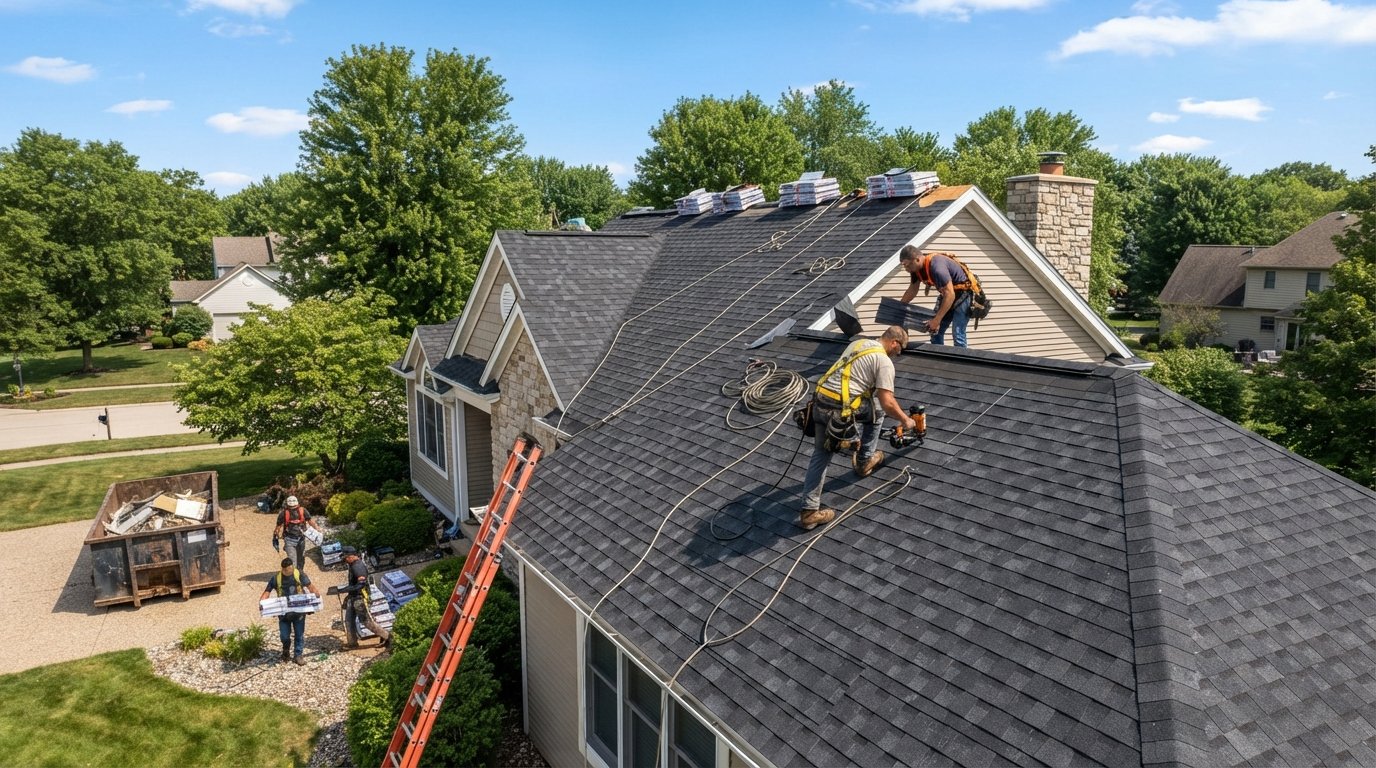
How Long a Roof Replacement Takes and What Affects Timeline
Get a realistic timeline for your roof replacement and learn what adds days. Call (833)-365-8755 for a free quote from vetted local contractors.

Learn more about Roof Installation or Replacement for guides, costs, and what to expect.
Compare Roof Installation or Replacement Pros Near You

Enter your ZIP code to compare top-rated local professionals and request free quotes.
A roof replacement is one of the largest and most disruptive home improvement projects a homeowner can undertake. Beyond the cost, the question that dominates most conversations is simple: how long will my house be under construction? The answer is rarely a single number. A straightforward asphalt shingle roof on a modest ranch home might be finished in a single day, while a complex, steep-sloped roof with multiple valleys and chimneys can stretch well into a week or more once tear-off, decking repairs, and weather delays are factored in. Understanding the forces that shape the schedule helps you plan realistically, coordinate with contractors, and avoid the frustration of unmet expectations. This guide breaks down typical timelines by material and roof size, explains the hidden variables that add days, and outlines what you can do before and during installation to keep the project moving.
Typical Timelines: From One-Day Asphalt to Week-Long Specialty Installs
For the majority of American homes, asphalt shingles remain the default roofing material, and their installation timeline is relatively predictable. A standard-sized roof between 1,500 and 2,500 square feet with a simple gable design and moderate pitch is often completed in one to three days. The first day is typically dedicated to tear-off, inspection, and preparation; the second day covers underlayment and shingle installation; and a third day may be needed for ridge caps, flashing, cleanup, and final inspection. Smaller homes or simple roofs with easy access can sometimes be finished in a single long day, while larger homes with multiple planes push toward the three-day mark.
Material choice is the single biggest driver of schedule variation. Metal roofing, standing seam in particular, often requires two to four days for the same footprint because panels are custom-cut, heavier to handle, and demand precise alignment. Clay and concrete tile roofs can take three to five days or more due to the weight, breakage risk, and the need for specialized fastening. Slate, synthetic slate, and cedar shake installations are the slowest, frequently requiring five to seven days or longer because each piece is individually placed and cut. Flat roofs using modified bitumen or single-ply membrane systems often fall in the two-to-three-day range, assuming the substrate is sound. The table below summarizes typical timelines, but treat these as baselines rather than promises.
- Asphalt shingles: 1 to 3 days for standard roofs, 3 to 4 days for larger or complex designs
- Standing seam metal: 2 to 4 days, plus lead time for custom panel fabrication
- Clay or concrete tile: 3 to 5 days, longer if structural reinforcement is needed
- Cedar shake or synthetic slate: 5 to 7 days or more for detailed workmanship
- Flat roof membrane systems: 2 to 3 days for clean, single-level surfaces
Roof size and complexity matter just as much as material. A 1,200-square-foot bungalow with four roof planes and no dormers is a fundamentally different job from a 3,500-square-foot two-story with a dozen valleys, three chimneys, skylights, and multiple pitch transitions. Each penetration, valley, and change in plane adds time for flashing, sealing, and careful detailing. Contractors often estimate labor in "squares" (100 square feet of roof surface), and a crew's daily output drops sharply as complexity rises. A simple roof might allow a crew to install 25 to 35 squares per day; a cut-up roof with steep pitches might limit them to 10 to 15 squares per day.
What Adds Days: Tear-Off, Decking Repair, and Steep Slopes
The baseline timelines above assume a clean tear-off and a sound roof deck. Reality often intervenes. Tear-off itself is a significant variable. Removing one layer of asphalt shingles is relatively quick, but homes with two or three layers of old roofing add a full day or more of labor and disposal. The weight and volume of debris increase dumpster needs and disposal fees, and some municipal codes limit how many layers can be installed over. If you are weighing a full tear-off against a layover (installing new shingles directly over the old ones), it is worth understanding the trade-offs. Layover roofing can save a day of labor and disposal costs, but it traps the old roof underneath, making future leak detection harder, adding weight to the structure, and voiding many manufacturer warranties. Most roofing professionals and building inspectors recommend a full tear-off so that the deck can be inspected and repaired.
Decking repair is the wildcard that surprises homeowners most often. Once the old shingles are removed, the crew can see the condition of the plywood or plank sheathing. Soft spots, water damage, delamination, or inadequate fastening require replacement before new roofing goes down. A few sheets of plywood might add half a day; extensive rot across an entire roof plane can add two or more days and significant material cost. Similarly, if the home has older plank decking that does not meet current code for shingle attachment, the crew may need to install a new layer of oriented strand board over it, which adds time and expense. A reputable contractor will build a contingency into the schedule and the quote, but no one can know the full extent of decking issues until the tear-off is underway.
Roof pitch and access also shape the timeline. A low-slope roof that a crew can walk comfortably is faster to work on than a steep 10/12 or 12/12 pitch that requires roof jacks, harnesses, and slower, more cautious movement. Steep roofs can add 20 to 40 percent to labor time. Limited access, such as a narrow driveway that prevents a dumpster from being placed close to the house, means crews spend more time carrying materials and debris, which also stretches the schedule. Homes surrounded by mature landscaping, power lines, or neighboring structures may require extra safety measures and staging time.
Material Lead Times and Weather Delays
Even the most efficient crew cannot install materials that have not arrived. Material lead times have become a major scheduling factor in recent years. Asphalt shingles are usually stocked in local supply yards and can be delivered within days, but specialty products are a different story. Standing seam metal panels are fabricated to order and can take two to six weeks. Clay tile, synthetic slate, and cedar shakes often require four to eight weeks or more depending on the manufacturer and the region. Solar-ready roofing systems, custom color matches, and imported products can push lead times even further. The lesson is simple: order materials as soon as the contract is signed, and confirm the delivery date before the crew is scheduled. A project that is ready to install but waiting on a truck is a project that is not moving.
Weather is the other uncontrollable variable. Roofing is inherently weather-dependent. Rain, snow, high winds, and even extreme heat can halt work. Asphalt shingles should not be installed in freezing temperatures because the adhesive strips need warmth to seal properly; metal panels can become dangerously hot or slippery; and crews cannot safely handle materials in high winds. A single day of rain can push a three-day project into four or five days once the schedule resets and the deck dries out. In regions with frequent summer thunderstorms or winter snow, contractors typically build weather days into their estimates. Homeowners should ask how the contractor handles weather delays: whether they communicate proactively, whether they protect the open roof with tarps overnight, and how they prioritize rescheduling. A contractor who disappears for a week after a rainstorm is a red flag.
Seasonal demand also affects timing. Roofing crews are busiest in late spring through early fall in most of the country, and scheduling can be booked out for weeks. If you are planning a replacement, contacting contractors early and being flexible on the start date can help you secure a slot. In some cases, a late-fall or winter installation can be scheduled more quickly, provided the weather cooperates and the materials are suitable for cold-weather application.
Layover Versus Tear-Off: How the Choice Shapes the Schedule
The decision between a layover and a full tear-off has direct schedule implications. A layover, also called a re-cover, involves installing new shingles directly over the existing layer. Because there is no tear-off, the project can sometimes be completed in a single day for a simple roof. The crew skips the demolition and disposal phase, which saves labor, dumpster rental, and landfill fees. However, layover is only permitted when local building codes allow it and when the existing roof is in sound condition with no more than one layer already present. It also requires that the old shingles be relatively flat and well-adhered; curling, cupping, or loose shingles must be removed or repaired first.
The trade-offs extend beyond the schedule. Layover traps moisture and heat between the old and new layers, which can accelerate deterioration of the new roof and make leak diagnosis more difficult. It adds weight to the roof structure, which may be a concern on older homes. Many shingle manufacturers will not warranty a layover installation, and some insurance companies view it less favorably. A full tear-off, while adding a day or two to the timeline, allows the contractor to inspect and repair the deck, install proper underlayment and ice-and-water shield, and start fresh. For most homeowners planning to stay in the home for years, the extra day is a worthwhile investment. For those selling quickly or working with a tight budget, layover may be a short-term option, but it should be discussed openly with the contractor and weighed against long-term performance.
What Homeowners Should Do During Installation
Once the project begins, your role shifts from planner to coordinator. The most important thing you can do is stay out of the crew's way while remaining available for questions. Roofing is loud, messy, and physically demanding work. Keep children and pets indoors, move vehicles out of the driveway, and remove or protect delicate items on walls and shelves that might vibrate during tear-off. If you have a garage, clear space for material staging. If the crew needs access to an outdoor outlet or water spigot, make that clear in advance. Small courtesies like providing a cooler of water on hot days are appreciated but never expected.
Communication is key. Confirm the project manager's phone number and the best way to reach them. Ask for a daily briefing at the end of each workday: what was accomplished, what is planned for tomorrow, and whether any issues were discovered. If decking damage is found, you will likely be asked to approve additional work and cost. Having a contingency fund set aside (typically 10 to 15 percent of the project cost) prevents delays while you scramble for funds. If you are considering upgrading to a more durable roofing system or want to compare contractor quotes before work begins, resources like upgrade your shelter with roof replacement solutions can help you understand options and connect with vetted professionals. For homeowners who need to source licensed local help for related repairs or maintenance, platforms such as Repairmen offer a nationwide directory of vetted service professionals.
Finally, plan for the post-installation phase. A final walkthrough should happen within a day or two of completion. Check the cleanup: nails in the yard, debris in gutters, and damage to landscaping are common complaints. Confirm that the contractor will provide a warranty document and that any permits were closed out with the local building department. Keep a folder with the contract, material receipts, warranty information, and photos of the finished roof. These records matter when you sell the home or file an insurance claim. And if you are planning a larger renovation that includes roofing alongside other projects, coordinating schedules early with a platform that matches you to multiple contractors can save weeks of back-and-forth. The timeline for a roof replacement is never entirely predictable, but with realistic expectations, proactive material ordering, and clear communication, most homeowners find the disruption is shorter than they feared and the result well worth the wait.