Thermostat Replacement Guide for Homeowners
"*" indicates required fields
Your thermostat is the command center for your home’s comfort, silently working day and night. But when it starts acting up, you might notice uneven temperatures, high energy bills, or a system that just won’t turn on. Knowing when and how to replace this crucial device can save you money, prevent discomfort, and protect your entire HVAC system from strain.
Understanding Thermostat Replacement
Thermostat replacement is the process of removing your old, faulty, or outdated temperature control unit and installing a new one. It’s more than just swapping a device on the wall; it involves ensuring the new thermostat correctly communicates with your heating and cooling system for safe, efficient operation.
This task bridges simple DIY and complex electrical work. While some basic swaps are straightforward, many require understanding low-voltage wiring, system compatibility, and proper configuration. A professional installation guarantees your new thermostat is a perfect match for your home’s unique setup.
The Core Goal: Reliable Control
The ultimate purpose of replacing your thermostat is to restore precise, reliable control over your indoor climate. A properly functioning unit accurately reads the temperature, sends clear signals to your HVAC equipment, and helps maintain consistent comfort in every room.
Why It Matters for Homeowners
A faulty thermostat doesn’t just cause a minor annoyance,it can have real consequences for your wallet and home. An inaccurate reading can cause your furnace or air conditioner to run much longer than necessary, leading to surprisingly high energy bills. You’re essentially paying to heat or cool your home based on bad information.
Beyond cost, comfort and system health are on the line. A thermostat that cycles your HVAC system on and off too frequently (short cycling) puts tremendous wear on expensive components like the compressor. Consistent, accurate control from a new thermostat extends the life of your entire system and keeps your family comfortable year-round.
Common Issues and Their Causes
Thermostats can fail for several reasons. Age is a primary factor; most units last 10 years, and older mechanical models are particularly prone to drift and inaccuracy. Dust and debris buildup inside the unit can also interfere with its sensors and electrical connections, leading to erratic behavior.
Electrical problems are another common culprit. Power surges from storms or your home’s electrical system can damage the thermostat’s delicate circuitry. Similarly, loose, corroded, or incorrectly connected low-voltage wires can prevent proper communication with your HVAC system, causing it not to respond at all.
- Temperature Inaccuracy: The displayed temperature doesn’t match the room’s actual feel.
- Unresponsive Buttons or Screen: The unit doesn’t react to your inputs.
- HVAC System Won’t Turn On/Off: The thermostat fails to send the start or stop signal.
- Short Cycling: The system turns on and off in very short, frequent bursts.
- Blank Display: Often a sign of dead batteries or a loss of power from the system.
How Professionals Fix the Problem
A professional thermostat replacement is a systematic process designed for safety and success. It begins with a thorough assessment. The technician will examine your old thermostat, your HVAC system type (furnace, heat pump, etc.), and your wiring to determine compatibility and choose the best new model for your needs and budget.
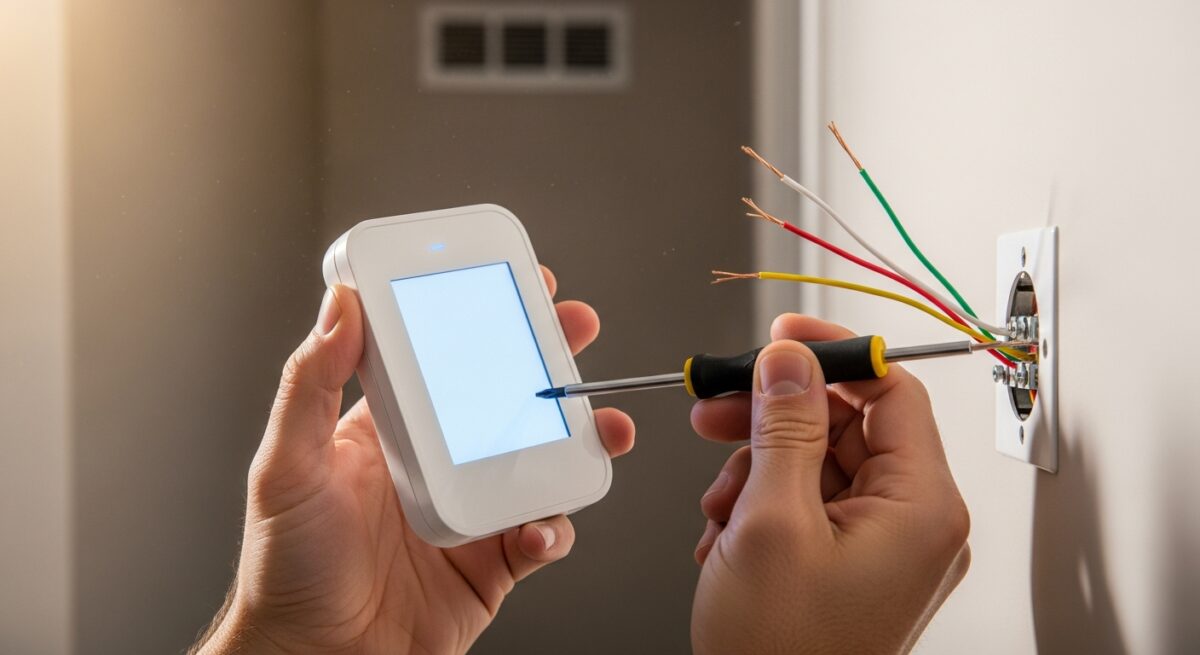
The installation itself is meticulous. After safely turning off power at the furnace/air handler, the old thermostat is carefully removed, and the wires are labeled. The mounting plate for the new unit is installed, wires are connected precisely according to the manufacturer’s diagram, and the unit is secured to the wall.
The final and most critical step is configuration and testing. The professional will power the system back on, program the new thermostat’s settings (like schedules and temperature differentials), and test each mode (heat, cool, fan) to ensure everything operates smoothly and safely. They ensure your new thermostat is not just installed, but fully optimized.
Signs You Should Not Ignore
Your thermostat often sends clear signals when it’s failing. Paying attention to these warnings can prevent a minor issue from becoming a major repair. If you find yourself constantly adjusting the thermostat to feel comfortable, or if different rooms have wildly different temperatures, the unit likely isn’t reading or controlling accurately.
Listen to your HVAC system as well. If it’s turning on and off every few minutes, that’s a sign of short cycling often caused by thermostat error. Similarly, if the system doesn’t respond at all when you adjust the temperature, the thermostat may have lost its connection or failed entirely.
- Your energy bills are rising without a clear explanation.
- The thermostat display is blank, flickering, or showing error codes.
- You’re upgrading your HVAC system and have an old, incompatible thermostat.
- Your thermostat is over 10 years old and lacks modern programming features.
- The unit feels loose on the wall or you notice damaged wires behind it.
Cost Factors and What Affects Pricing
The cost of thermostat replacement isn’t one-size-fits-all. The biggest factor is the type of thermostat you choose. A basic, non-programmable model has a lower price point, while smart thermostats with Wi-Fi, learning capabilities, and zoning features are a larger investment but offer greater long-term savings and convenience.
Labor complexity also affects the price. A simple replacement with compatible wiring is straightforward. However, if the job requires running new wires, installing a C-wire for power, or integrating with a complex system like a multi-stage heat pump, the labor time and expertise required increase. The service fee also covers the professional’s knowledge, guarantee of correct installation, and post-installation support.
How To Choose the Right Professional or Service
Selecting the right technician is as important as choosing the right thermostat. Always look for proper licensing and insurance; this protects you and your home in the rare event of an accident. Experience with your specific type of HVAC system (especially heat pumps or multi-zone systems) is a major plus.
Seek out a service that offers a clear, upfront quote that includes both the cost of the recommended thermostat and the labor for installation and setup. Read reviews to gauge their reputation for professionalism, cleanliness, and follow-up support. A great technician will explain your options, answer all your questions, and ensure you know how to use your new device.
Long-Term Benefits for Your Home
Investing in a proper thermostat replacement pays dividends for years. The most immediate benefit is improved energy efficiency. A modern, accurately calibrated thermostat can reduce heating and cooling costs by optimizing runtime, potentially saving you 10% or more annually on your energy bills.
You’ll also gain enhanced comfort and control. Programmable and smart thermostats maintain consistent temperatures and allow you to create schedules that match your lifestyle. Furthermore, by ensuring your HVAC system runs correctly and avoids short cycling, you reduce wear and tear, extending the system’s lifespan and preventing costly premature breakdowns. It’s an upgrade that protects your investment and your comfort.
Frequently Asked Questions
How long does a thermostat replacement take?
A standard replacement by a professional typically takes 1 to 2 hours. This includes removing the old unit, installing and wiring the new one, configuring the settings, and testing all system functions to ensure perfect operation.
Can I replace a thermostat myself?
Some basic, battery-powered models are DIY-friendly if the wiring matches. However, for hardwired units, smart thermostats, or systems with heat pumps, professional installation is strongly recommended to avoid wiring errors, system damage, or voided warranties.
What is a C-wire, and do I need one?
A C-wire (common wire) provides continuous power to newer, feature-rich thermostats. Many older homes lack one. A technician can determine if you need a C-wire for your chosen model and can often install an adapter if running a new wire is difficult.
Will a new thermostat really lower my bills?
Yes. Replacing an old, inaccurate thermostat with a modern, programmable model can significantly improve efficiency. By eliminating temperature drift and allowing for automated setbacks, you avoid overheating or overcooling an empty home, which directly saves energy.
What’s the difference between a programmable and a smart thermostat?
Programmable thermostats allow you to set a heating/cooling schedule. Smart thermostats connect to Wi-Fi, can be controlled from your phone, learn your habits to create schedules automatically, and provide energy usage reports, offering greater convenience and insight.
How do I know which thermostat is compatible with my system?
A professional technician can assess your current wiring and HVAC equipment to guarantee compatibility. It depends on your system type (single-stage, multi-stage, heat pump) and the available wires at your wall plate.
Is there a best time of year to replace a thermostat?
Anytime is a good time to improve your home’s efficiency and comfort. However, replacing it before the peak of summer or winter ensures your system is ready to perform reliably when you need it most.
Your thermostat is a small device with a big responsibility. When it fails, the impact on your home’s comfort, efficiency, and budget is immediate. By recognizing the signs of trouble and trusting a qualified professional with the replacement, you’re not just fixing a problem,you’re making a smart investment in your home’s performance and your family’s well-being for years to come.

About Alex Carter
"*" indicates required fields