
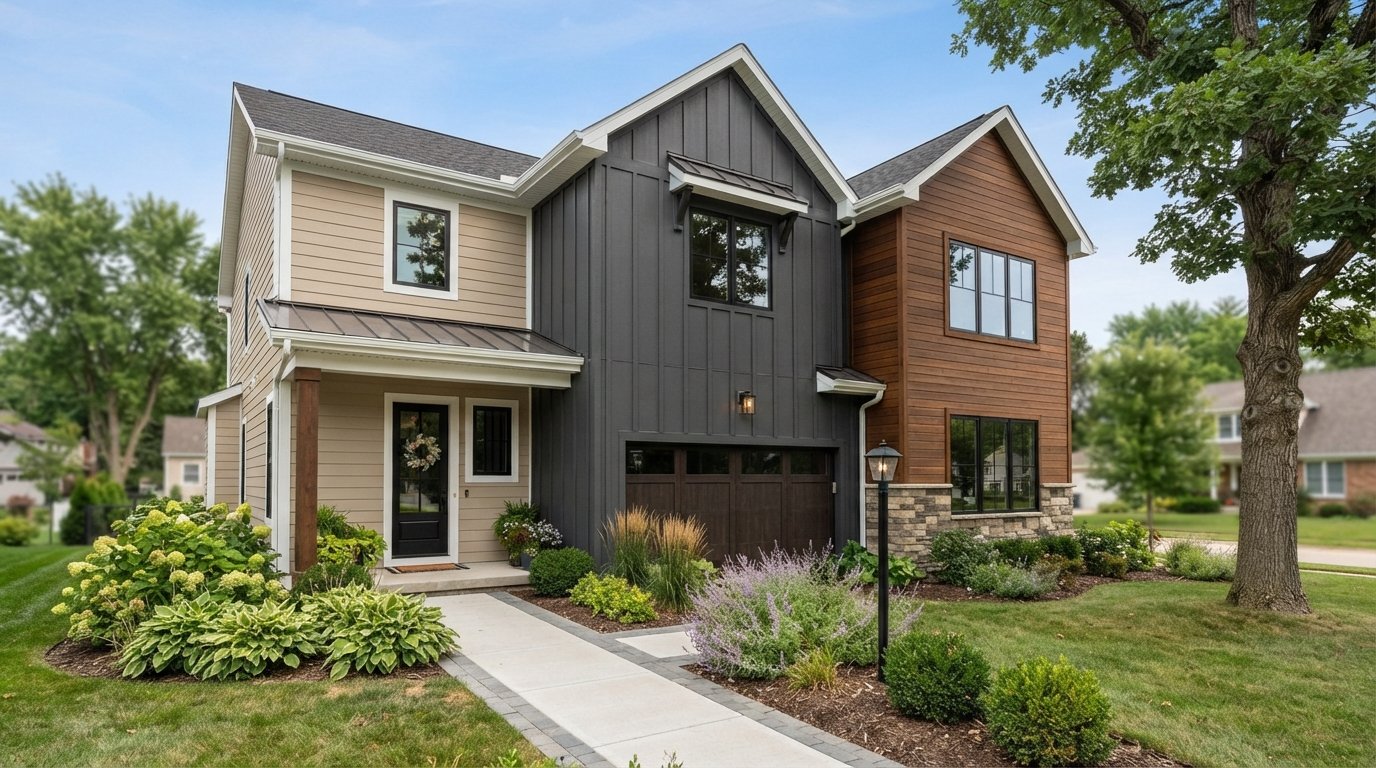
Modern Siding Options: Curb Appeal Comparison Guide
Compare modern siding options for curb appeal, from fiber cement to engineered wood, and see which material boosts your home's resale value most.

By Margaret Lowe
Learn more about Siding Installation for guides, costs, and what to expect.
Compare Siding Installation Pros Near You

Enter your ZIP code to compare top-rated local professionals and request free quotes.
A home's exterior is the first thing anyone notices, and siding does more than shield the structure from rain, wind, and sun. It sets the tone for the entire property, influencing perceived value before a buyer or guest ever steps inside. If you are weighing a siding upgrade, the real question is not simply which material lasts longest, but which one delivers the strongest visual payoff for your budget and climate. This modern siding options curb appeal comparison breaks down the leading choices, from fiber cement to engineered wood, so you can see how each one shapes the look, feel, and resale potential of your home.
Why Siding Is the Single Biggest Curb Appeal Lever
Curb appeal is not a vague concept. It is the cumulative impression created by color, texture, proportion, and condition. Siding controls three of those four factors at once. A dated, chalky, or warped exterior drags down everything else, even if the landscaping is immaculate and the roof is new. A crisp, well-installed siding system, by contrast, can make an older home read as recently renovated.
Real estate professionals consistently rank exterior replacement projects among the highest-return improvements a homeowner can make. The reason is simple: siding is visible from the street, it covers the largest surface area of the house, and it signals how well the rest of the property has been maintained. Buyers and appraisers read that signal quickly, often within seconds of arriving.
There is also a practical dimension. Modern siding products are engineered with better moisture management, improved insulation values, and longer finish warranties than the materials installed twenty or thirty years ago. Upgrading is not purely cosmetic; it can reduce maintenance and energy costs while sharpening the home's appearance. For homeowners who want to compare quotes from vetted professionals before committing, a service like USremodel can simplify the process of finding qualified installers in your area.
How to Judge Siding by Curb Appeal, Not Just Durability
Most siding articles focus on impact resistance and warranty length. Those matter, but curb appeal is a separate scorecard. When comparing materials visually, evaluate them across four dimensions.
The first is texture. Smooth panels read as contemporary and minimal, while woodgrain textures lean traditional or rustic. The second is profile, meaning whether the siding is horizontal lap, vertical board-and-batten, shake, or a mix. The third is color depth, since darker tones create drama and lighter tones create openness. The fourth is reflectivity, because glossy finishes can look cheap while matte finishes tend to photograph and age better.
- Texture: smooth for modern, grained for traditional
- Profile: lap, board-and-batten, shake, or mixed
- Color depth: dark for contrast, light for airiness
- Finish: matte resists fading and looks richer over time
Keeping these four dimensions in mind makes the comparison far more useful than a simple list of pros and cons. A material that wins on durability may lose on visual warmth, and vice versa. The best choice is the one that aligns with your home's architecture and your long-term maintenance tolerance.
Fiber Cement Siding: The All-Around Curb Appeal Leader
Fiber cement has become the default premium choice for homeowners who want the look of painted wood without the rot, warping, and insect damage. It is made from cement, sand, and cellulose fibers, then factory-finished with a baked-on color coat that holds up for years.
Visually, fiber cement is remarkably versatile. It can be manufactured with smooth, woodgrain, or stucco-like textures, and it accepts deep, saturated colors that many vinyl products cannot match. That color richness is a major reason it performs so well in curb appeal comparisons. A deep navy or charcoal fiber cement exterior photographs beautifully and reads as high-end from the street.
The trade-offs are cost and installation complexity. Fiber cement is heavier than vinyl, requires specialized cutting tools, and demands careful flashing to prevent moisture intrusion. It is not a do-it-yourself product. Homeowners who choose it should budget for experienced installers, but the result is a facade that can look new for fifteen to twenty years with minimal upkeep. When you compare modern siding options for curb appeal, fiber cement usually sits at the top of the list for resale value.
Engineered Wood: Warmth and Texture With Modern Performance
Engineered wood siding, sometimes called composite or strand siding, is manufactured from wood strands bonded with resin and finished with a durable overlay. It delivers the organic warmth of real wood with far better resistance to moisture and decay.
From a design standpoint, engineered wood is hard to beat for certain architectural styles. Craftsman, farmhouse, and transitional homes benefit from its natural grain and the way it takes stain and paint. It creates shadow lines that add depth to a facade, which is exactly the quality that makes a home look custom rather than builder-grade.
The main drawbacks are cost and sensitivity to installation errors. Engineered wood must be kept clear of constant ground contact and properly sealed at cut edges. When installed correctly, it offers a rich, high-end appearance that many synthetic materials struggle to replicate. For homeowners in mixed climates who want a wood look without constant repainting, engineered wood is a strong contender.
Vinyl Siding: Budget-Friendly With Improved Aesthetics
Vinyl has long been the affordable workhorse of the siding world, and modern versions are far removed from the thin, glossy panels of decades past. Today's vinyl comes in insulated profiles, deeper woodgrain textures, and a wider color range, including darker tones that were once unavailable.
For curb appeal, vinyl's strength is consistency. It never needs painting, it cleans easily with a garden hose, and it maintains its color reasonably well in moderate climates. The weakness is that it can look flat or plasticky next to fiber cement or engineered wood, especially in bright sunlight. On a simple ranch or colonial, that difference may be negligible. On a home with complex architecture, it can be noticeable.
Vinyl remains the most budget-friendly way to refresh an exterior, and for many homeowners it is the practical choice that frees up funds for other improvements. If you are also planning interior projects, our guide to bathroom flooring options can help you think about how exterior and interior upgrades work together in a single renovation plan.
Insulated Vinyl and Foam-Backed Panels: A Middle Path
Insulated vinyl sits between standard vinyl and premium materials. Each panel is backed with foam, which adds rigidity, improves the R-value slightly, and creates deeper shadow lines that mimic the look of thicker wood siding.
The visual improvement over standard vinyl is real. Foam backing prevents the wavy, oil-canning effect that cheap vinyl sometimes develops, so the wall plane stays flat and crisp. That flatness matters enormously for curb appeal, because warped siding is one of the most obvious signs of a low-quality installation.
Insulated vinyl costs more than basic vinyl but less than fiber cement or engineered wood. It is a sensible compromise for homeowners who want better looks and a bit of energy benefit without a premium price tag. It also installs faster than heavier materials, which can reduce labor costs.
Stucco and Stone Veneer: Texture as a Design Statement
Stucco and stone veneer are not full-siding replacements in most cases, but they are powerful accent tools. A stone veneer on a porch column, chimney, or entry surround can transform a plain facade into something memorable. Stucco, meanwhile, creates a smooth, monolithic surface that suits Mediterranean, Southwestern, and modern styles.
Both materials score extremely high on curb appeal when used with restraint. The mistake is overuse. A house covered entirely in stone can feel heavy and dated, while stucco applied poorly can crack and stain. Used as accents alongside fiber cement or engineered wood, however, they add depth and a sense of permanence that flat siding cannot provide.
Cost and installation skill are the main barriers. Stone veneer is labor-intensive, and stucco requires proper curing and sealing. Homeowners should treat these as investments in visual impact rather than budget solutions.
Comparing Curb Appeal, Cost, and Maintenance at a Glance
To make the comparison concrete, it helps to line up the leading options against the factors that matter most to homeowners. The table below summarizes how each material typically performs, though actual results depend on climate, installation quality, and home style.
- Fiber cement: excellent curb appeal, high durability, moderate to high cost, low maintenance
- Engineered wood: excellent warmth and texture, good durability, high cost, moderate maintenance
- Insulated vinyl: good curb appeal, moderate durability, moderate cost, very low maintenance
- Standard vinyl: fair to good curb appeal, moderate durability, low cost, very low maintenance
- Stucco and stone veneer: excellent accent impact, high durability, high cost, low to moderate maintenance
The pattern is clear: curb appeal generally rises with cost, but the relationship is not perfectly linear. Insulated vinyl, for example, delivers a disproportionate visual upgrade for its price. Fiber cement delivers the best combination of looks and longevity for most homes. The right answer depends on how long you plan to stay, your local climate, and how much maintenance you are willing to accept.
Color and Profile Choices That Maximize Visual Impact
Material is only half the story. Color and profile decisions often determine whether a siding upgrade looks stunning or merely adequate. A few principles consistently separate high-impact exteriors from forgettable ones.
First, limit the palette. Two or three colors on an exterior is usually enough: a dominant field color, a trim color, and an accent for the door or shutters. Too many colors create visual noise. Second, use contrast deliberately. Dark siding with white trim is a classic, high-contrast combination that reads well from a distance. Light siding with dark trim feels more contemporary.
Third, match profile to architecture. Horizontal lap siding suits almost any style, but board-and-batten shines on farmhouse and modern designs, while shake works beautifully on coastal and Craftsman homes. Mixing profiles on different elevations, such as lap on the main body and shake in the gable, adds interest without clutter.
Finally, consider how the finish will age. Dark colors absorb heat and can fade faster in sunny climates, while light colors show dirt less. A matte finish almost always looks more expensive than a glossy one, regardless of material.
Installation Quality: The Hidden Curb Appeal Factor
Even the best siding looks mediocre when installed poorly. Crooked courses, visible seams, sloppy caulking, and improper flashing are the most common reasons a new exterior fails to deliver the expected visual upgrade. These flaws are also the most likely to cause moisture problems later.
This is why contractor selection matters as much as material choice. A skilled installer will discuss house wrap, flashing details, expansion gaps, and trim transitions before the first panel goes up. A less careful installer will focus on speed. The difference shows up immediately in the straightness of the lines and the tightness of the corners.
Homeowners should ask for references, review completed projects in person when possible, and confirm that the contractor is licensed and insured. Comparing multiple quotes is not just about price; it is about seeing how different professionals approach the same project. A platform that connects homeowners with independent contractors can make that comparison faster and less stressful, especially when you are coordinating siding with other exterior work such as roofing or windows.
Matching Siding to Your Home's Architecture
Every architectural style has siding choices that feel natural and choices that feel forced. Getting this match right is the difference between a renovation that looks intentional and one that looks like a patch.
Colonial and traditional homes pair well with horizontal lap siding in a classic color, often with shutters and substantial trim. Craftsman homes call for a mix of lap and shake, earthy colors, and deep porch details. Modern and contemporary homes favor smooth panels, vertical profiles, and a restrained palette of grays, whites, and blacks. Farmhouse styles thrive on board-and-batten in white or soft neutrals. Mediterranean and Southwestern homes often use stucco as the dominant surface with stone or tile accents.
When a homeowner chooses a material that fights the architecture, the result can feel off even if the workmanship is excellent. A modern smooth-panel exterior on a Victorian, for example, strips away the texture that gives the style its character. Matching material to style is one of the most reliable ways to protect and enhance curb appeal.
Making the Decision: A Practical Framework
With so many options, the decision can feel overwhelming. A simple framework helps narrow the field. Start by identifying your primary goal: maximum resale value, lowest maintenance, best visual transformation, or lowest upfront cost. Most homeowners prioritize one or two of these, and that priority should drive the material shortlist.
Next, consider your climate. Fiber cement and engineered wood handle freeze-thaw cycles well when installed correctly. Vinyl performs best in moderate temperatures. Stucco suits dry climates better than humid ones. Then factor in your timeline. If you plan to sell within a few years, the material with the strongest resale reputation may be worth the extra cost. If you plan to stay for decades, long-term maintenance and durability weigh more heavily.
Finally, get real numbers. Siding costs vary widely by region, home size, and complexity. Comparing quotes from multiple contractors gives you a realistic budget and reveals which materials are actually feasible for your project. A modern siding options curb appeal comparison is most useful when it is grounded in your specific home, climate, and goals rather than generic averages.
The best exterior is one that looks deliberate, fits the architecture, and holds up over time. Whether you choose fiber cement, engineered wood, insulated vinyl, or a combination with stone accents, the goal is the same: a facade that welcomes people in and signals that the home is well cared for. Take the time to compare materials honestly, invest in quality installation, and the curb appeal payoff will be visible every time you pull into the driveway.