
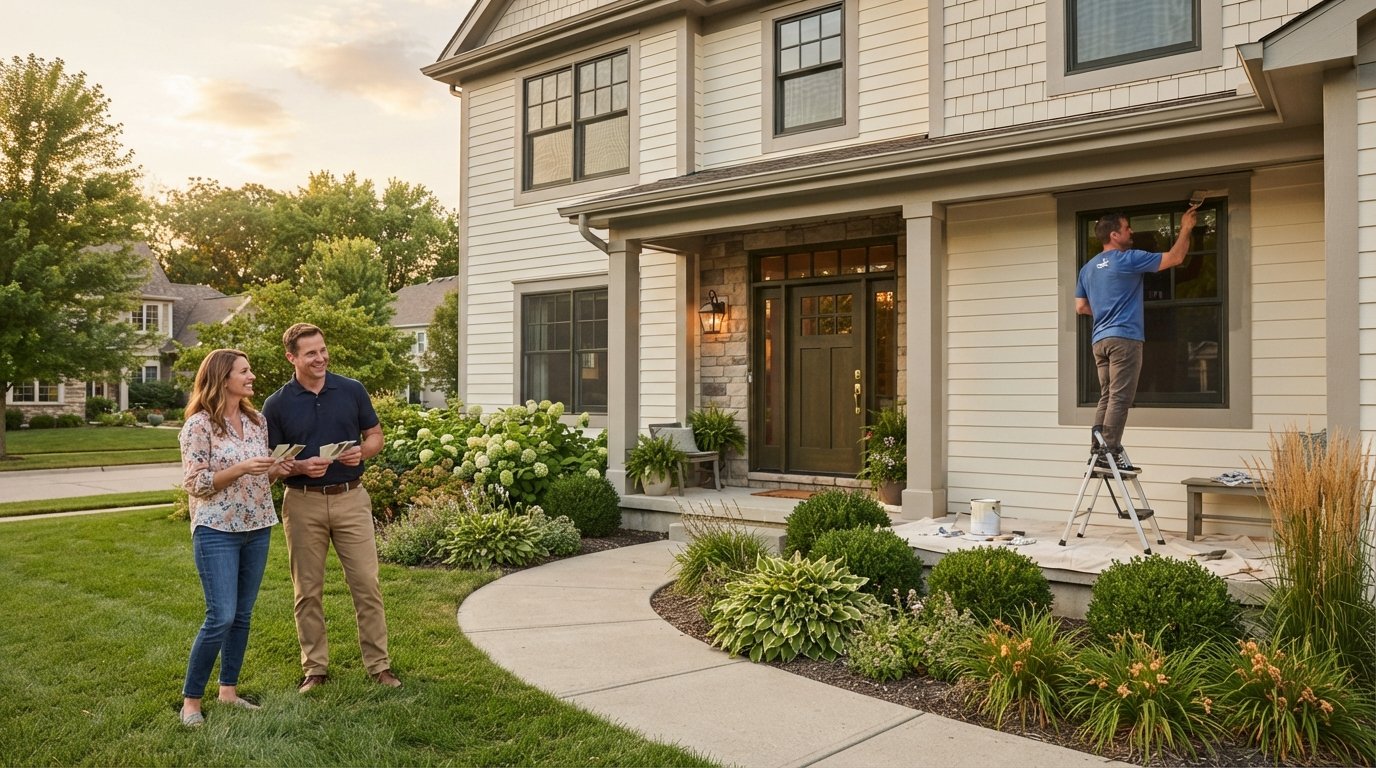
Modern Exterior Paint Color Trends for Curb Appeal
Modern exterior paint color trends for curb appeal favor warm neutrals and tone-on-tone trim. Call (833)-365-8755 to plan your repaint.

Learn more about Exterior Painting for guides, costs, and what to expect.
Compare Exterior Painting Pros Near You

Enter your ZIP code to compare top-rated local professionals and request free quotes.
A freshly painted exterior does more than tidy up a facade. It signals that a home is cared for, influences how quickly a property sells, and can make a builder-grade house look custom. But choosing the wrong palette can drain a renovation budget and leave homeowners repainting within two years. The modern exterior paint color trends for curb appeal have shifted away from high-contrast gray-and-white pairings toward warmer, nature-inspired neutrals, tone-on-tone trim, and deliberate accent doors that add personality without shouting. This guide walks through the palettes that age well, the fixed elements that constrain your choices, how to test colors on site, which sheens work best by surface and climate, and how to time a repaint so prep and weather cooperate.
Palette Directions That Age Well Across Siding, Trim, and Accent Doors
The most durable exterior palettes share one trait: they look intentional from the street while staying quiet enough to survive shifting design fashions. Modern exterior paint color trends for curb appeal now favor warm whites, greiges with green or brown undertones, and deep earth tones used sparingly. The goal is a composed exterior where siding, trim, and the front door relate to one another rather than compete.
For siding, three families dominate current recommendations. Warm off-whites (think cream and oyster rather than stark white) soften brick and stone. Mid-tone greiges with a green or taupe cast bridge traditional and contemporary architecture. Deep charcoal, forest green, and muted navy work on smaller homes or as accent volumes where the massing can carry a darker color without looking heavy. On trim, the trend has moved toward lower contrast: trim painted one or two shades lighter or darker than the siding creates a tailored look that reads well in photographs and in person.
Accent doors are where homeowners can take a calculated risk. A saturated color on a single door adds curb appeal at low cost and is easy to change later. Popular choices include muted teal, terracotta, mustard, and deep plum. The key is to echo an undertone already present in the roof, brick, or stone so the door feels connected to the house rather than pasted on.
- Warm white siding with greige trim and a black or bronze door for a classic, resale-friendly look.
- Greige siding with tone-on-tone trim and a muted teal door for a modern transitional style.
- Deep charcoal siding with light trim and a natural wood door for contemporary homes.
- Forest green siding with cream trim and a copper or burgundy door for cottage and Craftsman styles.
Before committing, consider how these palettes interact with the fixed elements discussed next. A color that looks perfect on a sample board can clash with a red brick chimney or a brown shingle roof, and correcting that mistake after the paint dries is expensive.
How Fixed Elements Like Roof Color and Brick Constrain Your Choices
Exterior paint does not exist in isolation. Roof color, brick, stone, window frames, and even the driveway all impose limits on which palettes will look harmonious. The smartest approach is to inventory those fixed elements first, then choose paint that either blends with them or provides deliberate contrast.
Roof color is the single biggest constraint. Brown and tan shingles pair naturally with warm whites, greiges, and earth tones, but they fight with cool grays and stark whites. Black and dark gray roofs are more forgiving and can support both warm and cool palettes, though very dark roofs on small homes can make the house look top-heavy if the siding is also dark. Brick is the second major factor: red and orange brick warm up a facade and look best with cream, greige, sage, and navy, while painted brick or stone veneer opens up cooler options.
Window frames and trim materials matter too. White vinyl windows limit trim color choices because painting trim a dark color can make the white frames stand out awkwardly. Wood windows and dark-clad windows offer more flexibility. The practical rule is to sample paint against the roof, brick, and window frames in daylight before falling in love with a color online. If the fixed elements are dated or damaged, it may be worth addressing them before or alongside the repaint; our exterior painting preparation and weather timing guide explains how to assess surfaces and schedule work so the new coating performs as intended.
Testing Colors on Site: Samples, Lighting, and the Two-Day Rule
Paint chips are a starting point, not a decision. Exterior colors shift dramatically depending on light direction, time of day, surrounding landscaping, and the sheen of the finish. A warm white that looks creamy on a north-facing wall can look stark on a south-facing one, and a greige that reads balanced in the morning can turn purple in late-afternoon sun. Testing on site is the only reliable way to predict the final result.
The most effective method is to paint large sample boards (at least two feet square) and move them around the house: next to the front door, under the eaves, on a sunny wall, and on a shaded wall. Leave them up for at least two full days and check them in morning, midday, and evening light. If the house has brick or stone, place a board directly against those materials. Homeowners who skip this step often end up with a color that looked right in the store but feels wrong on the house.
- Select three to five candidate colors and buy sample pots in the intended sheen.
- Paint large boards and label the back with the color name and code.
- Position boards on multiple sides of the house and against fixed elements.
- Observe the samples over two days, including overcast conditions.
- Narrow to one siding color and one trim color before ordering gallons.
This process also reveals how the paint behaves on textured siding. Lap siding, board-and-batten, and stucco all hold color differently, and a color that looks rich on smooth wood can appear washed out on stucco. Taking the time to test saves the cost of a repaint and the hassle of living with a choice that never quite feels right.
Sheen and Finish Selection by Surface and Climate
Color gets the attention, but sheen determines how a paint job performs. The wrong finish can highlight imperfections, trap dirt, or fail prematurely in harsh weather. Modern exterior paint color trends for curb appeal increasingly favor low-sheen finishes on siding because they hide surface irregularities and look more like natural materials than high-gloss coatings do.
For siding, flat or matte finishes are popular on fiber cement and wood because they minimize the appearance of dents and seams. However, flat paint collects dirt more readily and is harder to clean, so in dusty or rainy climates a satin or low-sheen eggshell on siding can be a better compromise. Trim and doors benefit from a glossier finish because it resists moisture and is easier to wipe down. On stucco, elastomeric paints in a matte finish provide flexibility and crack-bridging, which matters in climates with wide temperature swings.
Climate also dictates product selection. In hot, sunny regions, lighter colors with infrared-reflective pigments help keep surface temperatures down and reduce fading. In coastal areas, salt air demands mildew-resistant formulas and a glossier finish on trim to shed moisture. In cold climates, paint must remain flexible through freeze-thaw cycles, which often means choosing a 100 percent acrylic product rated for low temperatures. Homeowners unsure which product fits their region can ask a painting contractor during the estimate; matching the coating to the climate is as important as matching the color to the house.
Timing the Repaint: Weather, Prep, and When to Schedule
Even the best palette fails if the paint is applied in the wrong conditions. Exterior painting requires dry surfaces, moderate temperatures, and enough time for the coating to cure before rain or freezing temperatures arrive. Most manufacturers specify application between 50 and 85 degrees Fahrenheit, with humidity levels that allow the paint to dry evenly. Painting in direct sun on a hot day can cause the paint to skin over before it bonds, leading to peeling later.
Prep work is the other half of timing. Washing, scraping, sanding, caulking, and priming take time, and rushing these steps shortens the life of the finish. Homes with peeling paint, mildew, or bare wood need extra days for repair and priming before a single gallon of finish coat goes on. Scheduling the project in spring or early fall usually provides the most stable weather window in most regions, while summer heat and winter cold both create risks.
Homeowners planning a larger exterior refresh, including siding repair or window replacement, should coordinate trades so painting happens after carpentry and before landscaping is installed. For projects that involve multiple exterior upgrades, comparing quotes from licensed professionals early helps lock in scheduling. Homeowners can request free, no-obligation estimates through ContractorHomeQuotes to compare pricing and availability before the weather window closes.
Making the Palette Work With Landscaping and Hardscaping
Paint color does not stand alone; it sits within a landscape. A deep charcoal house surrounded by mature green trees reads as sophisticated, while the same color on a bare lot can look stark. Warm whites and greiges flatter most plantings, but homeowners with vivid flower gardens may want a quieter siding color so the blooms remain the focal point. Hardscaping matters too: a red brick walkway or a warm stone patio suggests warm undertones in the paint palette, while cool gray concrete pairs more naturally with cool grays and blues.
The most successful exteriors treat paint as one layer in a composition that includes roofing, masonry, plantings, and lighting. Before finalizing a color, take photos of the house from the street and study how the proposed palette relates to the landscape. Digital visualization tools can help, but nothing replaces standing at the curb and looking at large sample boards in context. When the palette and the landscape agree, the result looks intentional and boosts curb appeal without requiring expensive structural changes.
Finally, keep maintenance in mind. Lighter colors and lower sheens show dirt sooner, so homes near busy roads or in dusty regions may need more frequent washing. Darker colors fade faster in intense sun. Choosing a palette with these practical factors in mind helps the exterior look fresh for years rather than months.
Modern exterior paint color trends for curb appeal reward homeowners who plan carefully: warm neutrals and tone-on-tone trim for staying power, a confident accent door for personality, and a finish and schedule matched to the climate. Sampling on site, accounting for fixed elements, and timing the work with the weather turn a color choice into a durable improvement that raises the home's value and daily enjoyment.
Learn more about Exterior Painting for guides, costs, and what to expect.
Compare Exterior Painting Pros Near You
Enter your ZIP code to compare top-rated local professionals and request free quotes.