Hidden Water Leaks: A Homeowner’s Guide to Detection and Repair
"*" indicates required fields
You hear a faint drip in the night, but can’t find its source. Your water bill suddenly spikes for no clear reason. A mysterious musty smell lingers in a hallway. These subtle clues often point to a hidden water leak,a silent problem that can cause major damage to your home’s structure, finances, and even your family’s health. Unlike a burst pipe under the sink, these leaks are out of sight, slowly spreading moisture within your walls, under your floors, or beneath your foundation. Understanding and addressing them quickly is one of the most important forms of home maintenance you can do.
Understanding Hidden Water Leaks
A hidden water leak is exactly what it sounds like: a leak in your plumbing system that is not immediately visible. It’s not the dripping faucet you can see or the leaky toilet flapper you can hear. Instead, the water escapes from a compromised pipe or fitting and flows into areas you don’t regularly inspect,like inside wall cavities, under your home’s slab foundation, or in the ceiling between floors.
This hidden nature is what makes them so dangerous. Because you can’t see the water, the leak can go on for weeks, months, or even longer. All that time, water is saturating building materials, creating the perfect environment for mold growth, attracting pests, and weakening the structural integrity of your home. By the time you see a stain on the ceiling or feel a soft spot in the floor, significant damage may have already occurred.
How Water Finds Its Way Out of Sight
Your home’s plumbing is a network of pipes running behind walls and under floors. Connections can loosen, pipes can corrode or crack from age or shifting soil, and even a tiny pinhole leak under pressure can release hundreds of gallons over time. Common trouble spots include the water supply lines to toilets and sinks, connections behind washing machines and dishwashers, and the main water line entering your home.
Why It Matters for Homeowners
Ignoring a hidden leak is like ignoring a small fire in your attic. The problem only grows. The persistent moisture from a leak doesn’t just warp wood and stain drywall; it actively destroys the materials that hold your home together. This can lead to incredibly expensive repairs, far exceeding the cost of simply fixing the leak itself. We’re talking about replacing entire sections of subfloor, rebuilding walls, or addressing foundational issues.
Beyond the structure, hidden leaks create a serious health hazard. Damp, dark spaces are a breeding ground for mold and mildew. Mold spores can circulate through your HVAC system, aggravating allergies, asthma, and other respiratory problems for everyone in the household. Furthermore, standing water can attract insects like cockroaches and silverfish, and even provide a water source for rodents.
Finally, there’s the financial drain,literally. That leaking water is measured by your meter, and you are paying for every drop that goes down the drain (or into your walls). A steady hidden leak can easily double or triple your normal water usage, leading to shocking utility bills. Fixing the leak is an investment that stops this waste and protects your home’s value.
Don’t let a small leak become a big disaster. If you suspect a hidden water leak, our expert team can find it and fix it fast. Schedule a professional leak detection service online or call us now at (555) 123-4567.
Common Issues and Their Causes
Hidden leaks typically stem from a few common sources. Age is a major factor, as pipes and fittings naturally wear out over decades. In older homes, galvanized steel pipes are prone to corrosion from the inside out, which eventually leads to leaks. Even modern materials like PVC or copper can fail due to poor installation, physical damage, or chemical reactions in the soil.
Another frequent cause is normal wear and tear on appliance connections. The constant vibration of a washing machine can loosen its water supply hoses. The high water pressure and heat cycles of a dishwasher can stress its inlet valve. These failures often happen slowly, behind the appliance where you rarely look.
Here are some of the most common culprits behind hidden water leaks:
- Corroded Pipes: Especially in older homes with galvanized steel plumbing.
- Failed Pipe Joints: The connections between pipes can degrade or loosen over time.
- Pinhole Leaks in Copper Pipes: Often caused by acidic water or improper grounding.
- Cracked Toilet Flanges or Supply Lines: Leaks that run under the bathroom floor.
- Leaking Shower Pan or Tub Drain: Water seeps into the subfloor and surrounding walls.
- Foundation Shifting: Soil movement can crack the main water line or sewer pipe under your slab.
How Professionals Fix the Problem
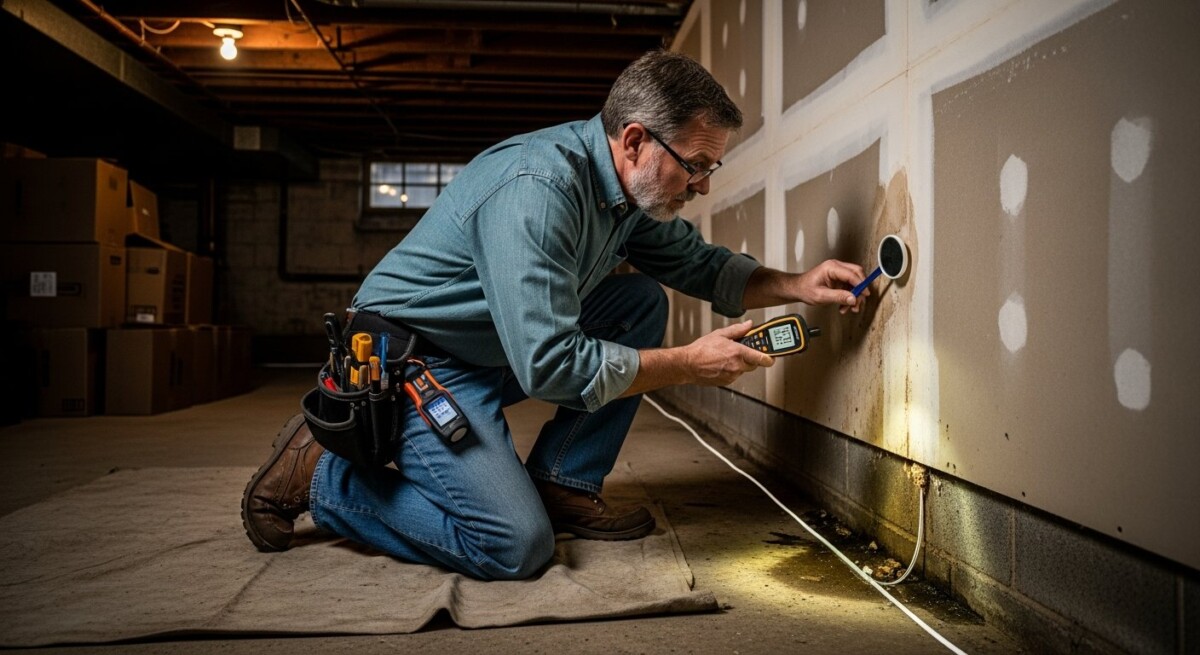
The first and most critical step is precise location. We don’t start tearing open walls hoping to find the leak. Instead, we use specialized, non-invasive technology to pinpoint the exact source with minimal disruption to your home. This includes acoustic listening devices that can hear the sound of water escaping under pressure, thermal imaging cameras that detect temperature differences caused by moisture, and tracer gas systems that can find leaks even in non-pressurized drain lines.
Once the leak is precisely located, we can plan a targeted repair. The method depends entirely on the leak’s location and the type of pipe. For accessible pipes, a section may be cut out and replaced. For leaks under a slab or in hard-to-reach walls, trenchless pipe lining or spot repair techniques might be the best solution, saving your flooring and landscaping. Our goal is always to fix the problem permanently while preserving as much of your home as possible.
The repair process typically follows these clear steps:
- Inspection & Detection: Using advanced tools to find the leak’s exact location.
- Diagnosis & Explanation: We show you what we found and explain your repair options.
- Targeted Repair: Executing the fix with minimal intrusion, whether it’s a pipe section replacement, epoxy lining, or joint resealing.
- Testing & Verification: Pressurizing the system to ensure the repair is complete and successful.
- Restoration Guidance: Advising you on any necessary drying or repairs to affected areas like drywall or flooring.
You need a permanent solution, not a guess. Our licensed technicians use the latest technology to find and fix your hidden leak with precision. Learn more about our leak repair process or call for immediate help at (555) 123-4567.
Signs You Should Not Ignore
Your home often sends you clear signals that something is wrong. Learning to recognize these early warnings can save you thousands of dollars. Often, the signs are subtle and easy to dismiss, but together they paint a clear picture of a hidden water issue. Trust your senses,if something seems off, it probably is.
For example, you might notice a section of your hardwood floor is suddenly warping or buckling for no apparent reason. A wall may feel unexpectedly damp or cool to the touch. You might hear the sound of running water when all faucets and appliances are off. These are not minor quirks; they are direct communications from your home that urgent attention is needed.
Be alert for these key warning signs of a hidden water leak:
- Unexplained Increase in Water Bills: A steady, month-over-month rise is a major red flag.
- Sound of Running Water: Hearing water flow or a faint hissing/dripping when the house is quiet.
- Mold or Mildew Odors: A persistent musty, earthy smell, especially in a specific area.
- Discoloration or Stains: Yellow, brown, or copper-colored stains on walls, ceilings, or floors.
- Warping or Buckling: Floors, walls, or baseboards that are swelling, bending, or separating.
Cost Factors and What Affects Pricing
We believe in transparent, upfront pricing. The cost to fix a hidden leak isn’t a single flat fee because every situation is unique. The biggest factor is the location and accessibility of the leak. A leak in an exposed pipe in the garage will cost significantly less to repair than one buried under your home’s concrete slab foundation, which requires specialized equipment and more labor.
The type of repair needed also affects the price. Simply tightening a loose fitting is one thing; replacing a long section of corroded pipe or lining a damaged sewer line is another. Furthermore, if the leak has caused secondary damage like mold growth or rotten framing, those issues will need to be addressed separately, which will add to the overall project cost. We always provide a detailed, written estimate after our initial inspection so you know exactly what to expect.
Worried about the cost of inaction? A small repair now is always less expensive than major structural damage later. Get a clear, honest estimate for your peace of mind. Contact us for a free consultation or call (555) 123-4567 today.
How To Choose the Right Professional or Service
Not all handymen or plumbers are equipped to handle hidden leaks. This is a specialized area that requires specific tools and expertise. When choosing a professional, look for a company that specializes in leak detection. They should advertise the use of technology like thermal imaging and acoustic listening devices. Always verify that they are licensed, insured, and bonded to protect you and your home.
Ask about their process. A reputable company will explain how they plan to find the leak without unnecessary damage. They should be willing to provide references or examples of similar jobs. Be wary of anyone who gives a firm quote over the phone without seeing the problem,true leak detection requires an on-site assessment. Choose a service that communicates clearly, respects your home, and focuses on a permanent fix, not a temporary patch.
Long-Term Benefits for Your Home
Addressing a hidden water leak is an investment with tremendous long-term returns. First and foremost, you are protecting your home’s structural integrity. You’re stopping the progressive decay of wood and drywall that can compromise floors, walls, and even the foundation. This maintains your property’s value and prevents catastrophic failures down the road.
You are also safeguarding your family’s health by eliminating the moisture source for mold and mildew. This leads to better indoor air quality and a healthier living environment. Financially, you stop the waste of water and the associated high utility bills. The peace of mind that comes from knowing your home is dry, safe, and structurally sound is perhaps the greatest benefit of all. Proactive leak detection and repair is one of the smartest forms of preventative maintenance a homeowner can undertake.
Frequently Asked Questions About Hidden Leaks
Can I find a hidden leak myself?
You can look for signs like checking your water meter (read it, don’t use water for two hours, then read it again). If it moves, you likely have a leak. However, pinpointing the exact location without professional equipment is nearly impossible and can lead to unnecessary damage. Professional detection is faster and more accurate.
Will my homeowners insurance cover the repair?
It depends on your policy and the cause of the leak. Sudden, accidental damage (like a pipe bursting) is often covered. Damage from a long-term, slow leak that is deemed a maintenance issue may not be. Always check with your insurance provider and document the damage and repair process thoroughly.
How long does it take to find and fix a hidden leak?
With modern technology, a professional can often locate a leak within 1-2 hours. The repair time varies greatly based on the leak’s location. A simple repair might be done in a few hours, while a complex slab leak might take a day or two.
Are the detection methods you use destructive?
No. Our primary methods,acoustic listening, thermal imaging, and tracer gas,are completely non-invasive. We find the leak without tearing into walls or floors. Only once the exact location is confirmed do we make a small, targeted access point for the repair.
What is a slab leak, and is it serious?
A slab leak is a leak in the water lines running beneath your home’s concrete foundation. Yes, it is very serious. It can erode the soil supporting your foundation, lead to cracks in your floor, and cause significant structural damage. It requires immediate attention from a specialist.
How can I prevent hidden leaks?
Regular maintenance is key. Know where your main water shut-off valve is. Inspect appliance hoses annually and replace them every 5-7 years. Consider a whole-home water leak monitoring system. Be attentive to the warning signs listed in this article and act quickly.
Hidden water leaks are a silent threat, but they don’t have to be a mystery or a catastrophe. By understanding the signs, knowing the risks, and acting swiftly with the right professionals, you can protect your home from extensive damage and ensure a safe, dry, and healthy living environment for years to come. Your home is your biggest investment,guard it wisely.