
Electrical and Plumbing Permits: A Home Project Guide
Understanding electrical and plumbing permits for home projects protects your investment and your insurance claim. Call (833)-365-8755 for guidance on your next project.

Learn more about Home Remodeling for guides, costs, and what to expect.
Compare Home Remodeling Pros Near You

Enter your ZIP code to compare independent local professionals and request free quotes.
You have picked out the tile, scheduled the crew, and maybe even started demo. Then a neighbor mentions permits, and suddenly your straightforward bathroom refresh feels like a legal minefield. Here is the good news: permit rules are more logical than they appear once you understand the two systems involved. Electrical and plumbing permits exist because water and electricity are the two home systems most likely to cause catastrophic damage when installed incorrectly. A missing permit will not just derail your project timeline; it can void insurance claims, complicate a future sale, and force you to tear out finished work. This guide walks through exactly when permits are required, who is responsible for filing them, what inspectors look for, and how to avoid the expensive mistakes homeowners make most often.
Why Electrical and Plumbing Permits Exist
Building codes are not bureaucratic busywork. They are minimum safety standards written in response to real failures: fires caused by overloaded circuits, sewage backups from improperly vented drains, electrocution risks from ungrounded outlets near water. The permit process creates a paper trail and an independent inspection checkpoint. When a licensed electrician pulls a permit, a municipal inspector verifies the work at specific stages before walls close up. That inspection protects you, the homeowner, even though the electrician is the one doing the work.
Permits also protect future buyers. Most real estate transactions include a permit history search. Unpermitted work discovered during a sale can stall financing, force retroactive permits with penalty fees, or require demolition to expose the work for inspection. In competitive markets, buyers and their agents treat missing permits as a red flag that suggests other corners were cut. The cost of a permit is almost always trivial compared to the cost of remediating unpermitted work later.
Finally, permits create accountability. An inspector who signs off on a rough-in has confirmed that the wiring or piping meets code at a point when corrections are cheap. After drywall goes up, corrections become expensive. The permit system front-loads quality control, which is why insurance companies increasingly ask for permit records when processing claims related to water damage or electrical fires.
Electrical Permits: When You Need One and When You Do Not
Electrical permit triggers generally follow a simple principle: if new wiring is being run, a circuit is being added or altered, or the electrical panel is being changed, a permit is almost certainly required. Replacing a light fixture or a switch is usually exempt, but the line between a swap and new work can be blurry. A good rule of thumb is that anything requiring a new wire run, a new breaker, or a change to the panel needs a permit.
Here are the common residential scenarios and where they typically fall. Note that local rules vary, so always confirm with your local building department before assuming an exemption applies.
- Usually requires a permit: Adding outlets or circuits, installing a new ceiling fan where no fixture existed, upgrading the electrical panel, installing a hot tub or EV charger, finishing a basement with new wiring, and adding recessed lighting on a new switch leg.
- Usually exempt (but confirm locally): Replacing a light fixture with a similar one on an existing circuit, swapping a switch or outlet like-for-like, replacing a smoke detector, and changing a lamp cord or plug.
- Gray areas: Replacing a bathroom exhaust fan (mechanical permit may apply), adding a smart thermostat (usually exempt but check), and converting a hardwired appliance to a plug-in model.
The gray areas are where homeowners get into trouble. A common example is replacing a bathroom exhaust fan. The fan itself is a like-for-like swap, but if the new fan requires a larger duct or a new circuit, the scope has changed and a permit may be needed. Similarly, installing a smart switch in a house with old wiring can reveal grounding issues that trigger a larger scope. When in doubt, call the building department and describe the work in plain language. Inspectors would rather answer a question than discover a violation later.
Plumbing Permits: Moving Drains, Water Lines, and Fixtures
Plumbing permits follow a similar logic but with a different set of triggers. The core question is whether the work changes the plumbing system's layout, capacity, or venting. Replacing a faucet or a toilet in the same location is usually exempt. Moving a drain, adding a new fixture, or rerouting a water line almost always requires a permit.
Consider a kitchen remodel that relocates the sink. The sink itself is not the issue; the drain and supply lines must be rerouted, which changes the system. That work requires a permit and an inspection of the rough-in before the cabinets and countertops go in. The same applies to adding a bathroom, moving a laundry room, or installing a new water heater. Water heater replacements are a frequent source of confusion because some jurisdictions require a permit for any replacement, while others exempt like-for-like swaps. Do not assume; verify.
Outdoor plumbing has its own rules. Installing a hose bib, irrigation system, or pool fill line often requires a permit and sometimes a backflow prevention device inspection. Sewer line replacements and repairs almost always require a permit because they involve public infrastructure connections. If your project involves digging, call 811 before you dig, and check whether a plumbing permit is required for the exterior work.
Who Is Responsible for Pulling the Permit?
This is the question that causes the most friction between homeowners and contractors. The short answer is that the person performing the work is typically responsible for pulling the permit. A licensed electrician pulls the electrical permit; a licensed plumber pulls the plumbing permit. In many jurisdictions, homeowners can pull permits for work on their own primary residence, but that option usually comes with conditions: the homeowner must do the work themselves, the home must be owner-occupied, and the homeowner assumes all liability for code compliance.
Be very cautious about any contractor who suggests pulling a permit under the homeowner's name to save money or time. That arrangement shifts legal responsibility to you and can create problems if the contractor disappears mid-project or if the work fails inspection. A reputable contractor will include permit fees in the estimate and will handle the filing and inspection scheduling as part of the job. If a contractor discourages permits or offers a cash discount for skipping them, treat that as a serious warning sign.
For larger projects that involve both trades, such as a bathroom remodel, you may have two separate permits and two separate inspection sequences. The general contractor, if you have one, usually coordinates this. If you are acting as your own general contractor, you are responsible for making sure each trade pulls the correct permit and that inspections are scheduled in the right order. A simple tracking spreadsheet with permit numbers, inspection dates, and inspector notes will save you significant stress.
If you are still assembling your project team, our guide on home renovation permit requirements explains how to screen contractors for permit compliance before you sign a contract. It pairs well with this article because it covers the general renovation permit landscape, while this piece focuses specifically on electrical and plumbing.
Inspection Stages and What Inspectors Actually Check
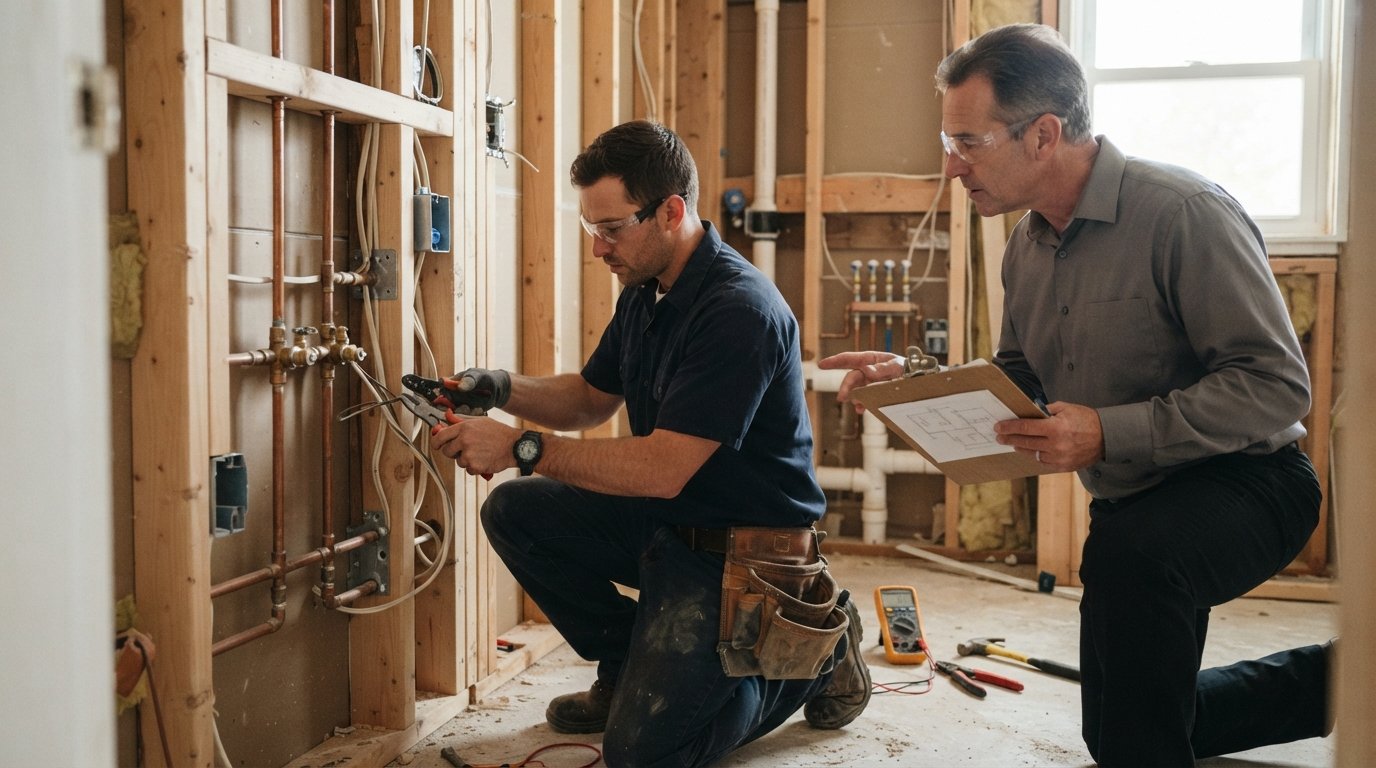
Inspections are not surprise visits designed to catch mistakes; they are scheduled checkpoints at defined stages. For electrical work, the typical sequence is rough-in inspection before drywall, then final inspection after devices and fixtures are installed. The rough-in inspection verifies that boxes are properly mounted, wire is stapled and protected, grounding is correct, and the panel work is safe. The final inspection confirms that outlets, switches, and fixtures work and that the panel labeling is accurate.
Plumbing inspections follow a similar pattern. The rough-in inspection happens after pipes are installed but before walls are closed. The inspector checks pipe sizing, slope on drain lines, venting, and the watertightness of joints under pressure. A water test or air test may be required. The final inspection confirms that fixtures are installed, traps are correct, and there are no leaks. For water heaters, the inspection may include checking the temperature and pressure relief valve and the venting.
Inspectors are also checking for things homeowners often overlook: proper support for pipes, correct clearances around recessed lights, ground fault protection in wet areas, and whether the work matches the permit scope. If the inspector finds a problem, you get a correction notice. The contractor fixes the issue and schedules a re-inspection, which may involve an additional fee. This is why hiring a contractor who is familiar with local inspection practices matters. An experienced local electrician knows what the local inspector expects and builds to that standard the first time.
The Real Cost of Skipping Permits
The permit fee itself is usually modest, often a few hundred dollars depending on the scope and jurisdiction. The real cost of skipping permits is in the consequences. Insurance companies can deny claims for damage caused by unpermitted work. If a fire starts in an unpermitted circuit, the insurer may investigate the permit history and refuse to cover the loss. The same applies to water damage from unpermitted plumbing. Even if the insurer pays, it may pursue subrogation against the homeowner or contractor, and the resulting dispute can take years to resolve.
Resale is the other major risk. Most purchase contracts include a representation that all work was permitted and inspected. If that representation is false, the buyer can demand repairs, credits, or cancellation. Lenders may refuse to finance a home with unpermitted electrical or plumbing work. In some cases, the local building department can require the work to be exposed for inspection, which means tearing out drywall, tile, or cabinetry. The financial hit from that scenario dwarfs any savings from skipping the permit.
There is also a safety dimension that deserves emphasis. Unpermitted work is often unlicensed work, and unlicensed work is where serious hazards hide. Improperly bonded gas lines, undersized wiring, missing venting, and inadequate ground fault protection are all common in unpermitted renovations. These are not abstract code violations; they are conditions that cause fires, carbon monoxide poisoning, and electrocution. The permit and inspection process is the cheapest insurance you can buy against those outcomes.
How to Navigate Permits Without Slowing Your Project
The best way to keep permits from delaying your project is to plan for them from the start. Before you finalize a design or order materials, call your local building department or check its website for the permit application requirements. Ask what inspections are required and how far in advance they must be scheduled. Build those timelines into your project schedule. A rough-in inspection that takes three days to schedule is not a problem if you planned for it; it is a crisis if you did not.
Choose contractors who treat permits as routine. Ask during the interview process who will pull the permit, whether the permit fee is included in the quote, and how inspection scheduling is handled. A contractor who answers those questions clearly and without hesitation is likely experienced with the local process. A contractor who dodges the question or suggests the homeowner pull the permit is a risk you do not need.
Keep your own records. Save copies of permits, inspection reports, and final sign-offs. If you sell the home, those documents are valuable. If you have a dispute with a contractor, they are evidence. If you need to make an insurance claim, they support your position. A simple folder, physical or digital, is sufficient.
For homeowners planning a larger move or renovation that coincides with a relocation, resources like Moving.Homes relocation guides can help you coordinate timelines and understand what documentation to gather before a move. The overlap between selling, buying, and renovating is where permit records matter most, so keeping them organized pays off.
Working With Independent Local Providers
Most homeowners do not have a regular electrician or plumber on speed dial, and finding one who is experienced with local permit requirements can feel like a gamble. A matching service can simplify the process by connecting you with independent local providers who can discuss scope, permits, and inspections before you commit. The key is to ask the right questions during the quote process and to compare multiple quotes rather than accepting the first one.
When you compare quotes, look beyond the bottom line. A quote that includes permit fees and inspection coordination is more complete than one that does not. Ask each provider how they handle permit filing, who schedules inspections, and what happens if a correction notice is issued. The answers will tell you a lot about how the project will actually run. For electrical and plumbing work especially, the cheapest quote is rarely the best value once you account for permit compliance and inspection outcomes.
Permits are not the enemy of a good renovation; they are the structure that makes a good renovation safe and insurable. Understanding when they apply, who is responsible for filing them, and what inspectors check puts you in control of your project. The homeowners who breeze through renovations are not the ones who avoid permits; they are the ones who plan for them from day one.