
Ductwork Repair: Restore Your Home’s Comfort and Efficiency
"*" indicates required fields
Your home’s heating and cooling system is a complex network, and the ductwork that snakes through your walls, attic, and crawlspaces is its highway for delivering comfort. When these hidden pathways develop problems, your entire home can feel the effects—from uneven temperatures and higher bills to dusty air and strange noises. Understanding ductwork repair is the first step to reclaiming a comfortable, efficient, and healthy living environment.
Understanding Ductwork and Common Problems
Your ductwork is a series of tubes, typically made of sheet metal, flexible plastic, or fiberglass, that transport warm or cool air from your furnace or air conditioner to every room in your house. Over time, these ducts can suffer from wear and tear, poor installation, or accidental damage.
Common issues include loose connections, small holes from pests or corrosion, and crushed or sagging sections. These problems might seem minor, but they allow your conditioned air to escape into unconditioned spaces like your attic or basement. This is why a simple concept like professional ductwork sealing can make such a dramatic difference in your system’s performance.
Why Leaky Ducts Are a Big Deal
Think of a leaky duct like a garden hose with a puncture. Water sprays everywhere except where you need it, and your water pressure drops. Similarly, leaky ducts force your HVAC system to work much harder and longer to try to reach the thermostat setting, wasting energy and straining the equipment.
Why Ductwork Repair Matters for Homeowners
Ignoring damaged ducts directly impacts your wallet and your well-being. The U.S. Department of Energy states that the average home loses 20-30% of the air moving through its duct system due to leaks, holes, and poor connections. That means nearly a third of the energy you pay to heat or cool your home is literally going to waste.
Beyond energy savings, proper ductwork repair improves indoor air quality. Leaks in return ducts can suck in dust, insulation fibers, and even mold spores from attics and crawl spaces, circulating them throughout your living areas. Sealing and repairing these breaches creates a closed, clean system for your air to travel.
The comfort benefits are immediate. You’ll notice fewer hot and cold spots, rooms that heat or cool evenly, and a system that runs more quietly. It’s a foundational repair that enhances everything your HVAC system is meant to do.
Is your home struggling with inconsistent temperatures or unexplained high energy bills? Our certified technicians can perform a thorough ductwork inspection to pinpoint the problem. Contact us online or call (555) 123-4567 for a professional assessment today.
Common Ductwork Issues and Their Causes
Most ductwork problems fall into a few key categories. Understanding what causes them helps in preventing future issues.
Physical damage is a leading cause. This can happen during home renovations, from rodents or pests nesting in ducts, or simply from aging materials that sag or tear. Poor initial installation is another major culprit, where ducts were never properly connected, supported, or sealed in the first place.
Environmental factors also play a role. Over years, the vibration from the blower motor can shake connections loose. In unconditioned spaces, temperature extremes cause metal to expand and contract, potentially weakening seams. Humidity can also lead to corrosion in metal ducts over a long period.
- Disconnected Sections: Joints come apart due to faulty tape, broken straps, or shifting.
- Holes and Tears: Caused by pests, accidental impacts, or corrosion.
- Crushed or Kinked Flexible Duct: Often from improper installation or storage items in an attic or crawlspace.
- Poorly Sealed Joints: Using the wrong materials (like standard duct tape, which fails) at installation.
- Insufficient Insulation: Ducts in hot attics or cold crawlspaces lose energy through the duct walls themselves.
How Professionals Fix Ductwork Problems
A professional ductwork repair begins with a comprehensive inspection. Technicians will often use specialized tools, like a duct blaster test, to measure the overall leakage of the system. They’ll also visually inspect accessible runs in attics, basements, and crawlspaces.
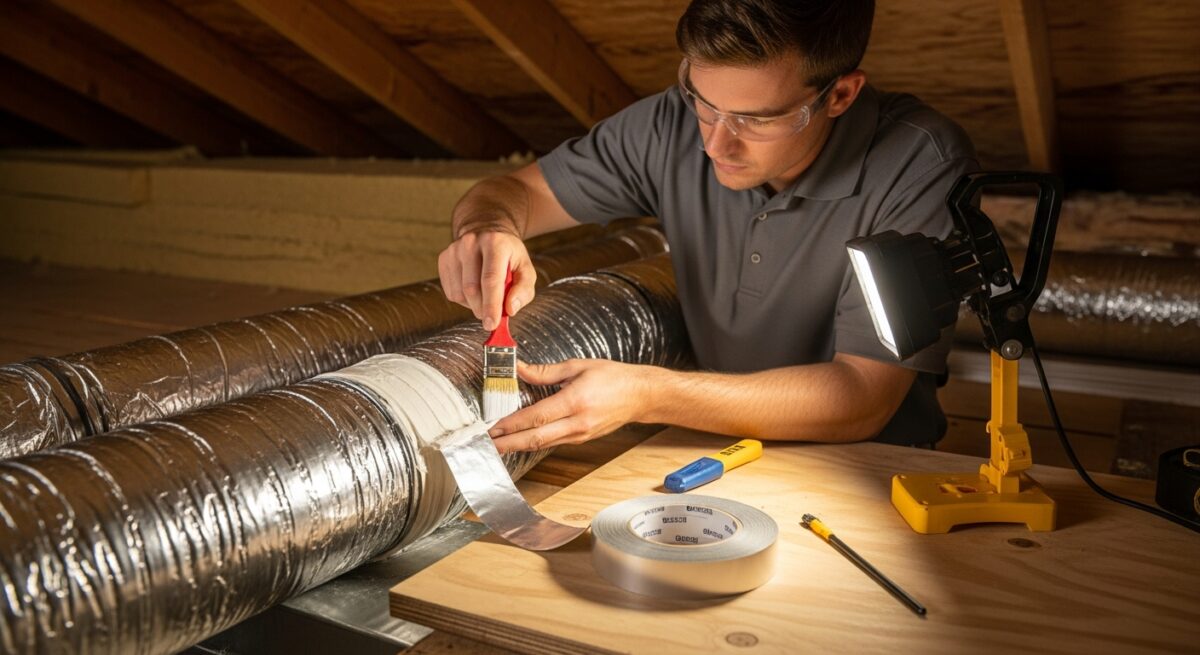
The repair process itself is methodical. First, technicians will re-secure any disconnected or sagging ducts using proper metal screws and durable mastic sealant or UL-181 approved foil tape. For small holes and cracks, mastic sealant is brushed on to create a permanent, flexible seal. Larger holes or crushed sections require cutting out the damaged piece and replacing it with new duct, securely fastened and sealed at both ends.
For a complete performance upgrade, the process often includes adding proper insulation around ducts in unconditioned spaces, a service detailed in our guide on the benefits of ductwork insulation. This two-pronged approach of sealing and insulating ensures maximum efficiency.
Don’t let hidden duct leaks drain your comfort and budget. Our expert team uses industry-best practices and materials for lasting repairs. Schedule your ductwork evaluation or call (555) 123-4567 to get started.
Signs You Should Not Ignore
Your home often gives you clear signals that your ductwork needs attention. While some signs are subtle, others are more pronounced, especially when compared to how your system used to perform.
One of the most common complaints is uneven heating or cooling. If certain rooms are always too hot or too cold, even with the vents fully open, it’s a strong indicator that air isn’t being delivered properly due to leaks or blockages. Similarly, if you feel little to no airflow coming from some vents, but others are blowing strongly, the duct leading to that room is likely compromised.
Listen to your system, too. Whistling or rattling sounds from the ducts when the HVAC is running can indicate loose parts or gaps where air is escaping. A sudden increase in dust on your furniture shortly after the system turns on is another red flag, suggesting leaks are pulling in debris.
- High and Unexplained Energy Bills: Your usage hasn’t changed, but costs keep rising.
- Rooms That Never Get Comfortable: Persistent hot or cold spots despite thermostat adjustments.
- Weak Airflow from Vents: Noticeably less air coming out compared to other rooms.
- Excessive Dust: Constant dust accumulation, especially near vents.
- Visible Damage: You can see disconnected, torn, or sagging ducts in an accessible area.
Cost Factors and What Affects Pricing
The cost of ductwork repair varies based on the scope and complexity of the job. A simple repair to seal a few accessible leaks will be far less than a project that requires replacing long runs of damaged duct in a hard-to-reach crawlspace.
The main factors include the extent of the damage, the accessibility of your ductwork, and the type of materials needed. Labor is a significant component, as repairs in tight attics or under homes take more time and effort. The geographic location and the expertise of the contractor will also influence the final price.
It’s important to view ductwork repair as an investment. While there is an upfront cost, the monthly savings on your energy bills often pay for the repair over time. Additionally, it can prevent more costly future problems, like an HVAC emergency repair caused by a system overworking to compensate for massive air loss.
Ready for an accurate quote? We provide transparent, upfront pricing after a detailed inspection. Reach out for a free estimate by calling (555) 123-4567. Let’s find the most cost-effective solution for your home.
How to Choose the Right Professional for the Job
Not all handymen or HVAC companies are equally equipped for proper ductwork repair. It’s a specialized task that requires specific knowledge and materials. Look for a contractor with proven experience in duct diagnostics and repair, not just system installation.
Ask about their process. A reputable pro will perform a diagnostic test before and after repairs to quantify the improvement. They should use industry-standard materials like mastic sealant or metal-backed tape, not the cloth-backed “duct tape” found at hardware stores. Ensure they are licensed, insured, and can provide references for similar work.
Finally, get a detailed written estimate that outlines the specific problems found, the proposed repairs, the materials to be used, and the total cost. A trustworthy technician will be happy to explain their findings and recommendations clearly.
Long-Term Benefits for Your Home
Investing in professional ductwork repair pays dividends for years. The most immediate benefit is lower utility bills—a properly sealed system can reduce heating and cooling costs by up to 20% or more. Your HVAC equipment will also experience less wear and tear, potentially extending its lifespan and delaying the need for a costly replacement.
Your home’s comfort level will reach a new consistency, eliminating those frustrating temperature imbalances. You’ll also breathe easier knowing your air is cleaner, as sealed ducts minimize the intake of allergens and pollutants from outside the living space. In short, it makes your entire home more efficient, comfortable, and healthy.
Frequently Asked Questions About Ductwork Repair
How long does a typical ductwork repair take?
Most standard repairs, like sealing leaks in an accessible attic, can be completed in a single day. More extensive jobs involving duct replacement in multiple zones may take two to three days. Your technician will provide a clear timeline after the inspection.
Can I repair my ductwork myself?
While you can attempt to seal accessible leaks with mastic from a hardware store, a professional repair is far more effective. DIY efforts often miss hidden leaks and may use inappropriate materials. Professionals have the tools and expertise to diagnose the full extent of the problem and ensure a lasting fix.
Will repairing my ducts make my house less dusty?
Yes, absolutely. Sealing leaks in the return side of your duct system prevents it from sucking dust and debris from attics and walls into your air supply. Many homeowners notice a significant reduction in dust accumulation after a proper duct sealing.
How often should ductwork be inspected?
It’s wise to have your ducts inspected every 3 to 5 years, or anytime you notice a significant change in your system’s performance, efficiency, or airflow. You should also have them checked after any major home renovation.
Is duct cleaning the same as duct repair?
No, they are different services. Duct cleaning removes dust and debris from inside the ducts. Duct repair fixes the physical integrity of the ducts themselves (holes, leaks, disconnections). Often, repairs are done before or after a cleaning for optimal system health.
What’s the difference between sealing and insulating ducts?
Sealing closes gaps and leaks in the ducts themselves to prevent air loss. Insulation wraps around the outside of ducts in unconditioned spaces to prevent thermal energy loss through the duct walls. Both are crucial for efficiency and are often performed together.
Will duct repair help with my allergies?
It can significantly help. By preventing unfiltered, allergen-filled air from being pulled into your system through leaks, it reduces the circulation of pollen, mold spores, and dust mites, creating a cleaner indoor environment.
Is the repair work messy or disruptive?
Professional technicians take great care to minimize disruption. Most work is done in attics, basements, or crawlspaces, so your living areas are generally unaffected. They will clean up the work area thoroughly before completing the job.
Your home’s ductwork is a vital, though often overlooked, component of your comfort system. Addressing repairs promptly with a qualified professional restores efficiency, improves air quality, and brings balanced comfort to every corner of your home. It’s a smart investment that pays back in savings and peace of mind for years to come.


About Jackson Adams
"*" indicates required fields
Recent Posts
Related Posts