
Crawlspace Encapsulation Cost and Benefits for 2026
Crawlspace encapsulation cost and benefits explained, from vapor barriers to energy savings. Call 8333658755 for trusted contractor quotes.

By Gabriel Nguyen
Learn more about Home Waterproofing for guides, costs, and what to expect.
Compare Home Waterproofing Pros Near You

Enter your ZIP code to compare top-rated local professionals and request free quotes.
Your crawlspace is one of the hardest-working parts of your home, yet it is also one of the most overlooked. It sits quietly beneath your floorboards, buffering your living space from ground moisture, temperature swings, and pests. When that space is left open to the earth, however, it becomes a silent driver of high energy bills, musty odors, warped flooring, and even structural rot. Crawlspace encapsulation seals that vulnerable area with a heavy-duty vapor barrier and, in many cases, a dehumidifier and drainage system, turning a damp, vented void into a dry, conditioned buffer. Homeowners who understand crawlspace encapsulation cost and benefits early can avoid expensive surprises later and make a smarter decision for their property.
What Crawlspace Encapsulation Actually Involves
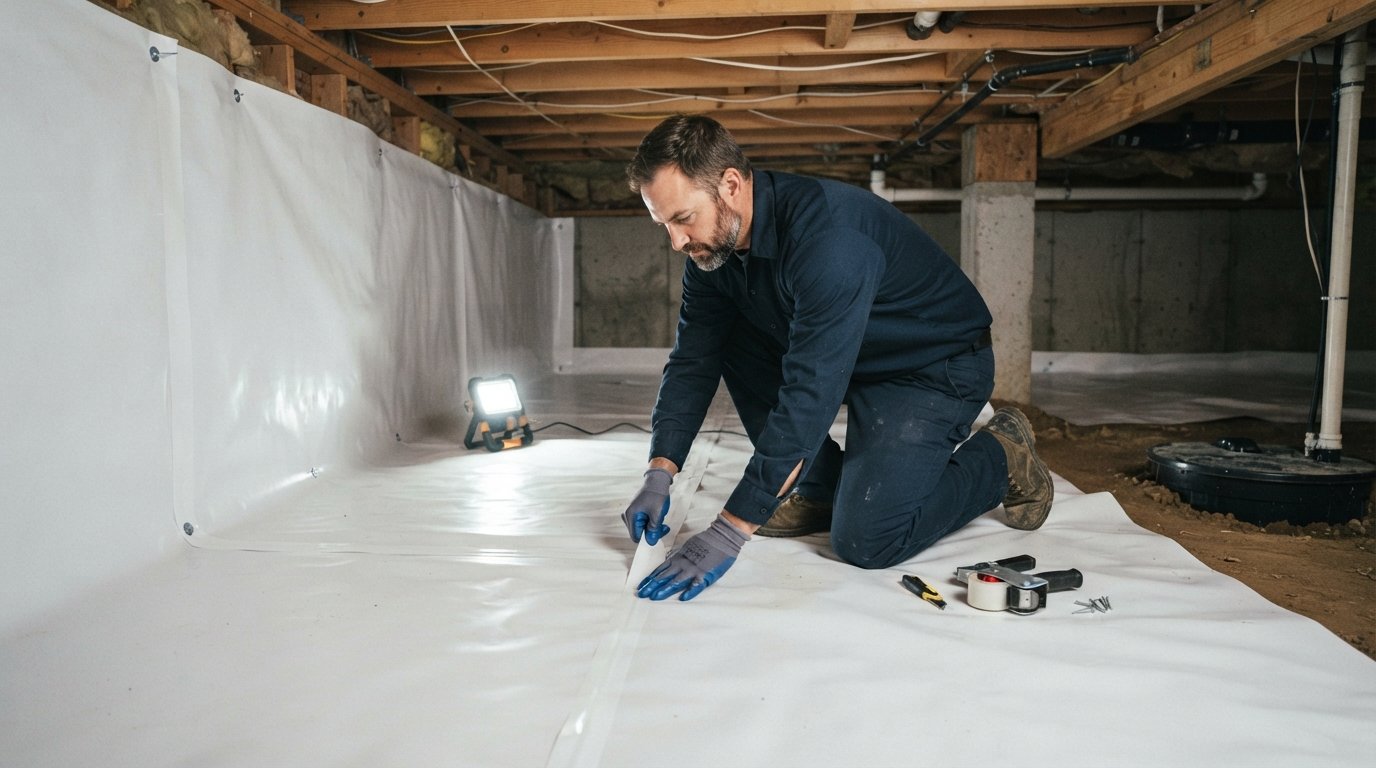
Encapsulation is not the same as laying down a few plastic sheets. A proper job starts with a full assessment of the crawlspace: checking for standing water, pest activity, damaged joists, and existing insulation. Crews then remove debris, level the soil, and seal any foundation cracks or penetrations. A reinforced vapor barrier, usually between 10 and 20 mil thick, is installed across the floor and often up the walls and piers. Seams are overlapped and taped, and the barrier is mechanically fastened to the foundation walls.
From there, the scope can expand depending on the home. Many installers add a crawlspace dehumidifier to keep relative humidity below 60 percent, a sump pump or French drain for groundwater, and closed-cell foam insulation on the walls or rim joists. Vents are typically sealed shut because a vented crawlspace in a humid climate pulls moist outside air into the structure. The result is a semi-conditioned or fully conditioned space that no longer feeds moisture into the home above.
Because every home is different, encapsulation is usually priced as a custom project rather than a flat rate. A dry, easily accessible crawlspace with no repairs needed will cost far less than one with mold, sagging insulation, or a failing vapor barrier. That is why getting a professional inspection and a written scope of work matters before you compare quotes.
How Much Does Crawlspace Encapsulation Cost in 2026?
Nationally, most homeowners spend between $1,500 and $15,000 on crawlspace encapsulation, with a typical project landing in the $4,000 to $8,000 range. The wide spread reflects differences in square footage, barrier thickness, drainage needs, and whether a dehumidifier is included. For a rough planning number, expect to pay somewhere between $1.50 and $4.00 per square foot for a basic vapor barrier installation, and $5.00 to $10.00 per square foot or more for a full encapsulation with insulation, drainage, and climate control.
Labor is a major cost driver. Tight crawlspaces, low clearance, and long access distances slow crews down and raise the price. If your home needs foundation repairs, joist sistering, or mold remediation, those items are usually quoted separately and can add thousands of dollars. Below is a breakdown of the most common cost categories homeowners see on encapsulation estimates.
- Vapor barrier only: $1,500 to $4,000, best for dry crawlspaces with minor moisture.
- Full encapsulation with wall liner: $4,000 to $9,000, includes sealing vents and covering piers.
- Dehumidifier installation: $1,200 to $2,500 installed, depending on capacity and drainage.
- Drainage and sump pump: $800 to $2,500, needed where groundwater enters the space.
- Mold remediation or wood repair: $1,000 to $6,000, required when damage is already present.
Geography matters too. Contractors in humid states like Florida, Texas, and Louisiana often charge more because the work is more demanding and the risk of moisture-related callbacks is higher. In drier regions, a lighter scope may be enough. Always ask whether the quote includes permits, disposal of old insulation, and a post-installation humidity check. If you are comparing this project against other home system upgrades, it helps to understand how warranties and coverage work across your home, much like the protections explained in this guide to an HVAC system warranty, because knowing what is covered can prevent duplicate spending.
The Financial and Comfort Benefits of Encapsulation
The strongest argument for encapsulation is not cosmetic. It is the way a dry crawlspace changes how your entire house performs. Moisture is the root cause of many problems homeowners attribute to other systems: uneven floors, sticking doors, moldy baseboards, and allergy symptoms that never seem to go away. By cutting off the ground as a moisture source, encapsulation addresses the cause rather than the symptom.
Energy savings are often the first benefit homeowners notice. A vented crawlspace allows cold or hot air to move freely under the floor, forcing your HVAC system to work harder. Sealing and insulating that space reduces the load, and many homeowners report a 10 to 20 percent reduction in heating and cooling costs after a full encapsulation. Over a decade, those savings can offset a significant portion of the project cost.
There are also structural and health advantages. Wood rot, mold growth, and pest infestations all thrive in damp environments. Encapsulation removes that habitat and protects floor joists, subflooring, and insulation. For families with asthma or allergies, a drier crawlspace often means fewer airborne irritants inside the living space. And because encapsulation is a permanent upgrade rather than a recurring repair, it can improve resale value and make the home easier to sell after inspection.
Signs Your Home Needs Encapsulation Now
Not every crawlspace needs immediate work, but certain warning signs suggest the problem is already affecting your home. If you notice any of the following, it is worth scheduling an inspection before the damage spreads.
- Persistent musty or earthy odors on the first floor.
- Cupping, buckling, or squeaking hardwood floors.
- Condensation on ducts, pipes, or HVAC equipment in the crawlspace.
- Visible mold, white fungal growth, or darkened wood on joists.
- High indoor humidity, especially during summer months.
- Evidence of rodents, termites, or other pests in the crawlspace.
Ignoring these signs rarely saves money. Moisture damage compounds: a small leak becomes rot, rot becomes structural repair, and structural repair becomes a major renovation. Encapsulation is almost always cheaper when done early, before secondary damage sets in. A qualified contractor can measure moisture levels, inspect the vapor barrier, and tell you whether a partial or full encapsulation is appropriate.
How to Budget and Compare Encapsulation Quotes
Because encapsulation is a custom project, the quote you receive should be detailed and itemized. A vague lump sum is a red flag. Ask for a breakdown that separates materials, labor, drainage, dehumidification, and any repairs. Confirm the barrier thickness and brand, the warranty terms, and whether the contractor will return for a humidity check after installation.
It also helps to get at least three quotes from licensed, insured contractors. Prices can vary by 30 percent or more for the same scope, and the cheapest bid is not always the best value if it skips drainage or uses thin plastic. Homeowners who want to compare vetted professionals quickly can use a matching service to request quotes, review options, and choose the right fit without cold-calling dozens of companies. Platforms like USremodel connect homeowners with independent contractors for projects such as crawlspace work, HVAC, and flooring, which makes side-by-side comparison far easier.
When reviewing bids, look for these elements in every proposal:
- A clear scope of work with square footage and barrier specifications.
- Separate line items for dehumidifier, drainage, and insulation.
- Timeline, including cure time and inspection.
- Warranty length and what it covers.
- Proof of license, insurance, and references from similar projects.
Financing is another consideration. Some contractors offer payment plans, and some utilities or state programs provide rebates for energy-efficiency improvements. Even without incentives, many homeowners find that the monthly energy savings plus the avoided cost of future repairs make encapsulation a financially sound decision.
Encapsulation Versus Other Moisture Fixes
Homeowners sometimes ask whether they can simply add a dehumidifier or regrade the yard instead of encapsulating. Those steps can help, but they rarely solve the underlying problem. A dehumidifier running in an open, vented crawlspace fights an endless battle against incoming humid air. Regrading addresses surface water but not vapor rising through the soil. Encapsulation is the only approach that seals the moisture source at the ground level.
Partial measures can also cost more over time. Replacing a failing vapor barrier every few years, treating mold repeatedly, or repairing joists damaged by rot adds up quickly. A single well-installed encapsulation typically lasts 20 years or more with minimal maintenance, making the long-term cost lower than repeated short-term fixes. For homeowners planning to stay in their home, that durability is a strong argument.
Choosing the Right Contractor for the Job
Encapsulation is only as good as its installation. A poorly sealed barrier, an undersized dehumidifier, or missing drainage will leave you with the same problems you started with. Look for contractors who specialize in crawlspace and moisture work, carry proper licensing, and can show before-and-after photos of completed projects. Ask how they handle unexpected findings, such as hidden mold or damaged joists, and whether those costs are quoted upfront.
It is also wise to confirm that the contractor will pull any required permits and dispose of old materials responsibly. A written contract should spell out the scope, payment schedule, and warranty. Once the work is complete, keep the documentation, because it can be valuable if you sell the home or file an insurance claim later. With the right professional and a clear scope, encapsulation transforms a problem area into a long-term asset.
Ultimately, crawlspace encapsulation cost and benefits should be weighed against the cost of doing nothing. Moisture damage does not stay in the crawlspace; it moves into your floors, walls, and air. Addressing it early protects your home, your health, and your budget, and it turns one of the most neglected spaces in the house into one of its most reliable defenses.