Bathtub Installation Cost: A Homeowner’s Guide
"*" indicates required fields
You’re finally ready to replace that old, stained bathtub or create the spa-like bathroom you’ve always wanted. As you start planning, one question quickly rises to the surface: what will this actually cost? For most homeowners, the price of a new bathtub installation feels like a mystery, filled with hidden variables and potential budget surprises. Ignoring this crucial planning step or opting for a quick DIY fix can lead to water damage, improper installation, and even more costly repairs down the line. Understanding bathtub installation cost is the first step toward a successful, stress-free bathroom upgrade that protects your home’s value and your peace of mind.
Understanding Bathtub Installation Cost
Bathtub installation cost isn’t just the price of the tub itself. It’s the total investment required to remove your old unit and properly install a new one, which includes labor, materials, plumbing, and potential modifications to your bathroom. This price can vary dramatically because every home and project is unique.
Why does the cost swing so much? It comes down to the complexity of the job. A simple alcove tub swap is far different from installing a freestanding soaker tub that requires moving drain lines and reinforcing the floor. The age and condition of your existing plumbing also play a huge role, as older homes often reveal surprises once walls are opened.
While any home can undergo a bathtub replacement, some are more prone to higher costs. Older homes with outdated plumbing, bathrooms with difficult access, and projects involving structural changes typically see higher quotes. Knowing what you’re getting into from the start helps set realistic expectations.
Why This Matters for Your Home
Getting your bathtub installation right is about more than just a new bathing experience. A professional installation safeguards your home from one of the most common and destructive issues: water damage. An improperly sealed or leveled tub can leak water slowly into your subfloor and walls for months, leading to rot, mold, and structural damage you won’t see until it’s severe and expensive to fix.
Beyond property protection, there are significant safety and comfort considerations. A tub that isn’t securely installed can shift or crack, creating a fall hazard. Proper installation ensures your drain works efficiently, preventing standing water and slip risks. It also guarantees that your new tub is level, comfortable to use, and built to last for years, turning your bathroom into a true sanctuary.
Delaying a needed replacement or choosing a cut-rate installation to save money now almost always leads to larger costs later. A small leak can escalate into a major remediation project involving flooring, drywall, and mold removal. Investing in a quality installation from the start is a proactive measure that protects your biggest investment,your home.
If you notice signs of this issue in your home, it may help to speak with a qualified contractor. Request a free quote or call to explore your repair or remodeling options.
Common Problems Homeowners Experience
When tackling a bathtub project, homeowners often encounter a series of predictable hurdles. The most frequent issue is underestimating the scope of work, thinking it’s a simple swap when it requires new plumbing, wall repair, or floor reinforcement. This discovery mid-project is a major source of budget overruns and stress.
Another common challenge is navigating the vast selection of tubs and materials. From acrylic and fiberglass to cast iron and stone resin, each material has different price points, installation requirements, and long-term durability. Choosing the wrong one for your space or lifestyle can lead to disappointment and premature wear.
- Visible damage like cracks, chips, or persistent stains in an old tub.
- Performance problems such as slow drains, inconsistent water temperature, or inadequate soaking depth.
- Structural concerns like a flexing or “spongy” floor around the tub, indicating subfloor issues.
- Aging materials that are difficult to clean, have lost their gloss, or have failing caulk and seals.
- Outdated style that diminishes your enjoyment and reduces your home’s appeal to future buyers.
- Accessibility issues, where the current tub is difficult or unsafe to enter and exit.
How Professionals Solve the Problem
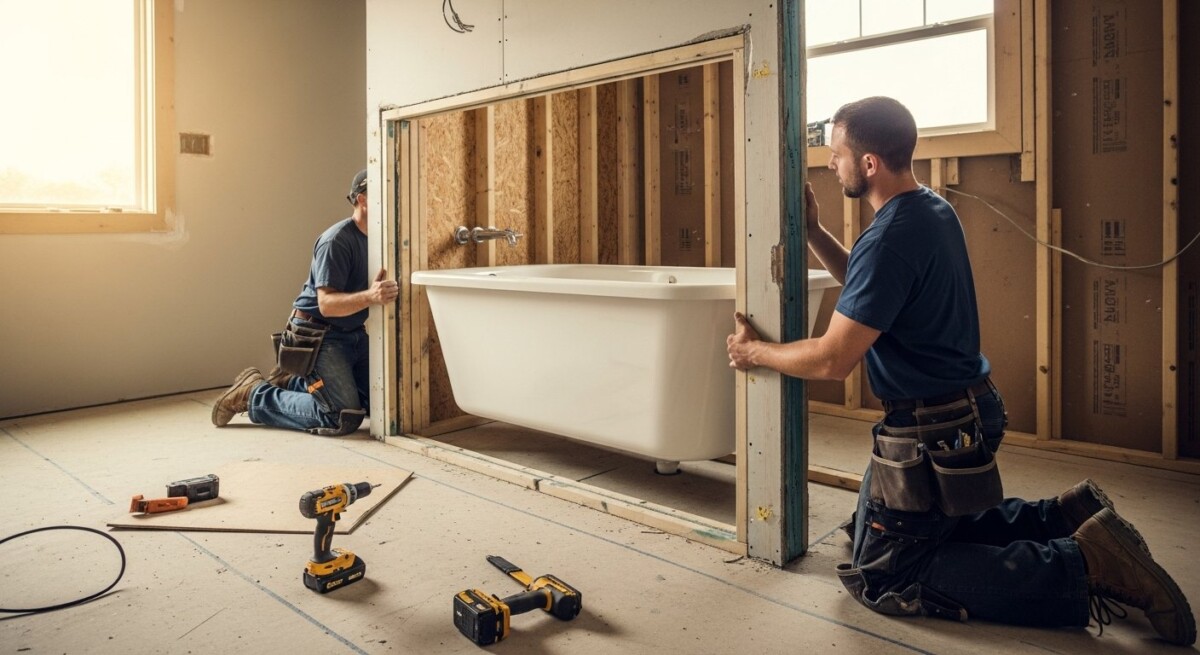
A professional contractor transforms a potentially chaotic project into a streamlined process. They start with a detailed assessment, looking beyond the surface to evaluate your plumbing, flooring, and wall conditions. This crucial step identifies hidden issues,like corroded pipes or water-damaged subflooring,before the installation begins, preventing costly surprises.
The value of professional work lies in their expertise and efficiency. They have the right tools, knowledge of local building codes, and relationships with suppliers to source materials correctly. Their work is not just about placing a tub; it’s about ensuring a watertight, level, and secure installation that functions perfectly for years. This is similar to the thorough approach needed for a successful kitchen renovation, where planning prevents pitfalls, as outlined in our article on avoiding costly kitchen renovation errors.
A typical professional installation follows a logical, proven process:
- Site Inspection & Measurement: Assessing the space, checking for level, and verifying plumbing locations.
- Careful Demolition & Removal: Protecting the surrounding area and properly disposing of the old tub.
- Substrate Preparation: Repairing or reinforcing the subfloor and walls as needed.
- Plumbing Adjustments: Updating drain and supply lines to fit the new tub.
- Setting & Leveling: Placing the tub perfectly level and securing it to the structure.
- Sealing & Finishing: Applying waterproof sealant and connecting the drain assembly for a leak-proof finish.
A professional inspection can reveal hidden issues before they become expensive repairs. Compare contractor quotes here or call to discuss your project.
Warning Signs You Should Not Ignore
Your bathroom often gives clear signals when a tub replacement is moving from a “want” to a “need.” Paying attention to these signs can help you act before a minor issue becomes a major emergency. The most obvious warnings are physical defects in the tub itself that can’t be cleaned or repaired.
Less visible, but equally important, are signs of water damage. If the floor near the tub feels soft, tiles are loose, or you notice peeling paint or wallpaper on adjacent walls, moisture is likely escaping. Musty odors are another red flag, suggesting mold growth beneath the tub or within walls. Addressing these early protects your home’s structure and your family’s health.
- Cracks, especially near the drain or on the tub floor, which can quickly worsen and leak.
- Persistent leaks around the edges, even after re-caulking.
- A wobbly or unstable tub that moves when you step in.
- Visible water stains or warping on the ceiling in the room directly below the bathroom.
- Chronic drainage problems that plumbers can’t permanently fix.
- Rust stains or significant discoloration that makes the tub look unsanitary.
What Affects the Cost of Repairs or Installation
The final price tag for your bathtub project is influenced by several key factors. The first and most significant is the type of tub you choose. A standard alcove acrylic tub is the most budget-friendly, while a heavy cast-iron slipper tub or a large freestanding model will cost more for both the unit and the labor to install it.
Labor complexity is the other major cost driver. This includes the accessibility of your bathroom, the condition of existing plumbing, and any necessary construction work. If your bathroom is on a second floor with narrow hallways, or if the plumbing needs to be brought up to current code, expect labor hours,and costs,to increase. Just as with a kitchen, creating a realistic budget requires understanding all these variables, a topic we explore in depth in our guide to kitchen remodeling cost and budget.
- Materials: Tub material (acrylic, cast iron, etc.), surround, and trim.
- Labor: Demolition, disposal, plumbing, installation, and finishing.
- Project Scope: A simple replacement vs. a full bathroom remodel.
- Structural Work: Floor reinforcement, wall repair, or moving plumbing lines.
- Location & Accessibility: Ease of moving materials in and out.
- Permits & Codes: Costs for required permits and bringing work up to code.
Costs can vary depending on the condition of your home. The best way to know the price is to get a personalized estimate. Request free quotes from contractors or call today.
How to Choose the Right Contractor
Selecting the right professional is the most important decision you’ll make for your bathtub installation. Start by looking for a contractor who specializes in bathroom work and has a proven track record. They should be willing to provide references and examples of past projects similar to yours.
Always verify their credentials. A reputable contractor will be properly licensed, insured, and bonded. This protects you from liability in case of accidents and ensures the work meets local building standards. Don’t hesitate to ask for proof of insurance and check their standing with your state’s licensing board.
- Check for valid state and local licenses, plus liability and workers’ compensation insurance.
- Read recent customer reviews on multiple platforms and ask for references.
- Request a detailed, written estimate that breaks down material and labor costs.
- Compare quotes from at least three different contractors.
- Confirm their experience with your specific type of tub and project scope.
- Ask about who will perform the work,the company’s employees or subcontractors.
Long-Term Benefits of Professional Work
Investing in a professional bathtub installation pays dividends long after the project is complete. The foremost benefit is durability. A correctly installed tub won’t shift, leak, or crack under normal use, meaning you won’t face repair bills or water damage for many years. This quality workmanship translates directly into peace of mind.
Your home’s value and efficiency also get a boost. A modern, well-installed bathtub is a key selling point that appeals to future buyers. Furthermore, a professional can ensure your new plumbing connections are optimal, which can contribute to better water pressure and efficiency. For more ideas on improving your home’s systems, consider reading about efficient plumbing upgrades for a modern home.
Finally, professional work reduces future maintenance. Proper sealing, support, and plumbing connections mean less frequent caulking, fewer drain clogs, and a surface that’s easier to clean and maintain. You get to enjoy your new bathroom without the nagging worry of something going wrong underneath the surface.
How much does it typically cost to install a new bathtub?
The average cost to install a standard bathtub ranges from $1,500 to $5,000, but this is a wide range. A simple alcove tub replacement might be on the lower end, while installing a freestanding tub with new plumbing lines can reach $8,000 or more. The only way to get an accurate price for your home is to get a detailed estimate based on your specific choices and bathroom conditions.
Is it cheaper to refinish or replace a bathtub?
Refinishing (or reglazing) is almost always cheaper upfront, costing $300-$600 versus thousands for replacement. However, it’s a surface fix that lasts 5-10 years and doesn’t address underlying problems like poor plumbing or a damaged substrate. Replacement is a more permanent, comprehensive solution that can fix functional issues and add more value to your home.
How long does a professional bathtub installation take?
For a straightforward replacement with no major issues, a professional crew can often complete the job in 1-2 days. If the project involves moving plumbing, repairing subfloors, or tiling a new surround, it may take 3-5 days. Your contractor should provide a clear timeline after their initial inspection.
Do I need a permit to replace my bathtub?
In most municipalities, you need a permit if the installation involves altering the plumbing (moving drain or water supply lines). A simple like-for-like swap where plumbing isn’t touched may not require one. Your licensed contractor will know local codes and handle the permit process if needed, which is a key reason to hire a pro.
What is the most affordable type of bathtub to install?
Acrylic or fiberglass alcove tubs are generally the most affordable both in material cost and installation. They are lightweight, easy for pros to handle, and designed to fit standard 60-inch alcoves with minimal modification. They offer a good balance of cost, durability, and a wide variety of styles.
Can I install a bathtub myself to save money?
While DIY installation is possible, it’s not recommended unless you have significant plumbing and carpentry experience. Mistakes can lead to catastrophic water damage, improper support (causing cracks), and voided warranties. The cost to fix a DIY error often far exceeds the money saved by not hiring a professional initially.
Understanding bathtub installation cost empowers you to plan a successful bathroom project that fits your budget and enhances your home. By recognizing the warning signs early and appreciating the value of professional work, you can avoid the stress and expense of emergency repairs. The most practical step any homeowner can take is to gather information from experienced local contractors. Comparing a few detailed quotes will give you the clarity and confidence to move forward, ensuring your new bathtub is a source of relaxation, not worry, for years to come.