Bathroom Remodeling Basics: A Homeowner’s Essential Guide
"*" indicates required fields
Thinking about updating your bathroom can feel equal parts exciting and overwhelming. It’s a project that promises daily comfort and increased home value, but the sheer number of decisions—from layout to fixtures to finishes—can be daunting. Understanding the core bathroom remodeling basics is the key to transforming that anxiety into a clear, actionable plan for the beautiful, functional space you deserve.
Understanding Bathroom Remodeling Basics
At its heart, a bathroom remodel is about more than just new tiles and a fresh coat of paint. It’s a structured process of upgrading the functionality, safety, and aesthetics of one of the most hard-working rooms in your home. Getting the basics right from the start sets the foundation for a smooth project and a result you’ll love for years.
These fundamentals cover three key areas: planning and design, the essential construction phases, and material selection. Each stage builds on the last, and skipping a step often leads to delays, budget overruns, and frustration. A successful remodel balances your dream vision with practical considerations like plumbing, ventilation, and space.
The Importance of a Solid Plan
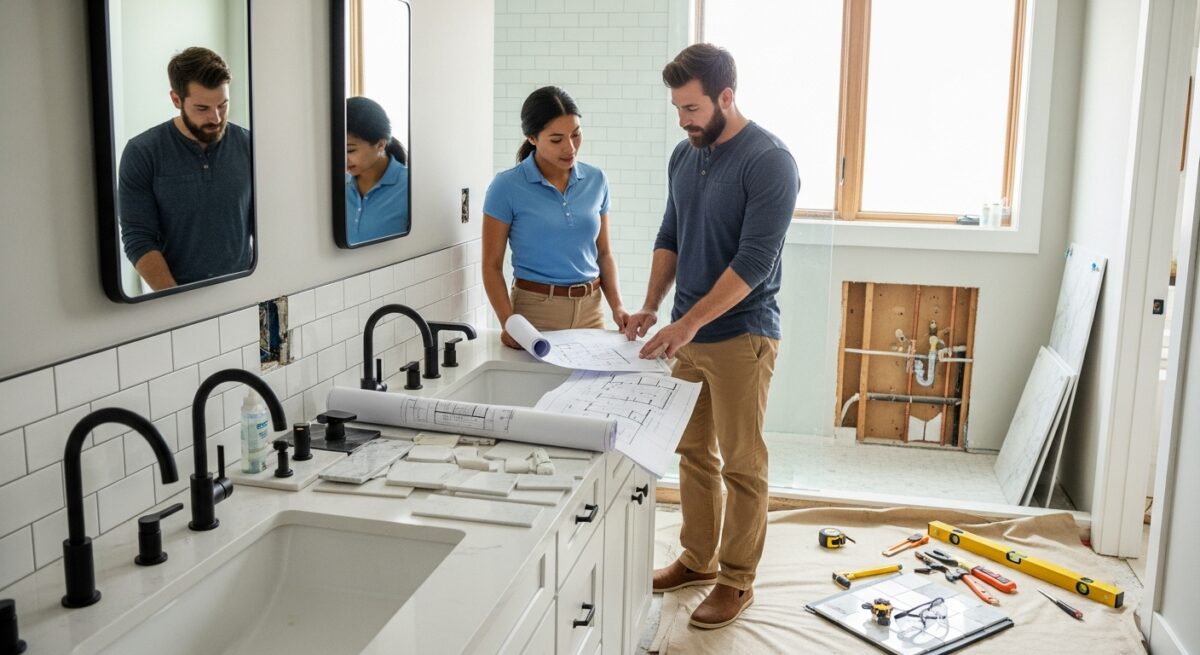
Before the first tile is lifted, a detailed plan is your most crucial tool. This includes a realistic budget, a clear design vision, and a timeline that accounts for material lead times and potential surprises. For a deeper dive into getting ready, our resource on bathroom remodeling preparation is invaluable. A good plan also considers whether you need permits, which are often required for plumbing, electrical, and structural changes.
Why It Matters for Homeowners
Investing in your bathroom delivers some of the highest returns of any home improvement project, both in daily enjoyment and financial value. A modern, well-executed bathroom improves your morning routine, provides a sanctuary for relaxation, and makes a powerful statement to potential buyers if you ever sell.
Beyond aesthetics, remodeling addresses hidden issues that can cost you money. Upgrading old, inefficient plumbing stops water waste and prevents leaks. Improving ventilation eliminates mold and mildew, protecting your family’s health and your home’s structure. Replacing worn surfaces with durable, easy-clean materials reduces long-term maintenance headaches.
Ready to turn your vision into a reality? Our team specializes in guiding homeowners through every step. Contact us today for a free, no-obligation consultation, or call (555) 123-4567 to speak directly with a project advisor.
Common Issues and Their Causes
Many homeowners start a remodel because of recurring problems that simple repairs can’t fix. Understanding these common issues helps you target your remodel to solve them permanently.
Often, symptoms like persistent leaks, poor drainage, or cold floors point to underlying failures in the bathroom’s core systems. These problems typically stem from age, outdated materials, or poor initial installation.
- Water Damage & Mold: Caused by failing seals, inadequate waterproofing, or poor ventilation.
- Outdated & Inefficient Fixtures: Old toilets, faucets, and showers use significantly more water and lack modern safety features.
- Poor Layout & Lack of Storage: Awkward spacing, insufficient counter space, and no place for linens make the room frustrating to use daily.
- Worn-Out Surfaces: Cracked tiles, chipped tubs, and peeling vanity finishes are not just ugly; they can harbor bacteria and be unsafe.
- Insufficient Lighting & Electrical: A single overhead light and no outlets near the mirror are hallmarks of an outdated electrical plan.
How Professionals Fix the Problem
A professional remodeling team follows a deliberate, phased process to ensure quality, safety, and efficiency. This systematic approach is what separates a lasting renovation from a makeshift update. Familiarizing yourself with the steps, as outlined in our comprehensive guide to bathroom remodeling steps, demystifies the journey ahead.
The process typically follows a logical order: demolition, rough-in work for plumbing and electrical, installation of new surfaces and fixtures, and finishing touches. Professionals manage critical tasks like ensuring the subfloor is level, walls are properly waterproofed, and all new installations meet current building codes.
- Demolition & Prep: Carefully removing old materials and preparing the space.
- Rough-In Work: Updating plumbing drains and supply lines, electrical wiring, and ventilation ductwork behind the walls.
- Installation & Finishing: Setting tile, installing cabinetry and fixtures, painting, and adding final hardware and lighting.
Don’t navigate the complexities of a remodel alone. Let our licensed experts handle the details from start to finish. Get your personalized quote now or call (555) 123-4567 to schedule an in-home assessment.
Signs You Should Not Ignore
Some bathroom issues are more than just cosmetic nuisances; they are urgent signals that a remodel is necessary to protect your home. Waiting too long can turn a planned improvement into an emergency repair with much higher costs.
Pay close attention to signs of water intrusion and structural wear. These problems rarely improve on their own and usually worsen over time, leading to more extensive damage in adjacent rooms.
- Persistent leaks or water stains on ceilings or walls below the bathroom.
- Soft, spongy, or sagging floors around the toilet or tub.
- Visible mold growth that returns after cleaning (especially black mold).
- Cracked or lifting floor tiles, which can indicate a failing subfloor.
- Outdated wiring that can’t handle modern hair dryers, lighting, and outlets safely.
Cost Factors and What Affects Pricing
The cost of a bathroom remodel varies widely because every home and homeowner’s vision is unique. Being aware of the key factors that influence the final price helps you make informed choices that align with your budget.
Major cost drivers include the scope of the project (full gut renovation vs. cosmetic update), the quality and brand of materials selected (fixtures, tile, cabinetry), and labor costs in your area. Changing the room’s layout by moving plumbing fixtures like the toilet or shower is a significant expense, as it requires extensive re-piping work.
Other factors include the need for structural repairs discovered during demolition, the complexity of the tile or design work, and the cost of necessary permits and inspections. For a detailed look at managing expenses, explore our guide to a bathroom makeover on a budget.
Transparent pricing is a cornerstone of our service. We provide detailed estimates so you know exactly what to expect. Reach out to us today for a clear, honest assessment of your project’s investment, or dial (555) 123-4567.
How To Choose the Right Professional or Service
Your contractor is your partner in this project, so choosing the right one is the most important decision you’ll make. Look for a licensed, insured, and experienced professional with a proven track record in bathroom remodels specifically.
Always ask for and check references, view photos of completed projects similar to yours, and ensure they provide detailed, written contracts. A reputable pro will communicate clearly, answer all your questions, and never pressure you into a quick decision. They should also handle all necessary permit applications and inspections.
- Verify licensing and insurance.
- Read reviews and ask for client references.
- Review a detailed, written estimate and contract.
- Assess their communication style and professionalism.
Long-Term Benefits for Your Home
A well-executed bathroom remodel is an investment that pays dividends long after the project is complete. You’ll enjoy immediate benefits like a more pleasant and efficient daily routine, but the long-term advantages are even more compelling.
These include a substantial increase in your home’s resale value and marketability, reduced utility bills from water-efficient fixtures, and the peace of mind that comes from knowing the room is safe, sound, and free of hidden hazards. High-quality materials and professional installation also mean your new bathroom will stand the test of time with minimal need for repairs, protecting your investment for decades.
FAQs
How long does a typical bathroom remodel take?
A standard full bathroom remodel usually takes 3 to 4 weeks from start to finish. Timelines can vary based on the project’s complexity, material availability, and the discovery of any unforeseen issues like hidden water damage during demolition.
Do I need a permit to remodel my bathroom?
In most areas, yes. Permits are typically required for any work that involves plumbing, electrical, or structural changes. Your professional contractor should handle the permit process, ensuring all work is up to code and inspected for safety.
What is the most expensive part of a bathroom remodel?
Labor and plumbing work are often the largest cost components, followed by high-ticket items like custom cabinetry, specialty tile, and premium fixtures like freestanding tubs or multi-feature shower systems.
Can I remodel my bathroom in stages to save money?
While possible, phased remodeling is often less efficient and can be more costly in the long run. It can lead to disjointed design, repeated setup/cleanup costs, and difficulty scheduling contractors for multiple small visits.
How can I maximize storage in a small bathroom?
Smart solutions include recessed medicine cabinets, vanity cabinets with drawers, wall-mounted shelves, and niche shelving within the shower area. Using vertical space effectively is key in a compact layout.
Should I choose a bathtub, a shower, or both?
This depends on your household’s needs and available space. For resale, having at least one bathtub in the home is often recommended. For master bathrooms, a large, accessible shower is a popular and valuable feature.
What flooring is best for bathrooms?
Porcelain or ceramic tile is the top choice for its durability, water resistance, and style options. Luxury vinyl plank (LVP) is an excellent, warm, and water-resistant alternative that mimics wood or stone.
How do I prevent mold in my new bathroom?
Proper ventilation is critical. Ensure your new bathroom has a correctly sized, quiet exhaust fan vented to the outside. Also, use waterproof materials like cement board behind tiles and choose paint formulated for high-humidity areas.
Embarking on a bathroom remodel is a significant step toward enhancing your home’s comfort, function, and value. By grounding your project in these essential basics—thorough planning, professional execution, and smart material choices—you set the stage for a successful transformation. With the right knowledge and the right partner, you can confidently create a beautiful, durable space that perfectly suits your life.


About Alex Carter
"*" indicates required fields
Recent Posts
Related Posts