
Winter HVAC Preparation: A Homeowner’s Guide to Cozy Comfort
A practical guide to preparing your home’s heating system for winter, covering essential maintenance, warning signs, and the benefits of professional service.

By Alex Carter
Learn more about Handyman for guides, costs, and what to expect.
Compare Handyman Pros Near You

Enter your ZIP code to compare top-rated local professionals and request free quotes.
You wake up to a chilly house on the first truly cold morning of the year. You turn up the thermostat, but instead of a comforting rush of warm air, you hear a strange clunk, a worrisome rattle, or worse,nothing at all. This common scenario is how many homeowners discover their heating system isn’t ready for winter. Ignoring these early signs can lead to a complete breakdown in the middle of a freeze, leaving you scrambling for expensive emergency repairs and a cold family.
Understanding Winter HVAC Preparation
Winter HVAC preparation is the process of getting your home’s heating, ventilation, and air conditioning system ready for the heavy workload of the cold season. It involves checking key components, cleaning essential parts, and making necessary adjustments or repairs.
This proactive maintenance happens because your system has been idle for months. Dust settles, parts can seize, and small issues from last season may have worsened. Every home with forced-air heat, a boiler, or a heat pump needs this attention, but older systems and those that worked hard last winter are most at risk.
It’s More Than Just a Filter Change
While changing your air filter is a great start, full preparation goes deeper. A professional looks at electrical connections, combustion safety, airflow, and the mechanical integrity of the entire system. This ensures every part works in harmony for safe, efficient operation.
Why This Matters for Your Home
A neglected HVAC system doesn’t just fail to keep you warm. It can become a source of significant risk and expense. Inefficient heating forces your furnace to run longer cycles, leading to skyrocketing energy bills all season long.
More critically, safety hazards like cracked heat exchangers can leak carbon monoxide,an odorless, deadly gas,into your home. Other issues can lead to poor indoor air quality or even the risk of electrical fire. The cost of fixing a minor problem now is always less than repairing catastrophic failure later.
If you notice signs of this issue in your home, it may help to speak with a qualified contractor. Request a free quote or call to explore your repair or remodeling options.
Common Problems Homeowners Experience
When your heating system isn’t prepared, the problems you face are more than just discomfort. You might notice one room is always cold while another is too hot, indicating airflow issues or ductwork problems. Strange smells when the heat first kicks on are another red flag, often pointing to accumulated dust burning off or something more serious.
These issues don’t fix themselves. In fact, they typically get worse with each heating cycle, putting more strain on the system’s heart,the heat exchanger or compressor. Addressing these common problems early is key to a warm, worry-free winter.
- Uneven Heating: Some rooms feel like a sauna, others feel like an icebox.
- Strange Noises: Loud bangs, screeches, rattles, or booms when the system starts or runs.
- Frequent Cycling: The furnace turns on and off every few minutes, never running a full cycle.
- Weak Airflow: Little warm air comes from the vents, even when the furnace is running.
- High Humidity or Dryness: Improper operation can lead to overly dry air or window condensation.
- Rising Energy Bills: Your system works much harder to produce the same amount of heat.
How Professionals Solve the Problem
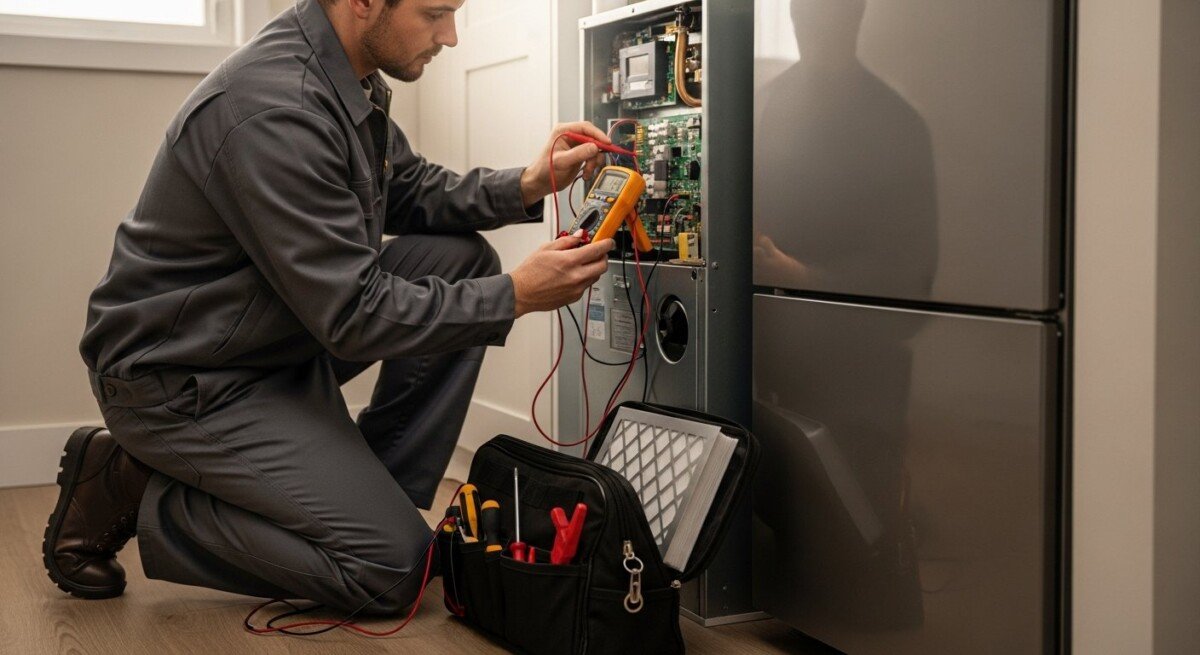
A qualified HVAC technician doesn’t just guess at what’s wrong. They perform a comprehensive inspection and tune-up based on manufacturer specifications and safety codes. They have the tools and training to diagnose hidden issues a homeowner might miss, like a slight gas pressure irregularity or a micro-crack in a critical component.
Their process is systematic and thorough, ensuring no potential problem is overlooked. This professional approach is safer and more reliable than DIY attempts, which can inadvertently create new hazards or void system warranties. For more complex heating challenges, exploring professional heating system solutions can provide lasting comfort and efficiency.
- Safety First: They check for gas leaks, carbon monoxide risks, and secure electrical connections before any work begins.
- Comprehensive Inspection: Every major component,from the burners and heat exchanger to the blower motor and flue,is visually and mechanically inspected.
- Cleaning & Adjustment: Key parts are cleaned of dust and debris. Gas pressure, airflow, and thermostat calibration are adjusted for peak performance.
- Performance Testing: The system is run through a full cycle while the technician monitors operation, temperatures, and safety controls.
- Expert Recommendation: You receive a clear report on your system’s health and an honest assessment of any needed repairs or future considerations.
A professional inspection can reveal hidden issues before they become expensive repairs. Compare contractor quotes here or call to discuss your project.
Warning Signs You Should Not Ignore
Your HVAC system often sends clear signals when it needs help. Paying attention to these warnings can mean the difference between a simple service call and a frigid night waiting for an emergency technician. The key is to act before the small symptom becomes a major failure.
Remember, some of the most dangerous issues, like carbon monoxide leaks, have no obvious signs at all. This is why annual professional maintenance is so crucial,it finds what you can’t see, hear, or smell. Don’t wait for a total breakdown; proactive care protects your investment and your family.
- The Pilot Light Color: A healthy gas furnace flame is blue. A yellow or flickering flame indicates a dangerous combustion problem.
- Persistent Dust: Excessive dust buildup soon after cleaning can point to leaky ducts pulling air from attics or crawlspaces.
- Yellowing or Sooting: Any signs of soot around the furnace or yellow/brown stains on the unit are immediate red flags.
- Old Age: If your furnace or heat pump is over 15 years old, its efficiency and reliability are naturally declining.
- Constant Thermostat Adjustments: Needing to constantly nudge the thermostat upward to stay comfortable signals poor performance.
- Unusual Odors: A persistent musty smell could indicate mold in the ducts, while a metallic or electrical smell suggests overheating components.
What Affects the Cost of Repairs or Installation
The cost of HVAC service or a new system installation isn’t one-size-fits-all. Several factors specific to your home and system determine the final price. Understanding these can help you make sense of estimates and budget appropriately for your home’s comfort needs.
The size and type of your system are primary factors, as is the complexity of the repair. Labor costs can vary if your furnace is in a difficult-to-access crawlspace versus an open basement. The age of your ductwork may also play a role, as older ducts often need sealing or modification to work efficiently with a new unit.
Costs can vary depending on the condition of your home. The best way to know the price is to get a personalized estimate. Request free quotes from contractors or call today.
How to Choose the Right Contractor
Selecting the right HVAC professional is as important as the service itself. You want someone who is trustworthy, knowledgeable, and will stand behind their work. Start by asking friends and neighbors for referrals and checking online reviews to gauge reputation and customer satisfaction.
Always verify that a contractor is properly licensed, bonded, and insured for your protection. A reputable pro will be happy to provide this information and will offer a detailed, written estimate that breaks down costs for parts, labor, and any potential contingencies. Getting multiple quotes is wise, but remember, the lowest price isn’t always the best value if it cuts corners on quality or safety.
- Check Credentials: Verify state or local licensing and insurance for liability and workers’ compensation.
- Seek Experience: Ask how long they’ve been in business and for examples of similar work in homes like yours.
- Get Detailed Estimates: A written quote should include model numbers, labor breakdown, warranty terms, and a project timeline.
- Ask About Maintenance Plans: Many reputable companies offer annual service plans to keep your system running well year after year.
- Trust Your Instincts: Choose someone who communicates clearly, answers all your questions, and doesn’t use high-pressure sales tactics.
Long-Term Benefits of Professional Work
Investing in professional HVAC preparation and repair pays dividends far beyond a single warm winter. A properly maintained system operates safely, giving you peace of mind against hidden hazards like gas leaks or electrical faults. It also runs more efficiently, which directly translates to lower monthly utility bills and a reduced carbon footprint.
This care extends the lifespan of your expensive heating equipment, delaying the need for a costly full replacement. Furthermore, a well-documented maintenance history and a modern, efficient system are attractive features that add tangible value to your home. It’s an investment that protects your family, your budget, and your property’s worth. A comfortable home is also a healthier one, as proper HVAC function helps manage humidity and filter allergens. For a holistic approach to winter home care, consider how your HVAC health interacts with other seasonal tasks like effective winter pest control, as sealed ducts and a tight thermal envelope deter unwanted guests.
FAQs
How often should I have my heating system serviced?
HVAC professionals recommend a professional tune-up for your heating system once a year, ideally in the fall before you start using it heavily. This annual check-up catches wear and tear, ensures safe operation, and maintains peak efficiency for the coming winter season.
Can I do my own winter HVAC preparation?
Homeowners can and should do simple tasks like changing the air filter every 1-3 months and keeping the area around the outdoor unit clear of leaves and debris. However, the intricate safety checks, combustion analysis, and electrical testing required for a full preparation are best left to trained and certified technicians.
What’s included in a standard professional tune-up?
A thorough tune-up typically includes inspecting and cleaning burners, checking heat exchanger integrity, testing safety controls, lubricating moving parts, checking refrigerant levels (for heat pumps), testing system start-up and operation, and verifying proper airflow and thermostat function.
My system is working, but it’s old. Should I wait for it to fail?
Waiting for a complete failure in winter is a risky and often costly strategy. You may face emergency service fees, higher repair costs, and be without heat for days. Proactively replacing an aging, inefficient system allows you to plan, budget, and choose the right model without pressure, often with financing options.
What is the most important part of HVAC preparation?
While all steps are important, the safety checks are paramount. Ensuring there are no gas leaks, that the heat exchanger is intact (to prevent carbon monoxide leaks), and that all electrical connections are secure protects your home and family from serious hazards.
How long does a professional HVAC tune-up take?
For a standard forced-air furnace or heat pump system, a comprehensive tune-up and inspection usually takes between 1 to 2 hours. More complex systems, like boilers, or systems requiring minor repairs may take longer. The technician should provide a time estimate beforehand.
Will preparing my HVAC system really lower my bills?
Absolutely. A clean, well-adjusted system uses significantly less fuel or electricity to produce the same amount of heat. The U.S. Department of Energy states that regular maintenance can improve efficiency by up to 15%, directly reducing your winter energy costs.
What’s the difference between a tune-up and a repair?
A tune-up is preventative maintenance,a series of standard checks, cleanings, and adjustments to keep a working system running optimally and safely. A repair is corrective work to fix a specific, identified problem that is causing the system to malfunction or perform poorly.
Taking time for winter HVAC preparation is one of the smartest things you can do as a homeowner. It transforms anxiety about the first cold snap into confidence, knowing your home will be a warm, safe haven all season long. By addressing small issues now, you avoid the stress and high cost of emergency breakdowns. The best next step is to gather information specific to your home,starting with a few detailed quotes from local, trusted professionals.
Learn more about Handyman for guides, costs, and what to expect.
Compare Handyman Pros Near You
Enter your ZIP code to compare top-rated local professionals and request free quotes.