
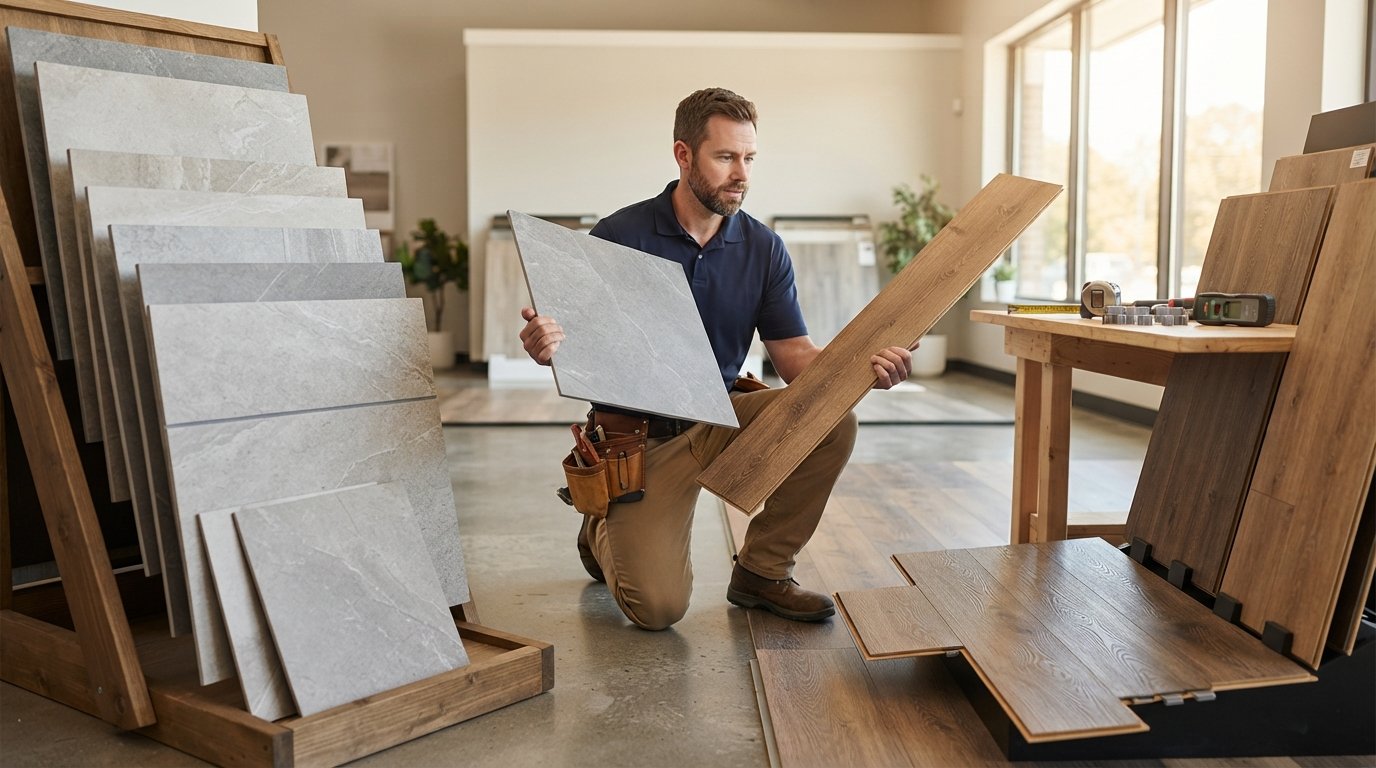
Tile Versus Luxury Vinyl Plank Flooring Comparison
This tile versus luxury vinyl plank flooring comparison covers cost, durability, and comfort so you can pick the right floor for every room.

By Jackson Adams
Learn more about Floor Installation or Replacement for guides, costs, and what to expect.
Compare Floor Installation or Replacement Pros Near You

Enter your ZIP code to compare top-rated local professionals and request free quotes.
Choosing the right flooring for a bathroom, kitchen, or basement often comes down to a single decision: tile versus luxury vinyl plank flooring comparison. Both materials promise durability, water resistance, and good looks, yet they behave very differently underfoot, in the budget, and across a ten-year ownership window. A 2026 survey of remodeling projects found that flooring ranks among the top three upgrades homeowners research most before contacting a contractor. The reason is simple: flooring touches every room, every day, and every resale conversation. Get it right, and you enjoy a surface that handles spills, pets, and traffic without drama. Get it wrong, and you face chipped edges, peeling seams, or a floor that feels cold and hollow. This guide walks through the practical differences, so you can match the material to the room, the budget, and the lifestyle.
Material Composition and How Each Floor Is Built
Tile flooring, whether ceramic or porcelain, begins as clay and minerals fired at extremely high temperatures. That firing process creates a dense, hard surface that resists water, stains, and heat. Porcelain tile is pressed more tightly and fired hotter than basic ceramic, which gives it a lower water absorption rate. Natural stone tile, such as marble or travertine, follows a different path but shares the same rigid, mineral-based character. The result is a floor that feels solid, sounds solid, and behaves like part of the structure itself.
Luxury vinyl plank, often shortened to LVP, is a composite product. A typical plank contains a printed decorative layer, a rigid or flexible core, and a transparent wear layer on top. The core may be made from stone plastic composite (SPC) or wood plastic composite (WPC). SPC planks tend to be denser and more dimensionally stable, while WPC planks feel softer underfoot. The wear layer, measured in mils, determines how well the floor resists scratches and scuffs. A 20-mil wear layer performs very differently from a 6-mil wear layer in a busy household.
Understanding construction matters because it predicts performance. Tile is monolithic: what you see is what supports the load. LVP is layered: each layer can fail independently. A weak wear layer scratches, a poor core dents, and a cheap adhesive allows seams to open. This is why two LVP products at the same price per square foot can deliver wildly different results after five years.
Water Resistance and Moisture Behavior
Water resistance is the headline feature for both materials, but they handle moisture in different ways. Porcelain tile is effectively waterproof. It will not swell, warp, or delaminate when exposed to standing water. The weak point is not the tile itself but the grout and the subfloor beneath. Cement-based grout can absorb water, and a compromised subfloor can flex and crack the tile above it. Proper sealing and a stable substrate solve most of these issues.
LVP is also marketed as waterproof, and for the plank core, that claim usually holds. SPC cores resist swelling, and the wear layer keeps surface water out. However, waterproof does not mean watertight. Water can seep through seams, around the perimeter, and under the floor if it sits long enough. In a basement with occasional dampness, LVP performs well. In a bathroom with a chronic leak, neither material saves the subfloor. The real question is how each floor behaves during normal use: splashes, spills, humid air, and wet feet.
For bathrooms, laundry rooms, and basements, tile offers a higher margin of safety because it tolerates standing water and repeated wetting. LVP offers excellent everyday protection and is easier to replace in sections if damage occurs. Homeowners planning a wet-area renovation should weigh how long water might sit before it is noticed. A slow drip behind a toilet is a plumbing problem, not a flooring problem, but the floor you choose determines how much collateral damage occurs.
Durability, Lifespan, and Real-World Wear
Tile is exceptionally durable. A well-installed porcelain floor can last 50 years or more, often outliving the cabinets and fixtures around it. It resists scratches from pet claws, dents from dropped pans, and fading from sunlight. The main vulnerabilities are impact cracks from heavy objects and grout lines that discolor over time. In high-traffic areas like entryways and kitchens, tile holds its appearance with minimal maintenance.
LVP durability depends heavily on quality and installation. A premium SPC plank with a thick wear layer can last 15 to 25 years in a residential setting. A budget plank with a thin wear layer may show scratches and dull spots within three to five years. Pets with long nails, rolling chairs, and grit tracked in from outside are the usual culprits. LVP also fades in direct sunlight over time, which matters in sunrooms and south-facing living rooms.
Consider the difference in repair strategy. Tile repairs require removing and replacing individual tiles, which is feasible if you have matching spares and the grout color is still available. LVP repairs are often easier because planks click or peel out and new ones go in. However, if the floor is glued down or the pattern is discontinued, repairs become harder. Keeping extra boxes of either material is a smart move that costs little and saves a lot of frustration later.
Comfort, Sound, and Underfoot Feel
Comfort is where LVP wins for many homeowners. Vinyl plank feels warmer and softer than tile, especially in basements and on upper floors. It absorbs sound better, so footsteps and dropped objects do not echo. In open-plan homes, this acoustic difference is noticeable. LVP also feels more forgiving on joints during long periods of standing, which matters in kitchens where people cook for hours.
Tile feels cold and hard. In warm climates, that can be a benefit, and radiant heating solves the cold-floor problem in cooler regions. Tile also reflects sound, which makes large rooms feel louder. Rugs and soft furnishings help, but the underlying hardness remains. For bedrooms and living areas, many homeowners prefer the quieter, warmer feel of LVP. For bathrooms and mudrooms, the cool, solid feel of tile is often seen as a feature rather than a flaw.
There is also a psychological dimension. Tile communicates permanence and cleanliness, which is why it dominates in bathrooms and commercial spaces. LVP communicates warmth and approachability, which suits family rooms and finished basements. Neither is objectively better; the right choice depends on how the room is used and who uses it.
Installation Process and Subfloor Requirements
Installation complexity differs significantly. Tile requires a rigid, level subfloor, often a cement backer board or uncoupling membrane, and thin-set mortar. The process is messy, time-consuming, and best left to experienced installers. Grouting and sealing add curing time, and heavy furniture cannot go back for at least 24 to 48 hours. A typical bathroom tile installation takes several days from prep to grout.
LVP installation is faster and cleaner. Many products use a click-lock system that floats over a prepared subfloor. Some planks come with pre-applied adhesive for peel-and-stick installation. The subfloor still needs to be clean, flat, and dry, but the tolerance for minor imperfections is greater than with tile. A skilled DIY homeowner can install LVP in a weekend. A professional crew can finish a large room in a single day.
Here is a quick comparison of the installation steps for each material:
- Tile: Remove old flooring, inspect and repair the subfloor, install backer board or membrane, lay out the pattern, apply thin-set, set tiles, wait for cure, grout, seal, and clean.
- LVP: Remove old flooring, clean and level the subfloor, acclimate the planks, install underlayment if needed, click or glue planks into place, install trim, and clean.
- Both: Allow for transitions at doorways, expansion gaps, and time for the floor to settle before heavy use.
For homeowners who want to minimize disruption, LVP is the clear winner. For those who want a permanent, hard surface that can be cleaned aggressively, tile justifies the extra time and labor. Hiring a professional matters in both cases, especially if the subfloor is uneven or the room has moisture issues.
Cost Comparison: Material, Labor, and Long-Term Value
Cost is rarely simple. Material prices vary by region, quality, and pattern. Tile often costs more per square foot for the material itself, and labor costs are higher because the installation is skilled and slow. LVP material costs range widely, and labor is usually lower because the product installs faster. However, the cheapest LVP can end up costing more over time if it fails early.
A realistic 2026 budget comparison for a 100-square-foot bathroom might look like this: ceramic tile at $3 to $7 per square foot for material, plus $8 to $15 per square foot for installation, plus grout, backer board, and sealer. LVP at $2 to $6 per square foot for material, plus $3 to $7 per square foot for installation, plus underlayment and trim. In both cases, removing old flooring and repairing the subfloor adds cost. The gap narrows when you choose premium LVP or budget tile, but tile generally costs 30 to 60 percent more installed.
Long-term value depends on how long you stay. If you plan to sell within five years, LVP offers a faster return on investment in many markets because it looks modern and costs less upfront. If you plan to stay for 20 years, tile often wins because it does not need replacement. Homebuyers recognize both materials, but they also notice condition. A worn LVP floor can look tired, while a well-maintained tile floor can look nearly new after decades.
For homeowners exploring high-end finishes and long-term value, the principles in this luxury home renovation guide apply directly to flooring choices: match the material to the room, the lifestyle, and the resale story you want to tell.
Maintenance, Cleaning, and Repair
Tile maintenance is straightforward but not effortless. Sweeping or vacuuming removes grit. Damp mopping with a pH-neutral cleaner keeps the surface clean without dulling the finish. Grout needs occasional scrubbing and resealing, especially in wet areas. Stains on grout are the most common complaint, and they are easier to prevent than to remove. A grout sealer applied every few years extends the life of the installation.
LVP maintenance is even simpler. Sweeping and damp mopping are usually enough. Most manufacturers warn against steam mops and harsh chemicals because they can damage the wear layer. Felt pads under furniture and regular trimming of pet nails prevent most scratches. If a plank is damaged, replacement is often a matter of cutting it out and clicking in a new one, provided you have matching stock.
Repair costs differ. Replacing a single tile requires matching tile, grout, and some skill. Replacing a single plank requires matching plank and a few tools. In both cases, keeping spares is essential. A floor with no spare planks or tiles becomes a patchwork problem when damage occurs. This is one of the most overlooked aspects of the tile versus luxury vinyl plank flooring comparison, and it affects long-term satisfaction more than most homeowners expect.
Resale Value and Buyer Perception
Real estate agents often note that flooring influences buyer first impressions within seconds. Tile signals quality and permanence, particularly in bathrooms, kitchens, and entryways. LVP signals updated style and practicality, especially in basements and open living areas. Neither material guarantees a higher sale price on its own, but condition and consistency matter. A home with mismatched flooring or worn surfaces feels neglected, while a home with clean, cohesive floors feels cared for.
In luxury markets, natural stone and large-format porcelain tile carry more prestige than vinyl. In mid-range markets, high-quality LVP is often seen as a smart, modern choice. The key is to avoid extremes: very cheap tile with wide, discolored grout lines, or very thin LVP that flexes and scratches. Buyers notice both. If resale is a priority, invest in the best version of whichever material you choose.
Homeowners planning a major renovation often benefit from professional guidance on material selection. Platforms like USremodel connect homeowners with independent contractors who can provide quotes and recommendations for flooring, remodeling, and repair projects across the United States. Comparing multiple professional opinions before committing to a material is one of the most reliable ways to avoid expensive mistakes.
Room-by-Room Recommendations
Different rooms call for different floors. A single material throughout the home is convenient, but it rarely performs equally well everywhere. The following recommendations reflect how each material handles moisture, traffic, and comfort in specific spaces:
- Bathrooms: Porcelain or ceramic tile for water tolerance and easy cleaning; LVP works if installation is precise and the room is well ventilated.
- Kitchens: Tile for durability and heat resistance near the stove; LVP for comfort and quieter footsteps in open-plan layouts.
- Basements: LVP over a moisture barrier for warmth and resilience; tile if the space is prone to dampness and you want a permanent surface.
- Living rooms: LVP for warmth and sound absorption; large-format tile for a sleek, modern look in warm climates.
- Bedrooms: LVP for softness and quiet; tile only if radiant heating is installed or the climate is warm year-round.
Consistency across adjacent spaces matters. A tile bathroom next to an LVP hallway can look intentional if the transition is handled well, but it can also feel disjointed if the colors and textures clash. Many homeowners choose a single material for the main living areas and use tile only in wet rooms. Others choose tile throughout for a seamless, low-maintenance home. There is no universal answer, only the answer that fits your household.
Making the Final Decision
The tile versus luxury vinyl plank flooring comparison ultimately comes down to priorities. If you value permanence, water tolerance, and resale prestige, tile is the stronger choice. If you value warmth, speed of installation, lower upfront cost, and easier repairs, LVP is the stronger choice. In many homes, the best answer is a combination: tile in bathrooms and laundry rooms, LVP in living areas and basements.
Before you commit, gather samples and live with them for a week. Look at them in morning light and evening light. Walk on them barefoot. Drop a fork on them. Consider how they will look with your cabinets, paint, and furniture. Then get quotes from at least three contractors, because installation quality determines how well either material performs. A premium product installed poorly will disappoint. A mid-range product installed well will exceed expectations.
Flooring is one of the few renovation choices you interact with every single day. Take the time to match the material to the room, the budget, and the long-term plan for your home. When the comparison is done with clear eyes, the right choice becomes obvious, and you can move forward with confidence.