The Right Size HVAC System for Your Home’s Comfort
"*" indicates required fields
You’ve just had a new, high-efficiency HVAC system installed, expecting lower bills and perfect comfort. Yet, some rooms are still stuffy, the system seems to run constantly, and your energy bill hasn’t dropped as promised. The problem might not be the brand or the installer’s skill, but something more fundamental: the system is the wrong size for your home. This common issue, often discovered through uneven temperatures and high costs, can lead to premature breakdowns and significant discomfort if ignored. Getting the correct HVAC system size is the unseen foundation of your home’s comfort and efficiency.
Understanding Correct HVAC System Size
Correct HVAC system size isn’t about physical dimensions. It’s about the system’s heating and cooling capacity being perfectly matched to your home’s specific needs. This capacity is measured in tons or BTUs (British Thermal Units). A system that’s too large or too small creates a cascade of problems.
This mismatch happens when a system is chosen based on square footage alone, without considering other critical factors. Older homes often have systems that were sized before modern efficiency standards, while newer homes can suffer from quick replacements where the existing, possibly wrong size is simply duplicated. For a deeper dive into how these systems work, our guide to HVAC system basics breaks down the components simply.
It’s More Than Just Square Footage
Professional contractors perform a detailed calculation called a Manual J to determine the correct size. This considers your home’s insulation, window types and directions, ceiling height, local climate, and even how many people live there. It’s a precise blueprint for comfort.
Why This Matters for Your Home
An incorrectly sized HVAC system is more than an inconvenience; it’s a drain on your wallet, your comfort, and the system’s own lifespan. You invest in climate control for peace of mind, but the wrong size delivers the opposite: constant worry about performance and costs.
Ignoring a sizing issue allows minor inefficiencies to snowball into major expenses. A system straining to operate will wear out years earlier than it should, leading to a costly full replacement long before you planned. Furthermore, poor temperature and humidity control can affect your home’s air quality and even the integrity of wood and drywall over time.
If you notice signs of this issue in your home, it may help to speak with a qualified contractor. Request a free quote or call to explore your repair or remodeling options.
Common Problems Homeowners Experience
When your HVAC system isn’t the right size, your home tells you in clear, frustrating ways. The symptoms often feel like general system failure, but the root cause is a simple mismatch of capacity to demand. Homeowners typically experience problems in two opposite but equally problematic scenarios.
A system that is too large will cool or heat your home too quickly, shutting off after short, powerful bursts. This is called short-cycling. Conversely, a system that’s too small will run almost non-stop, struggling to reach the temperature on your thermostat. Both extremes lead to a host of noticeable issues.
- High Energy Bills: Both oversized and undersized systems operate inefficiently, wasting significant energy and driving up your monthly costs.
- Uneven Temperatures: Some rooms are too hot while others are too cold, with noticeable drafts or stale, stagnant air.
- Excessive Humidity in Summer: An oversized AC cools too fast and doesn’t run long enough to remove moisture from the air, leaving your home feeling damp and clammy.
- Frequent Cycling: The system turns on and off every few minutes, which is noisy, inefficient, and hard on components.
- Inadequate Heating or Cooling: The system runs constantly but never seems to satisfy the thermostat, especially on very hot or very cold days.
- Premature System Failure: The constant strain of short-cycling or non-stop operation causes excessive wear, leading to breakdowns and a shortened equipment life.
How Professionals Solve the Problem
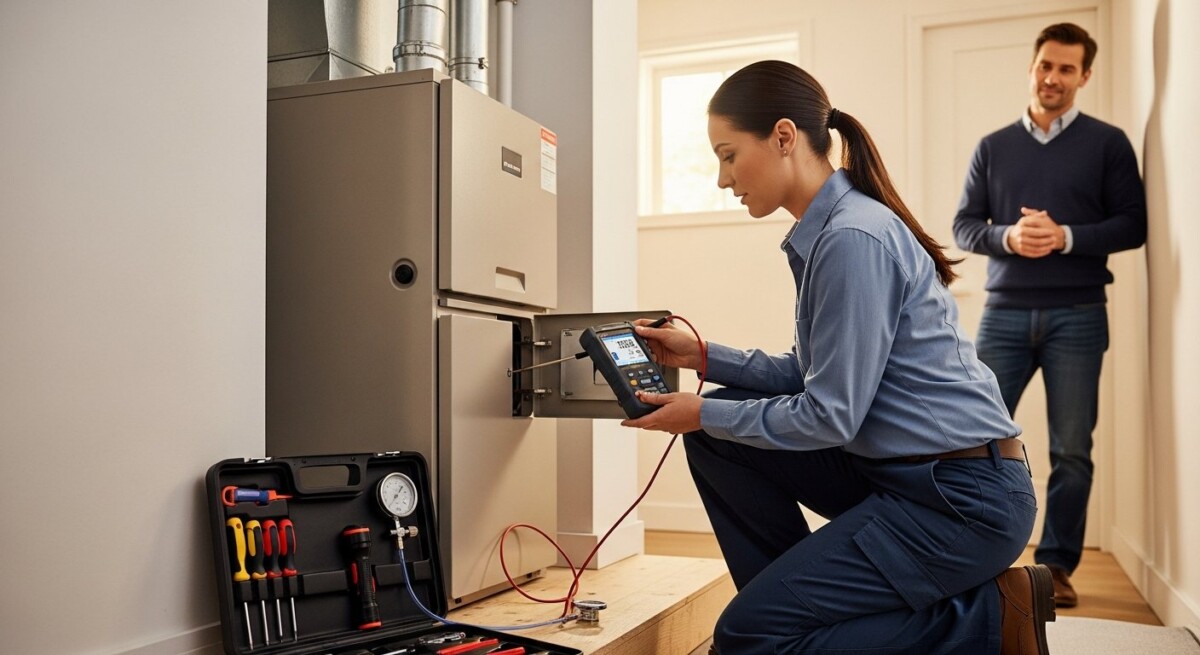
A professional HVAC contractor solves the sizing problem with science, not guesswork. They replace rules-of-thumb with precise calculations that account for every factor that affects your home’s heating and cooling load. This process ensures the new system will deliver promised efficiency and comfort for years to come.
Attempting to size a system yourself or trusting a contractor who doesn’t perform these calculations is a major risk. The investment in a new HVAC system is substantial, and getting the size wrong voids the benefits. Professionals bring the right tools and knowledge to protect that investment. For a comprehensive look at what a professional installation entails, you can review our complete guide to a new HVAC system setup.
- Conduct a Load Calculation: The contractor performs a Manual J calculation, measuring rooms, evaluating insulation, windows, doors, and orientation.
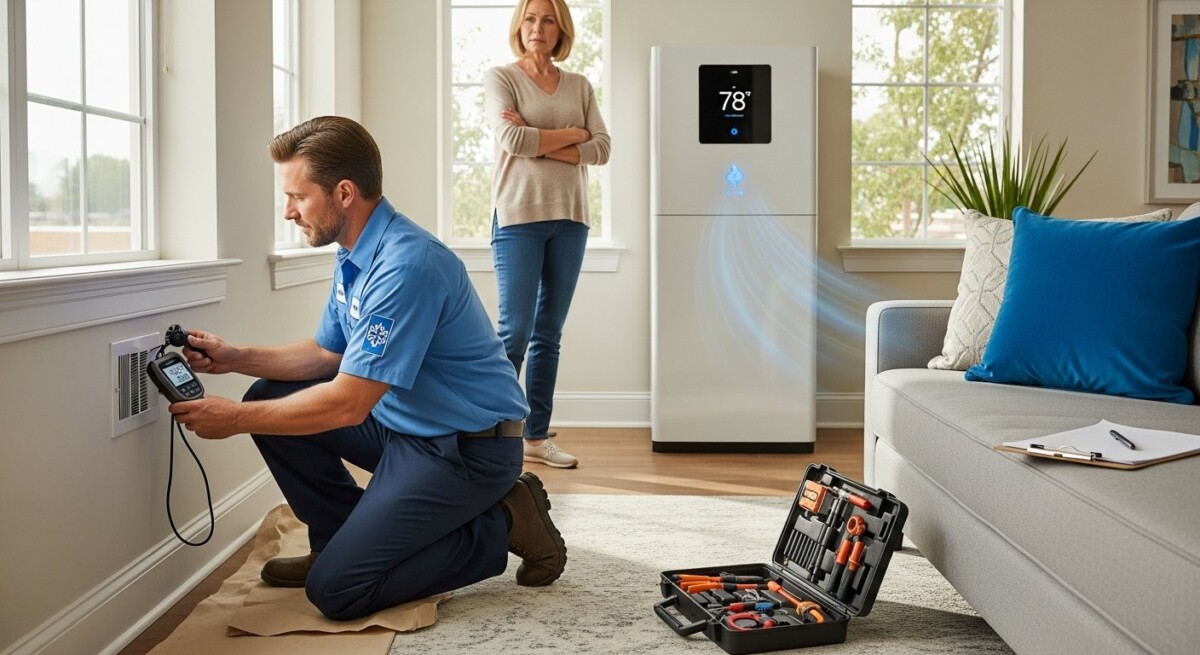
- Evaluate the Ductwork: They assess if your existing ducts are the right size and properly sealed to deliver air from the new system efficiently.
- Recommend Correctly Sized Equipment: Based on the data, they present options for systems with the exact capacity your home requires.
- Professional Installation: Trained technicians install the system according to manufacturer and industry standards, ensuring peak performance.
- Testing and Balancing: After installation, they test system operation, check refrigerant charge, and balance airflow to all rooms.
A professional inspection can reveal hidden issues before they become expensive repairs. Compare contractor quotes here or call to discuss your project.
Warning Signs You Should Not Ignore
Your HVAC system gives you clues when something is wrong. Paying attention to these warning signs can help you address a sizing problem before it leads to a complete system failure. Early action is always more affordable than an emergency replacement in the peak of summer or winter.
Many homeowners dismiss these signs as normal aging or minor quirks. However, they often point directly to a fundamental sizing issue that will only worsen over time. Recognizing them empowers you to seek a professional diagnosis.
- Your system is louder than usual, with loud startups or constant operation noise.
- You have hot or cold spots in several rooms, no matter how you adjust the vents.
- Your energy bills are climbing steadily without a clear change in usage or utility rates.
- You need frequent repairs, with components failing every year or two.
- Windows fog up or you notice a musty smell, indicating high humidity levels from poor dehumidification.
- The system never seems to reach the set temperature or shuts off almost immediately after starting.
What Affects the Cost of Repairs or Installation
The cost of correcting an HVAC sizing issue depends largely on the solution. If the system is only slightly off and the ductwork is adequate, adjustments might be minimal. However, if a brand-new, incorrectly sized system was recently installed, the cost to replace it with the right unit is significant. Understanding the factors helps you interpret quotes.
Major factors include the size and efficiency rating of the new equipment (e.g., a high-SEER AC unit costs more than a standard one), the complexity of installing or modifying ductwork, and your home’s accessibility. The age of your home also plays a role, as older homes may need electrical upgrades or structural modifications to accommodate modern systems.
Costs can vary depending on the condition of your home. The best way to know the price is to get a personalized estimate. Request free quotes from contractors or call today.
How to Choose the Right Contractor
Selecting the right contractor is as important as selecting the right equipment. A trustworthy professional will be your guide, ensuring the job is done correctly the first time. This choice protects your safety, your investment, and your long-term comfort.
Always get detailed written estimates from at least three contractors. This allows you to compare not just price, but the scope of work, the proposed equipment, and the company’s approach. A surprisingly low bid can sometimes indicate corners will be cut, such as skipping the crucial load calculation.
- Verify licenses and insurance: Ensure they are legally permitted to work in your area and carry liability and workers’ compensation insurance.
- Check experience and reviews: Look for established companies with positive reviews on independent sites and ask for references from similar projects.
- Insist on a load calculation: Any contractor who proposes a new system size without performing a Manual J (or equivalent) should be disqualified.
- Get everything in writing: The estimate should include model numbers, warranty details, labor scope, timeline, and a clear payment schedule.
- Ask about post-installation support: Understand their service policies, maintenance plans, and emergency repair availability.
Long-Term Benefits of Professional Work
Investing in a correctly sized, professionally installed HVAC system pays dividends for as long as you own your home. The initial focus is on solving an immediate comfort problem, but the long-term advantages are substantial and wide-reaching. This is an upgrade that works for you silently and efficiently, day after day.
Beyond consistent temperatures, a right-sized system provides proper dehumidification, which improves indoor air quality and protects your home from mold and mildew. It also operates safely within its design parameters, reducing fire and electrical risks associated with an overworked system. Understanding these safety aspects is crucial, and our resource on HVAC system safety and peace of mind covers this in detail.
You’ll also enjoy lower utility bills, fewer repair calls, and a system that lasts for its full expected lifespan. When it’s time to sell, an efficient, properly functioning HVAC system is a strong selling point that can increase your home’s value and appeal to knowledgeable buyers.
How do I know if my current HVAC system is the wrong size?
Look for the warning signs like uneven temperatures, high humidity, constant operation, and skyrocketing energy bills. The most accurate way to know is to have a professional perform a load calculation on your home and compare it to your existing system’s capacity.
Can’t I just replace my old unit with the same size?
Not necessarily. Older homes may have been retrofitted with incorrectly sized units, and building codes or your home’s envelope (like new windows or insulation) may have changed. Always perform a new calculation to ensure the replacement is optimally sized for your home as it exists today.
What is a Manual J calculation, and is it really necessary?
A Manual J is the industry-standard method for determining a home’s heating and cooling loads. Yes, it is absolutely necessary for a quality installation. It’s the difference between guessing and knowing your system will work properly.
Will correcting the size fix my high energy bills?
In most cases, yes, significantly. A correctly sized system runs at peak efficiency. Eliminating short-cycling or constant runtime can reduce energy consumption by 20% or more, directly lowering your bills.
What if my ductwork is also the wrong size?
A professional assessment will identify this. Often, ductwork needs to be modified or replaced to deliver air efficiently from a new, properly sized unit. This adds to the project cost but is essential for system performance.
How long does it take to install a new, correctly sized system?
For a standard replacement with compatible ductwork, a professional crew can often complete the job in 1-2 days. If duct modifications or electrical upgrades are needed, the project may take several days longer.
Is a slightly bigger system better for extreme weather?
No. An oversized system will still short-cycle, even on the hottest or coldest days. A properly sized system is designed to handle your local climate’s design temperatures (like the hottest typical summer day) efficiently and comfortably.
Does system size affect my warranty?
It can. Many manufacturer warranties require professional installation per their specifications, which includes correct sizing. Improper sizing that leads to premature failure could void warranty coverage.
Ensuring your HVAC system is the correct size is one of the most important decisions for your home’s comfort, efficiency, and value. It transforms your system from a source of frustration into a reliable asset. By recognizing the signs of a problem and seeking professional guidance, you can make an informed investment that pays off for years. The best first step is to gather information from qualified local contractors to understand your specific options and costs.

About Alex Carter
"*" indicates required fields