
Sustainable Flooring Options for Eco Conscious Remodels
Choose sustainable flooring options for eco conscious remodels that cut VOCs and last decades. Call (833)-365-8755 for vetted contractor quotes.

By Justin Parker
Learn more about Floor Installation or Replacement for guides, costs, and what to expect.
Compare Floor Installation or Replacement Pros Near You

Enter your ZIP code to compare top-rated local professionals and request free quotes.
Every remodeling decision carries an environmental footprint, and flooring is one of the heaviest. Traditional carpet, vinyl, and even some hardwood products can off-gas volatile organic compounds, rely on virgin petrochemicals, and end up in landfills within a decade. Homeowners planning eco conscious remodels face a real challenge: finding floors that look beautiful, hold up to daily life, and align with their values. The good news is that sustainable flooring options have never been more diverse or accessible. From reclaimed barn wood with a story to cork that cushions every step, the right choice depends on room, moisture, budget, and how you define green.
This guide breaks down the most credible sustainable flooring materials, explains the certifications that actually matter, and helps you specify eco friendly products in contractor quotes. Whether you are renovating a single bathroom or reflooring an entire home, you can make a choice that reduces waste, improves indoor air quality, and supports responsible forestry and manufacturing.
Why Sustainable Flooring Matters in an Eco Conscious Remodel
Flooring covers more square footage than any other finish in your home, so its impact adds up quickly. Conventional options often contain adhesives and finishes that release formaldehyde and other VOCs for months after installation. Many are designed for a single lifecycle, meaning they are ripped out and landfilled rather than repaired or recycled. Sustainable flooring options address these problems at every stage: sourcing, manufacturing, installation, and end of life.
Green flooring also supports healthier indoor air. Low-VOC and formaldehyde-free products reduce respiratory irritation, which matters for families with children, pets, or allergy sufferers. Durable materials that can be refinished or repaired extend the floor's service life, conserving raw materials and keeping waste out of landfills. And many sustainable products come from rapidly renewable resources or recycled content, easing pressure on old-growth forests and energy-intensive supply chains.
Finally, eco conscious remodels often align with long-term financial goals. Floors that last 30 to 50 years, or that can be sanded and refinished instead of replaced, deliver better value per year than cheap alternatives that fail in a decade. When you compare quotes, factor in lifecycle cost, not just the sticker price per square foot.
Top Sustainable Flooring Materials Compared
No single material wins on every metric. The best sustainable flooring options balance durability, maintenance, moisture resistance, and environmental credentials. Here is how the leading contenders stack up.
Reclaimed Hardwood
Reclaimed hardwood comes from old barns, factories, warehouses, and even riverbeds. Reusing this wood avoids logging new trees and keeps valuable material out of the waste stream. Each plank carries a unique patina and history that new wood cannot replicate. Reclaimed oak, heart pine, and chestnut are common, and most can be sanded and refinished just like new hardwood.
Durability is excellent, often better than new growth wood because older trees grew slowly and produced denser grain. Maintenance mirrors conventional hardwood: sweep regularly, clean with a damp mop, and refinish every 7 to 10 years depending on traffic. The main trade-offs are cost and availability. Reclaimed wood can run $8 to $20 per square foot or more, and supply varies by region. It is best suited for living rooms, bedrooms, and dining areas where moisture is controlled.
Bamboo
Bamboo is a grass, not a tree, and it regenerates in three to five years without replanting. That makes it one of the most rapidly renewable flooring materials available. Strand-woven bamboo is particularly durable, often harder than oak, and works well in high-traffic areas. It comes in natural tones and carbonized (darker) shades.
Not all bamboo is equal. Look for brands that avoid urea-formaldehyde adhesives and use low-VOC finishes. Some bamboo is harvested unsustainably in clear-cut operations, so certifications matter. Maintenance is similar to hardwood: avoid standing water and use felt pads under furniture. Bamboo is not ideal for bathrooms or basements because it swells with moisture. Expect $3 to $8 per square foot for quality bamboo planks.
Cork
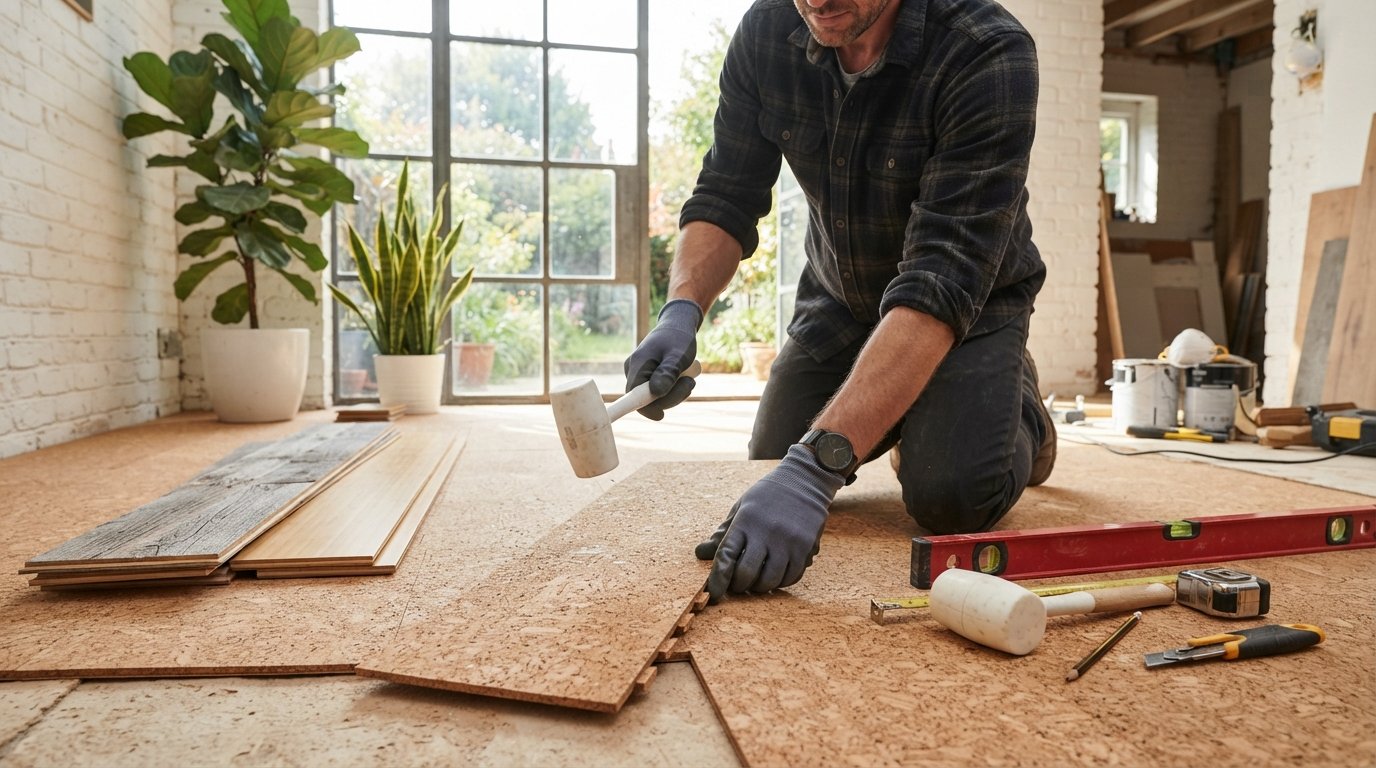
Cork is harvested from the bark of cork oak trees every nine years without killing the tree, making it a genuinely renewable resource. It is naturally resilient, warm underfoot, and absorbs sound, which makes it popular for bedrooms, kitchens, and home offices. Cork flooring is also naturally resistant to mold and mildew when properly sealed.
Durability is moderate. Cork can dent under heavy furniture and is not recommended for wet rooms or homes with large pets. Maintenance requires sweeping and occasional damp mopping with a pH-neutral cleaner. Look for cork products with low-VOC binders and finishes. Cost runs $4 to $10 per square foot installed. Cork works best in dry, climate-controlled spaces.
Linoleum
True linoleum (not vinyl) is made from linseed oil, cork dust, wood flour, and natural resins. It is biodegradable, low-VOC, and durable, often lasting 30 years or more. Linoleum comes in sheets and tiles and is naturally antibacterial, which makes it a strong choice for kitchens, bathrooms, and laundry rooms.
Modern linoleum is available in a wide range of colors and patterns, including realistic wood and stone looks. Maintenance involves sweeping and damp mopping with a neutral cleaner; avoid harsh chemicals that dull the finish. Expect $4 to $8 per square foot installed. Linoleum is not recommended for basements or rooms with chronic moisture because seams can trap water if not properly sealed.
Recycled-Content Carpet
Carpet made from recycled PET bottles or recycled nylon reduces waste and can be softer than conventional carpet. Many brands now offer carpet tiles that can be replaced individually rather than reflooring an entire room. Look for carpets with low-VOC adhesives and CRI Green Label Plus certification for indoor air quality.
Durability varies widely. Solution-dyed recycled nylon is stain-resistant and holds up well in bedrooms and living areas. Maintenance requires regular vacuuming and periodic professional cleaning. Avoid recycled carpet in bathrooms, basements, or homes with pets prone to accidents. Cost ranges from $3 to $7 per square foot installed. At end of life, some manufacturers run take-back programs, so ask before you buy.
Decoding Certifications: FSC, Low-VOC, and Formaldehyde-Free Claims
Sustainable flooring marketing is full of green-sounding claims, but not all are verified. Understanding a few key certifications helps you separate substance from spin.
The Forest Stewardship Council (FSC) certification is the gold standard for wood and bamboo products. FSC-certified materials come from forests managed to protect biodiversity, water quality, and worker rights. Look for FSC 100% or FSC Mix labels on hardwood and bamboo. The Sustainable Forestry Initiative (SFI) and Programme for the Endorsement of Forest Certification (PEFC) are other credible programs, though FSC is the most widely recognized by environmental groups.
Low-VOC and formaldehyde-free claims require scrutiny. VOC content is regulated in some regions, but labels like GREENGUARD Gold and CRI Green Label Plus provide third-party verification for indoor air quality. For adhesives and finishes, look for products that meet CDPH Standard Method V1.2 or are explicitly formaldehyde-free. Bamboo and engineered wood products often use adhesives that contain urea-formaldehyde, so ask for documentation. Solid reclaimed wood and cork with natural binders are safer bets when air quality is a priority.
Other certifications worth noting include Cradle to Cradle (for material health and circularity), FloorScore (for hard surface flooring emissions), and Green Seal (for cleaning products, not flooring). Do not rely on a single logo. Ask your contractor for product data sheets and certification numbers, and verify them on the certifying body's website.
Durability and Maintenance Trade-Offs vs. Conventional Flooring
Sustainable flooring is not automatically less durable than conventional options, but the trade-offs vary by material. Reclaimed hardwood and strand-woven bamboo rival or exceed oak in hardness. Linoleum outlasts most vinyl. Cork and recycled carpet are softer and more prone to denting or staining, so they suit lower-traffic rooms better.
Maintenance is another differentiator. Hardwood and bamboo require periodic refinishing, which extends life but adds cost. Linoleum and cork need pH-neutral cleaners and quick attention to spills. Recycled carpet demands regular vacuuming and professional cleaning. None of these are burdensome, but they are different from the wipe-and-forget approach many homeowners expect from luxury vinyl plank.
Lifecycle cost is the metric that matters most. A $4 per square foot linoleum floor that lasts 30 years costs about $0.13 per square foot per year. A $2 per square foot vinyl floor that lasts 10 years costs $0.20 per square foot per year, and that does not count landfill impact. When comparing quotes, ask contractors to estimate service life and refinishing costs so you can see the full picture.
Where Sustainable Flooring Makes Sense by Room and Moisture Exposure
Moisture is the deciding factor for many flooring choices. Here is how sustainable options perform room by room.
- Living rooms and bedrooms: Reclaimed hardwood, bamboo, cork, and recycled carpet all work well in dry, climate-controlled spaces. These rooms see moderate traffic and little moisture, so you can prioritize comfort and aesthetics.
- Kitchens: Linoleum, cork (with proper sealing), and bamboo are good choices. Linoleum resists spills and is easy to clean. Avoid carpet and unsealed cork near sinks and dishwashers.
- Bathrooms: Linoleum and sealed cork are the safest sustainable options. Hardwood and bamboo are risky unless you choose engineered products rated for moisture and maintain perfect ventilation. For more room-specific guidance, see our bathroom flooring options guide.
- Basements: Moisture and humidity make basements challenging. Linoleum over a proper subfloor and vapor barrier is the most reliable sustainable choice. Avoid cork, carpet, and solid hardwood in below-grade spaces unless you have engineered drainage and dehumidification.
- Laundry rooms and mudrooms: Linoleum and sealed cork handle occasional moisture well. Use mats and wipe up spills promptly to extend life.
If you are unsure about moisture conditions, ask your contractor to test subfloor moisture content before installation. A simple calcium chloride test or pin meter reading can prevent costly failures. Sustainable floors are no different from conventional ones in this respect: proper prep is everything.
Specifying Eco Materials in Flooring Quotes from 180 Remodel Pros
Getting the sustainable floor you want requires clear communication in the quoting process. Vague requests like "eco friendly flooring" invite substitutions. Instead, specify material, certification, adhesive, and finish requirements in writing.
Start by defining your priorities: indoor air quality, recycled content, renewable sourcing, or durability. Then list acceptable products or brands, including certification numbers. Ask contractors to itemize adhesives, underlayments, and finishes, since these often contain the highest VOCs. Require low-VOC or formaldehyde-free products that meet CDPH or GREENGUARD standards. If reclaimed wood is your choice, ask for sourcing documentation and moisture content readings.
When you request quotes through 180 Remodel, you can compare multiple vetted contractors side by side. Use the platform's contractor directory and planning resources to check licensing and read project guidance before you commit. Ask each contractor how they handle waste: do they recycle offcuts, donate usable remnants, or landfill everything? A contractor who takes sustainability seriously will have answers.
Finally, build a small contingency into your budget for certification verification and moisture testing. These steps add little cost but protect your investment. A floor that fails because of moisture or adhesive problems is neither green nor economical.
Making the Green Choice Without Compromising on Looks
Sustainable flooring options for eco conscious remodels have matured to the point where you no longer sacrifice style or performance. Reclaimed hardwood offers character that new wood cannot match. Bamboo and cork deliver warmth and quiet. Linoleum comes in patterns that mimic stone and wood convincingly. Recycled carpet can be as plush as conventional carpet while diverting plastic from landfills.
The key is to match material to room conditions, verify certifications rather than trusting labels, and specify products clearly in your contractor quotes. Do that, and your new floor will look good, last long, and reflect the values behind your remodel. If you are ready to compare quotes from vetted professionals, reach out to 180 Remodel and start with a clear, eco conscious specification in hand.