
Solar Panel Maintenance: Efficiency and Lifespan
Discover how regular solar panel maintenance boosts efficiency and extends lifespan, saving you money for years.

By Jackson Adams
Learn more about Solar Panel Cleaning for guides, costs, and what to expect.
Compare Solar Panel Cleaning Pros Near You

Enter your ZIP code to compare top-rated local professionals and request free quotes.
Your solar array is a long-term investment, but its performance is not guaranteed by installation alone. The relationship between solar panel maintenance, efficiency, and lifespan determines whether your system delivers maximum returns over its 25 to 30 year life. Many homeowners assume that once panels are installed, they can be forgotten. That assumption often leads to gradual power loss, reduced savings, and premature component failure. Understanding how routine care affects energy output and system longevity helps you protect your investment and avoid unexpected repair costs.
Solar panels are remarkably durable, but they operate in harsh conditions. Dust, pollen, bird droppings, and airborne pollutants accumulate on the glass surface, blocking sunlight and reducing energy production. In many regions, even light soiling can cut output by 5 to 10 percent, while heavy buildup can cause losses above 20 percent. Over a 25 year period, that lost energy represents thousands of dollars in missed savings. The good news is that a simple, consistent maintenance routine can keep your system operating near its rated capacity.
How Maintenance Drives Efficiency and Extends Lifespan
The efficiency of a solar panel declines naturally over time, a process known as degradation. Most quality panels lose about 0.5 to 1 percent of their output each year. However, dirt, debris, and micro-cracks can accelerate this decline. When panels overheat due to poor airflow or when hot spots develop from shaded cells, the internal components experience stress that shortens their operational life. Regular maintenance addresses these issues before they become serious.
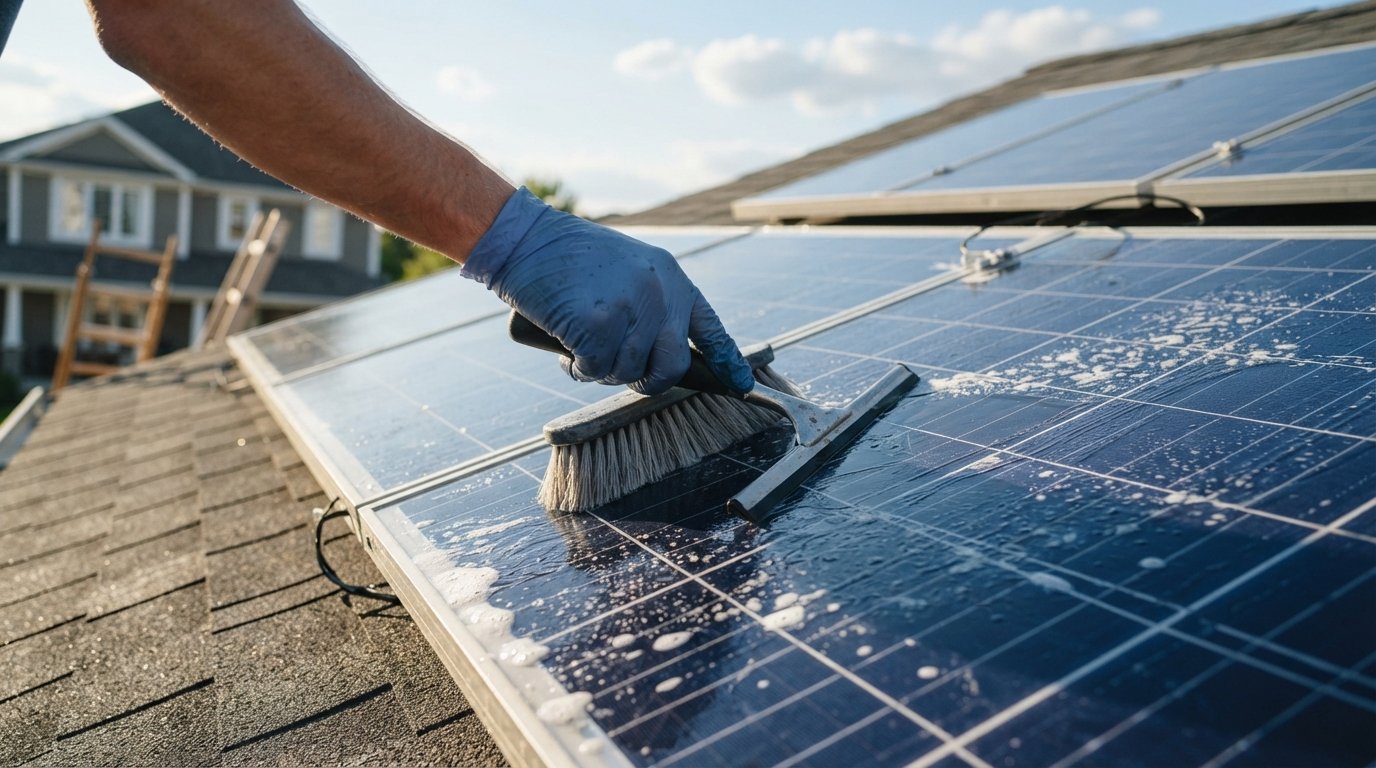
Cleaning your panels removes the layer of grime that blocks sunlight. Inspecting the mounting hardware and electrical connections prevents loose wiring and corrosion that can cause voltage drops or fire hazards. Trimming nearby vegetation prevents shading, which not only reduces output but also creates uneven load across the panel. These tasks, when performed consistently, help your system produce more energy each year and reduce the likelihood of premature failure.
In fact, studies from the National Renewable Energy Laboratory show that poorly maintained panels can lose up to 25 percent of their expected output. That loss translates directly into lower electricity savings and a longer payback period. By keeping your system clean and well-maintained, you can slow the natural degradation rate and preserve efficiency for the full 30 year lifespan. This is why solar panel maintenance efficiency lifespan are so closely connected: each factor reinforces the others.
Signs Your Panels Need Attention
Monitoring your energy production is the simplest way to detect performance issues. If your monthly output drops significantly compared to the same period last year, or if your monitoring app shows unusual spikes or dips, your system may need service. Other warning signs include visible cracks on the glass, discoloration of the cells, water pooling under the panels, or a buildup of bird droppings that you can see from the ground.
You should also pay attention to the inverter, which converts DC power from the panels to AC power for your home. A flashing red light or an error message on the inverter display indicates a problem. Many modern systems include remote monitoring that alerts you to faults, but a quick visual check of the inverter screen is still worthwhile every few months.
When you notice any of these signs, schedule an inspection promptly. Ignoring a small issue, such as a loose bracket or a cracked seal, can lead to water damage, electrical shorts, or even panel failure. Early intervention is almost always cheaper than replacing a damaged panel or inverter.
Best Practices for Solar Panel Maintenance
Developing a simple routine can keep your panels performing at their peak. Here are the key tasks to include in your maintenance schedule:
- Clean panels twice a year, or more often if you live in a dusty area or near trees, farms, or construction sites.
- Inspect for physical damage such as cracks, loose mounts, or corrosion after major storms or high winds.
- Trim overhanging branches to prevent shading and reduce the accumulation of leaves and sap on the glass.
- Check the inverter display monthly to ensure it shows normal operation and no error codes.
- Review your energy bills and monitoring app to compare actual output against expected production.
These practices do not require specialized training, but they do require consistency. If you are not comfortable working on your roof, hire a professional solar maintenance service. Many companies offer annual inspection packages that include cleaning, electrical checks, and performance analysis. The cost of professional maintenance, typically $150 to $300 per visit, is far less than the revenue lost from a degraded system.
One important caution: never use harsh chemicals, abrasive pads, or pressure washers on your panels. These can scratch the glass or damage the anti-reflective coating. Use plain water, a soft sponge, and a squeegee for best results. If your panels are tilted, you can often clean them from the ground with a telescoping brush, which is both safer and more convenient.
Professional Inspections and When to Schedule Them
While DIY maintenance covers the basics, a professional inspection is recommended every 3 to 5 years, or immediately after a severe weather event. Certified technicians have the tools and expertise to identify issues that are not visible from the ground. They can use thermal imaging to detect hot spots, test the electrical output of each panel, and verify that your mounting system is secure and watertight.
Professional inspections are especially important if your system is still under warranty. Many manufacturers require proof of regular maintenance to honor warranty claims. An inspection report from a qualified technician provides that documentation and gives you peace of mind. If your system is older, inspections can also reveal whether it is time to replace the inverter, which typically lasts 10 to 15 years, before it fails completely.
When you choose a maintenance provider, look for certified solar technicians who are insured and familiar with your panel brand. You can ask your original installer for recommendations or use a reputable home improvement platform to connect with vetted professionals. For example, solar panel maintenance tips often include guidance on selecting a qualified service provider.
How Cleaning Affects Energy Output
The impact of cleaning on energy output is immediate and measurable. A study by the University of California, San Diego found that cleaning panels increased output by an average of 3.5 percent for panels that were not visibly dirty, but by as much as 15 percent for panels with heavy soiling. In areas with frequent rain, natural washing may be sufficient, but in dry climates or places with high pollution, manual cleaning is essential.
Consider the financial side: if your system produces 6,000 kWh per year, a 10 percent efficiency loss means 600 fewer kWh, which at $0.15 per kWh equals $90 in lost savings annually. Over a decade, that is $900. Cleaning your panels twice a year, whether you do it yourself or hire a professional, costs a fraction of that amount. The return on investment for regular cleaning is undeniable.
It is also worth noting that panel temperature affects efficiency. As panels heat up, their output drops. Keeping the surface clean and ensuring adequate airflow under the panels helps them stay cooler, which boosts performance, especially during hot summer months. Proper mounting that allows ventilation is part of good system design, but keeping the area around your panels free of debris and vegetation also helps.
Monitoring Performance and Keeping Records
Your solar monitoring system is your best tool for tracking efficiency over time. Most systems provide real-time data on production, and many allow you to compare daily, monthly, and yearly output. By reviewing this data regularly, you can spot trends that indicate a problem. For example, a sudden drop in output after a storm might point to a cracked panel or a loose connection.
Keep a log of all maintenance activities, including cleaning dates, inspections, and any repairs. This record is valuable for several reasons: it helps you track the health of your system, it provides documentation for warranty claims, and it can increase your home's resale value if you decide to sell. Potential buyers often ask about the age and condition of the solar system, and a well-documented maintenance history is a strong selling point.
If you notice a persistent drop in output despite regular cleaning and inspection, contact a professional for a thorough diagnostic. It could be a failing inverter, a damaged panel, or a wiring issue. Catching these problems early prevents more extensive damage and keeps your system operating efficiently for its full lifespan.
The Role of Warranties and Insurance
Most solar panels come with a 25 year performance warranty that guarantees a certain level of output over time. However, these warranties typically require that the system be properly maintained. If you neglect cleaning or fail to address damage promptly, the manufacturer may deny your claim. Understanding the terms of your warranty is essential to protecting your investment.
Homeowners insurance also plays a role. Standard policies usually cover solar panels as part of the dwelling, but you should confirm that your policy includes coverage for damage from hail, wind, or falling debris. Some policies have exclusions for solar equipment, so it is wise to review your coverage and add an endorsement if needed. Keeping records of maintenance and inspections can help if you need to file a claim.
For those considering new solar installation, choosing a reputable installer is just as important as maintaining the system. A well-installed system is less likely to develop problems and is easier to maintain. Platforms like USremodel connect homeowners with vetted contractors for solar setup and other home improvement projects, helping ensure that your installation meets industry standards.
Seasonal Maintenance Considerations
Your maintenance routine should adapt to the seasons. In spring, pollen and dust accumulate quickly, so plan a thorough cleaning. In summer, high temperatures can reduce efficiency, so ensure proper airflow and check for any shading from new foliage. In autumn, falling leaves can cover panels, and in winter, snow may block sunlight. While snow often slides off angled panels, heavy accumulation may require careful removal with a roof rake designed for solar panels.
After severe weather, such as hail or a hurricane, inspect your system promptly. Even if the panels look fine, hail impacts can create micro-cracks that reduce output over time. A professional inspection using thermal imaging can detect these hidden issues. By staying proactive with seasonal checks, you avoid small problems becoming expensive repairs.
Ultimately, solar panel maintenance efficiency lifespan are not separate concerns: they are one continuous cycle. Regular upkeep preserves efficiency, which prolongs lifespan, which in turn maximizes your financial return. With a modest investment of time or money, you can ensure that your solar system performs at its best for decades. Whether you handle the tasks yourself or hire a professional, the key is consistency. Start with a cleaning and inspection today, and schedule your next check on your calendar. Your future energy savings depend on it.