
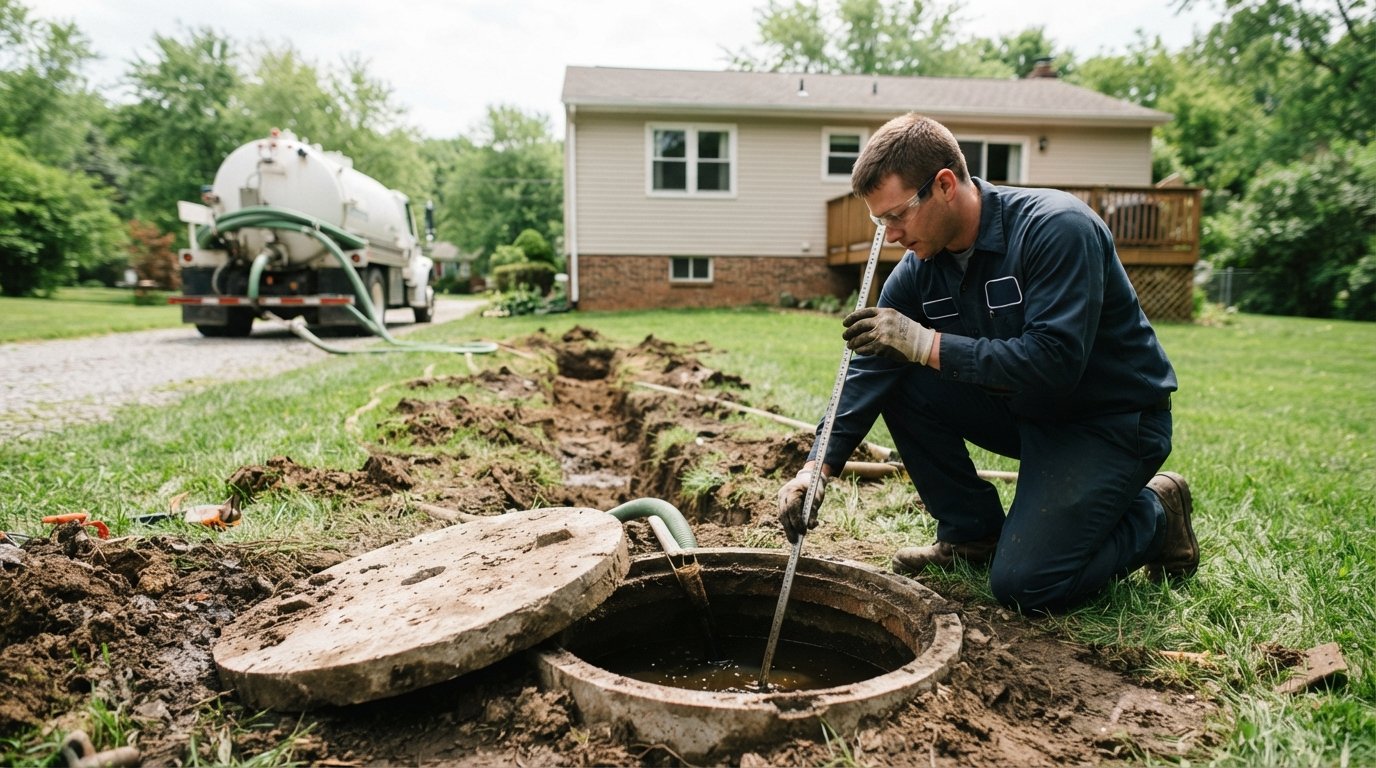
Septic System Maintenance and Upgrade Considerations
Septic system maintenance and upgrade considerations explained: pump-out timing, drain field warning signs, and repair costs. Call (833)-365-8755 for vetted contractor quotes.

By Irene Walsh
Learn more about Septic System Repair, Maintenance or Inspection for guides, costs, and what to expect.
Compare Septic System Repair, Maintenance or Inspection Pros Near You

Enter your ZIP code to compare top-rated local professionals and request free quotes.
Your septic system is one of the most expensive and least visible components of your home. It quietly processes thousands of gallons of wastewater each year, and when it fails, the consequences range from soggy, foul-smelling lawns to multi-thousand-dollar replacement bills. Yet many homeowners treat the system as out of sight, out of mind, until a backup forces the issue. Whether you own a rural property with a conventional tank and drain field or a suburban home with an advanced treatment unit, understanding what happens underground and how to care for it is essential for protecting your investment. This guide walks through how septic systems work, the warning signs that demand attention, the triggers that point toward an upgrade, and the records that keep you prepared. Along the way, we will connect you with resources for planning bigger home system projects, including our guide on whether HVAC maintenance contracts are worth it, because smart homeowners manage all their mechanical systems proactively.
How a Septic System Works and Realistic Pump-Out Intervals
A conventional septic system relies on gravity and biology. Wastewater flows from your home into a buried tank, typically concrete, fiberglass, or polyethylene, where solids settle to the bottom and form a sludge layer. Fats, oils, and grease float to the top as scum. The relatively clear middle layer, called effluent, exits the tank and travels into a drain field (also called a leach field), where it percolates through gravel and soil. Naturally occurring bacteria in the soil treat the effluent before it reaches groundwater. The tank does not eliminate waste; it separates it and gives bacteria time to work, which is why the solids must eventually be removed by a professional pumper.
Pump-out intervals depend on tank size, household size, and water usage habits. A common rule of thumb is to pump every three to five years, but that range can shrink to every one to two years for a large family or a small tank, and stretch to five or more years for a two-person household with a properly sized tank. The Environmental Protection Agency suggests that a 1,000-gallon tank serving a family of four should be pumped roughly every three to five years, but many professionals recommend an inspection every three years regardless. If you have a garbage disposal, use a water softener, or host frequent guests, err on the shorter side. The cost of a routine pump-out, often a few hundred dollars, is trivial compared to drain field repair, which can run into the tens of thousands.
Homeowners often ask how to know when the tank is full. The honest answer is that you cannot tell from the surface, and waiting for a backup is a mistake. Instead, keep a written log of pump-out dates and ask your pumper to note the sludge and scum thickness. When the combined layers approach 25 to 33 percent of the tank depth, pumping is due. This simple measurement turns guesswork into a data-driven schedule and helps you avoid emergency calls at the worst possible time.
Warning Signs of a Failing Drain Field and What to Do First
The drain field is where most septic systems fail, and the signs are usually unmistakable once you know what to look for. The most common indicators include slow drains throughout the house (not just one fixture), gurgling sounds in pipes after flushing, sewage odors inside or outside, and unusually lush or spongy grass over the drain field area. Standing water or bright green stripes in the lawn, especially during dry weather, suggest that effluent is surfacing rather than percolating. Backup into the lowest drains in the home, typically basement floor drains or tubs, is a late-stage warning that the system is overwhelmed.
If you notice these signs, the first step is to reduce water use immediately. Spread out laundry loads, fix dripping faucets, and avoid running the dishwasher and showers simultaneously. Do not pump the tank as a reflexive first move: if the drain field is saturated, pumping can sometimes make matters worse by removing the liquid that was helping solids move, and it does not solve the underlying soil problem. Instead, call a licensed septic professional for an inspection. They can camera the lines, check the distribution box, and determine whether the issue is a clogged pipe, a failed baffle, or a genuinely exhausted drain field.
What you should not do is ignore the problem or attempt DIY fixes involving chemical additives. Store-bought septic treatments rarely restore a failing field, and harsh chemicals can kill the bacteria your system depends on. In some cases, a failed field can be revived with rest and reduced loading, a process called easing, but this only works if the soil has not become permanently clogged with biomat. If the field is truly failed, you may face a choice between installing a new drain field, adding an advanced treatment unit, or connecting to a municipal sewer if one is available. Each option carries different costs and permitting requirements, so an early professional assessment is critical.
Upgrade Triggers: Adding Bedrooms, Aging Tanks, and Failed Inspections
Septic systems are sized based on the number of bedrooms and expected daily flow, not the number of bathrooms. This is a crucial distinction for homeowners planning additions. Adding a bedroom, finishing a basement with a legal sleeping room, or converting a den into a guest suite can push your system beyond its designed capacity. Many jurisdictions require a septic permit review or a system upgrade when a home's bedroom count increases, and failing to disclose or permit the change can create problems when you sell. If you are planning a home addition, factor the septic evaluation into your budget from the start rather than discovering the limitation after construction begins.
Age is another trigger. Concrete tanks can last 40 years or more, but fiberglass and plastic tanks have shorter lifespans, and metal tanks are prone to rust. Even a sound tank may have baffles that have deteriorated or a lid that is no longer watertight. Inspections during a real estate transaction often reveal these issues: a failed inspection can delay a sale, force a price reduction, or require the seller to install a new system before closing. If your system is more than 25 years old and has never been inspected, scheduling a professional evaluation is wise, even if nothing seems wrong.
Regulatory changes also drive upgrades. Some areas now require advanced treatment systems, such as aerobic units or mound systems, for new construction or replacements near sensitive waterways. If your existing system predates these rules, you may be grandfathered in until a failure occurs, at which point the replacement must meet current standards. Understanding your local code before you need a repair helps you budget realistically. Homeowners planning broader renovations should also consider how other systems interact with septic upgrades; for example, if you are replacing HVAC equipment, our resource on comparing contractor quotes for home projects offers useful guidance on evaluating bids and avoiding surprise costs.
Cost Factors: Repair Versus Full Replacement
Repair costs vary widely depending on what failed. A clogged line or a broken baffle might be fixed for a few hundred dollars, while a distribution box replacement or a new pump for an aerobic system can run into the low thousands. Drain field repair is more expensive: replacing a section of field can cost several thousand dollars, and a full field replacement often ranges from $5,000 to $20,000 or more depending on soil conditions, permits, and the size of the system. Full system replacement, including tank and field, commonly falls between $10,000 and $30,000, with advanced treatment units at the higher end.
Several factors influence where your project lands within these ranges. Soil type matters enormously: sandy soils drain well and are cheaper to work with, while clay soils may require engineered designs, mounds, or additional fill. Site access affects labor costs, especially if heavy equipment cannot reach the tank or field easily. Permits, inspections, and engineering fees add to the total, and local regulations may require specific system types that cost more than a conventional setup. Finally, the time of year and contractor availability can affect pricing, particularly in regions with seasonal demand.
When weighing repair versus replacement, consider the remaining life of the system and the likelihood of repeat failures. A single repair on a 10-year-old system is usually worth doing. Repeated repairs on a 30-year-old system often signal that replacement is the more economical path. It also helps to think about resale value: a documented, well-maintained system with a recent inspection is a selling point, while a patchwork of repairs without records can raise red flags for buyers. If you are planning a larger renovation or addition, getting a septic assessment early prevents costly redesigns later.
Maintenance Records and Inspections Every Homeowner Should Keep
Good records are the difference between a routine pump-out and a frantic emergency. At minimum, keep a folder (physical or digital) with the following documents: the original septic permit and as-built drawing, which shows the tank and drain field locations; pump-out receipts with dates and sludge/scum measurements; inspection reports from certified professionals; and any repair invoices or warranties. If you have an advanced treatment system, include the manufacturer's manual and service schedule. These records help future owners, satisfy disclosure requirements when you sell, and give inspectors a baseline for comparison.
Routine inspections should happen every three years for conventional systems, and annually for advanced treatment units that have mechanical components like aerators and pumps. During an inspection, a professional checks the tank's condition, baffle integrity, sludge and scum levels, the distribution box, and the drain field's condition. They may also pump the tank if needed. Homeowners can do simple monthly checks themselves: walk the drain field area to look for soggy spots, listen for gurgling, and note any slow drains. Keeping a simple log of these observations adds context for the next professional visit.
Water conservation is a maintenance strategy in its own right. High-efficiency toilets, shorter showers, and spreading out laundry loads reduce the hydraulic load on the system and extend the life of the drain field. Avoid flushing wipes, feminine products, paper towels, and cooking grease, all of which accelerate clogs and sludge buildup. If you are on a well and septic system, consider a water softener carefully: some systems discharge brine into the septic tank, which can affect bacterial activity, so consult a professional about positioning and settings. Protecting the drain field from vehicle traffic and deep-rooted plantings is equally important, since compaction and root intrusion are common causes of premature failure.
Finally, plan for the long term. A septic system is a 20- to 40-year asset that requires periodic investment, much like a roof or an HVAC system. Setting aside a small amount each year for maintenance and eventual replacement prevents financial strain when the system reaches the end of its life. If you are unsure where to start, a professional inspection is the best first step: it gives you a clear picture of your system's health and a realistic timeline for future decisions. For homeowners managing multiple home systems, pairing septic care with other maintenance schedules, such as those outlined in our HVAC contract guide, creates a comprehensive approach to home upkeep.
Septic system maintenance and upgrade considerations ultimately come down to awareness and timing. Systems fail slowly, then suddenly, and the homeowners who avoid disasters are the ones who pump on schedule, watch for warning signs, and keep good records. Whether you are planning an addition, buying a home with an older system, or simply want to protect what you already have, an inspection today is cheaper than a replacement tomorrow. Take the time to understand your system, budget for its care, and call a licensed professional when something looks off. Your lawn, your wallet, and your future buyer will thank you.
Learn more about Septic System Repair, Maintenance or Inspection for guides, costs, and what to expect.
Compare Septic System Repair, Maintenance or Inspection Pros Near You
Enter your ZIP code to compare top-rated local professionals and request free quotes.