
Residential HVAC Explained: A Homeowner’s Guide to Comfort
A clear guide to residential HVAC systems. Learn how heating, cooling, and ventilation work together to keep your home comfortable, efficient, and healthy year-round.

By Alex Carter
Learn more about Heating System Repair or Maintenance for guides, costs, and what to expect.
Compare Heating System Repair or Maintenance Pros Near You

Enter your ZIP code to compare top-rated local professionals and request free quotes.
Your home’s heating and cooling system is a silent hero, working year-round to keep your family comfortable. But for most homeowners, it’s a complex mystery—a network of metal boxes, ducts, and wires that you hope never fails. Understanding how it works, what can go wrong, and how to care for it is the key to maintaining a comfortable, efficient, and healthy home without unexpected breakdowns or sky-high energy bills.
Schedule your comprehensive HVAC evaluation today by calling 📞833-365-8755 or visiting Schedule HVAC Service to ensure your home’s comfort and efficiency.
A Simple Breakdown of Your Home’s HVAC System
HVAC stands for Heating, Ventilation, and Air Conditioning. It’s not just one machine, but a complete system designed to control your home’s temperature, humidity, and air quality. Think of it as your home’s lungs and circulatory system, constantly breathing in and circulating air to create the perfect indoor environment.
The system has two main sides: one for heating and one for cooling. They often share components like the thermostat, ductwork, and air handler to distribute conditioned air. The cooling side typically uses an outdoor condenser unit and an indoor evaporator coil, while the heating side might use a furnace (powered by gas, oil, or electricity) or a heat pump.
The Core Components Working Together
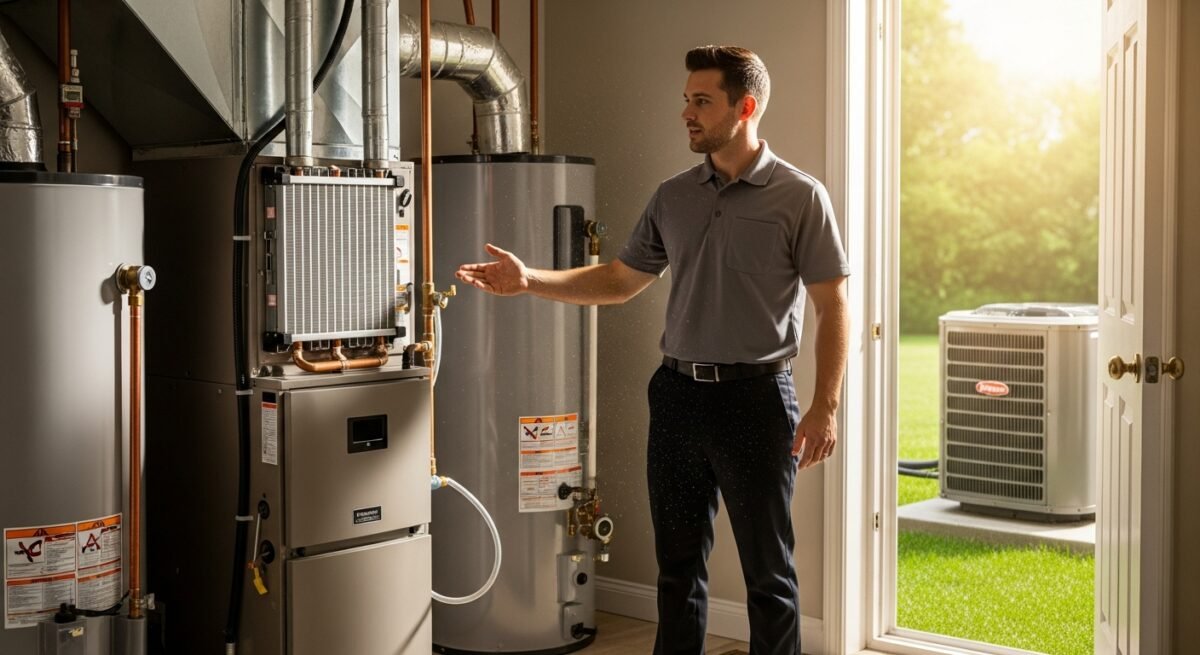
Each part has a specific job. The thermostat is the brain, telling the system when to turn on and what temperature to reach. The furnace or air handler is the heart, moving air through the ducts. The outdoor unit (for AC or heat pumps) releases heat from your home to the outside. Finally, the ductwork acts as the arteries and veins, carrying air to every room.
Why a Well-Functioning HVAC System Matters for Your Home
Beyond simple comfort, your HVAC system plays a crucial role in your home’s health, safety, and your wallet. An efficient system maintains consistent temperatures, preventing hot or cold spots that make living areas unpleasant. It also quietly filters out dust, pollen, and other allergens, which is vital for family members with allergies or asthma.
Perhaps most importantly, your HVAC system is likely your home’s largest energy consumer. A poorly maintained or aging system can waste hundreds of dollars annually on inefficient operation. Proper care and timely upgrades protect your investment in your home and prevent the stress and discomfort of a sudden failure on the hottest or coldest day of the year.
Our team of certified HVAC professionals is ready to ensure your system delivers the comfort and efficiency your home deserves.
Common HVAC Issues and What Usually Causes Them
Even the best systems experience problems over time. Many issues stem from a lack of regular maintenance. Dirty air filters, for example, are the most common culprit, restricting airflow and forcing the system to work harder, which can lead to frozen coils or overheating.
Other frequent problems include strange noises (like banging, squealing, or rattling) from loose or worn parts, thermostat malfunctions causing short-cycling or no response, and refrigerant leaks in AC systems that destroy cooling power. Many homeowners first notice an issue when their energy bills spike for no apparent reason or when certain rooms just won’t get comfortable.
- Poor or No Airflow: Often caused by clogged filters, blocked ducts, or a failing blower motor.
- Inconsistent Temperatures: Can point to ductwork leaks, an undersized system, or a failing component.
- Unusual Noises or Odors: Squealing may indicate belt issues, musty smells can signal mold in ducts, and burning odors require immediate attention.
- System Short-Cycling: (Turning on and off frequently) often relates to an oversized unit, dirty sensor, or overheating.
How HVAC Professionals Diagnose and Fix Problems
When you call a professional, they start with a systematic approach. First, they’ll discuss the symptoms with you and check the thermostat settings. Then, they perform a visual inspection of major components, looking for obvious signs of damage, dirt, or wear.
Next, they use specialized tools to diagnose the root cause. This includes checking refrigerant levels with gauges, testing electrical connections with a multimeter, measuring airflow, and assessing the heat exchange process. For complex issues like diagnosing persistent comfort problems, this methodical process is essential.
- Diagnosis: Pinpointing the exact faulty component or system imbalance.
- Repair or Replacement: Explaining the options, from repairing a single part to recommending a full component swap if it’s more cost-effective.
- System Testing: Verifying the repair works correctly and the system operates safely and efficiently.
- Preventative Advice: Offering tips or maintenance plans to prevent a recurrence.
Warning Signs You Should Never Ignore
Some HVAC problems are more urgent than others. While a slightly uneven temperature might wait for a scheduled visit, certain signs demand immediate professional attention to prevent safety hazards, major damage, or complete system failure.
Any smell of burning electrical wiring or gas (which smells like rotten eggs) means you should turn the system off immediately and call a pro. Similarly, if you see water pooling around the indoor furnace or air handler, or ice forming on the refrigerant lines or outdoor unit, it indicates a serious problem that needs prompt intervention.
- Strange Smells: Burning wire, gas, or persistent musty odors.
- Unusual Sounds: Loud grinding, screeching, or banging from the equipment.
- Visible Concerns: Ice on coils, water leaks, or visible rust/flame changes in the furnace.
- Health Symptoms: An increase in headaches, dizziness, or flu-like symptoms at home could point to a carbon monoxide leak from a cracked heat exchanger.
Understanding HVAC Cost Factors and What Affects Pricing
The cost of HVAC service, repair, or replacement varies widely. For repairs, the primary factors are the cost of the needed part and the labor involved. A simple capacitor replacement is relatively inexpensive, while replacing a compressor or heat exchanger is a major job. The age and accessibility of your system also play a role.
Schedule your comprehensive HVAC evaluation today by calling 📞833-365-8755 or visiting Schedule HVAC Service to ensure your home’s comfort and efficiency.
For a new system installation, the biggest cost drivers are the size (capacity) of the unit needed for your home, its efficiency rating (SEER for cooling, AFUE for heating), and the complexity of the installation. Upgrading ductwork, adding zoning, or installing advanced air purification systems will add to the project cost but offer significant long-term benefits. It’s worth exploring options like available HVAC rebates and financing to make high-efficiency upgrades more accessible.
How to Choose the Right HVAC Professional for Your Home
Selecting the right contractor is as important as choosing the right equipment. Always look for proper licensing, insurance, and certifications (like NATE certification for technicians). These credentials prove the company meets industry standards and protects you from liability.
Ask for references from recent customers and read online reviews to gauge reliability and quality of work. A trustworthy professional will perform a detailed load calculation (Manual J) for new installations—not just guess based on square footage—and provide a written, detailed estimate that clearly breaks down equipment, labor, and warranty information. For more on this critical choice, see our guide on choosing the right HVAC partner.
The Long-Term Benefits of a Healthy HVAC System
Investing in proper maintenance, timely repairs, and high-efficiency equipment pays dividends for years. You’ll enjoy superior comfort with consistent temperatures and balanced humidity. Your indoor air will be cleaner and healthier for your family to breathe.
Financially, you’ll save significantly on monthly utility bills and avoid costly emergency repairs. A well-maintained system also lasts years longer, protecting your home’s value and giving you peace of mind. Ultimately, a reliable HVAC system is the backbone of a comfortable, safe, and efficient home.
Frequently Asked Questions About Residential HVAC
How often should I replace my HVAC air filter?
Check basic 1-inch filters monthly and replace them every 1-3 months during peak seasons. Higher-quality pleated filters may last 3-6 months. Always follow manufacturer guidelines and inspect more frequently if you have pets or allergies.
What is the average lifespan of a residential HVAC system?
A well-maintained furnace or air conditioner typically lasts 15-20 years. Heat pumps may last 10-15 years. Lifespan depends heavily on maintenance, usage, and installation quality. Signs of age include frequent repairs and rising energy costs.
How can I lower my HVAC energy bills?
Start with regular maintenance, sealing duct leaks, and upgrading your thermostat to a programmable or smart model. Ensure your home is well-insulated. Consider a professional HVAC tune-up to optimize efficiency, and discuss with a pro if your system is old and inefficient.
What size HVAC system does my home need?
Size is critical and is not based on square footage alone. A proper Manual J load calculation factors in insulation, windows, home orientation, and more. An oversized or undersized system will cause comfort problems, short cycling, and higher costs.
Is an HVAC maintenance plan worth it?
For most homeowners, yes. Planned maintenance keeps systems running efficiently, catches small problems early, extends equipment life, and often includes priority service and discounts. It’s a proactive investment in comfort and cost savings.
What’s the difference between a heat pump and a furnace?
A furnace generates heat by burning fuel (gas/oil) or using electric resistance. A heat pump moves heat from one place to another—extracting heat from outdoor air to warm your home in winter and reversing to cool in summer. Heat pumps are highly efficient in moderate climates.
Why is my HVAC system blowing weak airflow?
Weak airflow is commonly caused by a dirty air filter, clogged evaporator coil, failing blower motor, or leaks/blockages in the ductwork. Restricted airflow strains the system and must be addressed to prevent further damage.
How often should I have my HVAC system professionally serviced?
You should schedule professional maintenance twice a year—ideally in the spring for cooling and the fall for heating. This bi-annual checkup ensures all components are clean, safe, and ready for the upcoming season of heavy use.
Your home’s comfort system doesn’t have to be a mystery. With a basic understanding of how it works and a trusted professional partner for maintenance and repairs, you can ensure reliable performance, improved efficiency, and a comfortable home for years to come. Taking a proactive approach is always more comfortable and cost-effective than reacting to an emergency.
Schedule your comprehensive HVAC evaluation today by calling 📞833-365-8755 or visiting Schedule HVAC Service to ensure your home’s comfort and efficiency.
Learn more about Heating System Repair or Maintenance for guides, costs, and what to expect.
Compare Heating System Repair or Maintenance Pros Near You
Enter your ZIP code to compare top-rated local professionals and request free quotes.