
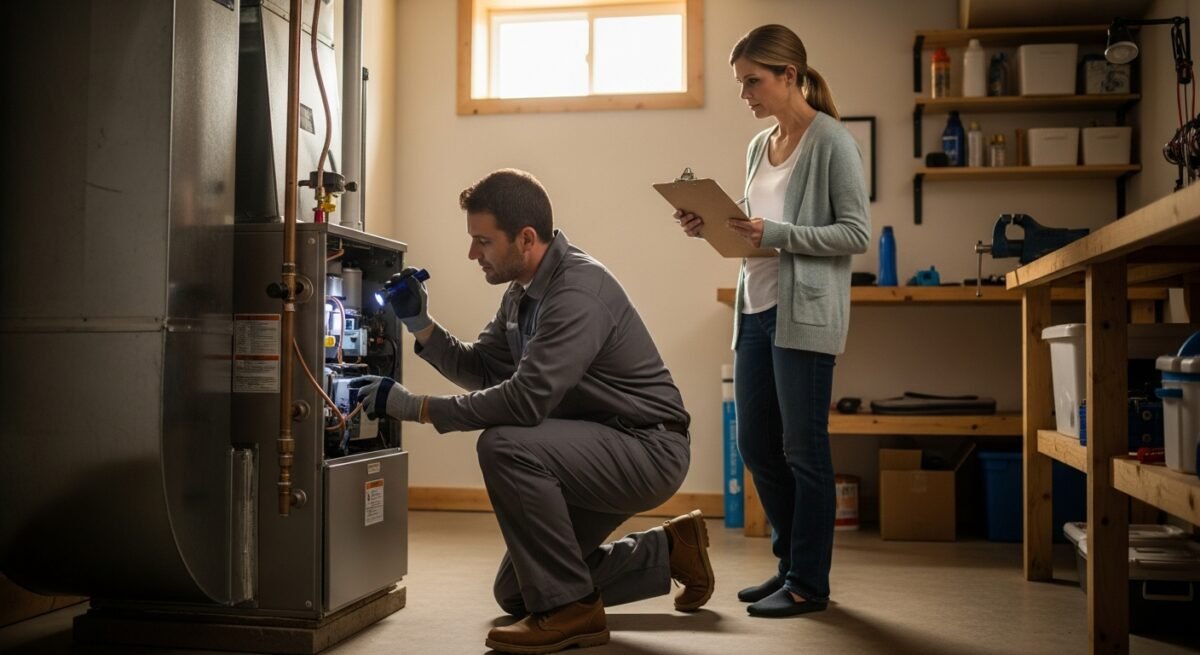
When To Replace Your HVAC System: A Homeowner’s Guide
Learn the clear signs it’s time to replace your HVAC system. Our guide helps you decide between repair and replacement to save money and improve comfort.

By Alex Carter
Learn more about Central Air Conditioning Repair or Maintenance for guides, costs, and what to expect.
Compare Central Air Conditioning Repair or Maintenance Pros Near You

Enter your ZIP code to compare top-rated local professionals and request free quotes.
Your HVAC system is the quiet hero of your home, working day and night to keep your family comfortable. But like any hardworking equipment, it won’t last forever. Knowing when to repair and when to replace it is one of the most important decisions for your home’s comfort, your budget, and your peace of mind. Let’s walk through the clear signs and smart considerations to help you make an informed choice.
Schedule your free HVAC assessment today by calling 📞833-365-8755 or visiting Get a Free Estimate to ensure your home’s comfort and efficiency.
Understanding When to Replace Your HVAC System
Replacing your HVAC system means installing a brand-new central air conditioner, furnace, or heat pump to take over the job of heating and cooling your home. It’s a significant investment, but it’s also an opportunity to upgrade your comfort, lower your energy bills, and improve your home’s air quality.
Knowing the right time isn’t always about a sudden breakdown. Often, it’s a series of smaller signs and a careful evaluation of costs versus benefits. A proactive replacement, planned on your schedule, is almost always better than an emergency replacement in the middle of a heatwave or cold snap.
The Age Factor
Age is the single biggest clue. Most systems are designed to last 15-20 years. If your system is within or beyond that range, its efficiency has dropped significantly, and major component failures become much more likely and costly.
Why It Matters for Homeowners
Choosing to replace your HVAC system at the right time has a direct impact on your daily life and finances. An old, struggling system can lead to inconsistent temperatures, strange noises, and frequent repair calls that add up quickly.
More importantly, an inefficient system wastes a tremendous amount of energy, leading to high utility bills month after month. A new, high-efficiency system can cut those costs dramatically, often paying for a portion of itself over time through savings. You also gain better humidity control, cleaner air, and the reliability that comes with a modern warranty.
Delaying a necessary replacement can be a false economy. You might spend thousands on patching up an old unit, only to face the full replacement cost a year later. Making a smart, planned decision protects your investment and your comfort.
Ready for a clear assessment of your system? Our expert technicians can provide a straightforward evaluation and quote. Schedule Your Free HVAC Replacement Consultation.
Common Issues and Their Causes
Older HVAC systems develop problems due to wear and tear, outdated technology, and simple aging. A common issue is reduced airflow, which can stem from a failing blower motor, clogged ductwork, or a dirty evaporator coil. This makes your system work harder to push air through your home.
Another frequent problem is refrigerant leaks, especially in systems over 10 years old. The refrigerant that cools your air slowly escapes through tiny cracks in the coil. Not only does this make the system less effective, but constantly topping it off is expensive and bad for the environment.
Here are some typical causes behind system failure:
- Normal Wear and Tear: Components like capacitors, contactors, and motors wear out after years of cycling on and off.
- Lack of Maintenance: Skipping annual tune-ups leads to dirty coils, clogged filters, and poor lubrication, accelerating breakdowns.
- Outdated Technology: Older systems use less efficient compressors and motors, and may rely on phased-out refrigerants like R-22.
- Improper Sizing: A system that’s too large or too small for your home (a common original installation mistake) strains to operate correctly.
How Professionals Fix the Problem
When you decide to replace your HVAC system, a professional installation is not a simple swap. It’s a detailed process that ensures your new system performs at its peak for years to come. It starts with a comprehensive home evaluation, where a technician measures your home’s square footage, inspects ductwork, and assesses insulation to determine the perfect system size and type for your needs.
The actual installation is a multi-step job. Professionals will safely remove the old equipment, prepare the installation sites (like the indoor air handler and outdoor condenser pad), and install the new units. Crucially, they will also connect new refrigerant lines, electrical wiring, and ductwork modifications if needed. The final and most important steps are system commissioning and testing.
- Load Calculation & System Selection: Choosing the right size and model.
- Safe Removal: Properly recovering refrigerant and disposing of old equipment.
- Precision Installation: Setting units level, securing all connections, and sealing ducts.
- System Startup & Testing: Checking refrigerant charge, airflow, electrical data, and thermostat communication to ensure optimal operation.
A proper installation is key to your system’s performance and lifespan. Trust our certified team for a seamless, code-compliant replacement. Learn About Our Precision Installation Process.
Signs You Should Not Ignore
Your HVAC system often sends clear signals that it’s nearing the end of its service life. Paying attention to these warnings can help you avoid a sudden, uncomfortable breakdown. One of the most telling signs is rising energy costs. If your bills are climbing steadily but your usage habits haven’t changed, your system is likely losing efficiency and working overtime to maintain temperature.
Frequent and costly repairs are another major red flag. If you’re calling for service more than once a year, or facing a repair bill that’s over 50% of the cost of a new system, replacement is almost always the wiser financial choice. You’re putting money into a unit that is only going to continue to degrade.
Schedule your free HVAC assessment today by calling 📞833-365-8755 or visiting Get a Free Estimate to ensure your home’s comfort and efficiency.
Here are key warning signs that replacement is imminent:
- System Age Over 15 Years: It’s living on borrowed time.
- Uneven Heating or Cooling: Some rooms are too hot or too cold.
- Excessive Noise or Strange Smells: Loud banging, screeching, or a persistent musty or burning odor.
- Constant Cycling or Running: The system turns on and off too frequently or never seems to shut off.
- Poor Indoor Air Quality & Humidity: Increase in dust, failure to remove moisture, or lingering stuffiness.
Cost Factors and What Affects Pricing
The cost of a new HVAC system isn’t a single number because every home and need is different. The primary factor is the size and capacity of the unit, measured in tons for cooling and BTUs for heating. A larger home requires a larger, more powerful system. The efficiency rating is another major cost driver. Systems with higher SEER (cooling) and AFUE (heating) ratings cost more upfront but save significantly on monthly bills.
The type of equipment you choose also affects the price. A standard air conditioner and furnace setup differs in cost from a heat pump system. Furthermore, the complexity of the installation plays a huge role. If your ductwork needs modification or replacement, if electrical service needs an upgrade, or if the installation location is difficult to access, labor costs will increase to ensure the job is done right.
How To Choose the Right Professional or Service
Selecting the right contractor is as important as choosing the right equipment. Look for a licensed, insured, and locally established company with a strong reputation. Check online reviews and ask for references. A trustworthy professional will always perform a detailed home assessment before giving a quote,never accept a price over the phone without an in-person visit.
Ask about their experience with your preferred brand and their process for sizing the system. Ensure they pull the proper permits, which is a sign of a legitimate, code-compliant installation. Finally, compare the details of the proposals. The lowest price might omit crucial steps like proper duct sealing or a thorough system test-out. Choose the company that offers the best value, clarity, and confidence, not just the lowest number.
Long-Term Benefits for Your Home
Investing in a new HVAC system pays dividends for years. The most immediate benefit is enhanced comfort, with consistent temperatures and balanced humidity throughout your home. You’ll enjoy quieter operation and cleaner air thanks to advanced filtration options. Financially, you’ll lock in lower energy bills, with modern systems being up to 50% more efficient than those from 15 years ago.
You also gain reliability and peace of mind. A new system comes with a manufacturer’s warranty that covers major parts for up to 10 years, protecting you from unexpected repair costs. This upgrade increases your home’s value and appeal to future buyers. Ultimately, a new HVAC system is an investment in your home’s health, your family’s comfort, and your wallet’s well-being for the long haul.
Frequently Asked Questions
How long should an HVAC system last?
With proper annual maintenance, a well-installed HVAC system typically lasts 15 to 20 years. After this point, efficiency drops sharply and the likelihood of major failures increases significantly.
Is it better to repair or replace my old HVAC?
Use the “$5,000 Rule” as a guideline. Multiply the age of your system by the repair cost. If the result is over $5,000, replacement is usually better. Also, consider replacing if the repair cost is over 50% of a new system’s price.
What size HVAC system do I need for my home?
Size is based on a detailed “Manual J” load calculation, not just square footage. A professional must consider insulation, windows, home orientation, and more. An improperly sized system will be inefficient and uncomfortable.
What is SEER and AFUE rating?
SEER (Seasonal Energy Efficiency Ratio) measures air conditioner or heat pump cooling efficiency. AFUE (Annual Fuel Utilization Efficiency) measures furnace heating efficiency. Higher numbers mean greater efficiency and lower operating costs.
How long does HVAC replacement take?
A standard replacement for one system (e.g., air conditioner and furnace) usually takes one full day for a qualified crew. More complex jobs, like adding ductwork or zoning, may take two to three days.
Can I just replace the outside condenser unit?
It’s not recommended. Outdoor units and indoor coils are designed to work as a matched set. Mixing old and new components reduces efficiency, can void warranties, and often leads to performance problems.
What financing options are available for HVAC replacement?
Many reputable HVAC companies offer financing plans with low or no-interest options for qualified buyers. This can make the investment more manageable by spreading the cost over monthly payments.
Will a new HVAC system really lower my energy bills?
Absolutely. Replacing a 15-year-old system with a new, high-efficiency model can reduce your heating and cooling energy costs by 20% to 40%, depending on your old system’s condition and the efficiency of the new one.
Deciding to replace your HVAC system is a major step in caring for your home. By recognizing the signs, understanding the process, and partnering with a trustworthy professional, you can transform this decision from a stressful expense into a valuable upgrade. You’ll gain reliable comfort, modern efficiency, and the confidence that your home is prepared for every season ahead.
Schedule your free HVAC assessment today by calling 📞833-365-8755 or visiting Get a Free Estimate to ensure your home’s comfort and efficiency.
Learn more about Central Air Conditioning Repair or Maintenance for guides, costs, and what to expect.
Compare Central Air Conditioning Repair or Maintenance Pros Near You
Enter your ZIP code to compare top-rated local professionals and request free quotes.