
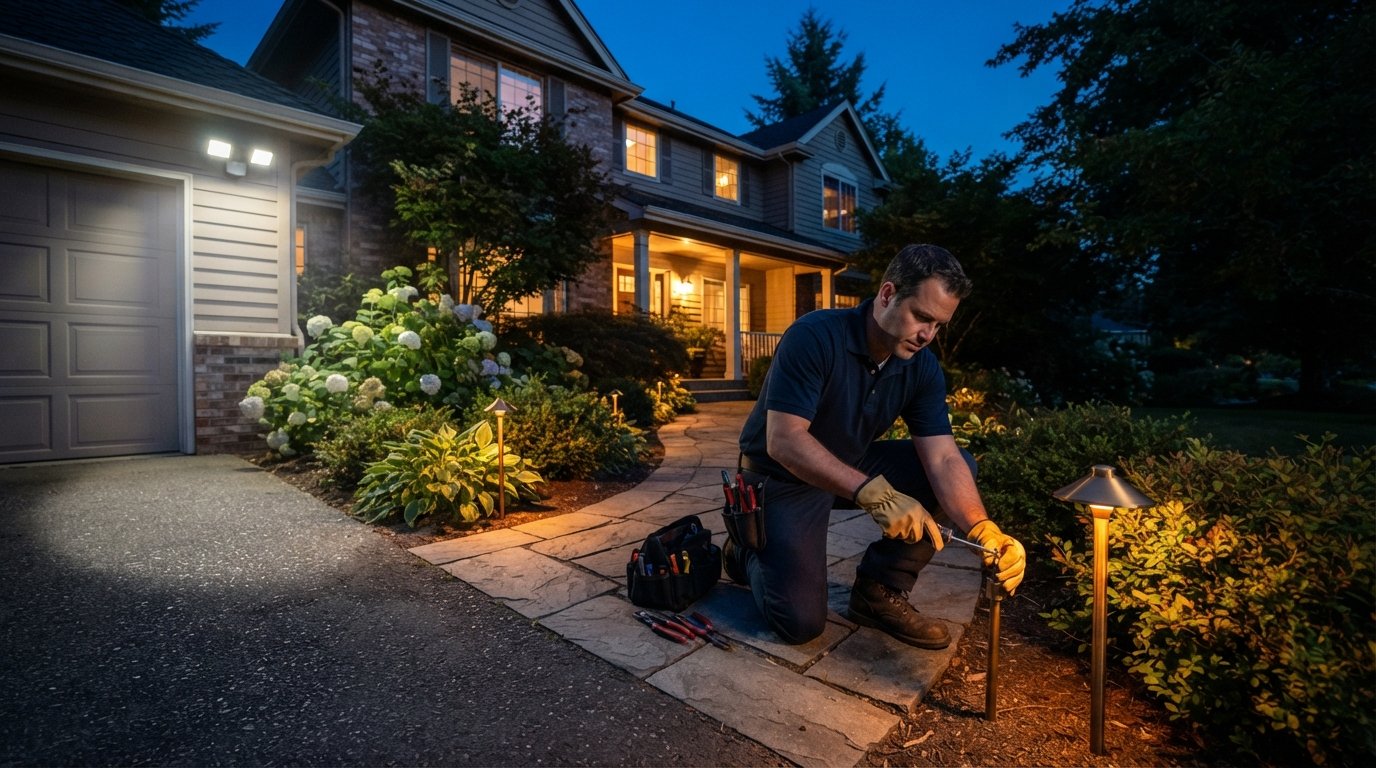
Outdoor Lighting Installation Ideas for Safety
Boost your home's security and prevent accidents with practical outdoor lighting installation ideas for safety, from entryways to walkways.

By Justin Parker
Learn more about Lighting Installation for guides, costs, and what to expect.
Compare Lighting Installation Pros Near You

Enter your ZIP code to compare top-rated local professionals and request free quotes.
When the sun sets, your home's exterior can quickly become a landscape of hidden hazards. Uneven walkways, dark corners, and unlit entry points are not just inconvenient; they are genuine safety risks for your family and visitors. Thoughtful outdoor lighting does more than boost curb appeal, it creates a secure perimeter that deters intruders and prevents accidents. This is where strategic planning and professional guidance come into play. By exploring practical outdoor lighting installation ideas for safety, you can transform your property into a well-guarded and welcoming space after dark. The right approach combines functionality with aesthetics, ensuring every step you take outside is a confident one.
Safety lighting is not about flooding your yard with blinding glare. Instead, it aims to illuminate key areas with the right intensity and placement. A well-lit home sends a clear message to potential trespassers: this property is occupied, visible, and not an easy target. For homeowners, it significantly reduces the risk of trips, slips, and falls, which are common causes of injury. From motion-sensing floodlights to subtle path markers, the options are vast. However, effective installation requires understanding your home's unique layout, local building codes, and the latest in lighting technology. This guide will walk you through the most effective strategies to secure your home, offering clear steps and professional insights to help you make informed decisions.
Why Safety-Focused Outdoor Lighting Matters
The primary goal of safety lighting is to eliminate dark zones where accidents can happen and where intruders can hide. Consider your own experience: arriving home to a dark garage or a shadowy front porch forces you to fumble for keys and feel vulnerable. This is a common concern for many homeowners, and the solution lies in deliberate illumination. Properly placed lights extend your living space outdoors, allowing you to enjoy your patio or yard with the same peace of mind you have inside. Moreover, it adds a layer of practical security that complements alarms and locks, creating a comprehensive defense system for your property.
Statistics consistently show that homes with adequate exterior lighting are less likely to be targeted by burglars. A well-lit property removes the concealment that criminals rely on. Beyond crime prevention, the safety aspect for residents cannot be overstated. According to the National Safety Council, falls are a leading cause of injury, and many occur on steps and walkways around the home. Investing in quality lighting is a proactive measure that protects your loved ones and guests. It also helps you navigate your property safely during evening hours, whether you are taking out the trash, gardening after work, or simply enjoying a quiet night on the deck.
Key Areas to Illuminate for Maximum Security and Safety
To create a truly safe environment, you need to prioritize specific zones around your home. Each area has unique requirements in terms of light placement and type. Focus on the following critical spaces to establish a solid foundation for your safety lighting plan.
Entry Points: Doors and Garages
Your front door, back door, and garage are the most common entry points, both for you and for potential intruders. These areas require bright, welcoming light that also allows you to see who is approaching. Wall-mounted lanterns or sconces placed at eye level on either side of the door are ideal. They provide even illumination for your face and your keys, eliminating glare and shadow. For garages, consider installing a light with a motion sensor that activates when you drive up. This not only guides you safely from the car to the house but also alerts you to any unexpected movement near your vehicle.
Walkways, Steps, and Driveways
Navigating uneven surfaces in the dark is a recipe for disaster. Path lights, low-voltage well lights, or step lights are essential for marking the route from your driveway to your entrance. These fixtures should be placed to cast light downward, highlighting changes in elevation and potential tripping hazards. For driveways, consider using lights that define the edges, such as bollard lights or low-profile fixtures. This helps drivers see the boundaries clearly and pedestrians stay on the designated path. The goal is to create a continuous line of light that safely guides everyone to your door.
Perimeter and Landscape Features
Don't forget the darker corners of your yard where shadows can gather. Security lights with motion sensors are highly effective in these areas. They can be mounted on the corners of your house or on trees, aimed to cover large sections of your property. Additionally, uplighting trees or architectural features not only adds drama but also eliminates hiding spots. By illuminating these areas, you reduce the risk of someone lurking unnoticed and also make your property less appealing as a target. For broader coverage, consider installing floodlights on the back and side elevations of your home, triggered by motion detectors to startle and deter any unwanted visitors.
Choosing the Right Lighting Technology and Fixtures
Selecting the correct type of lighting is just as important as deciding where to put it. Today's market offers a range of technologies, each with its own benefits. LED (light-emitting diode) lights have become the standard for outdoor use due to their energy efficiency, longevity, and brightness. They produce a clear, crisp light that is perfect for safety applications. Solar-powered options are also popular for path lights and accent fixtures, as they require no wiring and are easy to install. However, for critical safety areas like entryways and driveways, hardwired or low-voltage systems are often more reliable, ensuring consistent performance regardless of weather conditions.
When choosing fixtures, look for ones with an IP (Ingress Protection) rating suitable for outdoor use, typically IP65 or higher, to ensure they are dust-tight and resistant to water jets. This guarantees durability against rain, snow, and heat. For motion sensors, decide between passive infrared (PIR) sensors, which detect heat, or microwave sensors, which detect movement. PIR sensors are more common and less prone to false triggers. Additionally, consider the color temperature of your lights. Warmer tones (2700K-3000K) create a welcoming feel, while cooler tones (5000K) offer a brighter, more security-focused appearance. A combination of both can be used to balance aesthetics with safety.
Professional Installation versus DIY: Making the Right Choice
Once you have planned your lighting layout, the next decision is whether to tackle the installation yourself or hire a professional. For simple solar path lights or plug-in fixtures, a DIY approach is perfectly feasible. These projects require minimal tools and no electrical knowledge. However, for hardwired lighting, especially involving new circuits, transformers, or work near the main electrical panel, professional installation is strongly recommended. Working with electricity carries serious risks, including shock and fire hazards. Incorrect wiring can lead to shorts, power outages, or even electrical fires.
Hiring a licensed electrician ensures that the job is done safely, correctly, and in compliance with local building codes. Professionals can also help you design a system that maximizes coverage and efficiency, avoiding common pitfalls like dark spots or glaring light. They can properly install low-voltage transformers and ensure all connections are weatherproof. For most homeowners, the peace of mind and safety that come with professional installation far outweigh the cost. When you decide to upgrade your home, start by getting a free quote from a trusted professional service that can connect you with qualified electricians for your project.
Smart Lighting Controls for Enhanced Convenience and Security
Incorporating smart technology into your outdoor lighting system adds a new level of control and security. Smart bulbs and switches allow you to control your lights from your smartphone, no matter where you are. You can set schedules to turn lights on at dusk and off at dawn, or even simulate occupancy by turning lights on and off at random intervals when you are away on vacation. This feature is a powerful deterrent against burglars who often watch for signs that a home is empty.
Motion sensors are another critical component of a smart safety system. Instead of leaving lights on all night, which consumes energy, you can set them to activate only when movement is detected. This not only saves electricity but also makes the sudden burst of light more startling to an intruder. Modern motion sensors come with adjustable sensitivity and range, allowing you to fine-tune them to avoid false triggers from passing cars or small animals. Integrating these controls with a smart home hub allows you to create scenarios, such as having your porch light turn on automatically when your front door smart lock is unlocked. These innovations make your home safer and more responsive to your daily routines.
Designing a Layered Lighting Plan
To achieve a balance of safety and beauty, think of your outdoor lighting in layers. The first layer is ambient lighting, which provides overall illumination for large areas, such as the entire yard or driveway. The second layer is task lighting, which focuses on specific activities or areas like the front door lock or the grill station. The third layer is accent lighting, which highlights architectural features, trees, or landscaping for visual interest. A successful plan integrates all three.
For example, you might use a motion-sensing floodlight for ambient security, a wall sconce by the door for task lighting, and a small spotlights in the garden for accent. By layering these different types, you avoid the harsh, flat look of a single floodlight and create a dynamic, welcoming environment. This approach not only enhances safety by ensuring all critical areas are covered, but it also increases your home's curb appeal and overall value. The key is to start with a clear plan, identify your safety priorities, and then add aesthetic layers to create a cohesive and secure outdoor space.
Practical Steps to Implement Your Safety Lighting
Ready to put your plan into action? Here are the essential steps to guide you through the process, from initial planning to final installation. Following this sequence will help you avoid common mistakes and achieve the best results.
- Conduct a Nighttime Audit: Walk around your property after dark to identify all dark zones, shadowy corners, and potential hazards. Take notes on exactly where light is needed.
- Determine Your Power Source: Decide which areas will use solar power, which will use plug-in fixtures, and which require hardwired electrical connections. This will influence your design and budget.
- Sketch Your Layout: Draw a simple map of your yard, marking the locations for each type of light: path lights, spotlights, floodlights, and entry lights. This will serve as your installation blueprint.
- Choose Your Fixtures and Bulbs: Based on your audit and layout, select fixtures that match your home's style and provide the appropriate light output. Remember to choose LED bulbs for energy efficiency.
- Hire a Professional or Plan Your DIY: For complex electrical work, schedule a consultation with a licensed professional. For simpler DIY projects, gather your tools and materials, and always turn off power at the breaker before starting.
After you have installed your new lighting, take the time to test each fixture and sensor. Check that the coverage areas are as planned and that there are no dark spots left. Adjust the angles of spotlights and the sensitivity of motion sensors as needed. A final walkthrough after dusk will help you fine-tune everything. Remember to clean your fixtures regularly to ensure maximum brightness and longevity. With proper planning and execution, your safety lighting will provide years of protection and peace of mind.
Integrating Lighting with Your Home's Overall Safety Plan
Outdoor lighting works best when it is part of a holistic home security strategy. It should complement your locks, alarm system, and surveillance cameras. For instance, a well-lit area is essential for security cameras to capture clear footage. By ensuring your cameras are placed in lit zones, you increase their effectiveness. Lighting can also be timed to coincide with your alarm system's arming schedule, creating a synchronized defense. When planning your lighting, consider how it interacts with other safety features you have in place.
If you are undertaking a broader home renovation project, integrating outdoor lighting during the construction phase can save time and money. This is an opportune moment to add wiring for future needs or to install fixtures that are flush with new siding or walkways. For those looking to enhance their property comprehensively, coordinating with a renovation expert can ensure that your safety lighting is seamlessly incorporated into your overall design. This proactive approach not only boosts safety but also enhances the functionality and aesthetic appeal of your entire home exterior.
Maintenance and Upkeep for Long-Term Safety
Installing the perfect lighting system is only the first step. Regular maintenance is crucial to ensure your lights continue to function safely and effectively. Over time, dirt, dust, and insects can accumulate on fixtures, significantly reducing their brightness. A simple routine of cleaning lenses and housings every few months can make a world of difference. Check for any loose connections, frayed wires, or corrosion, especially after severe weather. For hardwired systems, it is wise to have a professional inspect the wiring and connections every few years to prevent potential electrical hazards.
Seasonal changes also affect your lighting. In the fall, ensure that fallen leaves do not block light output. In the winter, remove snow and ice from fixtures and sensors. Trim back any overgrown bushes or tree branches that may interfere with the light's path or the motion sensor's field of view. By staying on top of these small tasks, you extend the life of your investment and maintain a consistently safe environment around your home. If you notice any issues like flickering lights or sensors that are not triggering, address them promptly to avoid leaving your home unprotected.
In conclusion, implementing thoughtful outdoor lighting installation ideas for safety is one of the most effective ways to protect your home and family. It deters crime, prevents accidents, and enhances the overall beauty of your property. From the front porch to the backyard perimeter, every well-placed beam of light adds a layer of security. Whether you choose a simple DIY project or hire a professional for a comprehensive installation, the key is to plan carefully and choose quality products. As you enjoy brighter, safer evenings outdoors, you will appreciate the profound difference that good lighting makes. Take the first step today by evaluating your home's needs, and consider reaching out to a trusted professional to bring your vision to life.
To explore how a professional can help with your project, you can find more information on our expert lighting installation services. For a broader range of home improvement needs, you can also connect with vetted professionals through USremodel, which links homeowners to contractors for various projects.