
Low Maintenance Landscaping Ideas for Busy Homeowners
Low maintenance landscaping ideas for busy homeowners: cut mowing and watering time with native plants, drip irrigation, and smart hardscape choices.

By Alex Carter
Learn more about Outdoor Landscaping and Design for guides, costs, and what to expect.
Compare Outdoor Landscaping and Design Pros Near You

Enter your ZIP code to compare top-rated local professionals and request free quotes.
Your weekend should not disappear into a rotation of mowing, pruning, and dragging hoses across a thirsty lawn. For many homeowners, the dream yard has quietly shifted from a high-input showpiece to a space that looks intentional, supports local wildlife, and asks almost nothing in return. That shift is practical, not lazy: a yard that needs two hours of care every week costs you roughly a hundred hours a year, and many homeowners simply do not have that time to spare. The good news is that low maintenance landscaping is not about gravel and a few lonely shrubs. With the right plant choices, ground covers, irrigation, and hardscape planning, you can build an outdoor space that stays attractive through every season while freeing your calendar.
This guide walks through the most effective low maintenance landscaping ideas for busy homeowners, from lawn replacement strategies to smart irrigation and native plantings. Each idea includes enough detail to evaluate whether it fits your climate, budget, and long-term plans for the property. Along the way, you will also see where professional help makes sense, since some projects (drainage corrections, irrigation installation, and major hardscape work) deliver far better results when handled by experienced contractors.
Start With a Realistic Assessment of Your Yard and Schedule
Before you remove a single plant, spend one week tracking how much time your current landscape actually demands. Note mowing sessions, edge trimming, weeding, watering, deadheading, and seasonal cleanup. Most homeowners underestimate this number because the work is spread across many short sessions. Once you have an honest total, you can set a maintenance budget in hours per month, not just dollars. A realistic target for a low maintenance yard is two to four hours per month after the first year of establishment.
Next, map the growing conditions across your property. Sun exposure, soil type, slope, and drainage vary dramatically even in a modest yard, and plant failures usually trace back to a mismatch between species and site. A shrub that sulks in heavy clay may thrive twenty feet away in sandy, fast-draining soil. Sketch a simple sun map (morning sun, afternoon sun, full shade) and note any spots where water pools after rain. Those wet zones are prime candidates for rain gardens or moisture-loving perennials instead of turf that will always struggle.
Finally, decide how you want to use the space. A low maintenance landscape still needs to serve a purpose: entertaining, play, pets, or quiet relaxation. Zones that get heavy foot traffic need durable surfaces like pavers or flagstone, while distant corners can be planted with self-sufficient shrubs and ground covers that you rarely touch. Matching intensity of use to intensity of maintenance is the single most effective planning decision you can make.
Replace Thirsty Turf With Smarter Ground Covers
Traditional lawn is the highest-maintenance element in most yards: it demands weekly mowing, regular watering, fertilization, and often chemical treatments to stay presentable. Reducing turf area is the fastest way to cut your workload, and you do not have to eliminate grass entirely. Many homeowners keep a small, functional lawn for kids or pets and convert the rest of the yard to low-water plantings and mulch. Even a thirty percent reduction in turf translates to meaningfully fewer mowing hours each month.
Good ground cover options depend on your region, but several categories perform reliably across much of the country. Creeping thyme tolerates foot traffic and releases fragrance when stepped on. Sedum and other succulents thrive in hot, sunny spots with minimal water. Clover blends into lawns, fixes nitrogen, and stays green with far less irrigation than conventional grass. In shady areas, consider sweet woodruff, vinca, or liriope. Each of these spreads to fill space while suppressing weeds, which means less time on your knees with a trowel.
If you are not ready to remove grass, you can still lower its demands. Mow higher (three to four inches) to encourage deeper roots, leave clippings in place for free fertilizer, and water deeply but infrequently rather than in short daily bursts. These adjustments cost nothing and reduce both water use and mowing frequency over time. For homeowners planning broader exterior upgrades alongside landscaping, coordinating with a remodeling professional can help you sequence projects efficiently, and services like USremodel's contractor matching platform can connect you with local pros for related work such as patios, decks, and drainage improvements.
Choose Native and Adapted Plants That Take Care of Themselves
Native plants are the workhorses of a low maintenance landscape. Because they evolved in your region, they tolerate local rainfall patterns, soil conditions, and temperature swings without coddling. Once established (usually after one or two growing seasons), most natives need no supplemental watering, no fertilizer, and no pesticide. They also support pollinators and birds, turning your yard into a small habitat corridor. Your state extension service or a local native plant society can recommend species for your exact conditions.
Structure your plantings in layers so the landscape looks designed rather than random. A simple framework works well: evergreen shrubs for year-round bones, flowering perennials for seasonal color, and ornamental grasses for movement and winter interest. Repeat a few key species in drifts rather than collecting one of everything, since repetition reads as intentional and simplifies care. Group plants by water needs so irrigation zones can be tailored, and always plant in fall when possible, giving roots time to establish before summer heat arrives.
Adapted non-natives also deserve a place. Plants like lavender, rosemary, and ornamental sage perform beautifully in dry, sunny conditions across many climates and require little more than an annual trim. The key is to avoid high-maintenance favorites that demand constant deadheading, staking, or spraying. If a plant has failed in your yard twice, that is your signal to replace it with something better suited to the site rather than fighting the conditions.
Install Smart Irrigation and Mulch to Cut Watering Chores
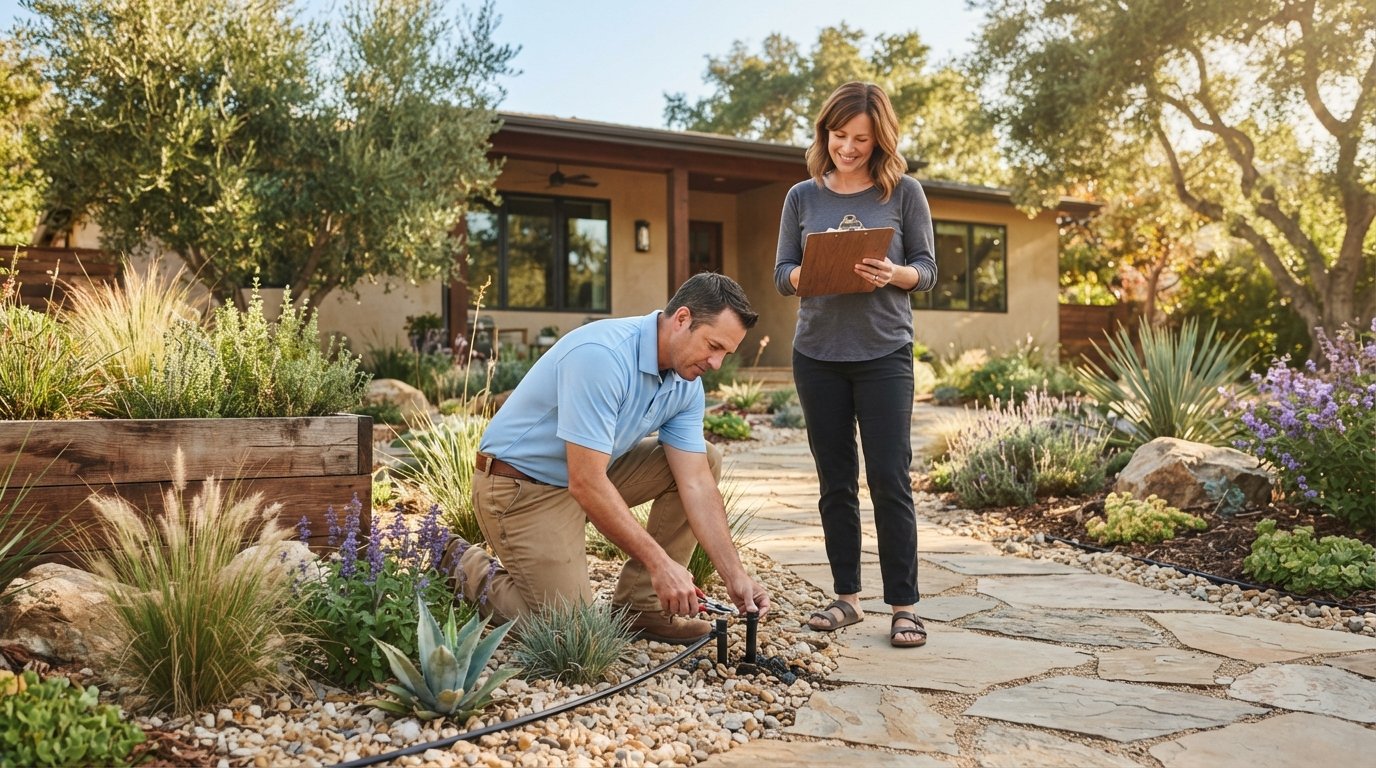
Hand watering is one of the most time-consuming and least efficient ways to keep plants alive. A drip irrigation system with a smart controller solves both problems: it delivers water directly to root zones, loses almost nothing to evaporation, and adjusts schedules automatically based on local weather data. Modern controllers connect to your phone, so you can pause watering after rain or during a trip without touching a single valve. Most homeowners find that drip irrigation pays for itself within a few seasons through lower water bills and healthier plants.
Mulch is the other quiet hero of low maintenance landscaping. A three-inch layer of wood chips, bark, or gravel suppresses weeds, conserves soil moisture, and moderates root-zone temperatures. Organic mulches break down over time and feed the soil as they decompose, which improves plant health year after year. Refresh mulch annually or every other year, and keep it a few inches away from trunks and stems to prevent rot and pest problems.
Together, drip irrigation and proper mulching can reduce watering time by eighty percent or more compared to hand watering and bare soil. They also make your landscape more resilient during drought restrictions, since established plants with deep, well-mulched roots survive far better than shallow-rooted, frequently watered ones. If your yard has drainage issues or you are installing irrigation from scratch, bringing in a qualified contractor is worth the investment: poorly designed systems waste water and create soggy spots that damage foundations and hardscape.
Use Hardscape and Structures to Reduce Upkeep
Hardscape does the heavy lifting in a low maintenance yard because it never needs mowing, pruning, or watering. A well-built patio, gravel path, or decomposed granite seating area replaces turf with a surface that simply needs occasional sweeping. Permeable pavers and gravel allow water to infiltrate naturally, reducing runoff and the need for complex drainage. In larger yards, consider converting awkward strips (side yards, steep slopes, narrow spaces between the house and fence) into mulched beds, gravel, or hardscape rather than struggling to maintain grass there.
Structures can also shrink your maintenance footprint. A pergola or covered patio creates a comfortable outdoor room that requires no planting at all. Raised beds with drip lines make vegetable gardening manageable in small doses, and container plantings let you enjoy flowers without committing to large beds. Even simple edging, whether metal, stone, or composite, keeps grass from invading beds and cuts hours of trimming each season.
When planning hardscape, prioritize durability and proper base preparation over decorative details. A patio that shifts and cracks after two winters creates more work than it saves. This is one area where professional installation genuinely matters, and it is also a good moment to think about how exterior upgrades connect to the rest of your home. If you are considering broader improvements, a resource like our guide on smart home office remodeling ideas can help you think about how indoor and outdoor spaces work together for daily life.
Simplify Planting Beds and Adopt Low-Effort Maintenance Habits
Even a low maintenance landscape benefits from a few smart routines. The goal is not zero effort but predictable, low-frequency effort that fits your schedule. Consider these habits:
- Plant in masses rather than single specimens, so weeding and watering cover larger areas with less fuss.
- Apply a fresh layer of mulch in spring before weeds emerge, which prevents most of the season's weed pressure.
- Prune only what is necessary, and choose plants that keep a naturally tidy shape without constant clipping.
- Leave spent perennials standing through winter for bird habitat and visual interest, then cut back once in early spring.
- Schedule one deep cleanup in fall and one light refresh in spring instead of weekly tinkering.
These habits compound over time. A yard that is mulched, drip-irrigated, and planted with adapted species stabilizes into a self-sustaining system within two to three years. At that point, most homeowners spend their outdoor time enjoying the space rather than maintaining it, which is exactly the point of low maintenance landscaping.
Know When to Bring In Professional Help
Some landscaping tasks are genuinely DIY-friendly: planting, mulching, and light pruning require more patience than skill. Others, including irrigation design, grading and drainage corrections, retaining walls, and large hardscape installations, are best handled by experienced professionals. Mistakes in these areas are expensive to fix and can cause water damage to your home's foundation or create liability issues. If your project involves moving soil, managing runoff, or building structures, get at least two or three quotes before committing.
Working with a contractor also saves time in ways that are easy to overlook. A good landscaper sources plants suited to your region, coordinates deliveries, handles permits where required, and warranties the work. For busy homeowners, that coordination is often worth more than the labor itself. When you are ready to compare options, a matching service can streamline the process: you describe your project once, receive competitive quotes from vetted local professionals, and choose the fit that works for your budget and timeline.
Low maintenance landscaping is ultimately an investment in your time. By reducing turf, choosing resilient plants, automating irrigation, and building durable hardscape, you create a yard that looks cared-for without demanding care. Start with one or two changes this season, such as converting a struggling lawn strip to mulch and perennials or installing a smart controller, and let the results guide your next step. Over a few years, those small decisions add up to an outdoor space that supports your lifestyle instead of competing with it.