
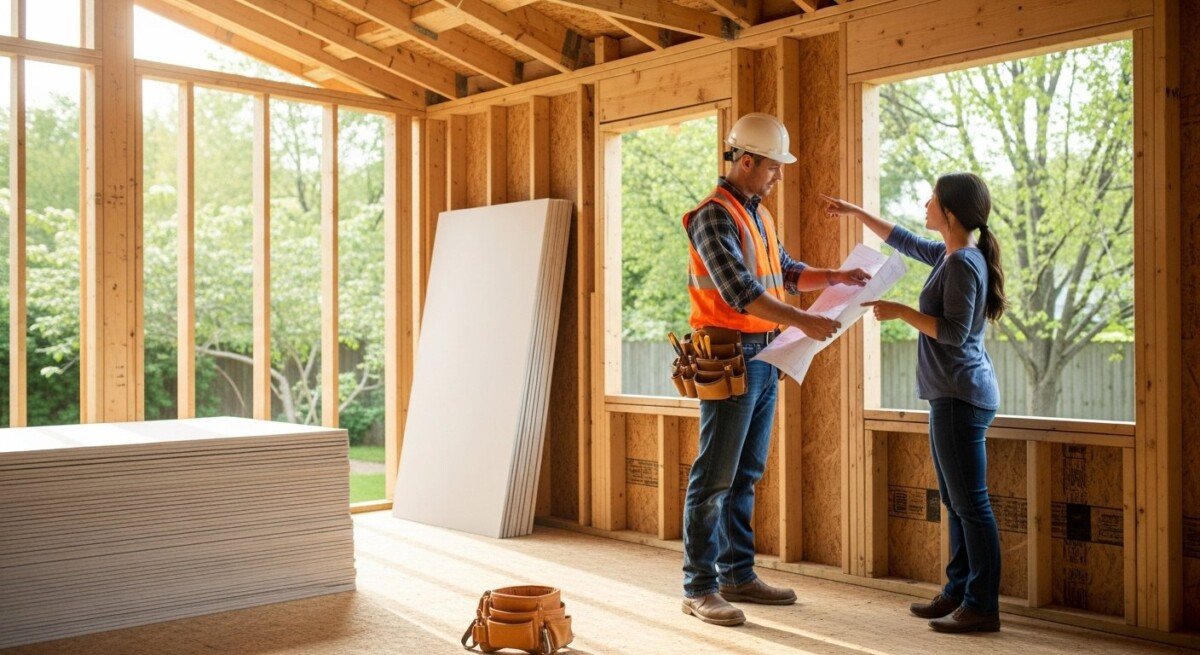
Home Addition Cost Estimate: A Realistic Guide for Homeowners
A realistic home addition cost estimate is crucial for planning your expansion. Learn what factors influence price and how to get an accurate budget.

By Alex Carter
Find Local Pros Near You

Enter your ZIP code to compare top-rated local professionals and request free quotes.
You’ve finally decided to expand your home. Maybe you need a new bedroom for a growing family, a dedicated home office, or a sunroom to enjoy your backyard. You start sketching ideas, feeling excited. Then, the big question hits: “How much will this actually cost?” A quick online search reveals a dizzying range of numbers, from surprisingly low to shockingly high. Without a realistic home addition cost estimate, your dream project can stall before it even begins, or worse, lead to unexpected financial strain halfway through.
Understanding Home Addition Cost Estimate
A home addition cost estimate is a detailed projection of the total expenses for your project. It’s far more than a single number scribbled on a napkin. A professional estimate breaks down costs for materials, labor, permits, design, and unforeseen challenges.
This estimate happens because every home and project is unique. The final price depends on your specific goals, your home’s existing structure, and local building requirements. It’s a roadmap for your budget, helping you understand where every dollar is planned to go.
While any home can have an addition, costs are influenced by the home’s age, foundation type, and roof complexity. A detailed estimate from a qualified contractor is the first step in turning your vision into a buildable, affordable plan.
Why This Matters for Your Home
Getting a realistic cost estimate is crucial for protecting your investment and your peace of mind. An accurate estimate prevents you from starting a project you can’t afford to finish, which can leave your home in a state of disarray and significantly lower its value.
Underestimating costs is a common pitfall that leads to cutting corners. This can compromise the structural integrity, safety, and energy efficiency of your new space. A professional estimate ensures the work is done correctly the first time, integrating seamlessly with your existing home.
Think of a detailed estimate as an insurance policy for your project. It helps you avoid the stress of surprise bills and ensures the final result adds genuine, lasting value to your property. For a deeper dive into planning this major project, our guide on home addition contractors and planning covers the essential first steps.
If you notice signs of this issue in your home, it may help to speak with a qualified contractor. Request a free quote or call to explore your repair or remodeling options.
Common Problems Homeowners Experience
When homeowners rely on guesswork or overly simplistic online calculators, they often encounter frustrating and costly problems. The dream addition can quickly become a source of financial strain and disappointment.
These issues usually surface after demolition begins or when the first major invoice arrives. Suddenly, hidden conditions or misunderstood scope reveal that the initial budget was completely unrealistic, forcing difficult compromises.
Common problems include:
- Massive Budget Overruns: The final cost ends up being 20-50% higher than the initial ballpark figure.
- Project Delays: Running out of funds halts construction, leaving your home unfinished for months.
- Subpar Materials or Workmanship: To stay within a tight, unrealistic budget, contractors may use lower-quality materials.
- Permit and Code Violations: Unforeseen costs for bringing existing electrical, plumbing, or structure up to current code.
- Poor Integration: The addition looks like a mismatched box stuck on the house, hurting curb appeal.
- Financing Shortfalls: Your loan or savings run out before the project is complete.
How Professionals Solve the Problem
Experienced contractors solve the cost estimate problem through a thorough, methodical process. They start by understanding your vision, then translate it into a detailed plan with predictable costs. Their expertise lies in anticipating challenges you might never consider.
They assess not just the new space, but how it connects to your existing home. This includes evaluating your foundation, roof lines, HVAC system, and electrical panel to ensure everything can support the new addition without issue.
A professional’s process typically follows these steps:
- Initial Consultation & Scope Definition: They discuss your goals, needs, and budget to define the project’s scope.
- Site Evaluation & Measurements: A detailed inspection of your property and home’s structure takes place.
- Preliminary Design & Planning: Basic layouts are drawn to visualize the addition’s footprint and connection points.
- Material & Labor Breakdown: Every component, from lumber and windows to plumbing fixtures and flooring, is specified and priced.
- Permit & Fee Research: They research local permit costs, impact fees, and any utility hookup charges.
- Contingency Planning: A standard percentage (often 10-20%) is added to the estimate to cover unexpected issues discovered during construction.
Warning Signs You Should Not Ignore
If you’re gathering estimates, pay close attention to the details provided. Some warning signs can indicate an estimate is unreliable, which could lead to major problems down the line. An estimate that seems too good to be true usually is.
Ignoring these red flags can lock you into a contract with hidden costs or a contractor who cuts corners. This often results in change orders that dramatically increase your final bill or legal disputes over the project’s scope.
Key warning signs include:
- Vague or Single-Line Estimates: A quote that is just one total number without a detailed breakdown of costs.
- Pressure to Sign Immediately: The contractor uses high-pressure tactics to get you to commit before you can compare quotes.
- Unwillingness to Put Everything in Writing: Promises made verbally that are not included in the written contract.
- No Mention of Permits: The estimate doesn’t include permit fees or the contractor suggests you “don’t need them.”
- Large Upfront Payment Demands: Requesting more than 10-15% of the total cost as a deposit before any work begins.
- No Contingency Line Item: The estimate has no allowance for unforeseen conditions, which are almost guaranteed in renovation work.
A professional inspection can reveal hidden issues before they become expensive repairs. Compare contractor quotes here or call to discuss your project.
What Affects the Cost of Repairs or Installation
Many factors influence the final price of your home addition. Understanding these variables helps you see why estimates vary and allows you to make informed decisions about where to allocate your budget. The size of the addition is just the starting point.
Materials and labor are the two largest cost drivers. Premium finishes like hardwood floors, custom cabinetry, and high-end windows will cost significantly more than standard builder-grade options. Similarly, complex architectural designs require more skilled labor than simple box additions.
Other major cost factors include:
- Site Accessibility: A tight lot with no room for equipment can increase labor time and cost.
- Foundation Work: Adding a basement or crawl space is far more expensive than building on a concrete slab.
- Mechanical Systems: Extending or upgrading HVAC, plumbing, and electrical systems to serve the new space.
- Roof Complexity: A simple gable roof is less expensive than multiple roof lines or dormers.
- Interior Finishes: The quality of flooring, trim, paint, lighting, and fixtures you choose.
- Local Labor Rates: Construction costs vary greatly by region and city.
Costs can vary depending on the condition of your home. The best way to know the price is to get a personalized estimate. Request free quotes from contractors or call today.
How to Choose the Right Contractor
Selecting the right contractor is the most important decision you’ll make for your home addition. The lowest bid is rarely the best value. You need a partner who is communicative, trustworthy, and skilled at bringing complex projects to life on budget.
Look for a contractor who listens to your ideas and asks thoughtful questions. They should be transparent about their process, timeline, and potential challenges. A good contractor views the estimate as a collaborative planning tool, not just a sales document.
Follow these tips to find the best professional:
- Verify Licenses and Insurance: Always check for a valid state contractor’s license and confirm they carry general liability and workers’ compensation insurance.
- Read Reviews and Check References: Look at online reviews and, crucially, ask for and contact past clients who had similar addition projects.
- Request Detailed, Itemized Estimates: Get at least three estimates that break down costs for materials, labor, permits, and profit margin for easy comparison.
- Review Past Work: Ask to see a portfolio of completed additions and, if possible, visit a finished project in person.
- Assess Communication: Choose someone who responds promptly, explains things clearly, and makes you feel comfortable asking questions.
Long-Term Benefits of Professional Work
Investing in a professional contractor and a accurate estimate pays off for years to come. A well-built addition should feel like it was always part of your home, functioning seamlessly and maintaining its value. Quality workmanship ensures your new space is safe, durable, and comfortable.
Professional contractors understand how to properly flash windows, insulate walls, and install vapor barriers to prevent moisture damage and drafts. This attention to detail leads to better energy efficiency, lowering your utility bills for the life of the home.
The long-term benefits include:
- Increased Home Value: A permitted, code-compliant addition completed by a professional typically offers a strong return on investment at resale.
- Reduced Maintenance Costs: Properly installed roofing, siding, and windows prevent leaks and repairs down the road.
- Enhanced Safety: Structural elements are engineered and built to support loads, and electrical work is performed to code, preventing fire hazards.
- Warranty Protection: Reputable contractors stand behind their work with warranties on both materials and labor.
- Peace of Mind: Knowing the job was done right allows you to enjoy your new space without worrying about hidden problems.
What is the average cost per square foot for a home addition?
This varies widely by region, project complexity, and finish level, but a common range is $200 to $500 per square foot. A basic, unfinished space will be on the lower end, while an addition with a kitchen or bathroom and high-end finishes will be at the top. The only way to get an accurate number for your home is with a site-specific estimate.
How long does it take to get a detailed cost estimate?
A thorough, professional estimate is not instant. After an initial consultation, a contractor may need a few days to a week to take measurements, create preliminary drawings, research material costs, and compile the detailed breakdown. This time investment is worth it for a reliable budget.
Should I get an architect before a contractor?
It depends on the project’s complexity. For a simple addition, many design-build contractors have in-house designers. For complex or custom designs, hiring an architect first is wise. A contractor can often recommend an architect and provide cost feedback on the designs early in the process.
What’s included in a contractor’s quote?
A comprehensive quote should include costs for demolition, materials, labor, subcontractors (plumber, electrician), permits, inspections, waste disposal, and a contingency fund. It should also specify the brands, grades, and quantities of major materials to be used.
How much should the contingency fund be?
For a home addition, a contingency of 10% to 20% of the total project cost is standard. This covers unforeseen issues like rotten wood behind walls, outdated wiring that needs upgrading, or unexpected foundation repairs. A professional contractor will factor this in from the start.
Is financing available for home additions?
Yes. Common options include a home equity loan, a home equity line of credit (HELOC), a cash-out refinance, or a renovation loan like an FHA 203(k). Your contractor may also have relationships with lenders who specialize in construction financing.
What questions should I ask when comparing estimates?
Ask about the project timeline, payment schedule, who pulls permits, how change orders are handled, the warranty offered, and who will be your daily point of contact. Also, ask each contractor to explain the biggest potential cost risk they see in your specific project.
A realistic home addition cost estimate is the foundation of a successful project. It transforms uncertainty into a clear plan, protecting your budget and your home’s value. By understanding the factors involved and working with a qualified professional, you can confidently move forward with expanding your living space. The best next step is to gather detailed, personalized quotes from reputable contractors in your area to understand your true investment and options.
Find Local Pros Near You
Enter your ZIP code to compare top-rated local professionals and request free quotes.