
GFCI vs AFCI Outlets: Key Electrical Safety Differences
Understand the key GFCI versus AFCI outlets electrical safety differences and where each is required. Call (833)-365-8755 for expert help.

By Irene Walsh
Learn more about Switch and Outlet Installation for guides, costs, and what to expect.
Compare Switch and Outlet Installation Pros Near You

Enter your ZIP code to compare top-rated local professionals and request free quotes.
Every year, electrical failures cause thousands of home fires and hundreds of electrocutions in the United States. Two small devices, the GFCI and the AFCI outlet, stand between your family and those hazards, yet most homeowners cannot explain how they differ or where each one belongs. Understanding the GFCI versus AFCI outlets electrical safety differences is not just an electrician's concern: it determines whether your kitchen, bedrooms, and laundry room meet modern code, and it can affect your home inspection, insurance, and resale value. This guide breaks down how each device works, where the code requires them, how to retrofit older wiring, and what to ask a contractor when something trips.
How GFCI and AFCI Outlets Detect Faults
A ground fault circuit interrupter (GFCI) protects people from electric shock. It continuously compares the current flowing out on the hot wire with the current returning on the neutral wire. Under normal conditions those two currents are equal. If a person touches a live part or a appliance leaks current to ground, the imbalance can be as small as 4 to 6 milliamps, and the GFCI trips in about one twenty-fifth of a second. That speed is why GFCIs are required near water, where a shock path through a wet body is most likely.
An arc fault circuit interrupter (AFCI) protects property from fire. It monitors the electrical waveform for the signature of a dangerous arc: a sputtering, high-frequency pattern caused by damaged insulation, a loose connection, or a nail driven through a wire. A normal switch opening produces a tiny, harmless arc, so the AFCI uses signal processing to distinguish safe arcs from dangerous ones. When it detects a hazardous arc, it cuts power before the arc can ignite surrounding wood or insulation. In short, the GFCI versus AFCI outlets electrical safety differences come down to this: GFCI guards people, AFCI guards the structure.
Where Code Requires Each Outlet Type
The National Electrical Code (NEC) sets minimum requirements that most states and local jurisdictions adopt, sometimes with amendments. GFCI protection has been required in bathrooms, garages, outdoors, and near kitchen counters for decades, and the list has expanded over successive code cycles to include laundry areas, unfinished basements, crawl spaces, and other damp or potentially wet locations. AFCI protection arrived later and now covers most branch circuits serving living areas, including bedrooms, living rooms, dining rooms, hallways, and closets.
Here is a practical room-by-room summary of typical requirements, keeping in mind that your local authority may enforce a different code edition:
- Kitchen: GFCI for all countertop receptacles, plus AFCI protection for the circuit under most recent codes.
- Bathrooms: GFCI for every receptacle, and often for lighting and exhaust fans as well.
- Laundry room: GFCI for the washer receptacle and AFCI for the circuit.
- Garage and outdoors: GFCI for all receptacles, including those on the exterior of the house.
- Bedrooms and living areas: AFCI for the branch circuits, with GFCI added in any damp location.
Notice that many rooms now need both types of protection, which is why dual-function breakers and outlets exist. A dual-function device combines GFCI and AFCI sensing in one unit, simplifying compliance in kitchens and laundry rooms. When you plan a remodel, ask your electrician which code edition your city follows, because adoption lags vary widely and can change what your inspector will accept.
Retrofit Options for Older Homes
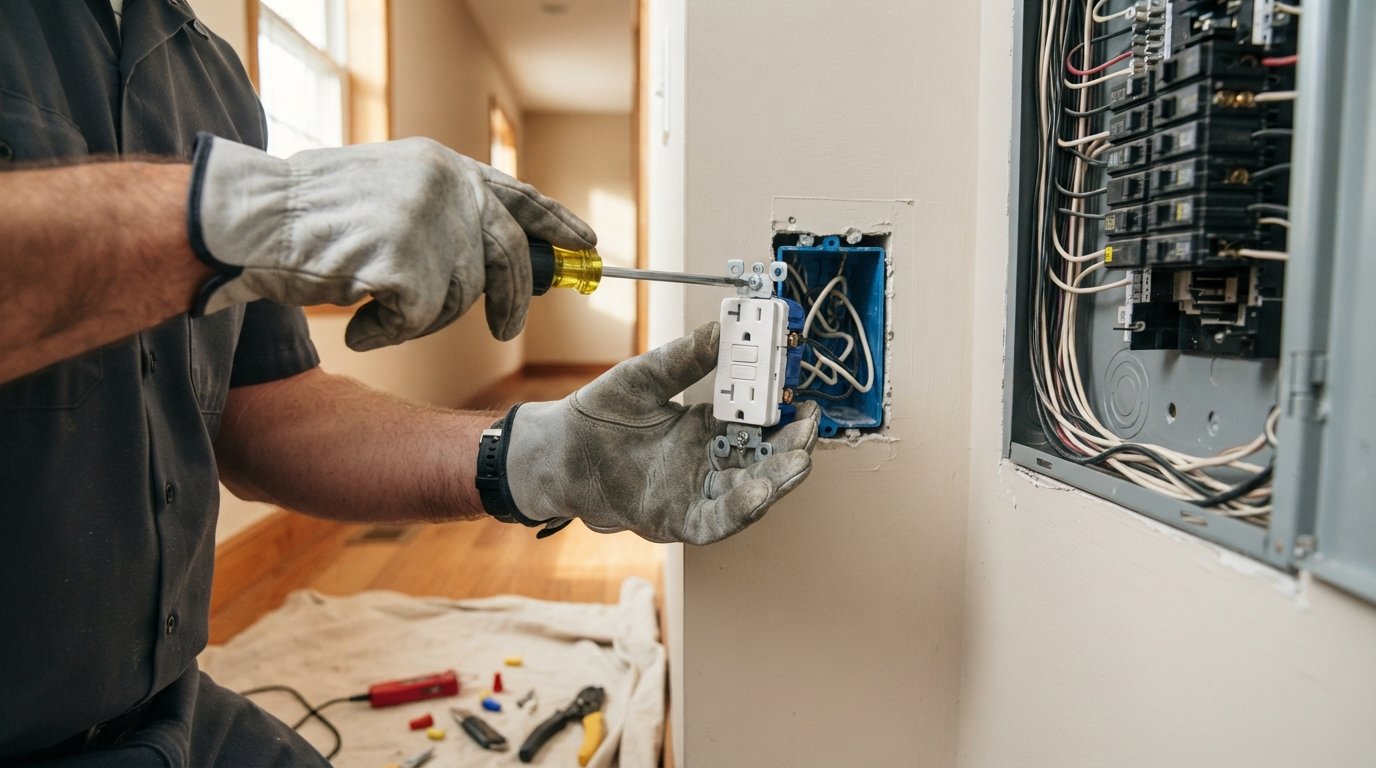
Millions of homes were wired before AFCI and GFCI requirements existed, and rewiring every circuit is rarely practical or affordable. Fortunately, you have several retrofit paths. The first is to replace a standard receptacle with a GFCI receptacle at the first outlet on the circuit, which protects downstream outlets as well. This is the classic fix for kitchens, bathrooms, and garages. The second is to install a GFCI or AFCI breaker in the panel, which protects the entire circuit without touching the walls.
For arc fault protection, a breaker replacement is usually the cleanest option because AFCI receptacles only protect the wiring downstream of the device and are more sensitive to shared neutral mistakes. A licensed electrician can tell you whether your panel has capacity for new breakers and whether your wiring method (such as knob and tube or early cloth-insulated cable) is compatible. If your home is older and you are unsure about the overall condition of the electrical system, schedule a professional electrical safety inspection before adding new devices, because hidden hazards can defeat even the best outlet.
Retrofit decisions also depend on the room. A bathroom remodel is the ideal moment to upgrade to GFCI protection and add a dedicated circuit for a hair dryer or heated towel rail. A kitchen remodel should include GFCI receptacles at the counter and AFCI protection for the small-appliance circuits. If you are planning a larger project, connecting with vetted local contractors through Contractor.Homes can simplify the process of finding an electrician who knows your local code and can bundle the work with your renovation schedule.
Troubleshooting Nuisance Trips Before Calling an Electrician
A tripping GFCI or AFCI is not always a sign of a failed device. Nuisance trips are common, and a few simple checks can save you a service call. For GFCIs, moisture is the usual culprit: a damp outlet cover, a sprinkler hitting an exterior receptacle, or steam from a shower can cause repeated trips. For AFCIs, the usual suspects are damaged extension cords, loose connections in a receptacle, or a vacuum cleaner with a worn motor brush. Newer appliances with variable-speed motors can also produce waveforms that older AFCIs misread.
Work through this sequence before you pick up the phone:
- Unplug everything on the circuit, reset the device, and see whether it holds.
- Plug devices back in one at a time to identify the culprit.
- Inspect cords and plugs for damage, and replace any that are worn.
- Check for moisture at outdoor and bathroom outlets, and dry them thoroughly.
- If the device trips with nothing plugged in, stop resetting it and call a qualified electrician.
If the device will not reset at all, it may have reached the end of its service life. GFCIs and AFCIs have electronic components and are typically rated for about 10 to 20 years. A device that fails to trip when tested with its TEST button should be replaced immediately, because it is no longer providing protection.
What to Ask a Contractor When Outlets Fail Inspection
An inspection report that flags missing GFCI or AFCI protection can feel alarming, but it is usually a straightforward fix. The key is to hire a licensed electrician who will explain the options rather than simply quote a price. Before you sign, ask which code edition your jurisdiction enforces, whether breakers or receptacles are the better retrofit for your wiring, and whether the work includes testing and labeling. A good contractor will also tell you if the panel needs upgrading to support new breakers, and will put the scope in writing.
It also helps to know the GFCI versus AFCI outlets electrical safety differences yourself so you can evaluate the advice you receive. If a contractor proposes GFCI protection where AFCI is required, or vice versa, ask why. Sometimes a dual-function device is the right answer; sometimes the panel cannot accept the breaker you need. Either way, a clear explanation is a sign of a professional who will stand behind the work. For homeowners planning a remodel, bundling electrical upgrades with the larger project often reduces cost and disruption, and it ensures the finished space passes inspection the first time.
Electrical safety devices are small, inexpensive, and easy to ignore until something goes wrong. Taking an hour to understand what your outlets are doing, and to verify that the right protection is in the right rooms, is one of the highest-return home maintenance tasks you can perform. Whether you are retrofitting an older home or finishing a new basement, make GFCI and AFCI protection part of the plan from the start, and confirm the details with a licensed professional before the drywall goes up.
Learn more about Switch and Outlet Installation for guides, costs, and what to expect.
Compare Switch and Outlet Installation Pros Near You
Enter your ZIP code to compare top-rated local professionals and request free quotes.