
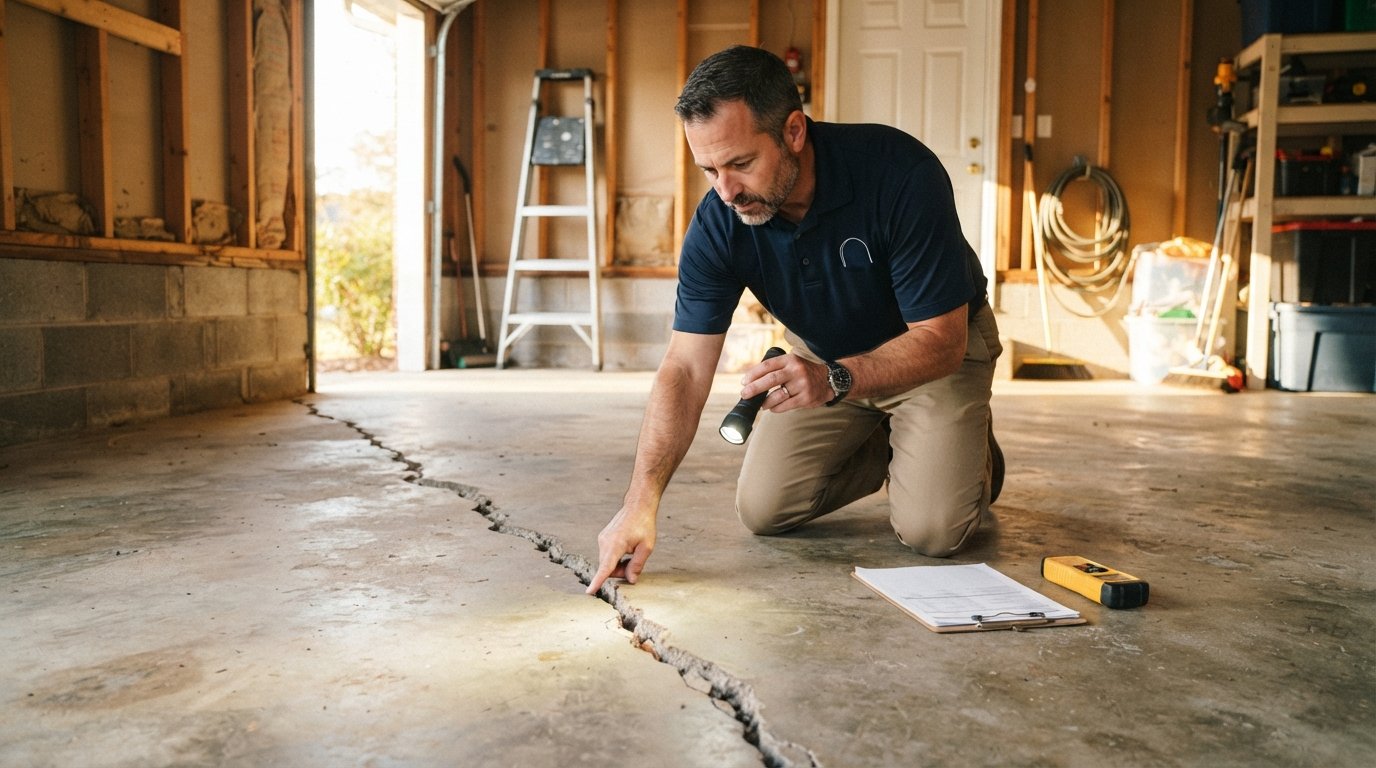
Foundation Repair Warning Signs and Repair Options
Spot foundation repair warning signs early and compare repair options like piers, slabjacking, and drainage fixes to avoid costly structural damage.

By Jackson Adams
Learn more about Foundation Repair for guides, costs, and what to expect.
Compare Foundation Repair Pros Near You

Enter your ZIP code to compare top-rated local professionals and request free quotes.
A crack in the drywall above a doorway. A door that suddenly sticks every time you close it. A floor that feels slightly spongy underfoot. These small annoyances are easy to dismiss as the normal quirks of an older house, but they are often the first whispers of a foundation problem that will only get louder and more expensive with time. Your foundation carries the entire weight of your home, and when it moves, everything above it moves too. The good news is that foundation damage rarely happens overnight. It announces itself through a predictable set of warning signs, and once you know what to look for, you can act long before a repair turns into a rebuild.
This guide walks through the most common foundation repair warning signs and repair options, from hairline cracks you can monitor yourself to structural failures that demand a licensed engineer. You will learn how soil, water, and climate drive most foundation movement, how to tell cosmetic cracks from structural ones, what each repair method actually does, and how to choose a contractor without overpaying. If you have ever wondered whether that crack in the garage floor is serious, this is the place to start.
Why Foundations Move in the First Place
Concrete is strong in compression but surprisingly fragile when the ground beneath it shifts. Most foundation problems trace back to one root cause: soil that expands, contracts, or erodes unevenly. When one corner of your home sits on soil that swells after a heavy rain while another corner rests on soil that stays dry, the foundation is forced to bend. Concrete does not bend well. It cracks.
Climate plays a major role in how severe that movement becomes. In Texas, expansive clay soils soak up water and expand dramatically, then shrink during summer droughts, which is why slab foundations in the Dallas and Houston areas are so prone to cracking. In Florida, the problem is often the opposite: sandy soil, a high water table, and sinkhole activity can undermine a foundation from below. In Chicago and other northern markets, the freeze and thaw cycle pushes soil upward in winter and lets it settle in spring, stressing foundations year after year. Even the best-built home will eventually feel some of this pressure.
Other contributors include poor drainage that sends roof water straight to the base of the house, plumbing leaks that saturate the soil under a slab, tree roots that pull moisture out of the ground, and simple age. A foundation that has performed flawlessly for 40 years can still develop problems when a nearby tree matures or a gutter clogs. Understanding the cause matters because the repair has to address the source, not just the symptom.
Foundation Repair Warning Signs You Should Never Ignore
Some symptoms are cosmetic and some are structural, and the difference usually comes down to pattern, location, and whether the movement is ongoing. A single hairline crack in a garage slab may never worsen. A stair-step crack running up a brick wall almost always means the foundation is actively settling. Walk your home twice a year, inside and out, and compare what you see against the list below.
- Cracks in walls, floors, or ceilings: Diagonal cracks near door and window corners, stair-step cracks in brick or block, and cracks wider than a credit card (about 1/8 inch) are the classic calling cards of foundation movement.
- Doors and windows that stick or swing open: When a door frame goes out of square, doors rub the jamb, latch poorly, or drift open on their own. Windows may crack or become impossible to open.
- Uneven or sloping floors: A floor that visibly slopes toward one side of the house, or feels bouncy and soft, often signals that part of the foundation has dropped.
- Gaps around exterior trim and brick: Look for separation where the brick meets the window frame, garage door, or chimney, and for cracks that appear at the corners of the house.
- Water intrusion and musty odors: Cracks in a slab or crawl space wall let groundwater in, which can lead to mildew smells, damp carpet, and higher humidity indoors.
Two more signs deserve special attention because they are easy to miss. First, check the perimeter of your home for soil that has pulled away from the foundation, leaving a visible gap. This often means the soil is shrinking and no longer supporting the edge of the slab. Second, look at your chimney: if it is separating from the house or leaning, the foundation beneath it is almost certainly moving. Any of these signs on their own is worth a professional evaluation. Three or more together is a strong indication that repair should not wait.
It also helps to know which warning signs are less urgent. Hairline cracks in a drywall corner that have not changed in years, or a single small crack in a concrete patio, are often cosmetic. The key is change over time. Photograph every crack you find, date the photo, and recheck in three to six months. If the crack has widened, lengthened, or multiplied, the foundation is still moving and you need a professional assessment sooner rather than later.
How Professionals Diagnose Foundation Problems
A proper diagnosis starts with a site visit, not a phone call. A qualified foundation contractor or structural engineer will inspect both the interior and exterior, measure floor elevation with a zip level or laser, check for cracks in the foundation itself, and evaluate the soil and drainage conditions around the home. On a slab foundation, they may use a plumber to run a hydrostatic test that detects leaks under the concrete, since hidden plumbing leaks are a common cause of slab movement.
You should receive a written report that identifies the type of foundation you have (slab, pier and beam, basement, or crawl space), the likely cause of the movement, the severity of the problem, and a recommended repair plan with a cost estimate. Be cautious of any contractor who quotes a full repair within minutes of arriving without taking measurements. Reputable professionals explain their findings, show you the evidence, and give you time to compare options.
If the diagnosis points to plumbing as the underlying cause, it is worth addressing that first. A hidden leak that keeps saturating the soil will undermine even a perfectly executed foundation repair. In our guide on hot water problems and repairs, we explain how to spot the leaks and pressure issues that often go unnoticed until they damage the structure around them.
Foundation Repair Options Explained
Once you know what is wrong, the repair itself usually falls into one of a handful of proven methods. The right choice depends on your foundation type, the cause of the movement, and how much of the home has been affected. Here are the most common options, from least invasive to most extensive.
Piering and Underpinning
Piering is the workhorse of foundation repair. Steel or concrete piers are driven or drilled deep into stable soil or bedrock beneath the home, then connected to the foundation with brackets. Hydraulic jacks lift the foundation back toward its original elevation, and the piers hold it there permanently. This method works well for slab foundations that have settled and for homes where one side has dropped. Helical piers are screwed into the ground and are popular in areas with expansive clay, while resistance piers are pushed down until they hit refusal, the point where the soil is strong enough to carry the load.
Slabjacking and Mudjacking
For smaller, localized settlement, slabjacking (also called mudjacking) offers a less expensive alternative. A grout mixture of cement, sand, and water is pumped through small holes drilled in the concrete, filling voids and lifting the slab back into place. It is fast, minimally disruptive, and typically costs a fraction of piering. The tradeoff is durability: slabjacking addresses the symptom rather than driving support to deep, stable soil, so it may need to be repeated if the underlying soil keeps moving.
Drainage Correction and Soil Stabilization
Sometimes the smartest repair is not structural at all. If poor drainage is causing the soil to swell and shrink, correcting gutters, downspouts, grading, and French drains can stop the movement before it worsens. Soil stabilization, which involves injecting expanding polyurethane foam beneath the slab to fill voids and compact loose soil, is another option that pairs well with drainage work. These solutions are often recommended alongside a structural repair to prevent the problem from returning.
Crawl Space and Basement Repairs
Homes with crawl spaces or basements face a different set of issues. Cracked or bowing foundation walls can be stabilized with carbon fiber straps, steel I-beams, or wall anchors that pull the wall back toward the soil. Crawl space moisture, which rots wood supports and encourages mold, is addressed with vapor barriers, encapsulation, and improved ventilation. In serious cases, a failing crawl space may need new support piers or a partial rebuild of the foundation wall.
Repair costs vary widely by region, foundation type, and severity. Minor crack injection might run a few hundred dollars, while a full perimeter pier installation on a large home can reach five figures or more. Because the range is so broad, getting multiple written quotes is essential. A platform like USremodel connects homeowners with independent contractors across the country, which makes it easier to compare bids for foundation work alongside related projects such as drainage improvements or plumbing repairs.
Choosing the Right Contractor for Foundation Work
Foundation repair is not a job for a general handyman. You want a licensed, insured specialist with a track record on your specific foundation type, and ideally one who offers a transferable warranty on the work. Ask how long the company has operated in your area, whether it employs its own crews or subcontracts, and whether it carries both general liability and workers compensation insurance. Request references from jobs completed at least two years ago, so you can ask those homeowners whether the repair has held up.
Get at least three written estimates that itemize the repair method, materials, pier depth or count, and warranty terms. Be wary of quotes that are dramatically lower than the others, and equally wary of pressure tactics such as same-day discounts or claims that your home is in imminent danger. A trustworthy contractor will welcome a second opinion from a structural engineer, and many homeowners choose to hire an engineer directly for the diagnosis and then bid the repair separately.
Before any work begins, confirm the payment schedule. A reasonable deposit is typically 10 to 30 percent, with the balance due after the work is complete and inspected. Never pay the full amount upfront, and make sure the contract spells out what happens if the repair does not achieve the promised elevation or if cracks reappear within the warranty period. Keep copies of every report, photo, and invoice in case you sell the home, since buyers and their inspectors will ask about foundation work.
Preventing Future Foundation Problems
Once a repair is complete, the goal shifts to keeping the soil around your home as stable as possible. Maintain consistent moisture by watering your foundation during dry spells, ideally with a soaker hose placed 12 to 18 inches from the slab. Keep gutters clean and extend downspouts at least five feet away from the house. Fix plumbing leaks promptly, and avoid planting large trees within 10 to 15 feet of the foundation, since their roots can pull moisture from the soil and cause settlement.
Schedule a professional inspection every two to three years, and after any major weather event such as a prolonged drought or heavy flood. Keep an eye on the same signs you learned earlier: new cracks, sticking doors, sloping floors, and gaps around trim. Catching a problem in its early stages almost always means a smaller, cheaper repair. Ignoring it rarely does.
Your foundation is the one part of your home you cannot see, but it is also the part that holds everything else together. Learn the warning signs, act on the ones that matter, and work with qualified professionals who can explain your repair options in plain language. Do that, and you protect not just your floors and walls, but the long-term value of your entire home.