
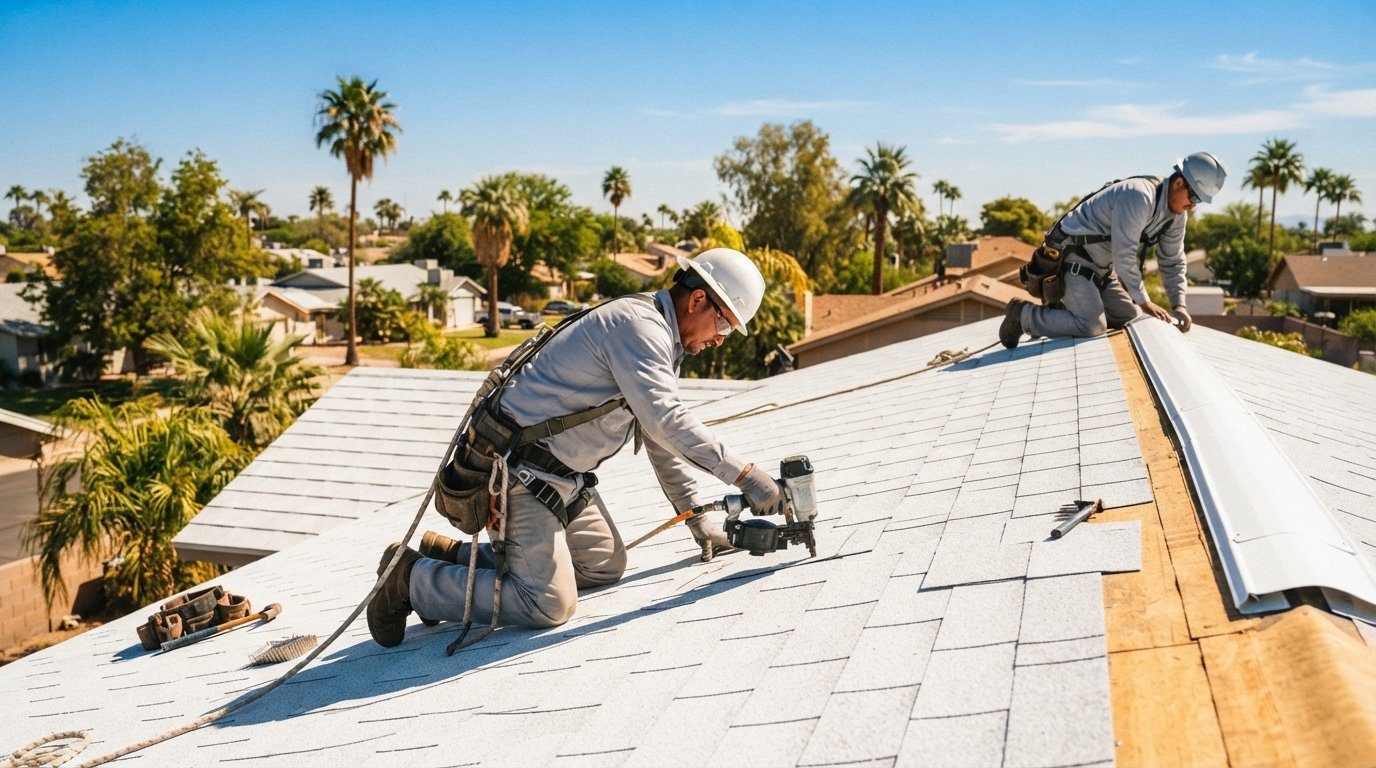
Energy Efficient Roofing Options for Hot Climates
Energy efficient roofing options for hot climates can cut cooling costs by 15 percent or more. Compare reflective shingles, metal, tile, and ventilation upgrades.

By Jackson Adams
Learn more about Roof Installation or Replacement for guides, costs, and what to expect.
Compare Roof Installation or Replacement Pros Near You

Enter your ZIP code to compare top-rated local professionals and request free quotes.
When summer heat pushes your attic temperature past 140 degrees Fahrenheit, your roof stops being a passive cover and becomes the single biggest driver of your cooling bill. In hot climates like Arizona, Texas, and Florida, a dark asphalt roof can absorb enough solar radiation to raise indoor temperatures by several degrees, forcing your air conditioner to run longer, work harder, and fail sooner. The good news is that modern roofing technology has caught up with the problem, and the right system can cut your cooling costs dramatically while extending the life of the roof itself.
In our guide on energy-efficient roofing systems, we explain how reflective materials, proper ventilation, and smart installation work together to reduce heat transfer. This article goes deeper into the specific options available for hot climates, how each performs under intense sun exposure, and what homeowners should weigh when choosing a replacement or upgrade.
Why Roofing Matters More in Hot Climates
In cooler regions, the roof's primary job is shedding water and snow. In hot climates, the roof's primary job shifts to blocking solar heat gain. The physics are straightforward: dark surfaces absorb more solar radiation, and that absorbed energy conducts through the roof deck into the attic, where it radiates down into living spaces. Even a well-insulated attic can only slow that transfer, not stop it. Once the attic becomes a heat reservoir, your HVAC system fights a losing battle.
Roof color, material composition, and surface texture all influence how much heat a roof absorbs. A standard black shingle might reflect only 5 percent of solar energy, meaning 95 percent is absorbed or transferred. A white reflective membrane can reflect 80 percent or more. That difference translates directly into attic temperature, duct efficiency, and cooling demand. In climates where the cooling season runs seven or eight months, even a modest improvement in reflectivity pays for itself quickly.
Beyond reflectivity, ventilation matters enormously. A hot roof without adequate intake and exhaust ventilation traps heat in the attic, where it degrades insulation, cooks wiring, and shortens the life of HVAC equipment. Energy efficient roofing options for hot climates must address both the material and the ventilation strategy to be truly effective.
Cool Roofing Materials That Perform Under Intense Sun
The term "cool roof" covers a range of products designed to reflect solar radiation and emit absorbed heat efficiently. These products carry ratings from the Cool Roof Rating Council, including solar reflectance (how much sunlight bounces off) and thermal emittance (how quickly the roof releases absorbed heat). In hot climates, you want both numbers as high as possible.
Several material categories dominate the cool roof market, each with distinct advantages depending on your home's architecture, budget, and structural capacity. The most common options include reflective asphalt shingles, clay and concrete tiles, metal roofing, and white thermoplastic membranes.
- Reflective asphalt shingles: These look like standard shingles but use specially coated granules that reflect more sunlight. They cost 10 to 20 percent more than standard shingles but install with the same labor, making them a practical upgrade for most homes.
- Clay and concrete tiles: Natural clay and concrete tiles have inherent thermal mass that delays heat transfer. Light-colored or white tiles reflect more solar energy, and the air space beneath the tiles adds an insulating buffer.
- Metal roofing: Standing seam metal roofs with reflective paint or granular coatings can achieve excellent solar reflectance. They also shed heat quickly because metal has low thermal mass.
- White thermoplastic membranes: Often used on flat or low-slope roofs, these single-ply membranes offer some of the highest reflectance ratings available and are common on commercial buildings and modern residential designs.
Each of these options has trade-offs in cost, weight, installation complexity, and aesthetic fit. A tile roof may require structural reinforcement, while a metal roof may need special fasteners to handle thermal expansion. The right choice depends on your home's design, your budget, and how long you plan to stay.
How Attic Ventilation Amplifies Roof Performance
A reflective roof without proper ventilation is like a sunshade with no airflow: it helps, but it does not solve the problem. Hot air trapped in an attic will eventually find its way into living spaces, no matter how reflective the roof surface is. Effective ventilation creates a continuous flow of air from intake vents at the eaves to exhaust vents at the ridge or roof deck.
The two primary ventilation strategies in hot climates are ridge-and-soffit ventilation and powered attic ventilators. Ridge-and-soffit systems rely on natural convection: cool air enters low, heats up, and exits high. They are passive, require no electricity, and work well when sized correctly. Powered ventilators use fans to force air movement, which can be effective but adds energy cost and maintenance.
In especially hot and humid climates, adding a radiant barrier in the attic can further reduce heat transfer. A radiant barrier is a reflective material installed on the underside of the roof deck or across the attic floor. It blocks radiant heat from entering the attic space, complementing the reflective roof above. Combined with proper insulation and ventilation, a radiant barrier can lower attic temperatures by 20 to 30 degrees.
Homeowners should also consider the condition of their attic insulation. Even the best roof cannot compensate for insufficient or degraded insulation. In hot climates, attic insulation should meet or exceed local code requirements, and any gaps or compressed areas should be addressed before or during a roof replacement.
Energy Savings and Cost Considerations
The financial case for energy efficient roofing options for hot climates is strong, but it varies by material, climate zone, and existing energy costs. According to the U.S. Department of Energy, cool roofs can reduce cooling energy use by 10 to 15 percent in hot climates. In areas with high electricity rates, that savings can add up to several hundred dollars per year.
Upfront costs vary widely. Reflective asphalt shingles are the most affordable upgrade, often adding only a few hundred dollars to a standard replacement. Metal roofing and tile cost significantly more, sometimes two to three times the price of asphalt, but they last longer and may reduce insurance premiums in some regions. Homeowners should also factor in potential utility rebates and federal tax credits for energy-efficient home improvements, which can offset part of the cost.
When comparing quotes, ask contractors for the solar reflectance and thermal emittance ratings of the products they propose. Also ask about warranties, installation practices, and whether the quote includes ventilation upgrades. A low bid that skips ventilation or uses standard underlayment may cost more in the long run through higher cooling bills and premature roof failure.
If you are planning a roof replacement and want to compare options from vetted professionals, USremodel connects homeowners with independent contractors across the country for roofing, windows, HVAC, and more. Their platform lets you request quotes, compare pricing, and choose the best fit for your project.
Choosing the Right Roof for Your Hot-Climate Home
Selecting an energy efficient roof is not just about picking the most reflective material on the market. It is about matching the material to your home's structure, your climate zone, your budget, and your long-term plans. A tile roof that requires structural reinforcement may not make sense for a starter home, while a reflective shingle roof may be the perfect upgrade for a mid-range house in a hot suburb.
Start by assessing your current roof's condition and remaining lifespan. If it is nearing the end of its life, a replacement is the right time to upgrade to a cool roof. If it is relatively new, you may be able to apply a reflective coating or add a radiant barrier instead. Next, evaluate your attic ventilation and insulation. These are often overlooked but can make or break the performance of even the best roofing material.
Finally, work with a qualified roofing contractor who understands hot-climate building science. They can help you navigate product ratings, local codes, and installation requirements. A good contractor will also explain how different options affect your energy bills, maintenance needs, and home value.
Energy efficient roofing options for hot climates have never been more accessible or more effective. From reflective shingles to metal and tile systems, the right roof can keep your home cooler, lower your cooling costs, and protect your investment for decades. With careful planning and the right professional support, you can turn your roof from a heat liability into a performance asset.