
Energy Efficiency Tax Credits Beyond Appliances: 2026 Guide
Energy efficiency tax credits beyond appliances can cut thousands off a remodel. Call 8333658755 to compare vetted contractors and plan qualifying upgrades.

By Gabriel Nguyen
Learn more about Insulation Installation or Upgrade for guides, costs, and what to expect.
Compare Insulation Installation or Upgrade Pros Near You

Enter your ZIP code to compare top-rated local professionals and request free quotes.
When homeowners hear about energy efficiency tax credits, their minds usually go straight to refrigerators, washing machines, and dishwashers. That focus makes sense, because appliance rebates are heavily advertised at retail stores. What many people miss is that the biggest savings often live outside the kitchen and laundry room. Windows, insulation, roofs, doors, and even the electrical panel in your basement can qualify for federal and local incentives that quietly shave thousands off a renovation. If you are already planning a remodel, stacking these credits on top of your project budget can change which upgrades actually make financial sense.
The landscape shifted after the Inflation Reduction Act reshaped the 25C and 25D programs, and those rules extend well into the 2030s. That means the credit you claim in 2026 is not a one-time fluke: it is part of a long runway of federal support for whole-home performance. The trick is knowing which improvements qualify, how the caps work, and how to document everything so the credit survives an audit. In our guide on roofing and energy efficiency, we explain how the roof over your head can reduce cooling loads before you ever touch a thermostat.
Why the Biggest Credits Often Sit Outside the Appliance Aisle
Appliances are visible and easy to swap, so they dominate the conversation. Building envelope improvements, by contrast, are invisible once installed, yet they do more to reduce total energy use. A new heat pump water heater might save a few hundred kilowatt hours a year, but air sealing and insulation can cut heating and cooling demand by 20 percent or more in an older home. That is why the federal government structured the 25C credit to reward envelope work alongside equipment upgrades.
There is also a practical timing advantage. Appliances tend to fail suddenly, which forces rushed purchases. Envelope upgrades are usually planned as part of a remodel, so you can sequence them with roofing, siding, or window replacement and capture multiple credits in a single tax year. Homeowners who treat energy efficiency as a renovation strategy rather than a shopping errand consistently capture more value.
Three categories of work deserve special attention because they are frequently overlooked:
- Building envelope improvements: insulation, air sealing, windows, skylights, and exterior doors.
- Whole-home systems: heat pumps, heat pump water heaters, and electrical panel upgrades that enable electrification.
- On-site generation and storage: solar panels, battery storage, and geothermal heat pumps.
Each category has its own cap, its own documentation requirements, and its own interaction with state and utility rebates. Treating them as one bucket is the fastest way to leave money on the table.
Federal Credits Beyond Appliances: What Qualifies in 2026
The Energy Efficient Home Improvement Credit, often called 25C, covers a defined list of improvements and caps total annual claims at 3,200 dollars for most homeowners. Within that ceiling, specific sub-limits apply. Windows, for example, are capped at 600 dollars, while doors are capped at 500 dollars for exterior doors and 250 dollars for each exterior door in some interpretations. Insulation and air sealing share a 1,200 dollar cap, and heat pumps and heat pump water heaters fall under a separate 2,000 dollar cap.
Residential clean energy credits, known as 25D, work differently. They are claimed as a percentage of project cost rather than a flat amount, which makes them more generous for large-ticket items such as solar arrays and battery storage. The 25D credit has historically covered 30 percent of qualified costs with no overall dollar cap for most technologies, though battery storage rules have evolved. Because these credits are non-refundable, they reduce tax liability rather than generating a refund, so timing your project around your expected tax bill matters.
A simple way to think about eligibility is to separate improvements that reduce demand from improvements that change how you generate or store energy:
- Demand-side upgrades (insulation, windows, doors) fall under 25C with annual caps.
- Efficiency equipment (heat pumps, heat pump water heaters) also falls under 25C but with a higher sub-cap.
- Supply-side upgrades (solar, batteries, geothermal) fall under 25D as a percentage of cost.
Understanding this split lets you plan a renovation that maximizes both programs in the same year, rather than accidentally wasting one cap while ignoring the other.
Windows, Doors, and Insulation: The Envelope Credits Most Owners Miss
Windows are the most claimed envelope item, but they are also the most misunderstood. Only products that meet specific U-factor and Solar Heat Gain Coefficient requirements qualify, and the credit is capped at 600 dollars total for all windows in a year, not per window. That means replacing ten windows in one tax year will not multiply your credit. Spreading window replacement across two tax years is a legitimate strategy that many homeowners use to capture the credit twice.
Insulation and air sealing are quietly the best value in the entire 25C program. They share a 1,200 dollar cap, and because they are labor-intensive rather than material-heavy, the credit applies to a large share of the project cost. Air sealing a drafty attic and adding blown-in insulation can cost a few thousand dollars and pay back through lower utility bills within a few years, even before the credit. Pairing that work with a roofing project is especially efficient, because the roof deck is already open and access is easy.
Exterior doors follow a similar logic. Each qualifying door can generate up to 250 dollars, with an aggregate cap of 500 dollars. Storm doors and garage doors have their own rules, and some products qualify only if they meet specific insulation values. The takeaway is straightforward: if you are already replacing entry doors as part of a remodel, choose a qualifying product and capture the credit instead of buying a standard door that does not qualify.
Heat Pumps, Water Heaters, and Panel Upgrades
Heat pumps are the headline item in the 25C program because they carry a 2,000 dollar sub-cap, the highest of any single category. That cap applies to electric heat pumps and heat pump water heaters, and it is separate from the 1,200 dollar envelope cap. In practice, a homeowner who installs a heat pump and also insulates an attic can claim up to 3,200 dollars in a single year, which is the overall 25C ceiling.
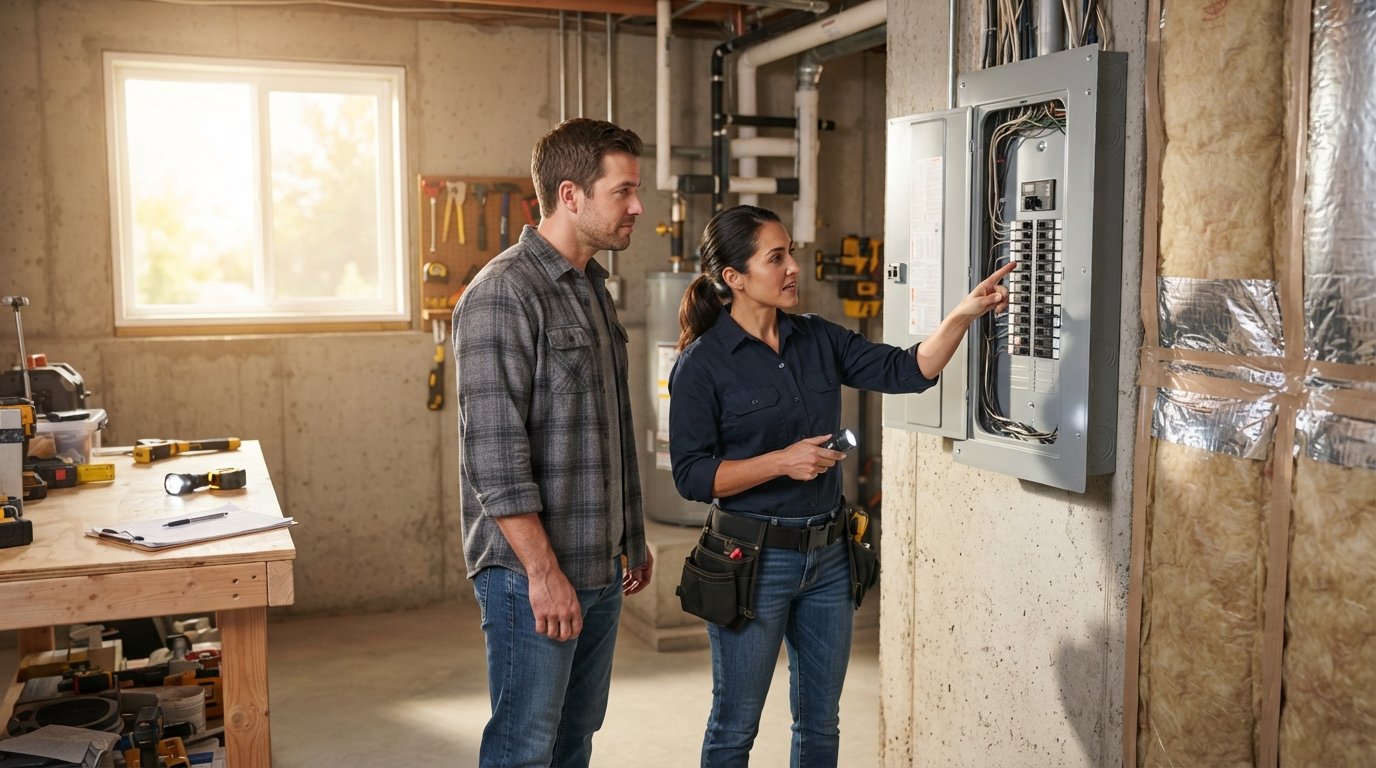
Electrical panel upgrades are the hidden enabler. Many older homes cannot support a heat pump, an EV charger, and a solar inverter on the same panel. The 25C credit includes up to 600 dollars for a qualified panel upgrade, and that upgrade is often the prerequisite for every other electrification credit you want to claim. Skipping it can stall an entire efficiency plan.
Heat pump water heaters deserve separate attention because they double as dehumidifiers in basements and garages. In humid climates, that side benefit reduces mold risk and improves air quality, which is a renovation outcome you can feel, not just measure on a utility bill. If your water heater is more than ten years old and you are already remodeling a basement or utility room, replacing it during the project is far cheaper than doing it later as an emergency repair.
Solar, Batteries, and Geothermal Under 25D
The 25D credit operates on a different logic. Instead of flat caps, it covers a percentage of qualified project costs, which means larger projects generate larger credits. Solar panels, battery storage, and geothermal heat pumps are the primary categories, and each has its own eligibility rules around placement, ownership, and grid connection. Because the credit is percentage-based, it rewards homeowners who bundle a battery with their solar array rather than adding storage later.
One nuance that trips people up is that 25D credits are non-refundable. If your tax liability is low, you may not be able to use the full credit in one year. Some homeowners carry unused credits forward, and others adjust the timing of their project so the credit lands in a year with higher liability. A conversation with a tax professional before signing a solar contract is worth the fee.
State and utility incentives often stack on top of 25D. Many states offer additional rebates for solar and storage, and some utilities pay performance-based incentives for battery dispatch during peak demand. Because these programs change annually, the most reliable approach is to confirm current offerings before you finalize a contract, not after. If you are comparing contractors for a solar or roofing project, a platform like USremodel can connect you with providers who understand how to document qualifying costs for tax purposes.
Stacking Credits With Rebates and Your Remodel Budget
The real power of energy efficiency tax credits beyond appliances is that they stack. Federal credits, state rebates, utility programs, and manufacturer promotions can all apply to the same project, provided you meet each program's requirements and keep separate documentation. A single heat pump installation, for example, might qualify for a federal 25C credit, a state electrification rebate, and a utility load-management incentive.
To capture that value without creating an audit nightmare, organize your project into a simple documentation system before work begins:
- Keep manufacturer certification statements for every qualifying product.
- Save itemized invoices that separate labor from materials where required.
- Record the date of installation, since credits are claimed in the year the work is placed in service.
- Track each rebate application separately so you can prove which costs were claimed where.
This discipline matters because double-claiming the same cost against two programs is a common audit trigger. Contractors who routinely work with incentive programs will usually provide the documentation you need, but you should still verify it before filing. If a contractor cannot produce a certification statement, that is a warning sign worth taking seriously.
Planning a Remodel Around Credits Without Losing Sight of the Goal
Tax credits should influence sequencing, not design. The most successful approach is to decide what your home actually needs, then ask how credits can offset the cost of doing it well. If your roof is at the end of its life, replacing it with a cool-rated roofing system and adding attic insulation in the same project captures both durability and efficiency value. If your windows are single-pane and drafty, upgrading them during a siding project avoids paying for scaffolding twice.
That sequencing mindset is where a contractor matching service earns its keep. Getting multiple quotes for a project that touches roofing, insulation, and windows lets you compare how each contractor handles incentives, permitting, and documentation. The goal is not to chase every credit, but to make sure the improvements you already planned are specified in a way that qualifies. A well-sequenced renovation can turn a 3,200 dollar federal credit, plus state and utility rebates, into a meaningful discount on work you needed anyway.
Start with an energy assessment if you have not had one recently. It identifies the highest-impact upgrades for your specific home, which prevents you from spending money on a qualifying product that does not actually solve your comfort or cost problem. From there, build your project list, confirm which items qualify, and time the work so each credit lands in the year you can use it. Energy efficiency tax credits beyond appliances are not a loophole; they are a deliberate incentive structure designed to reward homeowners who think about their house as a system.