
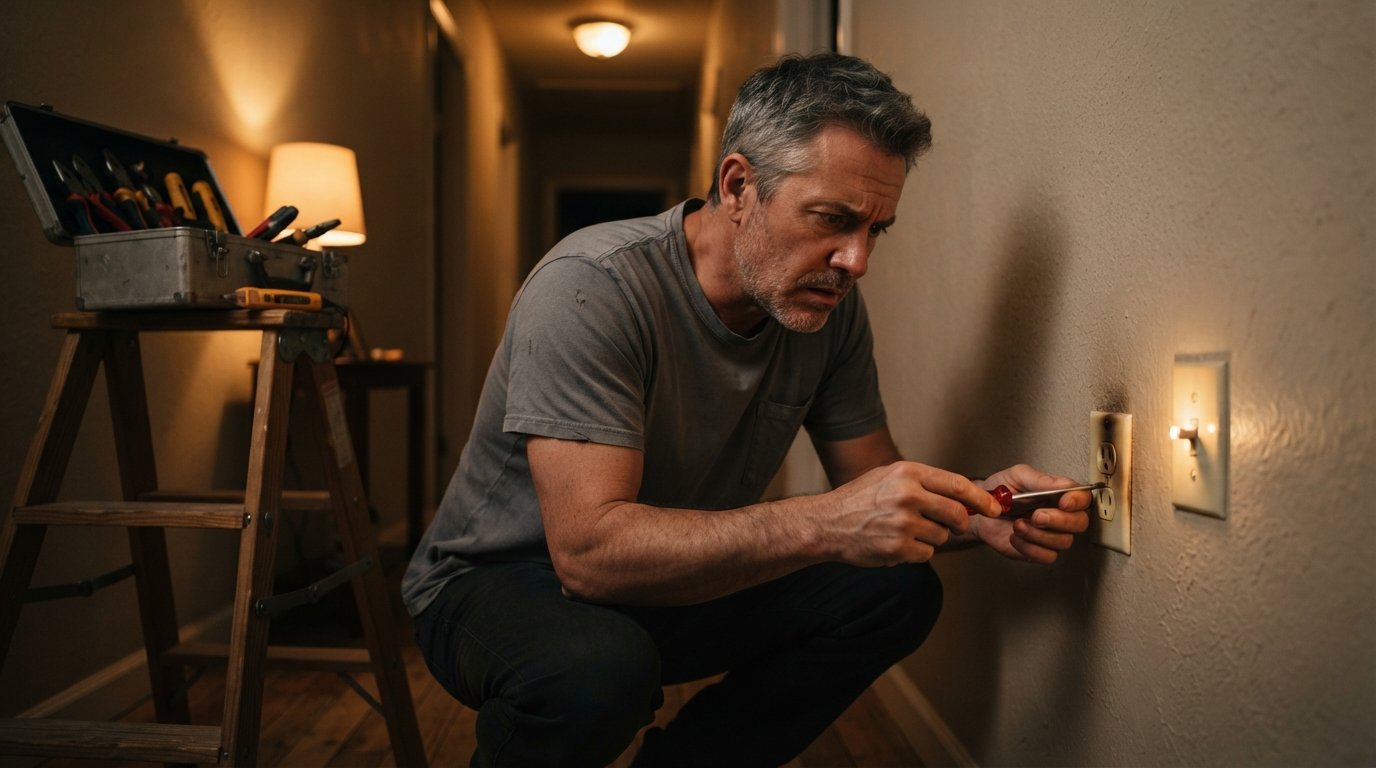
Electrical Repair Warning Signs Homeowners Should Not Ignore
Spot electrical repair warning signs homeowners should not ignore before they become hazards. Call (833)-365-8755 for vetted pro quotes.

By Irene Walsh
Learn more about Electrical and Wiring Repair for guides, costs, and what to expect.
Compare Electrical and Wiring Repair Pros Near You

Enter your ZIP code to compare top-rated local professionals and request free quotes.
Your home's electrical system is designed to be silent and invisible, delivering power safely and reliably day after day. That is exactly why the warning signs of trouble are so easy to overlook. A faint buzz, a switch plate that feels slightly warm, or a light that flickers only when the dryer runs can seem like minor annoyances. In reality, these are often the earliest signals that wiring, outlets, or your electrical panel are under stress, and ignoring them is how small problems become expensive repairs or, worse, house fires. Every year, electrical failures and malfunctions contribute to tens of thousands of residential fires in the United States, causing preventable deaths, injuries, and billions of dollars in property damage. The homeowners who avoid these outcomes are not the ones with the newest houses. They are the ones who recognize electrical repair warning signs early and act on them before a licensed professional has to deliver bad news.
Why Electrical Warning Signs Deserve Immediate Attention
Electricity is unforgiving in a way that few other home systems are. A slow plumbing leak gives you time to notice a water stain and call someone. A failing water heater usually announces itself with inconsistent hot water. Electrical faults, by contrast, can smolder inside a wall for months and then escalate in minutes. The insulation on old wiring degrades, connections loosen, and resistance builds up heat that you cannot see or smell until it is dangerously advanced. This is why the electrical repair warning signs homeowners should not ignore are not just maintenance reminders; they are safety thresholds.
There is also a financial reason to pay attention. Catching a failing outlet or a strained panel early typically means a targeted repair: replacing a device, tightening connections, or upgrading a single circuit. Waiting until a breaker fails completely or a wire overheats can mean opening walls, replacing entire runs of wiring, or remediating smoke and fire damage. The difference between a few hundred dollars and tens of thousands often comes down to how quickly someone responds to the first symptoms.
Finally, there is the insurance and resale dimension. Many policies require that known hazards be addressed, and a home inspection during a sale will flag electrical deficiencies that can derail a transaction. Documented, permitted repairs protect your coverage and your home's value. If you have ever dealt with hidden infrastructure problems, you know the pattern: the earlier you act, the more options you have. The same principle applies to other hidden systems, which is why our guide on early sewer line repair signs makes a useful companion read for anyone who wants to catch problems before they become emergencies.
Warning Signs You Should Never Dismiss
Some electrical symptoms are so common that homeowners normalize them. A light that flickers when the refrigerator kicks on, a switch that clicks a little louder than it used to, a faint hum near an outlet. Individually, any one of these might be harmless. Together, or when they persist, they point to underlying faults that need professional evaluation. The key is to treat recurring symptoms as data rather than background noise.
Start by watching for the most reliable indicators of trouble. These are the symptoms electricians hear about most often, and each one has a specific set of likely causes worth investigating:
- Flickering or dimming lights: Occasional flicker when a large appliance starts is normal, but persistent flickering, dimming when other circuits are used, or lights that pulse rhythmically suggest loose connections, overloaded circuits, or a failing neutral.
- Buzzing, humming, or crackling outlets and switches: Electricity should be silent. Any audible buzz, sizzle, or crackle at a device indicates arcing or a loose connection and is a genuine fire hazard.
- Warm or discolored switch plates and outlet covers: Heat at a device means resistance, and resistance means a connection is degrading. Brown scorch marks or a plate that feels hot to the touch require immediate attention.
- Burning or fishy odors: The smell of burning plastic or an unexplained fishy odor often signals overheating insulation or wiring inside a wall. Treat it as an emergency.
- Breakers that trip repeatedly: A breaker that trips once may have done its job. A breaker that trips again and again is telling you the circuit cannot handle its load or there is a fault that needs diagnosis.
Beyond these, watch for outlets that no longer grip plugs firmly, plugs that fall out on their own, and any device that produces a small shock when touched. Each of these is a sign that the receptacle has worn out internally, and worn receptacles are a common origin point for fires. Similarly, lights that flicker in only one part of the house can indicate a problem with a specific circuit or a loose neutral at the panel, which is a job for a licensed electrician rather than a DIY fix.
Fire Risk Indicators: When to Shut Off a Circuit Immediately
Most electrical warning signs give you time to schedule a service call. A few do not. Certain symptoms indicate an active fire risk, and the correct response is to stop using the circuit and, if necessary, shut off power at the panel before calling for help. Knowing the difference between "call an electrician this week" and "cut the power now" is a safety skill every homeowner should have.
Shut off the affected circuit immediately if you notice any of the following: a burning smell near an outlet, switch, or panel; visible sparks or arcing when you plug something in; a switch plate or outlet that is hot to the touch; smoke or scorch marks around a device; or a buzzing sound that starts when a specific circuit is energized. If you cannot identify which breaker controls the problem, shut off the main breaker and call a licensed electrician. Do not reset a breaker that has tripped due to a burning smell or visible damage, and never attempt to tape a breaker in the on position.
It is also worth knowing the limits of your own intervention. Replacing a light bulb or resetting a GFCI outlet is within reach for most homeowners. Opening a panel, tightening lugs, or tracing a fault inside a wall is not. The line is not about confidence; it is about the risk of arc flash, electrocution, and code violations. When in doubt, treat the circuit as live and dangerous, and let a professional take it from there.
GFCI and AFCI Trips: Troubleshooting Versus Calling a Pro
Ground fault circuit interrupter (GFCI) and arc fault circuit interrupter (AFCI) devices are among the most important safety technologies in a modern home. GFCIs protect against shock by detecting current leaking to ground, and they are required in kitchens, bathrooms, laundry areas, garages, and outdoors. AFCIs protect against arc faults, the tiny sparks that precede many electrical fires, and they are increasingly required in bedrooms and living areas. When one of these devices trips, it has usually done its job. The question is whether it tripped for a routine reason or because something is genuinely wrong.
Basic troubleshooting is reasonable before you call anyone. Unplug everything on the circuit, reset the device, and see whether it holds. If it holds with nothing plugged in, plug items back in one at a time to identify the culprit, which is often a damaged appliance cord or a device that has gotten wet. If the GFCI trips again with nothing connected, or if it will not reset at all, stop there. A GFCI that will not reset may be worn out, miswired, or responding to a real ground fault, and a repeatedly tripping AFCI can indicate a loose connection or damaged wiring that only a professional can safely diagnose.
There is also a code dimension here. GFCI and AFCI protection requirements have expanded with each edition of the National Electrical Code, and older homes frequently lack protection in areas where it is now required. If you are buying or selling a home, or planning renovations that touch kitchen, bath, or bedroom circuits, an electrician can tell you what upgrades make sense. This is the same permit and inspection logic that applies to larger projects, and it is why a platform that connects you with vetted contractors is valuable: you get professionals who know local code, pull the right permits, and stand behind the work.
Why Panel and Wiring Repairs Require Permits and Inspection
Electrical panel work and wiring repairs are not like swapping a faucet. They are regulated for good reason: mistakes in a panel can energize surfaces that should be safe, overload circuits that were never designed for the load, and create fire hazards that remain hidden until they fail. Most jurisdictions require a permit for panel replacements, new circuits, service upgrades, and significant rewiring, and the inspection that follows is not bureaucracy. It is a second set of trained eyes confirming that the work meets code before it is buried behind drywall.
Permits also protect you in practical ways. If a contractor performs unpermitted electrical work and a fire later occurs, your insurer may question the claim. If you sell the home, an inspector or buyer's electrician may flag the work, and you may be forced to open walls and redo it at your expense. Licensed electricians pull permits as a matter of course, and a contractor who suggests skipping the permit process is telling you something important about how they operate. The same discipline applies to any major system upgrade, from roofing to HVAC, and it is a good filter when you are comparing bids.
When you are ready to move from diagnosis to repair, the fastest path is to work with a network that pre-screens contractors and matches you with licensed electricians who handle permits and inspections as part of the job. That is exactly the model behind Homes.Contractors, a directory and resource hub where homeowners can find qualified professionals across electrical, plumbing, roofing, and HVAC work, compare options, and avoid the guesswork of hiring blind.
How 180 Remodel Connects You With Electrical Contractors
Recognizing the warning signs is the first step. The second is finding someone qualified to fix them without overpaying or waiting weeks for a callback. 180 Remodel is built for exactly this moment. The platform connects homeowners with vetted, professional contractors across more than 15 home improvement categories, including electrical repair, panel upgrades, outlet and switch replacement, and the broader renovation work that often accompanies electrical fixes. You start by entering your ZIP code and completing a short online form describing what you are seeing: flickering lights, a warm outlet, a breaker that will not stay on. From there, you are paired with qualified specialists who provide free, no-obligation, customized quotes so you can compare pricing and approach before committing.
What makes this useful in an electrical context is the combination of speed and transparency. Electrical problems do not improve with time, and the platform is designed to get you multiple competitive quotes quickly, often in under five minutes of form-filling. The contractors in the network are independent, pre-screened professionals, and the emphasis is on transparent pricing, prompt service, and quality parts. For a homeowner who has just noticed a burning smell or a breaker that keeps tripping, that is a meaningful difference from cold-calling electricians one at a time and hoping for a fair price.
It also helps to think about electrical repair as part of a larger home maintenance plan. The same visit that fixes a buzzing outlet can address a panel that is near capacity, add GFCI protection to an older kitchen, or advise on whether a renovation project will require a service upgrade. Homeowners planning bigger projects, from kitchen remodels to HVAC replacements, can use the same matching process to line up multiple trades and keep timelines coordinated. If you are unsure whether your issue is electrical or something else, the platform's categories and FAQ resources can help you frame the request accurately before you submit it.
A Practical Checklist for Acting on What You Notice
The gap between noticing a warning sign and doing something about it is where most electrical problems grow. A short, repeatable process closes that gap. Use the following sequence the next time something feels off, and you will move from worry to action without overreacting or underreacting.
- Document the symptom: Note what happens, when it happens, and which circuit or room is affected. Does the light flicker only when the microwave runs? Does the outlet buzz only under load? This information helps an electrician diagnose faster.
- Reduce the load: Unplug non-essential devices from the affected circuit and stop using the outlet or switch until it is inspected. If you smell burning or see sparks, shut off the circuit at the panel.
- Do only safe, basic checks: Confirm the breaker position, test GFCI reset buttons, and replace burned-out bulbs. Do not open devices, panels, or walls.
- Request quotes from licensed professionals: Use a vetted network to get multiple free estimates, confirm licensing and permit practices, and ask what the quote includes.
- Keep records: Save invoices, permit numbers, and inspection results. They protect your insurance coverage and help at resale.
Following this sequence turns a vague sense that something is wrong into a documented, actionable request. It also protects you from the opposite mistake: assuming every flicker means a full rewire. Many electrical issues are resolved with targeted repairs, and a good electrician will explain the options rather than upsell the most expensive one.
Protecting Your Home Starts With Paying Attention
Electrical repair warning signs homeowners should not ignore are rarely dramatic. They are the small, persistent signals that something in the system is working harder than it should: a warm plate, a buzzing outlet, a breaker that keeps tripping, lights that dim when the house wakes up. Taken seriously, these signs are an opportunity to make a targeted repair before a hidden fault becomes a fire or a five-figure remediation project. The homeowners who stay safe are not electricians themselves. They simply notice, document, and call for help early. If something in your home has been flickering, buzzing, or feeling warm longer than you would like to admit, treat this as your prompt to act. A quick request for quotes from licensed, vetted contractors is a small step that protects your home, your family, and your peace of mind.