
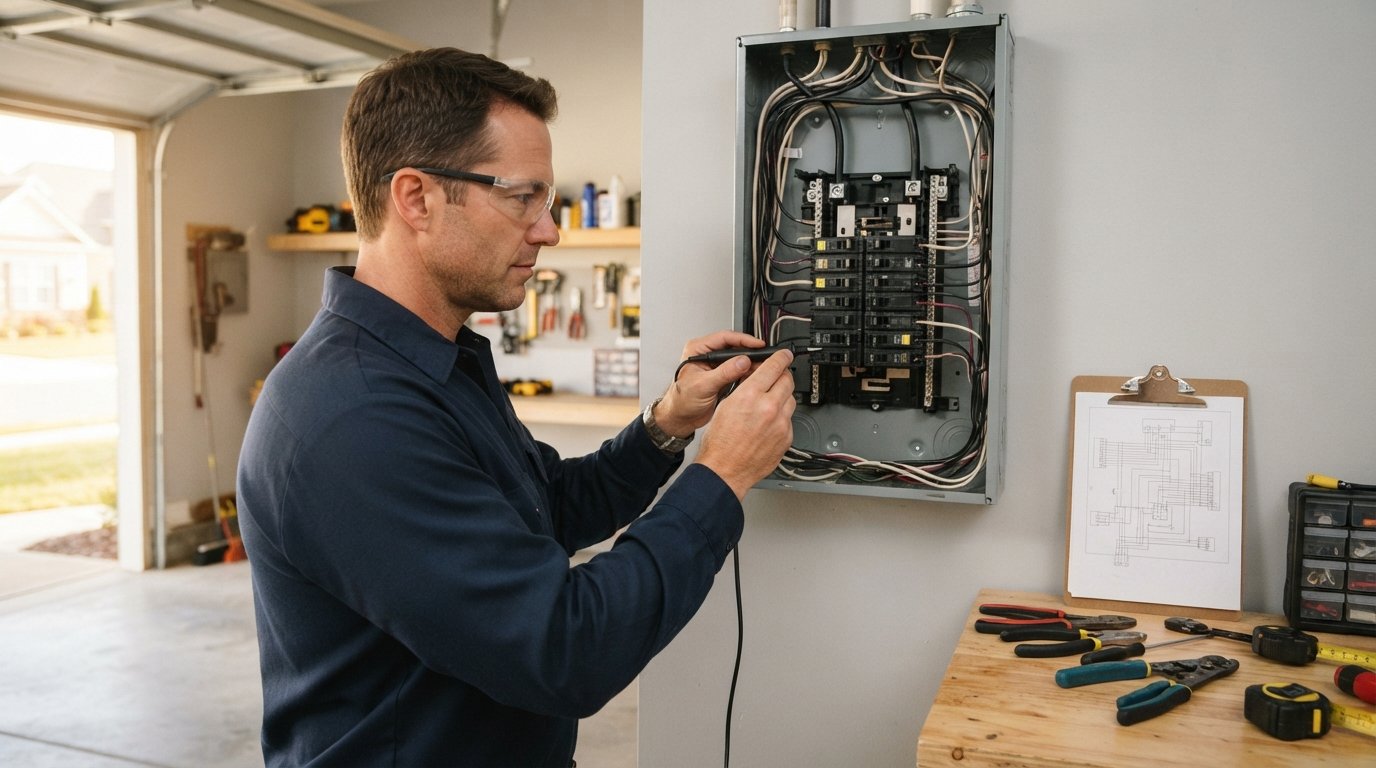
Electrical Panel Upgrade: When to Replace Your Breaker Box
Know when to replace your breaker box before renovation. Call (833)-365-8755 for expert electrical panel upgrade guidance and avoid costly surprises.

By Rachel Green
Learn more about Circuit Breaker Panel or Fuse Box Installation for guides, costs, and what to expect.
Compare Circuit Breaker Panel or Fuse Box Installation Pros Near You

Enter your ZIP code to compare top-rated local professionals and request free quotes.
Your breaker box is the silent guardian of your home's electrical system, quietly distributing power to every outlet, appliance, and light fixture. But when it starts to fail, the warning signs can be subtle at first: a breaker that trips more often, a faint burning smell near the panel, or lights that flicker when the HVAC kicks on. Ignoring these clues can lead to costly repairs, safety hazards, or even a house fire. For homeowners planning a renovation or simply trying to keep their electrical system reliable, understanding electrical panel upgrade when to replace a breaker box is essential. This guide walks you through the red flags, the modern load demands that push older panels past their limits, and the practical steps to budget and execute an upgrade alongside other remodeling projects.
Warning Signs Your Breaker Box Is Failing
Most electrical panels are designed to last 30 to 40 years, but many homes still have panels installed in the 1970s or earlier that were never built for today's electrical loads. The first sign of trouble is often frequent breaker trips. While an occasional trip is normal, a breaker that trips weekly or whenever you run the microwave and toaster at the same time indicates the circuit is overloaded or the breaker itself is failing. A warm or hot panel cover is another red flag: breakers should be warm to the touch under heavy load, but a hot panel or a burning smell points to loose connections or arcing that demand immediate professional attention.
Fuse boxes are an even clearer signal that an upgrade is overdue. If your home still relies on screw-in fuses, you are living with outdated technology that lacks modern safety features like arc-fault protection. Fuse boxes also typically max out at 60 amps, which is far below what a modern household needs. Similarly, a 100-amp panel was once standard for small homes, but today's homes with central air, electric ranges, and multiple entertainment systems often exceed that capacity. If you see rust inside the panel, hear buzzing sounds, or notice that breakers trip when you run the vacuum, it is time to call a licensed electrician for an evaluation.
How Modern Loads Force an Electrical Panel Upgrade
The way we use electricity has changed dramatically in the last two decades. Electric vehicles, heat pumps, induction cooktops, and tankless water heaters all draw significant power, and many older panels simply cannot handle the added load. When you add a 48-amp EV charger to a 100-amp panel that already powers an electric range and dryer, you are asking for trouble. The panel may trip constantly, or worse, the added demand can cause overheating and premature failure. Even if your panel technically has enough capacity on paper, the continuous load of an EV charger can push it beyond its safe limits.
Kitchen remodels are another common trigger for an upgrade. If you are replacing a gas range with an electric one, adding a double oven, or installing a new refrigerator with a built-in ice maker, the electrical demand can quickly outstrip a 100-amp service. Heat pumps and central air conditioning systems also require dedicated circuits that older panels may not have space for. Before starting any major renovation, have an electrician perform a load calculation to determine whether your existing panel can safely support the new appliances and systems you plan to install. This step is critical for both safety and code compliance.
What a Service Upgrade Involves: From Permit to Final Inspection
An electrical panel upgrade, often called a service upgrade, is more than just swapping a box. It typically involves replacing the panel, the meter base, and sometimes the service entrance cables that run from the utility pole to your home. The process begins with a permit from your local building department, which ensures the work will be inspected and meets current electrical codes. Your electrician will then coordinate with the utility company to disconnect power, install the new panel and grounding system, and reconnect the circuits. After the work is complete, a local inspector will verify that everything is up to code before the utility restores power.
The timeline for a service upgrade varies, but most projects take one to three days for the on-site work, plus waiting periods for permits and inspections. Costs typically range from $1,500 to $4,000 for a 200-amp upgrade, depending on your location and the complexity of the job. If you are planning a larger renovation, such as a kitchen remodel or an addition, it is smart to bundle the panel upgrade with the other work. This can save money on permits and labor, and it ensures your electrical system is ready for the new loads. When interviewing contractors for your renovation, ask whether they will handle the electrical upgrade as part of the project or subcontract it to a licensed electrician. For homeowners seeking vetted professionals, platforms like Repairmen connect you with licensed electricians and general contractors who can manage the entire scope, from panel replacement to final inspection.
Panel Location, Grounding, and Labeling: What Inspectors Check
Electrical codes have evolved significantly, and inspectors will scrutinize several details during a panel upgrade. First, the panel must be located in an accessible area with clear working space in front of it, typically 36 inches deep and 30 inches wide. If your current panel is in a closet, behind a water heater, or in a crawlspace, the upgrade may require relocating it to a compliant spot, which adds cost and complexity. Grounding is another critical element: modern panels require a grounding electrode system that includes ground rods and bonding to metallic water pipes. Poor grounding can lead to shock hazards and is a common reason for failed inspections.
Labeling is equally important. Every circuit in the panel must be clearly labeled to indicate what it controls. Inspectors often find panels with vague labels like "lights" or "outlets" that do not specify which rooms they serve. A well-labeled panel not only passes inspection but also makes future troubleshooting safer and faster. If you are upgrading your panel as part of a larger renovation, insist that your electrician provides a detailed circuit directory and that all new circuits are labeled correctly. This small step can save you hours of guesswork later.
Budgeting the Upgrade Alongside Other Renovation Work
An electrical panel upgrade is a significant investment, but it can be more cost-effective when combined with other renovation projects. For example, if you are remodeling your kitchen and adding new appliances, the panel upgrade can be folded into the overall budget and scheduled to minimize disruption. The same applies to basement finishing or adding a home office with dedicated circuits. To budget effectively, start by getting a load calculation and a detailed quote from a licensed electrician. Ask for a breakdown of costs for the panel, labor, permits, and any necessary utility coordination. Then, compare that with quotes from general contractors who can manage the entire renovation, including the electrical work.
Financing options are available for larger projects, and some contractors offer payment plans. Keep in mind that upgrading your panel can also increase your home's value and energy efficiency, especially if you are adding smart home features or solar readiness. If you are planning a renovation, consider upgrading to a 200-amp panel with space for future circuits. This future-proofing can save you from another upgrade down the road. For a deeper dive into the benefits of modernizing your electrical service, see our guide on the advantages of an electrical panel upgrade, which covers how a new panel can support EV charging, heat pumps, and other high-demand systems.
Making the Decision: Repair or Replace?
Sometimes a simple repair, such as replacing a single breaker or tightening a loose connection, can solve the problem. But if your panel is old, undersized, or showing signs of wear, replacement is the safer and more cost-effective choice in the long run. Frequent trips, warm panels, and outdated fuse boxes are clear indicators that an upgrade is needed. If you are planning a renovation that adds significant electrical load, such as a new kitchen, an EV charger, or a heat pump, a panel upgrade should be part of the plan from the start. Consulting a licensed electrician early in the process can help you avoid surprises and ensure your project stays on budget and on schedule.
Remember that electrical work is not a DIY project. Improperly installed panels can cause fires, shocks, and failed inspections. Always hire a licensed, insured electrician who pulls the proper permits and schedules inspections. If you are unsure where to start, use a reputable contractor matching service to find qualified professionals in your area. With the right team and a clear understanding of when to replace your breaker box, you can upgrade your electrical system with confidence and enjoy a safer, more capable home for years to come.