
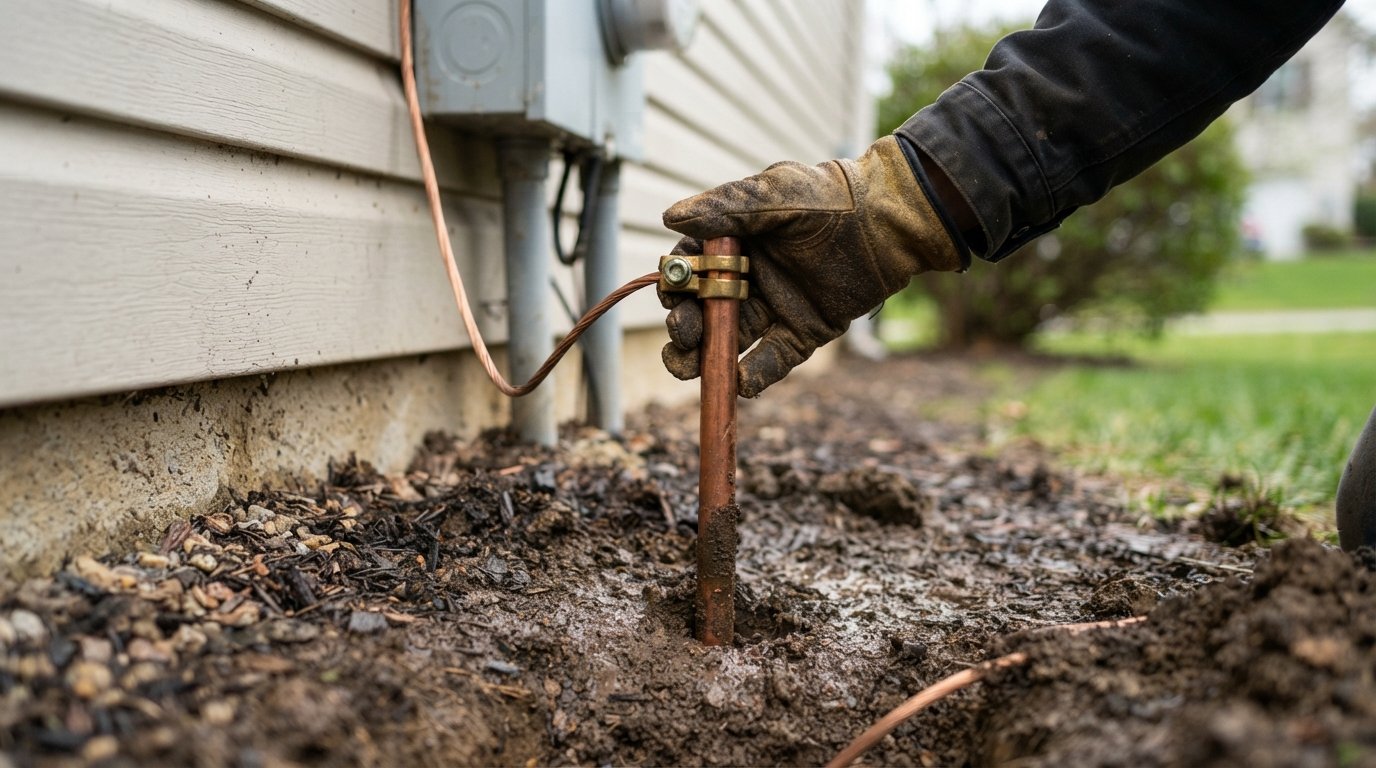
Electrical Grounding Rods: Home Safety Essentials
This guide explains how electrical grounding rods work, why they safeguard your family and appliances, and how to spot warning signs of failure.

By Margaret Lowe
Learn more about Wiring Installation for guides, costs, and what to expect.
Compare Wiring Installation Pros Near You

Enter your ZIP code to compare top-rated local professionals and request free quotes.
When you plug in a heavy appliance or switch on a light, you rarely think about the silent path that keeps electricity flowing safely. Yet every modern home depends on a simple metal rod buried in the earth to protect your family, your electronics, and your house from dangerous surges. Electrical grounding rods home safety is not just a technical detail for electricians; it is a fundamental layer of protection that can mean the difference between a minor inconvenience and a devastating fire or fatal shock. Understanding how this system works, why it matters, and when it needs attention empowers you to make informed decisions about your property.
This guide explains the role of grounding rods, how to verify they are working, and the warning signs that signal trouble. By the end, you will know what questions to ask a licensed electrician and how to prioritize this often-overlooked aspect of home maintenance. Your home's electrical system is a complex network, and the grounding rod is its anchor to safety.
What Is an Electrical Grounding Rod and How Does It Work?
An electrical grounding rod, also known as a ground electrode, is a long metal rod, typically made of copper or galvanized steel, that is driven vertically into the soil outside your home. It connects to your electrical panel's neutral bus bar through a thick copper wire, creating a direct, low-resistance path for fault currents to travel safely into the earth. In normal operation, electricity flows through your home's hot and neutral wires. But if a hot wire becomes frayed and touches the metal casing of an appliance, the grounding system provides an alternate route for that excess current. Instead of waiting for a person to touch the appliance and complete the circuit, the current flows through the grounding wire to the rod and safely disperses into the ground.
This process does two critical things. First, it prevents the metal parts of your appliances and electrical boxes from becoming energized, which dramatically reduces the risk of electric shock. Second, it gives the circuit breaker or fuse a clear path to detect the fault and trip, cutting off power within milliseconds. Without a proper ground, a fault could go unnoticed, leaving a dangerous charge on a surface you might touch. According to the National Electrical Code (NEC), a grounding electrode system is mandatory for all residential structures, and it must be tested to ensure it meets minimum resistance requirements.
The rod itself is only one component of a complete grounding system. The system also includes the grounding electrode conductor (the wire connecting the rod to the panel), bonding jumpers that connect multiple rods or other electrodes, and connections to metal water pipes or concrete-encased electrodes (called Ufer grounds). For most homes, a single 8-foot rod is sufficient, but local soil conditions may require a second rod. The NEC states that if the resistance to ground is more than 25 ohms, an additional rod must be installed. While homeowners rarely test this themselves, electricians use specialized equipment to verify the system's effectiveness during inspections or major upgrades.
Why Electrical Grounding Rods Are Vital for Home Safety
The most obvious benefit of grounding is protection from electric shock. Every year, hundreds of people in the United States are injured by accidental contact with energized appliances or wiring. A properly grounded system channels dangerous currents away from you, making a fatal shock far less likely. But grounding also protects your home's structure. If lightning strikes your house or a nearby utility line experiences a surge, the excess voltage seeks the path of least resistance. Without a ground, that path could be through your walls, wiring, and even the plumbing. A grounding rod offers a direct route to the earth, preventing fires caused by arcing and overheating.
Grounding also shields your sensitive electronics. Modern homes are filled with computers, televisions, smart appliances, and entertainment systems that rely on stable voltage. Even a minor surge, like one caused by a motor starting in your refrigerator, can degrade these components over time. The grounding rod helps equalize voltage and provides a reference point for the entire system. Surge protectors, both the power strip type and whole-house units, are only effective when your home has a solid ground. Without it, they cannot divert excess energy, leaving your expensive electronics vulnerable.
Beyond these direct safety benefits, a proper ground is essential for the correct operation of circuit breakers and ground fault circuit interrupters (GFCIs). These protective devices monitor the flow of current and shut off power when they detect an imbalance. An imbalance occurs when current leaks to the ground through an unintended path, such as a wet hand touching a faulty tool. The grounding rod provides that leakage path with a safe destination, which allows the GFCI to sense the problem and cut power in as little as 1/40th of a second. In short, grounding rods are the backbone of modern electrical safety, and their presence is non-negotiable for any home, whether old or new. If you are planning a major renovation or adding new circuits, ensuring your grounding system is up to code should be a top priority.
Signs That Your Grounding System Needs Attention
Unlike a leaky faucet or a cracked window, grounding problems are often invisible to the untrained eye. However, there are several clues that your grounding system may be compromised. One of the most common signs is frequent tripping of circuit breakers or blown fuses. While this can indicate an overloaded circuit, it may also point to a ground fault that is causing breakers to trip unnecessarily. If breakers trip repeatedly without an obvious cause, call a licensed electrician for a thorough inspection.
Another red flag is a mild shock or tingling sensation when you touch a metal appliance, such as a refrigerator, washing machine, or metal light fixture. This is a serious warning that the appliance's casing is energized, which means the grounding path is not working correctly. Do not ignore this; unplug the device and have the circuit checked immediately. Similarly, if you notice scorch marks, a burning smell, or discoloration around outlets or your electrical panel, this could indicate arcing caused by a poor ground connection. Loose or corroded connections at the grounding rod or panel are also common issues, especially in older homes where the rod may be corroded or the wire may have been damaged by lawn equipment.
To help you evaluate your situation, consider these key indicators that warrant a professional electrical inspection:
- Tripping GFCIs: If your bathroom or outdoor GFCI outlets trip frequently, it may be a sign of a grounding problem, not just a faulty device.
- Old wiring: Homes built before the 1960s may have two-prong outlets without a ground wire, meaning the grounding system is absent or incomplete.
- Visible corrosion: If you can see the grounding rod where it enters the soil and it is heavily corroded or damaged, it may not be making proper contact with the earth.
- Recent lightning strike: A nearby lightning strike can overload and damage your grounding system, even if your home did not catch fire.
- DIY electrical work: If you or a previous owner added outlets or fixtures without extending the ground wire, those circuits are unsafe.
If any of these conditions apply, do not attempt to fix the grounding system yourself. Working with grounding wires and rods requires specialized knowledge and tools, and a mistake could create a lethal hazard. A qualified electrician can test the resistance, inspect all connections, and recommend the correct solution, which might involve installing a new rod or upgrading the grounding electrode conductor. For comprehensive guidance on related electrical safety topics, refer to our article on electrical grounding rods to deepen your understanding.
When to Install or Upgrade a Grounding Rod
Most modern homes already have a grounding rod installed during construction, but there are scenarios where you might need a new one or an upgrade. If you live in an older home that still uses knob-and-tube wiring or has only two-prong outlets, it is highly likely that there is no grounding rod at all. In this case, installing one is a major safety improvement. Another situation is when you are adding a significant electrical load, such as a new electric vehicle charger, a home backup generator, or a solar panel system. These systems often require a dedicated grounding electrode to ensure safe operation and to meet local code requirements.
If your home has had a lightning strike, even a non-direct hit, the surge can damage the grounding rod or its connection. Over time, soil erosion can expose part of the rod, reducing its effectiveness. Corrosion on the copper wire or the rod itself, especially in areas with acidic soil, can also degrade the connection. A licensed electrician can assess these conditions and recommend a solution. When installing a new rod, the electrician will drive it at least 8 feet into the ground, leaving only a small portion exposed for connection. The wire is then clamped securely and routed to the main service panel, where it connects to the neutral/ground bus bar. In some cases, local codes require two rods spaced at least 6 feet apart to achieve the necessary resistance.
Upgrading your grounding system is not a DIY project. It involves working with live electrical panels and requires permits and inspections in most jurisdictions. However, the cost is relatively modest compared to the protection it provides. For a typical home, installing a grounding rod and connecting it to the panel can cost between $200 and $500, depending on labor rates and the complexity of the run. This is a small price for peace of mind, especially if you have young children or valuable electronics. During any major home renovation, ask your contractor to verify that the grounding system is up to code. This is especially important for kitchens, bathrooms, and outdoor areas where water is present.
Maintaining Your Grounding System for Long-Term Safety
Grounding rods are designed to last for decades, but they are not maintenance-free. The most common issue is a loose or corroded clamp, which connects the copper wire to the rod. Over time, moisture and soil chemicals can cause corrosion, increasing resistance and weakening the connection. Homeowners can perform a simple visual inspection by locating the rod where it enters the ground near the electrical meter. If the clamp looks rusty or the wire is damaged, contact an electrician. Do not attempt to tighten or replace connections yourself, as the wire may be energized under certain fault conditions.
Another maintenance step is to ensure that the rod remains fully buried. If soil erosion has exposed more than a few inches of the rod, add soil to cover it, but avoid piling mulch or landscaping material directly against the rod. Also, be careful when digging in your yard, especially near the utility lines. A shovel can sever the grounding wire, leaving your system non-functional without you knowing it. If you are planning any excavation work, call 811 to have underground utilities marked.
For homes with an older grounding system, an electrician can perform a ground resistance test using a clamp-on meter. This test measures the resistance of the electrode to the earth, and a reading above 25 ohms indicates that the rod is not dissipating current effectively. If the test fails, the solution may be to install an additional rod or to improve the soil conductivity around the rod. In very dry or rocky soil, the electrician might use a grounding compound or drive the rod deeper. While this level of testing is not needed annually, it is wise to request it during a comprehensive home inspection or before buying an older home.
Finally, remember that a grounding rod is only one part of a broader electrical safety strategy. Ensure that all outlets in wet areas, such as kitchens and bathrooms, have GFCI protection. Use surge protectors for expensive electronics, and consider a whole-house surge protector installed at the panel. Keep your electrical panel accessible and clearly labeled. By combining these measures with a properly maintained grounding rod, you create a layered defense against electrical hazards.
When it comes to home safety, few investments offer as much protection per dollar as a verified grounding system. If you are unsure about the condition of your grounding rod or have never had it inspected, now is the time to act. A licensed electrician can provide a thorough assessment and any necessary repairs. For homeowners planning renovations or seeking to improve their home's electrical resilience, connecting with vetted professionals is a smart first step. Platforms like USremodel can help you find qualified contractors in your area, ensuring that your electrical work is done safely and to code. By taking these proactive measures, you protect not only your property but also the people who live in it.
Learn more about Wiring Installation for guides, costs, and what to expect.
Compare Wiring Installation Pros Near You
Enter your ZIP code to compare top-rated local professionals and request free quotes.