
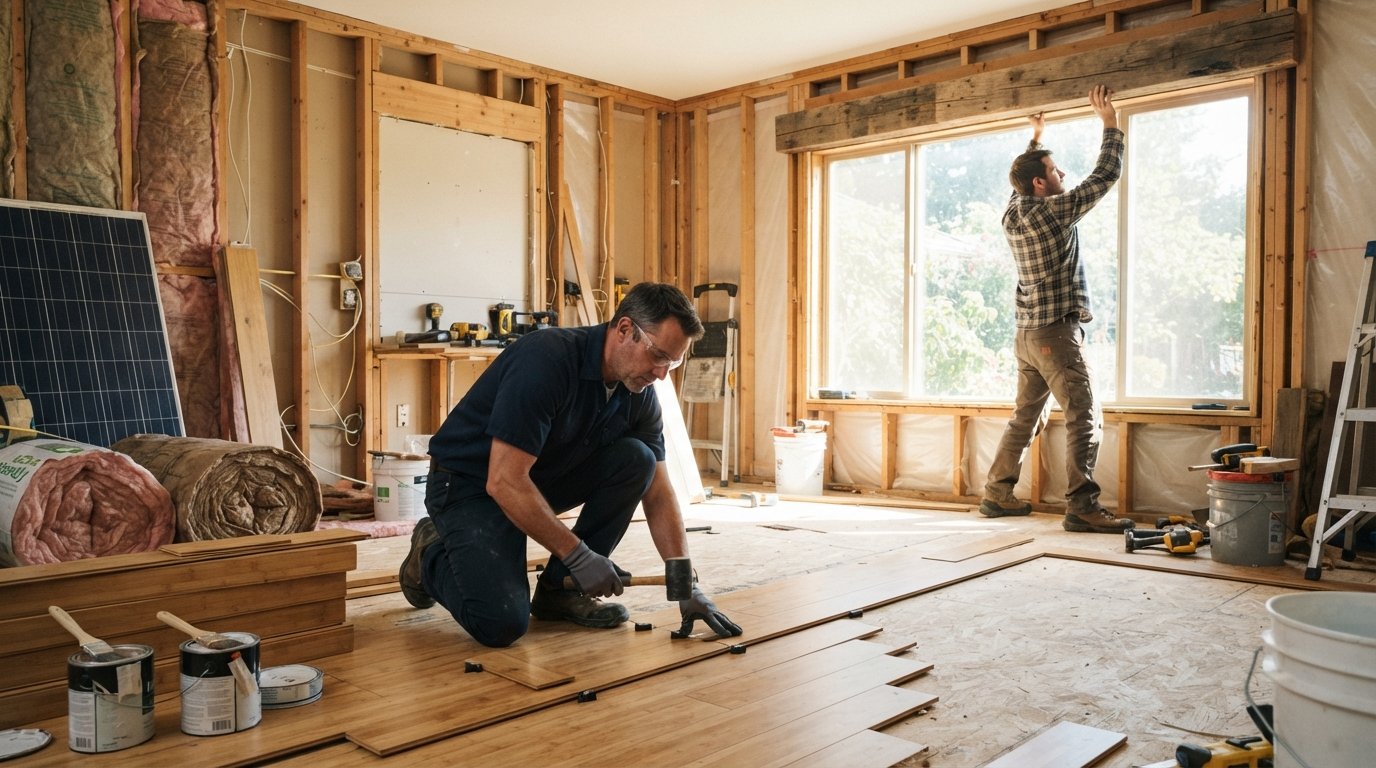
Eco Friendly Renovation Materials and Practices for 2026
Eco friendly renovation materials and practices cut utility bills while improving indoor air quality and long-term home value.

By Alex Carter
Learn more about Home Remodeling for guides, costs, and what to expect.
Compare Home Remodeling Pros Near You

Enter your ZIP code to compare top-rated local professionals and request free quotes.
Every renovation project starts with a choice: build the way it has always been done, or build with the next few decades in mind. Homeowners across the country are increasingly choosing the second path, and the reasons go well beyond a desire to be green. Eco friendly renovation materials and practices often deliver lower utility bills, healthier indoor air, and a home that holds its value when buyers start asking harder questions about efficiency and sustainability. The good news is that going green no longer means sacrificing style, comfort, or budget. In many cases, it means the opposite.
This guide walks through the materials, methods, and planning decisions that make a renovation genuinely eco friendly, from the framing lumber behind the drywall to the finishes you touch every day. Whether you are updating a single bathroom or rethinking an entire house, the principles here apply at every scale. And if you would rather hand the project to professionals who already know these materials, platforms like USremodel connect homeowners with independent contractors who can source and install them correctly.
What Makes a Renovation Truly Eco Friendly
Sustainability in remodeling is not a single product you buy. It is a set of decisions that run through the entire project: what you keep, what you replace, where materials come from, how they are installed, and how the finished space performs over time. A bamboo floor shipped halfway around the world on a diesel freighter is not automatically greener than a locally harvested hardwood floor. A tankless water heater saves energy but may require new gas lines and venting that offset some of the gain. Context matters, and a good contractor will help you weigh the tradeoffs instead of chasing labels.
The most effective eco friendly renovation practices tend to share a few traits. They reduce waste, lower energy demand, improve indoor air quality, and favor materials that are durable, renewable, or recycled. Durability deserves special emphasis because the greenest product is usually the one you do not have to replace in ten years. A well-sealed window, a properly insulated wall, or a solid-core door made from reclaimed wood all pay environmental dividends simply by lasting longer and performing better.
There is also a financial angle that homeowners should not overlook. Energy-efficient upgrades often reduce monthly utility costs, and some improvements qualify for federal tax credits or local rebates. Certain materials, like engineered hardwood and quartz countertops, can also boost resale value because buyers recognize them as quality upgrades. If budget is tight, there are plenty of budget friendly renovation ideas that still incorporate sustainable choices, such as refinishing existing cabinets instead of replacing them or using recycled-content drywall in a basement finish.
Eco Friendly Materials Worth Prioritizing
The material list for a green renovation can feel overwhelming, so it helps to group options by the role they play in the project. Structure and insulation come first, because they determine how much energy the finished home will need. Then come surfaces and finishes, which affect indoor air quality and daily maintenance. Finally, consider the systems behind the walls, such as plumbing and HVAC, which influence long-term efficiency.
Here are material categories that consistently deliver strong environmental and practical returns:
- Recycled and reclaimed content: reclaimed hardwood, recycled steel, fly-ash concrete, and reclaimed brick reduce demand for virgin resources and often bring unique character to a space.
- Rapidly renewable materials: bamboo, cork, and linoleum floor from linseed oil are renewable within years rather than decades, and modern versions rival traditional options in durability.
- Low-VOC and zero-VOC finishes: paints, adhesives, sealants, and stains that release fewer volatile organic compounds improve indoor air quality and reduce headaches, especially in bedrooms and nurseries.
- Engineered and composite wood: engineered hardwood and strand-woven bamboo use less slow-growth timber while resisting warping better than solid wood in humid rooms.
- Insulation alternatives: cellulose from recycled paper, mineral wool, and sheep wool offer solid thermal performance with lower embodied energy than some foam products.
Choosing between these options usually comes down to room function and budget. A bathroom remodel might favor cork or luxury vinyl made with recycled content because moisture resistance matters most. A living room might call for reclaimed oak flooring and zero-VOC paint. A kitchen could use quartz countertops with recycled glass content and cabinets made from FSC-certified plywood. The goal is not to use every green material on the market. It is to match the right material to the right application so it performs well and lasts.
Practices That Reduce Waste and Energy Use
Materials get most of the attention, but practices often determine whether a renovation is genuinely sustainable. Demolition is a prime example. Tearing out a kitchen without a plan sends cabinets, appliances, and fixtures straight to a landfill. A better approach is to sort materials before the sledgehammer swings: donate usable cabinets and appliances, recycle metals, and salvage old-growth lumber for reuse elsewhere in the home. Many communities have architectural salvage yards that will pick up usable items, and some contractors build deconstruction into their bids.
Energy performance should also be addressed during the rough-in stage, before walls close up. This is the moment to add insulation, seal air leaks, upgrade to energy-efficient windows, and run wiring for future solar or EV charging. Retrofitting these improvements later costs far more because it means opening finished surfaces again. Homeowners planning a larger project should think of the renovation as an opportunity to improve the building envelope, not just the visible finishes.
Water efficiency belongs in the same conversation. Low-flow fixtures, dual-flush toilets, and tankless or heat-pump water heaters reduce consumption without sacrificing comfort. In drought-prone regions, replacing thirsty landscaping with native plants and drip irrigation extends the sustainability of the project outdoors as well. For homeowners who want to go further, solar panel installation and battery storage can be phased into a renovation so the upfront cost is spread across multiple stages.
Planning a Green Renovation Step by Step
A green renovation works best when sustainability is baked into the plan from day one rather than added at the end. The sequence below keeps decisions in a logical order so materials, labor, and permits line up correctly.
- Set goals and a budget: decide whether the priority is energy savings, indoor air quality, water efficiency, or resale value, and allocate funds accordingly.
- Audit the existing home: a professional energy audit identifies air leaks, weak insulation, and inefficient systems before any demolition begins.
- Design with durability in mind: choose finishes and layouts that will last decades, and specify materials with recycled or renewable content where they make sense.
- Hire contractors who understand green building: ask about experience with low-VOC products, energy modeling, and waste diversion during demolition.
- Verify and document: keep receipts and product documentation for tax credits, rebates, and future resale disclosures.
Following this order prevents the common mistake of buying finishes first and discovering later that the walls needed insulation or the electrical panel cannot support a new heat pump. It also makes it easier to compare contractor bids because every bidder is pricing the same scope of work.
Health, Comfort, and Long-Term Value
The health benefits of eco friendly renovation materials and practices are often the ones homeowners notice first. Low-VOC paints and adhesives reduce that new-renovation smell, which is actually a sign of chemicals off-gassing into the air. Proper ventilation, including kitchen and bath exhaust fans vented to the outdoors, keeps moisture and pollutants from building up. In older homes, addressing lead paint and asbestos safely during renovation protects everyone in the household, especially children and pets.
Comfort improves alongside health. Better insulation and air sealing eliminate drafty rooms and uneven temperatures. Energy-efficient windows reduce outside noise as well as heat transfer. A right-sized HVAC system, chosen after the envelope improvements are complete, runs more quietly and costs less to operate. These are the upgrades homeowners rarely regret, because they improve daily life in ways that are felt rather than seen.
Long-term value ties everything together. Buyers increasingly ask about utility costs, window age, and HVAC efficiency when touring a home. A renovation that documents energy improvements and uses durable, low-maintenance materials gives sellers a concrete story to tell. Even if you never plan to sell, a home that costs less to heat, cool, and maintain is a home that is easier to afford for as long as you live in it.
Working With Contractors Who Get It
Finding the right contractor is often the difference between a renovation that checks every green box and one that quietly reverts to old habits. Not every builder is familiar with low-VOC products, recycled-content drywall, or waste diversion plans, and that is fine as long as they are willing to learn and follow specifications. What matters is clear communication: your goals, your material list, and your expectations for how the job site will be managed.
When comparing bids, ask specific questions about experience with sustainable materials, disposal practices, and whether the contractor can recommend energy-efficient systems that fit your budget. A good partner will explain tradeoffs honestly, from the higher upfront cost of certain windows to the maintenance needs of natural cork flooring. That transparency is far more valuable than a vague promise to be green.
Eco friendly renovation materials and practices are ultimately about making better choices at every stage, from the first sketch to the final walkthrough. Start with a clear plan, prioritize durability and efficiency, and let the materials follow. The result is a home that is healthier to live in, cheaper to operate, and better positioned for whatever the market values next.