
DIY Versus Professional Contractor for Bathroom Tile Work
Compare diy versus professional contractor for bathroom tile work, from real costs to waterproofing risks. Call 8333658755 for a free quote.

By Julian Hayes
Learn more about Tile Installation and Replacement for guides, costs, and what to expect.
Compare Tile Installation and Replacement Pros Near You

Enter your ZIP code to compare top-rated local professionals and request free quotes.
Bathroom tile work looks deceptively simple in online videos: spread thinset, press the tile, grout, and done. In reality, it is one of the least forgiving trades in home remodeling. A wavy wall, a clogged drain line, or a missed waterproofing layer can turn a weekend project into a months-long repair bill. The diy versus professional contractor for bathroom tile work debate is not about pride or skill alone. It is about water, structure, cost, and risk, and those factors should drive your decision more than any highlight reel.
Before you buy a tile saw, it helps to understand what a proper installation actually involves. This guide breaks down the real differences between doing it yourself and hiring a pro, including cost, timeline, tools, code requirements, and the mistakes that cause the most damage.
What Bathroom Tile Work Really Involves
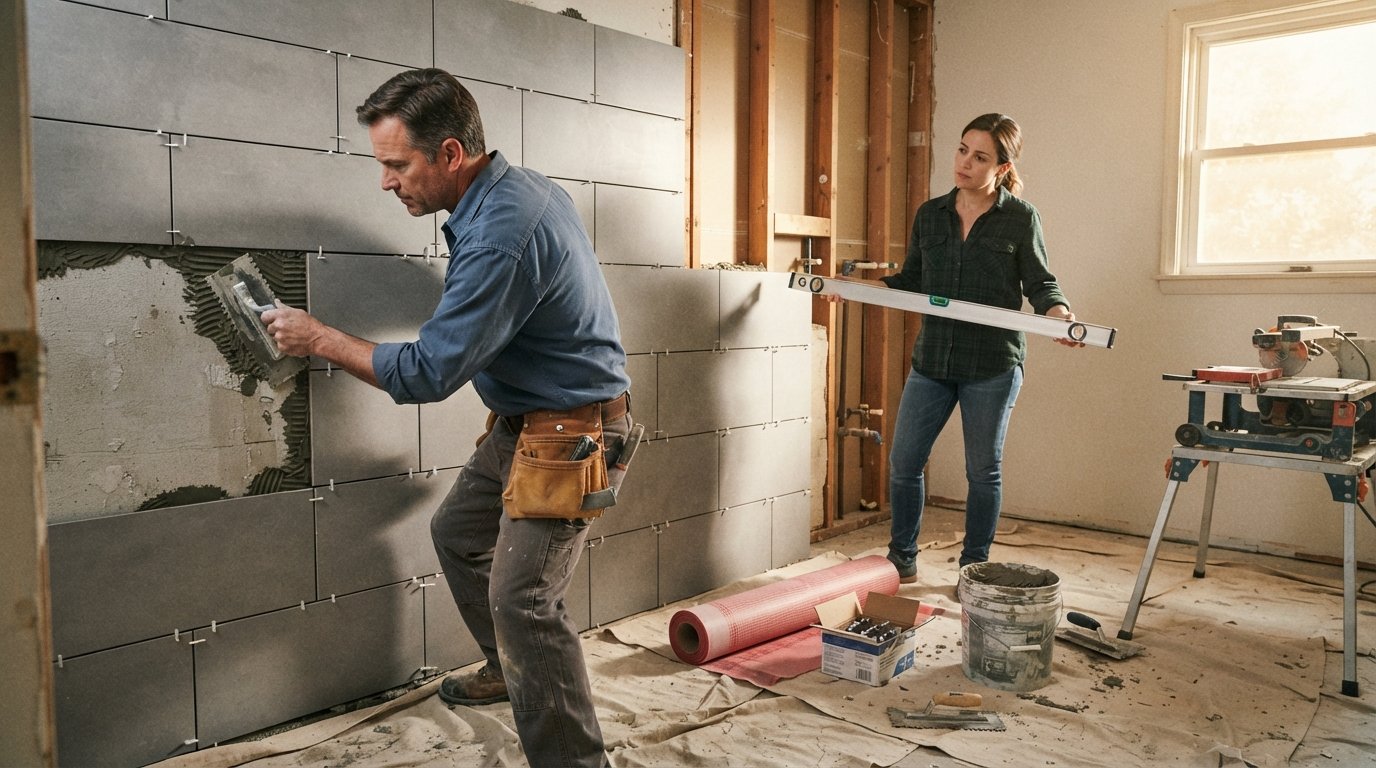
A finished tiled shower or floor is a system, not a surface. Under the visible tile sits a sequence of layers: a substrate (cement board, drywall, or a foam board), a waterproofing membrane, a bonding layer of thinset or mortar, and finally the tile and grout. Each layer depends on the one below it. If the substrate flexes, the tile cracks. If the waterproofing fails, mold grows behind the wall where you cannot see it until the damage is expensive.
Wet areas raise the stakes further. Shower floors need a sloped mortar bed that directs water to the drain at roughly a quarter inch per foot. Niches, benches, and curbs need special membrane detailing. Floor tile over a wood subframe may need an uncoupling membrane to absorb movement. None of these steps are visible in the finished product, which is exactly why they are so often skipped by first-time installers.
Layout matters just as much. A professional plans tile placement so that cut pieces land in less visible spots, grout lines stay level around corners, and the pattern stays centered on the room. Poor layout is the most common giveaway of amateur work, even when the tile itself is set perfectly.
The Case for Doing It Yourself
The strongest argument for DIY tile work is cost. A contractor might charge $2,000 to $6,000 or more for a standard bathroom floor and shower surround, depending on tile choice and regional labor rates. Doing the work yourself removes the labor line entirely, leaving only materials, tools, and your time. For a homeowner with a modest budget, that savings can be the difference between tiling now and waiting another year.
DIY also offers control. You pick the exact tile, the grout color, and the layout. You work on your own schedule, and you learn a skill you can reuse on future projects. For simple jobs, such as tiling a small powder room floor or replacing a backsplash, the learning curve is manageable and the risk of catastrophic failure is low, since there is no shower pan or constant moisture exposure.
There is also a satisfaction factor that matters to many homeowners. Finishing a visible, hands-on improvement to your own home builds confidence, and some people genuinely enjoy the process. If you have patience, a tolerance for mistakes, and time to spare, a basic tile project can be a rewarding experience.
Where DIY Bathroom Tile Goes Wrong
Most DIY tile failures trace back to a handful of recurring errors. Understanding them before you start is the best way to decide whether you should start at all.
- Missing or improperly installed waterproofing, which allows moisture to reach framing and subfloor.
- No pre-slope under the shower pan, causing water to pool and stagnate.
- Incorrect thinset (using mastic in wet areas) or the wrong trowel size for large-format tile.
- Poor layout that leaves sliver cuts at visible edges or misaligned grout lines.
- Skipping back-buttering on large tiles, leading to hollow spots and cracked corners.
Each of these mistakes can be invisible at first. Water damage typically shows up months later as loose tile, a musty smell, or stained drywall on the adjacent wall. By then, the repair often costs more than the original professional installation would have, because the entire shower has to be demolished and rebuilt.
There is also a permitting angle. Many municipalities require a permit for shower pan replacement or significant plumbing changes, and inspectors expect the work to meet specific standards. Unpermitted work can complicate a future home sale, and some insurers will not cover damage caused by work that was never inspected.
What a Professional Contractor Brings to the Job
A licensed tile contractor or bathroom remodeling specialist brings three things you cannot easily replicate: experience, tooling, and accountability. Experience shows up in the details, like knowing when to use a foam board system versus a traditional mud bed, how to handle a wall that is out of plumb by half an inch, and how to sequence the job so the floor tile is not damaged while the walls are finished.
Tooling matters more than most homeowners expect. Professionals use wet saws, laser levels, mixing paddles, trowels in several sizes, and moisture meters. Buying all of that for one bathroom rarely makes financial sense unless you plan to tile several rooms.
Accountability is the quiet advantage. A reputable contractor stands behind the work with a warranty, carries insurance, and pulls the required permits. If something fails, you have recourse. If you install the shower yourself and it leaks, the only person you can call is yourself, usually at 10 p.m. with a wet vacuum.
Working with an experienced team also removes the guesswork from scheduling and materials. In our guide on bathroom renovation specialists, we explain how to vet a pro, compare bids, and avoid the most common contractor headaches.
Cost Comparison: DIY Versus Hiring a Pro
Numbers make the tradeoff concrete. For a typical 5 by 8 foot bathroom with a tiled floor and a tiled shower surround, here is a rough comparison. These figures vary by region and material choice, but the ratios hold.
- DIY materials: $700 to $1,800 for tile, thinset, grout, membrane, backer board, and sealant.
- DIY tools: $300 to $900 for a wet saw, trowels, spacers, mixing paddle, and safety gear.
- DIY timeline: two to four weekends for a first-timer, often longer.
- Professional labor: $1,500 to $5,000 depending on scope, tile type, and market.
- Professional timeline: three to seven working days for a standard bathroom.
On paper, DIY saves real money. In practice, the savings shrink when you factor in tool purchases, wasted materials from mistakes, and the value of your own time. If a DIY error forces a redo, the cost can exceed the professional quote outright. That is why many homeowners choose a hybrid approach: DIY on low-risk surfaces such as a powder room floor, and professional help on wet areas such as the shower pan and walls.
For homeowners who want multiple quotes without calling around for days, platforms like USremodel connect you with independent contractors in your area, which makes it easier to compare pricing and scope before committing.
How to Decide: A Practical Framework
Use these questions to sort your project into the DIY column or the professional column. The answers usually point clearly in one direction.
- Does the project involve a shower pan, curb, or wet-area waterproofing? If yes, hire a pro.
- Is the substrate flat, sound, and already waterproofed? If no, expect extra prep work either way.
- Are you tiling a simple floor with standard-size tiles? This is the most DIY-friendly scenario.
- Does the job require a permit or plumbing relocation? Professionals handle this faster and correctly.
- Can you afford to redo the work if it fails? If not, the risk of DIY is too high.
If you answer yes to the first or fourth question, or no to the fifth, hiring a contractor is the more rational choice. If you are tiling a small, dry-area floor with basic materials and you have the time to learn, DIY is reasonable.
Timeline, Disruption, and Daily Life
Remodeling a bathroom disrupts your household no matter who does the work. A professional crew usually finishes faster, which shortens the period when your family is sharing a single bathroom. A DIY project stretched over several weekends can mean weeks of a half-finished room, tools in the hallway, and dust tracked through the house.
Professionals also sequence the work efficiently. They know that plumbing rough-in comes before backer board, that waterproofing needs curing time before tile, and that grout should not be walked on for a set period. Amateurs often learn this sequence by making mistakes, which adds days to the schedule.
If your household cannot tolerate a long disruption, factor that into the decision. Speed is a benefit you pay for, and it is often worth the cost in a busy home.
When DIY Makes Sense and When It Does Not
DIY makes the most sense for small, dry-area projects with forgiving materials. A powder room floor, a decorative backsplash, or a simple tile accent wall are good starting points. These jobs do not involve constant moisture, and a mistake is usually cosmetic rather than structural.
Hiring a professional makes sense for anything involving water management: shower walls, shower floors, tub surrounds, and any tile installed over a membrane system. It also makes sense when the tile is expensive, when the layout is complex (herringbone, large-format, or intricate patterns), or when the substrate needs significant repair.
There is also a resale consideration. Buyers and inspectors notice sloppy tile work, and unpermitted or visibly amateur installations can raise questions during a sale. Professional work with documentation and a warranty supports your home's value rather than undermining it.
Working With a Contractor: What to Expect
If you decide to hire, the process should be straightforward. A good contractor will inspect the space, discuss tile options and layout, provide a written estimate with a clear scope, and explain the timeline. They will pull permits if required, protect adjacent surfaces, and clean up at the end of each day.
Get at least three quotes and compare scope, not just price. A low bid that omits waterproofing or skips substrate repair is not a bargain. Ask about warranties, insurance, and whether the crew is in-house or subcontracted. These questions separate reliable pros from the ones who disappear mid-project.
Once the work begins, stay available for decisions but let the crew work. Changing tile or layout mid-installation slows the job and often adds cost. Clear communication up front prevents most disputes.
The diy versus professional contractor for bathroom tile work decision comes down to risk tolerance, budget, and the specifics of your project. For dry, simple surfaces, DIY can save money and build skills. For wet areas and complex layouts, a professional protects your home, your timeline, and your investment. Whichever path you choose, plan the waterproofing first, and the rest of the project will follow.