
Decorative Concrete Patio Ideas: Cost & Design
Explore decorative concrete patio ideas and costs, from stamped to stained, and learn how to get a stylish, durable outdoor space.

By Rachel Green
Learn more about Concrete Installation for guides, costs, and what to expect.
Compare Concrete Installation Pros Near You

Enter your ZIP code to compare top-rated local professionals and request free quotes.
Your backyard is more than just grass and a grill. It is an extension of your living space, a place for morning coffee, weekend gatherings, and quiet evenings under the stars. If you are planning to upgrade this outdoor area, the surface beneath your feet matters more than you might think. Decorative concrete has become a favorite choice for homeowners who want beauty, durability, and a custom look without the high price tag of natural stone or pavers. But what does it really cost, and which design fits your home and budget? This guide breaks down the most popular decorative concrete patio ideas, their costs, and how to plan a project that brings real value to your property.
Before you call a contractor, it helps to understand the basics. Decorative concrete is simply concrete that has been treated, stamped, stained, or textured to mimic more expensive materials or to create a unique design. The cost varies widely based on the technique, the size of your patio, your location, and the complexity of the work. On average, homeowners spend between $8 and $25 per square foot for a decorative concrete patio, installed. That range covers everything from a simple broom finish with a colored hardener to a detailed stamped pattern that resembles slate or cobblestone. For a standard 400 square foot patio, that translates to roughly $3,200 to $10,000. These figures are only estimates, and the final price depends on your specific choices and regional labor rates.
Why Choose Decorative Concrete for Your Patio?
Concrete is not the boring gray slab your grandparents had. Modern techniques allow you to create a surface that is both functional and artistic. One of the main reasons homeowners select decorative concrete is its longevity. A properly installed and sealed concrete patio can last 30 years or more, with minimal maintenance. Unlike wood decks that rot or pavers that shift and require weeding, concrete stays solid and stable. It also handles heavy furniture, grill carts, and high foot traffic without a problem.
Another strong selling point is design flexibility. You can match your patio to the architectural style of your home, whether that is a sleek modern rectangle with a smooth acid-washed finish or a rustic, irregular flagstone pattern. The color options are nearly endless, thanks to integral pigments, surface hardeners, and acid stains. You can even add borders, bands, or custom logos to create a one-of-a-kind look. This versatility is why decorative concrete is a top choice for homeowners who want a high-end appearance without the high-end cost of natural materials.
When you think about resale value, a well-designed patio can offer a strong return on investment. Outdoor living spaces are consistently ranked among the most desired features by home buyers. By choosing a durable, attractive material like decorative concrete, you are making an improvement that will pay off when it is time to sell. And because the surface is easier to clean than pavers (no weeds or sand to manage), it is a practical upgrade that appeals to busy families and retirees alike.
Top Decorative Concrete Patio Ideas and Their Costs
Every patio project starts with a vision. The following ideas represent the most popular options in the market today, each with a distinct look and a price range that reflects the labor and materials involved. Use this as a starting point for your own design, but always get a few local quotes for a precise estimate.
Stamped Concrete Patios
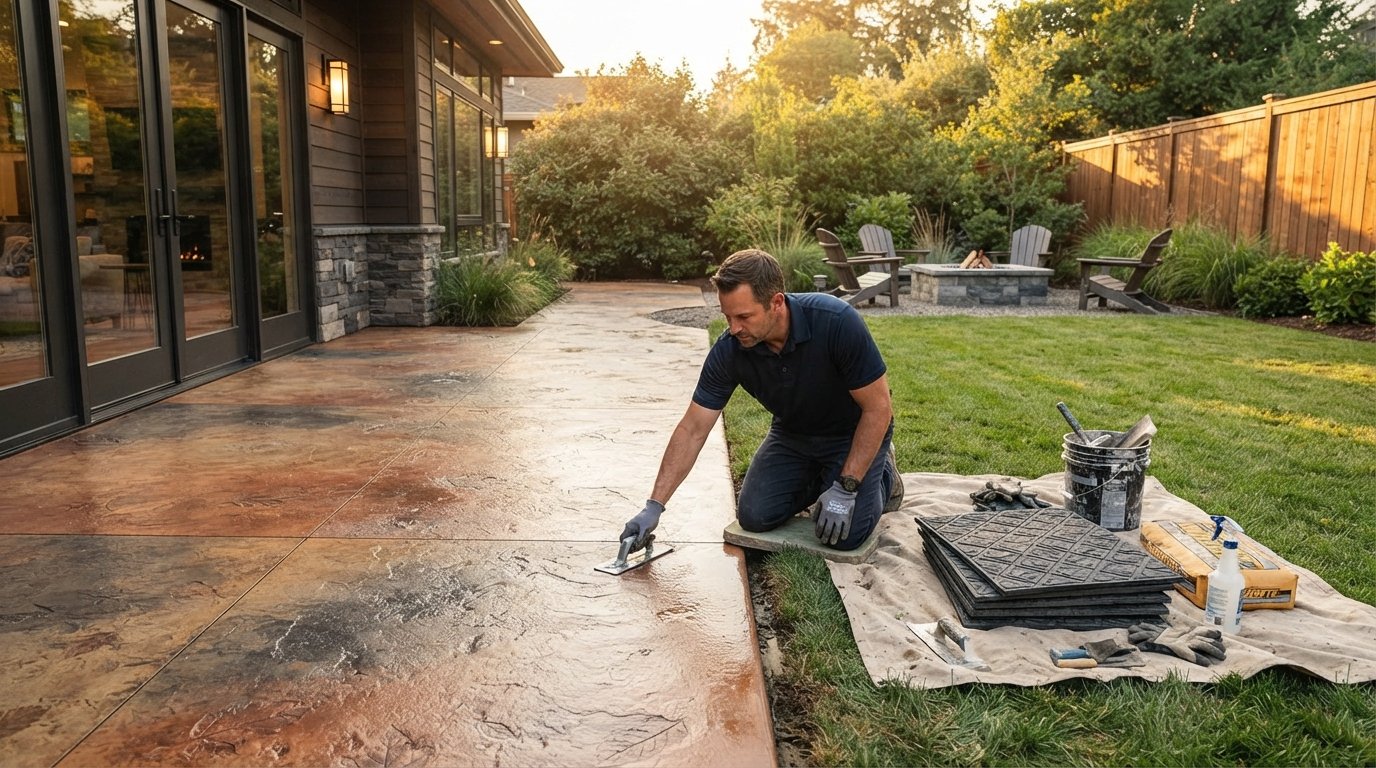
Stamped concrete is the classic choice for a decorative patio. Fresh concrete is pressed with rubber mats to create the texture of brick, slate, flagstone, tile, or even wood planks. The result is a surface that closely resembles the real material, but with the strength and low maintenance of concrete. You can also add color to the mix or apply a color hardener to the surface before stamping, which helps the pattern look more natural.
The cost for stamped concrete typically falls between $10 and $18 per square foot. The final price depends on the complexity of the pattern, the number of colors used, and whether the contractor adds extra details like a border or a custom medallion. For a 400 square foot patio, you might pay $4,000 to $7,200. Stamped concrete is an excellent option if you love the look of stone or brick but want to avoid the high cost and ongoing maintenance of real masonry. It is also a smart choice for areas with heavy use, as the concrete is less likely to crack or shift than individual pavers.
Acid-Stained Concrete Patios
If you prefer a more organic, mottled look, acid staining is a beautiful route. Acid stains penetrate the concrete and react with the minerals to produce translucent, earth-toned colors, such as browns, tans, greens, and blues. No two stains are exactly alike, so your patio will have a unique, variegated appearance that resembles natural stone or leather. This technique works best on existing concrete that is in good condition, which can make it a cost-effective option for a patio refresh.
Acid staining costs between $5 and $12 per square foot, depending on the condition of your current slab and the number of coats needed. If you are staining an existing patio, you avoid the cost of a new pour, which can be a significant savings. However, keep in mind that acid stains are not a fix for cracks or surface damage. Those issues must be repaired first, which adds to the project cost. For a 400 square foot patio, staining alone might run $2,000 to $4,800, plus any necessary repairs. The final look is subtle and sophisticated, making it a favorite for modern and rustic outdoor spaces alike.
Colored and Textured Concrete
Not every patio needs a bold pattern. Sometimes, a simple upgrade in color and texture is enough to transform the space. Colored concrete uses integral pigments mixed into the wet concrete, giving the entire slab a uniform hue. This is a great way to match your patio to your home's exterior or to create a soft, neutral backdrop for colorful furniture and planters. You can also add a surface texture, like a broom finish for slip resistance or an exposed aggregate finish that reveals small pebbles for a decorative, durable surface.
Prices for colored and textured concrete are on the lower end of the decorative scale, usually $6 to $12 per square foot. A 400 square foot patio would cost about $2,400 to $4,800. This is a budget-friendly option that still provides a custom look. The key is to work with a contractor who understands how to mix and place colored concrete evenly, as variations can occur if the process is rushed. A smooth, consistent color and texture will make your patio look intentional and high-end.
Engraving and Scoring
Engraving, also known as cutting or scoring, is a technique where lines are cut into hardened concrete to create the look of tile or stone joints. This is often combined with staining to produce a realistic tile pattern. The process involves a skilled craftsman using a saw to cut shallow grooves in a grid or custom design. The result is a sleek, contemporary look that can be tailored to any style. Engraving is also a smart way to add definition to a large, plain concrete slab without the expense of a full overlay.
The cost for engraving and scoring is typically $2 to $6 per square foot, on top of the cost of the base concrete or staining. If you are adding engraving to a new stamped patio, it might be included in the overall price. For an existing patio, this is an affordable way to add detail. A 400 square foot patio with engraving might add $800 to $2,400 to your total project cost. This technique shines when paired with a bold stain color, giving the patio a crisp, architectural feel.
Concrete Overlays
If you already have a concrete patio that is structurally sound but looks tired or stained, a concrete overlay can give it new life. An overlay is a thin layer of polymer-modified concrete that is applied over the existing slab. It can be troweled smooth, textured, stamped, or stained, depending on your desired look. This is a fantastic way to update an unsightly patio without the cost and hassle of demolition and new pouring.
Overlay costs range from $8 to $18 per square foot, which includes the material, labor, and any decorative finishes. For a 400 square foot patio, that is $3,200 to $7,200. Overlays are a popular choice because they are quicker to install than a full replacement and they reduce waste. However, the overlay is only as good as the base concrete, so the contractor must ensure the existing slab is clean, level, and free of major cracks. If your patio has significant structural issues, a full replacement might be a better long-term investment.
Factors That Affect the Final Cost
Several variables influence the price of your decorative concrete patio. Understanding these can help you create a realistic budget and avoid surprises when the quotes arrive. Here are the key factors you should discuss with your contractor:
- Patio Size and Shape: Larger areas cost more for materials and labor. Curves, angles, and intricate designs also increase the time needed for forming and stamping, which raises the price.
- Site Preparation: The condition of your yard matters. If the ground needs to be excavated, leveled, or compacted, those expenses are added. Removing an old patio or deck also costs extra.
- Base Thickness: Standard residential patios are 4 inches thick. For heavy vehicles or frequent large gatherings, you may need a 5 or 6 inch base, which increases material costs.
- Color and Pattern Complexity: A single-color, simple pattern is cheaper than a multi-color, multi-pattern design with borders and custom cuts. Extra colors require more labor and materials.
- Geographic Location: Labor rates and material prices vary by region. Urban areas and states with higher costs of living will naturally have higher quotes.
- Contractor Experience: A skilled decorative concrete contractor charges more per hour, but their work is more likely to be flawless and durable. Choosing a cheaper, less experienced pro can lead to costly repairs later.
When you receive estimates, ask for a detailed breakdown of all these components. That way, you can compare apples to apples and understand exactly what you are paying for. It is also wise to ask about the warranty on both the materials and the workmanship, as a reputable contractor will stand behind their installation.
DIY vs. Hiring a Professional
The temptation to save money by doing it yourself is strong, especially for a project like a patio. For a simple broom-finish concrete slab, a skilled DIYer might succeed. However, decorative concrete is a different beast. Stamping, staining, and overlaying require specialized tools and a deep understanding of timing, mix ratios, and curing processes. Mistakes are hard to fix and often result in permanent discoloration, uneven patterns, or surface cracking. The cost of renting stamping tools and buying quality materials can quickly eat into any savings, and the risk of a botched job is high.
Hiring a professional contractor is almost always the recommended path for decorative concrete. A pro has the experience to handle site prep, weather conditions, and the intricate steps of coloring and stamping. They also have access to higher-grade materials and can offer warranties that protect your investment. When you compare the long-term cost of a DIY failure (which might require a full replacement) to the upfront price of a professional installation, the professional option often proves more economical. To make this process seamless, you can use a platform like USremodel to connect with vetted contractors in your area who specialize in concrete work, ensuring you get quality results without endless phone calls.
How to Save Money on Your Decorative Concrete Patio
Decorative concrete is an investment, but there are smart ways to manage the cost without sacrificing quality. One of the most effective strategies is to keep the design simple. A single color and a basic stamp pattern will always be cheaper than a custom layout with multiple elements. You can also choose a smaller patio footprint. Instead of covering the entire backyard, design a compact patio that fits your main seating area and use stepping stones for pathways to other zones.
Another way to save is to schedule your project during the off-season. Concrete work is in high demand during spring and summer, so contractors often charge premium rates. Scheduling in late fall or early winter (in mild climates) can lead to lower quotes and faster scheduling. You can also save by doing some of the prep work yourself, like clearing the site of furniture, plants, or debris. Just be sure to ask your contractor what is included in the quote before you start any demolition or excavation. Finally, consider a concrete overlay instead of a full replacement if your existing patio is in decent shape. This can cut costs by up to 50% while still giving you a brand-new look.
Working With a Contractor: What to Expect
Finding the right contractor is just as important as choosing the right design. Start by asking for recommendations from neighbors or friends who have had similar work done. Then, verify that any contractor you consider is licensed, insured, and experienced in decorative concrete specifically. A general concrete contractor may not have the artistic eye needed for stamping or staining. Ask to see a portfolio of completed projects and request references from recent clients.
During the quoting process, be clear about your vision and budget. Share photos of patios you like and discuss the specific techniques and colors you prefer. A reputable contractor will offer honest advice on what is achievable within your budget and what might be a waste of money. They should also provide a written contract that spells out the scope of work, timeline, total cost, and payment schedule. Never pay the full amount upfront; a typical deposit is 10% to 30%, with the balance due upon completion and your final inspection.
Once the work begins, expect some disruption to your backyard. The contractor will need to set up forms, mix concrete, and allow for curing time, which can take several days. During this period, keep pets and children away from the work area. After the patio is finished, you will need to wait about a week before walking on it and up to a month before placing heavy furniture. Your contractor should give you specific care instructions, including when to apply the initial sealer.
Maintenance and Longevity of Your Patio
One of the greatest advantages of decorative concrete is its low maintenance, but it is not zero maintenance. To keep your patio looking its best, you should clean it regularly with a mild detergent and water. Avoid harsh chemicals or pressure washing at high settings, as these can damage the sealer and the color. You should also reseal the concrete every 2 to 3 years, depending on the level of foot traffic and weather exposure. A fresh coat of sealer restores the color, enhances the gloss, and protects against stains and moisture penetration.
With proper care, your decorative concrete patio can last for decades. It resists fading, chipping, and cracking far better than many other materials. In the rare event that a crack does appear, it can often be repaired with a flexible caulk or a concrete patching compound, and then touched up with stain to blend in. This durability is a key reason why decorative concrete is a smart investment for your home. It not only enhances your daily life but also adds lasting value to your property.
As you finalize your plans, remember that the cheapest quote is not always the best value. Look for a contractor who listens to your needs, offers a fair price, and has a proven track record of quality craftsmanship. Taking the time to choose the right design and the right professional will ensure that your decorative concrete patio becomes a beloved part of your home for many years.
Learn more about Concrete Installation for guides, costs, and what to expect.
Compare Concrete Installation Pros Near You
Enter your ZIP code to compare top-rated local professionals and request free quotes.