
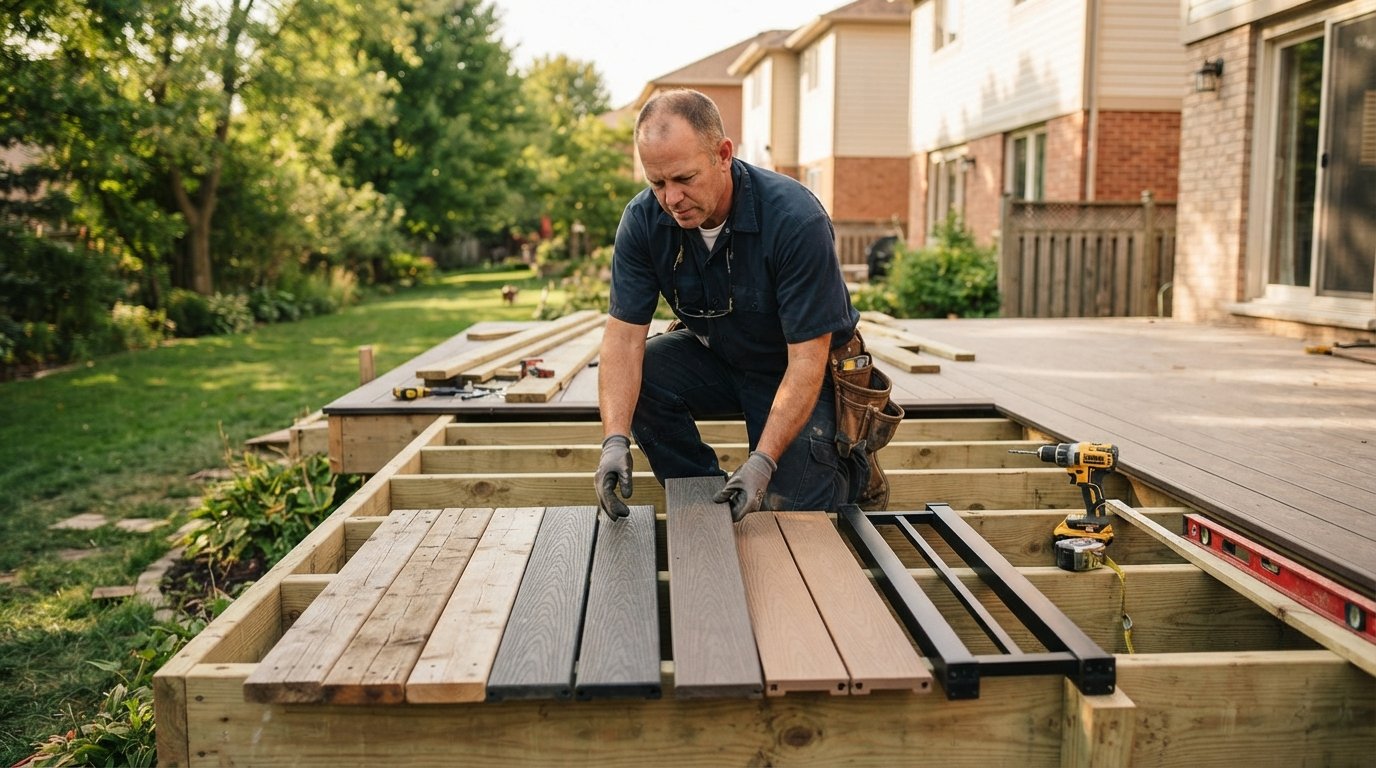
Deck Material Comparison: Wood, Composite, PVC, and Aluminum
Compare wood, composite, PVC, and aluminum decks on cost, maintenance, and lifespan to choose the best material for your climate and budget.

By Justin Parker
Learn more about Deck or Porch Remodel or Addition for guides, costs, and what to expect.
Compare Deck or Porch Remodel or Addition Pros Near You

Enter your ZIP code to compare top-rated local professionals and request free quotes.
Choosing the right deck material is one of the most consequential decisions a homeowner can make during an outdoor renovation. A deck extends living space, boosts curb appeal, and can add real resale value, but the material you select determines how much maintenance you will face, how long the structure lasts, and how much you ultimately spend. The four leading options (wood, composite, PVC, and aluminum) each carry distinct advantages and trade-offs, and the best choice depends on your climate, budget, lifestyle, and long-term plans.
This deck material comparison of wood, composite, PVC, and aluminum breaks down cost, durability, maintenance, appearance, and environmental impact so you can match the right surface to your property. Whether you are building a new deck from scratch or replacing an aging one, understanding these differences upfront prevents costly regrets later.
Why Deck Material Choice Matters More Than Most Homeowners Expect
A deck is not a one-time purchase. It is a long-term commitment measured in decades of exposure to sun, rain, snow, humidity, and foot traffic. The material you choose dictates how often you will sand, stain, seal, scrub, or replace boards. It also influences safety, since splinters, rot, and structural weakness become real concerns as any deck ages. Homeowners in humid regions such as Florida and Texas face different pressures than those in drier or colder climates, and the wrong material can deteriorate far faster than expected.
Cost is another factor that surprises many buyers. The sticker price of the boards is only part of the equation. Installation labor, framing requirements, hidden fasteners, and long-term upkeep all add up. A cheaper material that needs repainting every two years can cost more over a decade than a pricier option that requires almost no attention. That is why a true deck material comparison must look beyond the initial quote and consider total cost of ownership.
Resale value also plays a role. Buyers notice decks, and a well-built, low-maintenance surface signals a home that has been cared for. If you are planning to sell within a few years, the material you pick can influence how quickly your home moves and at what price. For guidance on how different surfaces affect overall renovation budgets, a countertop material comparison guide shows how the same logic of durability, cost, and maintenance applies indoors as well.
Wood Decks: Classic Look, Real Maintenance
Wood remains the traditional choice for decks, and for good reason. It offers a natural warmth and grain that many homeowners find unmatched. Pressure-treated pine, cedar, and redwood are the most common options. Pressure-treated lumber is affordable and widely available, while cedar and redwood bring natural rot resistance and a richer appearance at a higher price. Wood is also relatively easy to work with, which can keep installation labor costs lower than some alternatives.
The trade-off is maintenance. Wood decks typically need to be cleaned, sanded, and sealed or stained every one to three years, depending on climate and sun exposure. Without that care, boards can splinter, warp, crack, and rot. In humid states like Florida or Texas, the maintenance cycle is even shorter because moisture accelerates decay and mold growth. Homeowners who enjoy weekend projects may not mind, but those who want a hands-off surface often find wood frustrating over time.
Wood is also susceptible to insects such as termites and carpenter ants, which is a particular concern in warmer regions. Treated lumber helps, but it is not immune. Despite these drawbacks, wood remains a strong choice for budget-conscious homeowners who love the classic aesthetic and are willing to invest time in upkeep.
- Pros: Lower upfront cost, natural appearance, easy to repair individual boards, widely available.
- Cons: High maintenance, prone to rot and insects, needs regular sealing or staining, shorter lifespan in harsh climates.
- Best for: Homeowners on a tighter budget who do not mind annual upkeep and prefer a traditional look.
Composite Decks: The Balanced Middle Ground
Composite decking is made from a blend of wood fibers and plastic, designed to mimic the look of wood while reducing maintenance. It has become one of the most popular choices in recent years because it strikes a balance between appearance, durability, and effort. Composite boards resist rot, splintering, and insect damage far better than natural wood, and they do not require staining or sealing. A simple soap-and-water cleaning a few times a year is usually enough.
Composite decking comes in a wide range of colors and finishes, including capped boards that add a protective shell against fading and staining. That capping technology has improved dramatically, making modern composites more fade-resistant and easier to clean than earlier generations. However, composite is not indestructible. It can get hot under direct sun, may expand and contract with temperature changes, and can scratch or stain if heavy furniture is dragged across it or greasy food is spilled and left to sit.
Cost sits between wood and PVC or aluminum. Composite is more expensive than pressure-treated wood but often cheaper than high-end PVC. It is a strong option for homeowners who want a wood-like look with significantly less work, and it performs well in a variety of climates. For those in humid regions, composite avoids many of the rot issues that plague natural wood.
- Pros: Low maintenance, resists rot and insects, good color selection, no annual sealing.
- Cons: Higher upfront cost than wood, can get hot, may fade or stain over time, not fully scratch-proof.
- Best for: Homeowners who want a wood look with minimal upkeep and are willing to pay a bit more upfront.
PVC Decks: Maximum Durability and Minimal Upkeep
PVC decking is made entirely from plastic, with no wood fibers. That composition gives it a major advantage: it is completely impervious to moisture, rot, mold, and insects. PVC decks are often the top choice for coastal homes, lake houses, and humid climates where wood and even some composites struggle. They are also extremely low maintenance, requiring only occasional cleaning to stay looking new.
PVC decking typically comes in lighter colors and tends to stay cooler underfoot than composite, which is a meaningful benefit for sunny patios and pool decks. It resists fading and staining well and does not need to be painted or sealed. The downsides are cost and appearance. PVC is usually the most expensive synthetic option, and while it mimics wood grain, some homeowners feel it looks less natural than composite. It can also feel more slippery when wet and may expand and contract more noticeably in extreme temperature swings.
For homeowners in Florida, Texas, or other high-humidity areas, PVC often justifies its price through decades of low-maintenance performance. If you plan to stay in your home long term and want to avoid the cycle of repair and refinishing, PVC is a compelling choice.
- Pros: Completely water-resistant, no rot or insect damage, very low maintenance, stays cooler than composite.
- Cons: Highest upfront cost among synthetic options, less natural appearance, can be slippery when wet.
- Best for: Coastal and humid climates, homeowners who want the least possible maintenance.
Aluminum Decks: Strength and Sleek Style
Aluminum decking is a lesser-known but increasingly popular option. It is made from powder-coated aluminum, which makes it extremely durable, rust-resistant, and lightweight. Aluminum decks are often used for balconies, rooftop decks, and commercial spaces, but they are finding their way into residential projects as well. The surface stays relatively cool, resists fading, and requires almost no maintenance beyond basic cleaning.
Aluminum offers a modern, clean look that appeals to contemporary home designs. It is also fire-resistant, which can be an important consideration in wildfire-prone areas. However, aluminum has drawbacks. It can dent under heavy impact, may feel less solid underfoot than wood or composite, and tends to be more expensive than many homeowners expect. It also has a more industrial appearance, which may not suit traditional or rustic home styles.
For homeowners who prioritize durability and a sleek aesthetic, aluminum is worth considering. It is especially useful in high-rise or coastal settings where weight and rust resistance matter. But for a typical backyard deck, it is often overkill compared to composite or PVC.
- Pros: Rust-proof, fire-resistant, very low maintenance, modern look, lightweight.
- Cons: Expensive, can dent, less natural appearance, may feel less solid underfoot.
- Best for: Modern homes, coastal or high-rise settings, fire-prone regions.
Cost Comparison: What You Will Actually Pay
Upfront cost is often the first thing homeowners consider, and the range is wide. Pressure-treated wood is typically the cheapest, followed by cedar and redwood, then composite, with PVC and aluminum at the higher end. But material cost is only part of the picture. Labor, framing, fasteners, and long-term maintenance all affect the true cost of ownership.
Here is a simplified comparison of typical installed costs per square foot, though prices vary by region and project complexity:
- Pressure-treated wood: $15 to $25 per square foot installed.
- Cedar or redwood: $25 to $40 per square foot installed.
- Composite: $30 to $50 per square foot installed.
- PVC: $40 to $65 per square foot installed.
- Aluminum: $45 to $75 per square foot installed.
Over a 20-year period, the math shifts. A wood deck may require $5,000 or more in staining, sealing, and repairs, while a composite or PVC deck might need only occasional cleaning. When you factor in that long-term maintenance, the gap between wood and synthetic options narrows significantly. Homeowners in harsh climates often find that the higher upfront cost of PVC or composite pays for itself in avoided labor and replacement costs.
Maintenance and Lifespan: The Long Game
Maintenance is where the differences between these materials become most obvious. Wood demands the most attention: annual or biennial cleaning, staining, and sealing, plus periodic repairs for rot or splinters. Composite needs only occasional cleaning, though it can stain and may require spot treatment. PVC is similar but even more resistant to staining and moisture. Aluminum requires the least attention of all, typically just a rinse or wipe-down.
Lifespan follows a similar pattern. A well-maintained wood deck can last 15 to 20 years, though untreated or neglected wood may fail much sooner. Composite decks often last 25 to 30 years, PVC can exceed 30 years, and aluminum can last 30 to 40 years or more. These numbers assume proper installation and normal use, but they illustrate why synthetic materials often win on total cost of ownership despite higher upfront prices.
For homeowners who plan to age in place or who simply want to avoid recurring projects, PVC and aluminum offer the most peace of mind. Wood and composite can still be excellent choices, but they require a realistic commitment to upkeep.
Climate and Location: Matching Material to Environment
Climate should weigh heavily in your decision. In humid states like Florida and Texas, moisture is the enemy of wood. Rot, mold, and insect damage happen faster, and maintenance cycles shorten. Composite and PVC perform much better in these conditions, and PVC is often the top recommendation for coastal areas where salt air adds another layer of stress.
In drier climates, wood can last longer with less frequent sealing, though UV exposure still takes a toll. Composite handles UV well, and aluminum resists fading entirely. In cold climates, freeze-thaw cycles can crack wood and some composites, while PVC and aluminum are more stable. Fire-prone regions favor aluminum and other non-combustible materials.
If you are unsure which material suits your region, working with a professional can help. Platforms like USremodel connect homeowners with independent contractors who can assess your climate, budget, and design goals, and provide quotes for deck installation or replacement. Getting multiple perspectives helps you avoid costly mistakes and choose a material that will perform well where you live.
Making the Right Choice for Your Home
There is no single best deck material. Wood offers timeless beauty and lower upfront cost, but demands ongoing care. Composite balances appearance and low maintenance at a moderate price. PVC delivers maximum durability and minimal upkeep for those willing to pay more. Aluminum provides strength, fire resistance, and a modern look for specialized applications.
To decide, start by ranking your priorities: budget, maintenance tolerance, climate, and aesthetic preferences. If you want the lowest initial cost and enjoy DIY upkeep, wood may be your answer. If you want a wood look with less work, composite is a strong fit. If you never want to think about rot or sealing again, PVC or aluminum will serve you best. Whichever you choose, proper installation and framing are just as important as the surface material, so vet your contractor carefully and get multiple quotes before committing.
A deck is an investment in how you live outdoors. By understanding the real differences between wood, composite, PVC, and aluminum, you can choose a material that fits your lifestyle, your climate, and your wallet for years to come.