
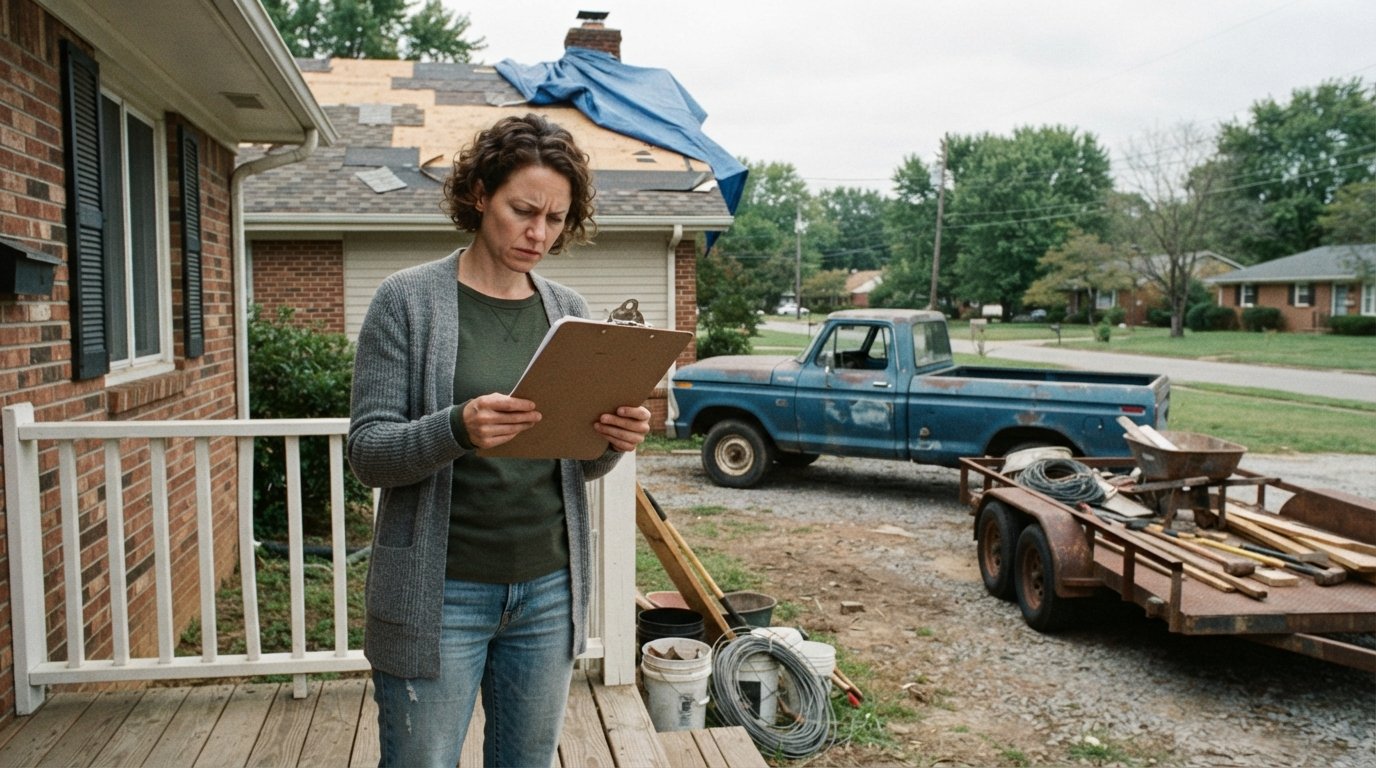
Contractor Red Flags Homeowners Should Avoid in 2026
Spot the contractor red flags homeowners should avoid, from cash-only demands to missing licenses, and protect your renovation budget before work begins.

By Rachel Green
Learn more about General Contracting for guides, costs, and what to expect.
Compare General Contracting Pros Near You

Enter your ZIP code to compare top-rated local professionals and request free quotes.
You just handed a contractor a deposit for a new roof or a bathroom remodel, and the crew has not shown up in five days. The phone number no longer works. That sinking feeling in your gut is not paranoia: it is your instinct catching warning signs you noticed but ignored. Every year, homeowners lose billions of dollars to unlicensed builders, high-pressure sales tactics, and crews that vanish after cashing a down payment. The good news is that nearly every bad contractor reveals themselves early, and the warning signs are usually hiding in plain sight.
This guide breaks down the contractor red flags homeowners should avoid, from the estimate stage through the final walkthrough. You will learn how to screen bids, verify credentials, read a contract like a pro, and spot the exact behaviors that separate a professional remodeler from a future headache. Whether you are planning a kitchen renovation or a quick plumbing repair, these checks take minutes and can save you thousands.
Why Contractor Vetting Matters More Than Ever
The remodeling market has cooled slightly from its pandemic-era frenzy, but demand for skilled trades remains high. That imbalance creates opportunity for bad actors, especially after storms when out-of-town crews flood neighborhoods with door-to-door pitches. Homeowners who skip verification are the easiest targets because they make decisions based on price and charm instead of documentation and track record.
The stakes go beyond money. Unpermitted work can fail inspection, void your insurance, and create safety hazards that surface years later when you try to sell. An unlicensed electrician who wires a basement incorrectly may leave you responsible for fire damage that your policy will not cover. A roofer who skips ice and water shield can turn a small leak into a mold remediation project costing five figures.
Vetting also protects your timeline. Reliable contractors plan materials, labor, and inspections in advance. Problem contractors improvise, disappear mid-project, or juggle so many jobs that yours stalls for weeks. The screening process described below helps you identify the difference before money changes hands.
The Warning Signs You Should Never Ignore
Most contractor problems trace back to a handful of behaviors visible during the first conversation. Learn to recognize them and you will filter out trouble before you ever sign a contract.
No License, No Insurance, No Exceptions
Ask for a license number and an insurance certificate on day one. In most states, you can verify a license through a public database in under two minutes. If the contractor dodges the question, claims a license is not required for their trade, or promises to send paperwork later, walk away. Legitimate professionals carry general liability insurance and workers compensation coverage, and they are happy to prove it because it protects them too.
Insurance matters because accidents happen on job sites. If an uninsured worker falls off a ladder in your home, you could be liable for medical bills. If an uninsured crew damages your neighbor's property, you may end up mediating the dispute. Never accept a verbal assurance that coverage exists.
Cash-Only Demands and Large Upfront Payments
A request for full payment upfront is one of the loudest contractor red flags homeowners should avoid. Standard practice in most states is a deposit of 10 to 30 percent, with payments tied to completed milestones. A contractor who wants half the project cost before ordering materials is either cash-strapped or planning to disappear.
Cash-only requests should also raise suspicion. Cash payments are hard to trace, which makes them attractive to contractors who avoid taxes or plan to skip town. Reputable builders accept checks, credit cards, or bank transfers and provide receipts for every transaction. If a contractor offers a discount for cash, ask yourself what they are trying to hide.
Door-to-Door Pressure and Storm Chasers
After a hailstorm or hurricane, out-of-state crews arrive offering quick repairs and insurance assistance. Some are legitimate, but many collect deposits and leave before the work is finished or inspected. These storm chasers often use high-pressure tactics, such as claiming a neighbor already signed up or warning that prices will double tomorrow.
Legitimate contractors do not need to pressure you on your doorstep. They schedule estimates, provide written proposals, and give you time to compare bids. If someone insists on a same-day decision, the answer is no.
Vague Estimates and Missing Paperwork
A professional estimate is a detailed document, not a number scribbled on a business card. It should list materials by brand or specification, labor costs, permit responsibilities, cleanup expectations, and a payment schedule. If the bid is a single lump sum with no breakdown, you have no way to compare it against competitors or hold the contractor accountable.
Watch for estimates that exclude permits or explicitly tell you to pull them yourself. In most jurisdictions, the contractor must pull permits for structural, electrical, plumbing, and mechanical work. A contractor who avoids permits is often cutting corners on code compliance.
The Red Flags That Appear After Work Begins
Some problems only surface once the crew is on site. Knowing what to watch for during construction helps you intervene before small issues become expensive disputes.
Sudden schedule changes with no explanation, crews that rotate every few days, and unexplained disappearances are classic signs of a contractor juggling too many jobs or subcontracting to unvetted labor. A professional communicates delays in advance and keeps the same core team on your project.
Substandard materials are another warning. If the tile delivered does not match the sample, or the lumber is visibly warped, speak up immediately. Bad contractors hope you will not notice until the invoice is paid. Document every delivery with photos and compare against the spec sheet in your contract.
Finally, pay attention to how the contractor handles change orders. Legitimate builders provide written change orders with updated costs before doing extra work. Verbal approvals and surprise charges at the end are a recipe for a billing dispute. If you notice plumbing problems during a remodel, our guide on common plumbing problems every homeowner should know explains which issues need immediate attention and which can wait.
A Step-by-Step Screening Process That Works
The best defense against contractor fraud is a repeatable process you apply to every bid. The following steps take about an hour per contractor and dramatically reduce your risk.
- Verify credentials first. Look up the license number, insurance certificate, and business registration before you invite anyone to your home. Check the Better Business Bureau and your state contractor board for complaints.
- Request three local references. Ask for projects completed in the last 12 months, ideally similar in scope to yours. Call each reference and ask whether the project finished on time, on budget, and whether the contractor honored the warranty.
- Get three written estimates. Compare line items, not just totals. A low bid that omits permits or uses builder-grade materials is not actually cheaper.
- Review the contract with a checklist. Confirm the scope, payment schedule, timeline, warranty terms, and dispute resolution clause. Never sign a contract with blank spaces.
- Verify lien waivers at each payment. A lien waiver confirms that subcontractors and suppliers have been paid. Without them, you could face a mechanic's lien on your home even after paying the general contractor in full.
This process also gives you a baseline for comparing quotes. When one contractor refuses to provide references or rushes you through the contract review, you have your answer without spending a dime.
If you want to skip the cold-calling and screening grind, a matching platform can do the heavy lifting. Services like USremodel connect homeowners with independent contractors for remodeling, renovation, and repair projects, letting you compare vetted professionals in your area without chasing down licenses and references yourself.
How to Read a Contractor Contract Before You Sign
Your contract is the only document that matters if something goes wrong. Read it slowly, and insist on clarity before signing. The scope of work should describe every task in plain language, including materials, finishes, and what is explicitly excluded. If the contract says "install tile" without specifying the tile type or grout, you have no recourse when the wrong product arrives.
Payment terms deserve special attention. A safe structure ties each payment to a milestone: deposit at signing, second payment when framing passes inspection, third when fixtures are installed, final payment after the punch list is complete. Never pay the final installment before you have walked the site and confirmed every item is finished.
Warranty language should specify what is covered, for how long, and how to file a claim. A one-year workmanship warranty is standard in many trades, but some contractors offer longer coverage on specific systems. Get the warranty in writing, and confirm whether it transfers if you sell the home.
Finally, check for a dispute resolution clause. Arbitration or mediation requirements are common and can save both parties legal fees, but you should understand what you are agreeing to before a problem arises.
Protecting Yourself Financially and Legally
Even with careful screening, projects sometimes go sideways. Build a financial cushion and document everything so you have options if a dispute escalates.
Keep a dedicated folder with the signed contract, change orders, receipts, photos of each stage, and copies of permits. If a contractor abandons the job, this documentation supports a claim with your state licensing board, your insurance company, or small claims court. Many states have contractor recovery funds that reimburse homeowners for certain losses caused by licensed contractors who violate the law.
Consider paying by credit card when possible. Credit card companies offer dispute rights that cash and checks do not. If your contractor only accepts cash, that is another data point in the red flag column.
Do not let a contractor convince you to skip permits to save time. Unpermitted work often surfaces during a home sale inspection, and the cost to retroactively permit and correct the work frequently exceeds the original project budget.
When to Walk Away and Start Over
Some situations are salvageable with a conversation. Others require you to cut ties immediately. Walk away if the contractor has no license or insurance, demands full payment upfront, refuses to provide a written contract, or pressures you to sign on the spot. Walk away if you discover they are not registered with the state, or if references describe abandoned projects and unpaid subcontractors.
If work has already started and problems emerge, document everything and send a written notice describing the issue and your requested remedy. Give the contractor a reasonable deadline to respond. If they ignore it, contact your state contractor board and consider consulting an attorney. The earlier you act, the more leverage you have.
Starting over feels expensive, but continuing with a bad contractor almost always costs more. A second bid from a qualified professional is cheaper than fixing shoddy work later.
Building a Better Renovation Experience
The contractor red flags homeowners should avoid are not subtle once you know what to look for. Missing licenses, cash-only demands, vague estimates, and high-pressure sales tactics all point to the same conclusion: this is not the professional you want in your home. By verifying credentials, comparing detailed bids, and insisting on clear contracts, you protect your budget and your peace of mind.
Take your time during the selection phase. A few extra hours of research and reference calls can save you months of frustration and tens of thousands of dollars. Your home is your largest investment, and the right contractor will respect that from the first handshake to the final walkthrough.
Learn more about General Contracting for guides, costs, and what to expect.
Compare General Contracting Pros Near You
Enter your ZIP code to compare top-rated local professionals and request free quotes.